Understanding Sequences Easy Numbers Worksheets for Ages 3-9
3 filtered results
-
From - To
Discover the perfect introduction to math for young learners with "Understanding Sequences Easy Numbers Worksheets for Ages 3-9". Tailored for children, these engaging worksheets make learning sequences fun and accessible. Each worksheet is designed to boost numerical skills and enhance logical thinking, providing essential practice in understanding number patterns. With vibrant illustrations, clear instructions, and age-appropriate content, these worksheets ensure that kids enjoy their learning journey while developing foundational math skills crucial for future success. Ideal for classrooms or at-home activities, these resources offer a seamless blend of education and entertainment, making math exciting for children aged 3 to 9.
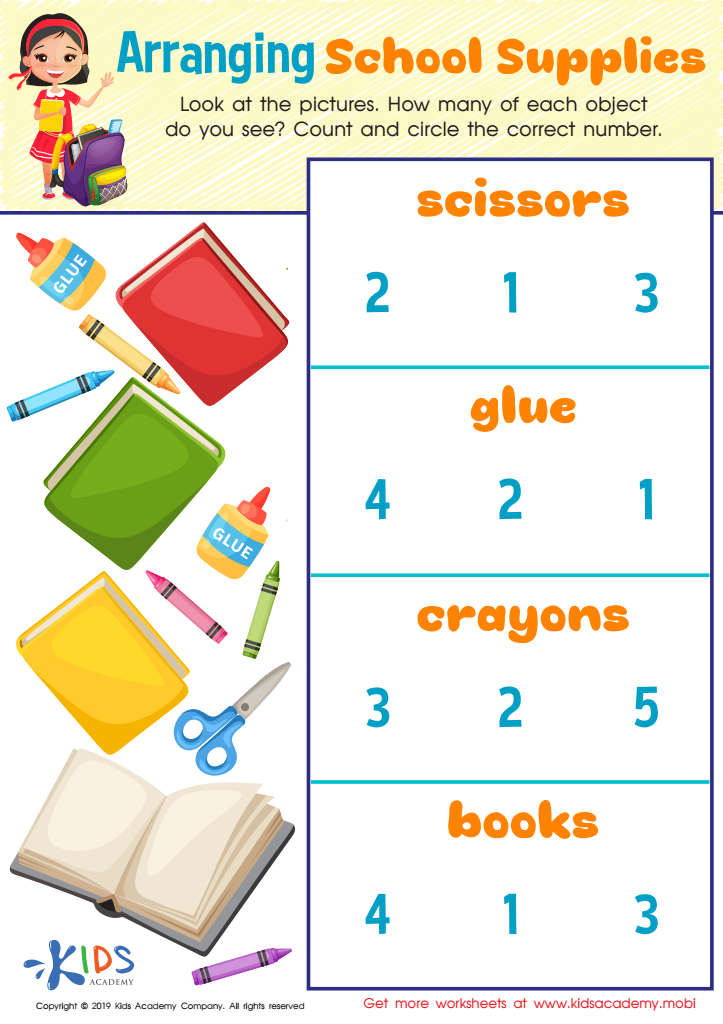
Arranging School Supplies Worksheet
 Assign to My Students
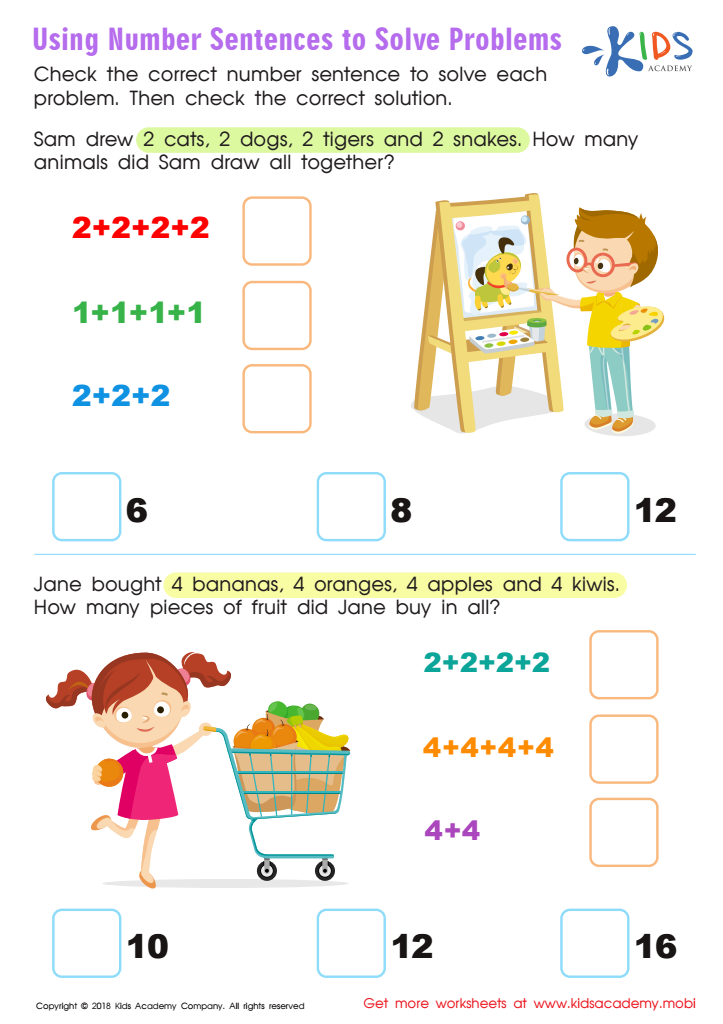
Using Number Sentences to Solve Problems Worksheet
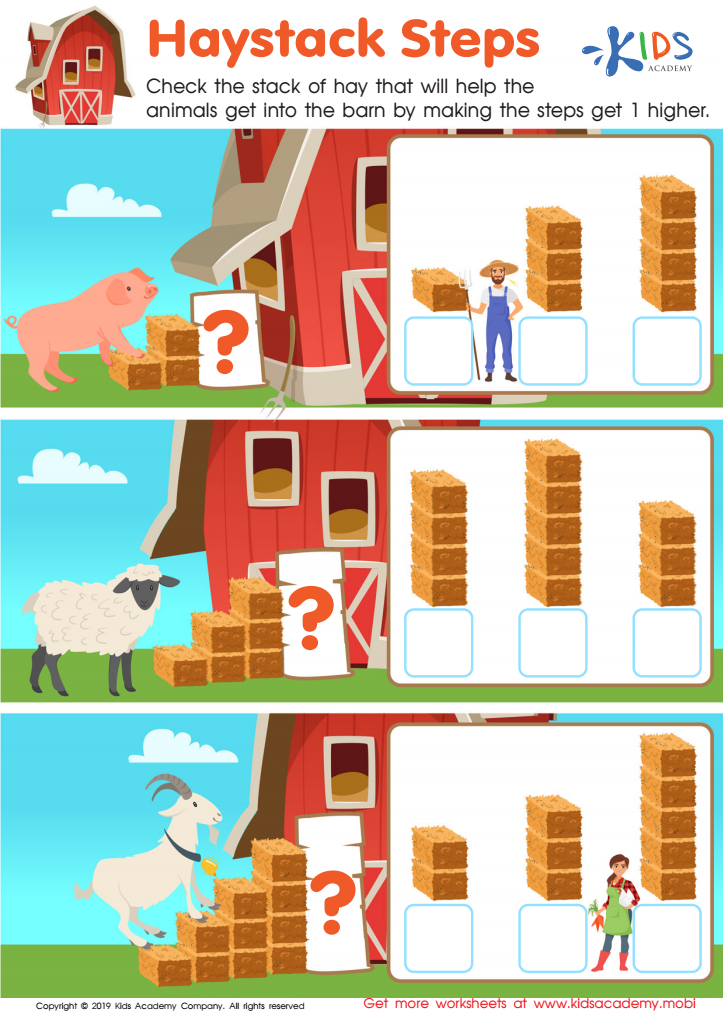
Haystack Steps Worksheet







Understanding sequences and easy numbers is crucial for young children because it lays the foundation for mathematical thinking and problem-solving skills. For ages 3-9, grasping these concepts helps children recognize patterns, make connections, and predict outcomes, which are essential cognitive skills.
For parents and teachers, nurturing an understanding of sequences can significantly boost a child's confidence in handling more complex mathematical tasks. By repeatedly practicing simple number sequences, children learn the order and relationship between numbers, which strengthens their numerical literacy. Sequential thinking also aids in reading comprehension, as recognizing patterns within text and storylines is similar to identifying number sequences.
Moreover, the mastery of easy numbers and sequences supports everyday logical reasoning and decision-making. Children will use this knowledge in daily activities, contributing to their overall cognitive development. Engaging children in playful number games and hands-on activities makes learning enjoyable and instills a positive attitude toward mathematics.
In summary, focusing on sequences and easy numbers for young learners equips them with critical skills for their academic journey and everyday life. It empowers them to approach both mathematical and real-world problems with confidence, curiosity, and an understanding of structure and order.








