
Sequencing Skills Easy Math Worksheets for Ages 3-9
5 filtered results
Difficulty Level
Grade
Age
-
From - To
Subject
Activity
Standards
Discover our engaging "Sequencing Skills Easy Math Worksheets" designed specifically for children ages 3-9. These fun, interactive worksheets help young learners develop essential sequencing skills necessary for early math proficiency. Through colorful visuals and age-appropriate activities, children will enhance their ability to identify patterns and order events. Our worksheets promote critical thinking, improve cognitive skills, and make learning mathematics enjoyable! Each worksheet is crafted to accommodate different learning levels, ensuring that every child can progress at their own pace. Perfect for both classroom settings and home practice, our resources support early childhood development in a fun and effective way. Start your child’s math journey today!
Favorites
With answer key
Interactive
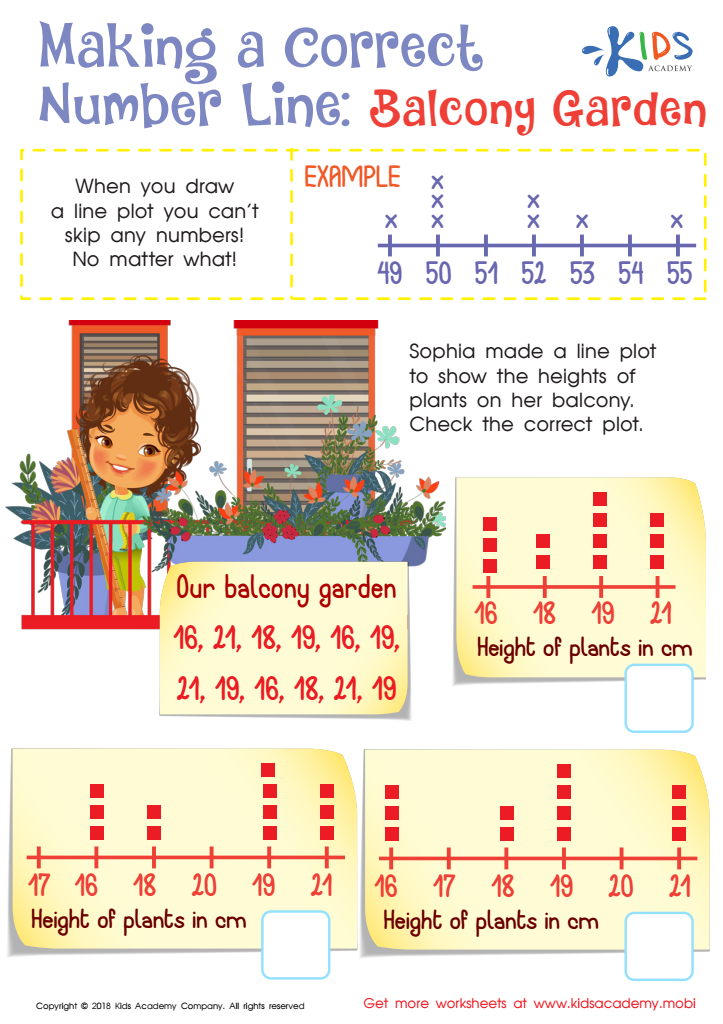
Making a Correct Number Line: Balcony Garden Worksheet
Teach your child to draw and identify a line plot with this worksheet. Have them help Sophia check her plot for the heights of plants in her balcony, ensuring no numbers are skipped. Line plots are a great way to quickly organize information and an essential skill your child needs.
 Assign to My Students
Making a Correct Number Line: Balcony Garden Worksheet
Worksheet
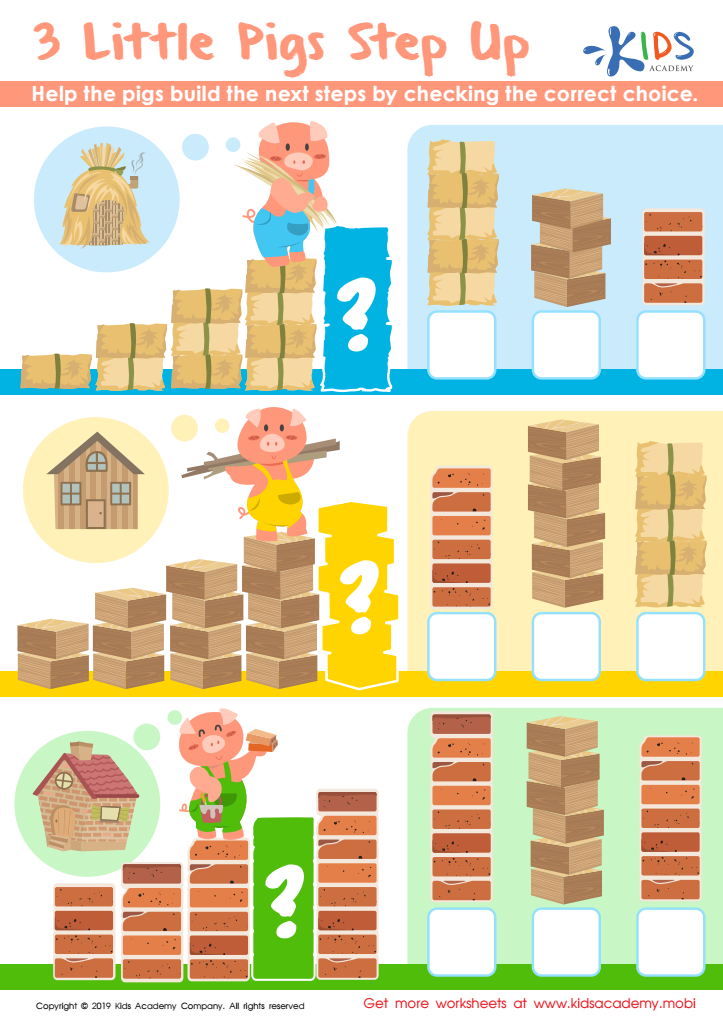
3 Little Pigs Step Up Worksheet
Test your kids' knowledge of the three little pigs' story. Ask them to tell you the important parts and then look at the pictures in this worksheet. Can they identify what's going on? They'll need to count the materials and help build the next steps by choosing the right option.
3 Little Pigs Step Up Worksheet
Worksheet
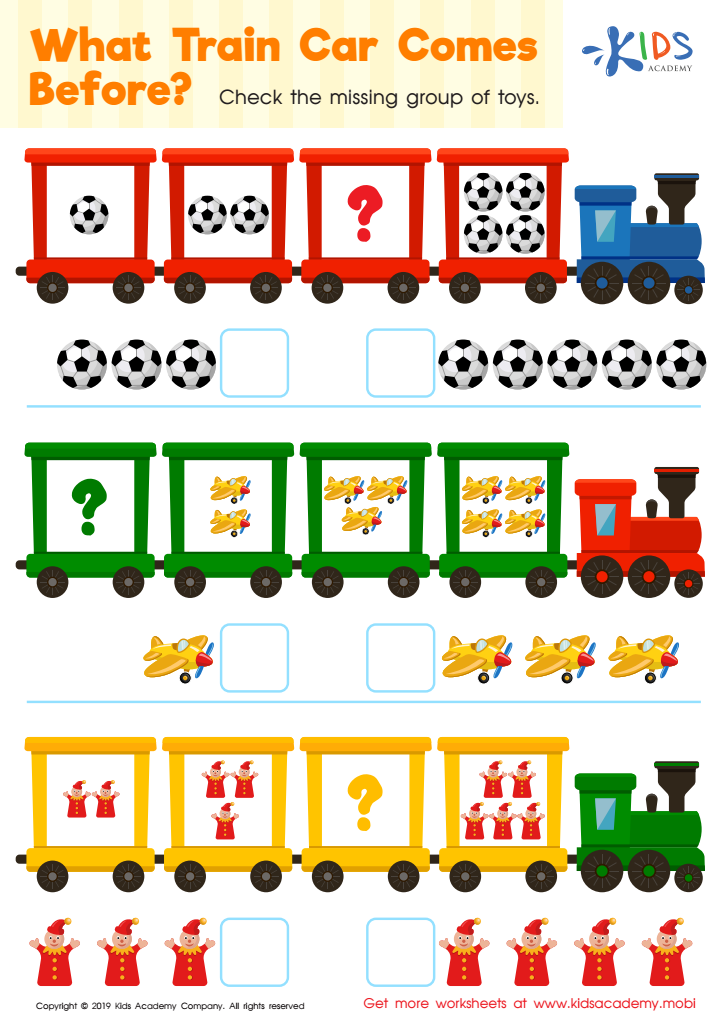
What Train Car Comes Before? Worksheet
Download this worksheet with your kids and have them identify the colorful objects pictured. Count the toys in the three trains together, then check the missing group of toys from the options provided. Have fun! (80 words)
What Train Car Comes Before? Worksheet
Worksheet
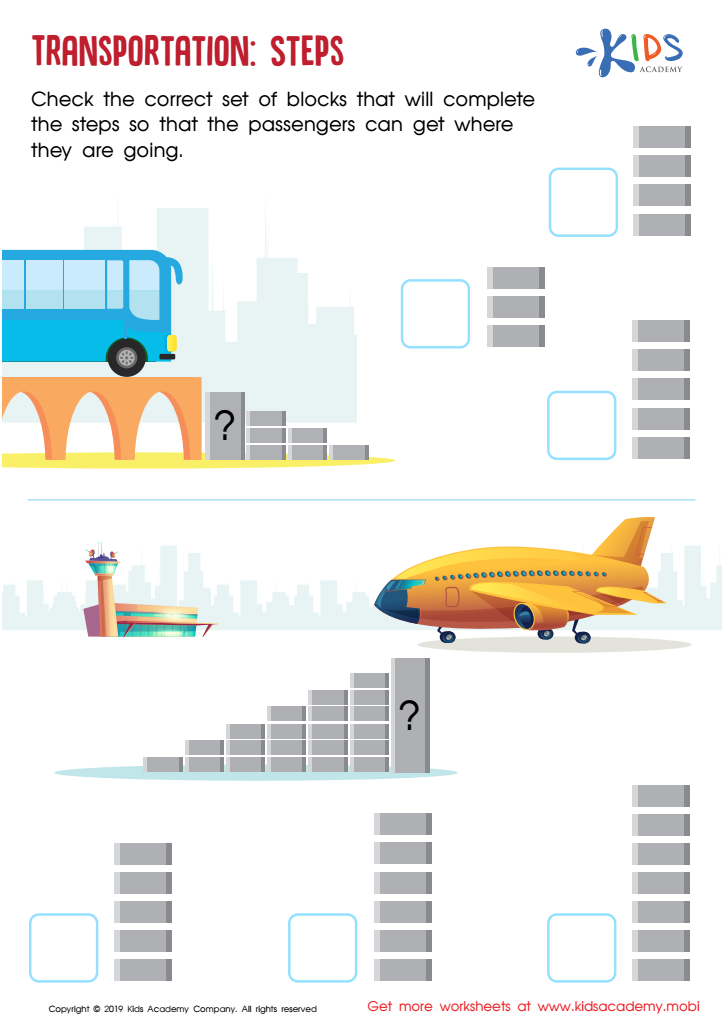
Transportation: Steps Worksheet
Trips are important to all - transportation and its modes have made travelling easier and quicker. Ask your kids to identify the transport in the picture then help them check the right blocks so passengers can reach their destination.
Transportation: Steps Worksheet
Worksheet
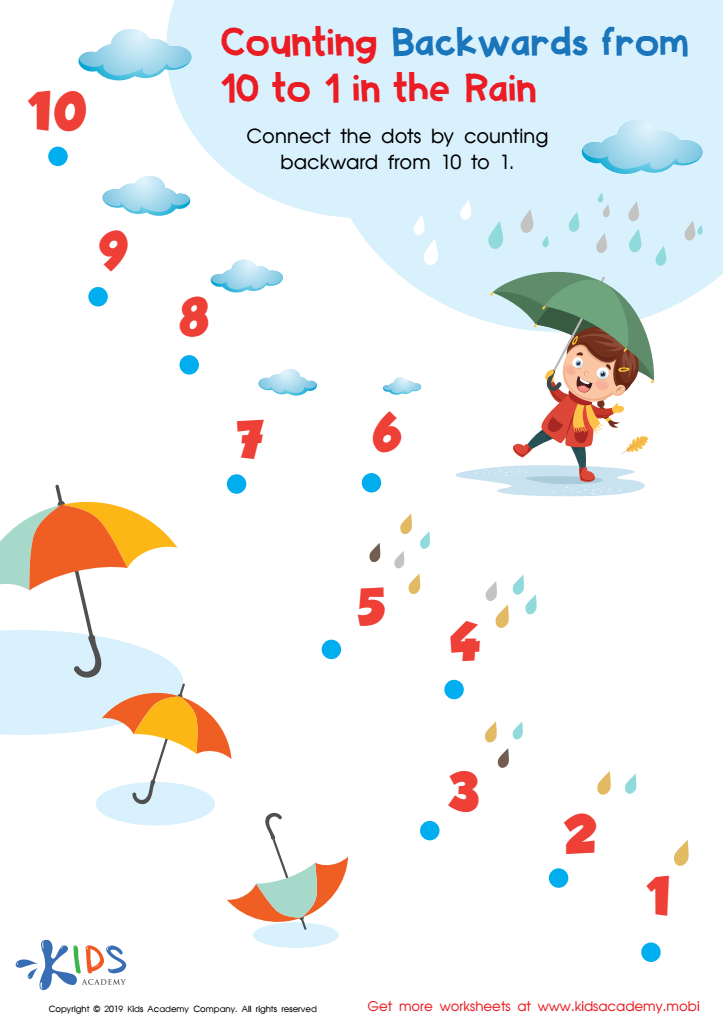
Counting Backwards from 10 to 1 in the Rain Worksheet
A rainy day can be fun - have your kids tell you their favorite activities! Then, look at the worksheet and ask them to identify the items. Count the numbers together, then help connect the dots from 10 to 1. It's an easy and fun way to spend time on a rainy day!
Counting Backwards from 10 to 1 in the Rain Worksheet
Worksheet
Join Kids Academy for Free
Who is primarily going to use this learning content?








Sequencing skills are foundational for early mathematics learning and play a pivotal role in the cognitive development of children aged 3 to 9. Developing these skills allows young learners to understand the order of events, which is essential for grasping more complex mathematical concepts later on. When children can recognize patterns and sequences, they also enhance their problem-solving abilities, as many math problems require a logical sequence of steps to arrive at the correct answer.
Parents and teachers should care about fostering sequencing skills because they are crucial not only for math but also for everyday decision-making and critical thinking. Engaging children in activities that promote these skills—such as counting, sorting, and storytelling—helps build a strong cognitive framework that supports various facets of learning. Additionally, sequencing is linked to language development, as children learn to communicate ideas in an organized manner.
By incorporating sequencing exercises into play and education, adults can empower children to become more confident in their analytical abilities, setting a strong foundation for future academic success. When children master sequencing, they are more likely to excel in mathematics and other subjects, ultimately nurturing a love for learning that will benefit them throughout their lives.








