Understanding patterns Easy Math Worksheets for Ages 3-9
6 filtered results
-
From - To
Explore our "Understanding Patterns Easy Math Worksheets" designed specifically for children ages 3-9! These engaging worksheets help young learners delve into the exciting world of patterns through fun and interactive activities. By identifying and completing patterns, children enhance their: critical thinking, cognitive skills, and mathematical foundation. Printable and convenient, these worksheets cater to various skill levels and keep learning enjoyable. Foster a love for math with delightful visuals and age-appropriate exercises that support early development. Perfect for classroom settings or home practice, our resources enable educators and parents to instill essential math concepts in a supportive environment. Start cultivating your child's pattern recognition skills today!
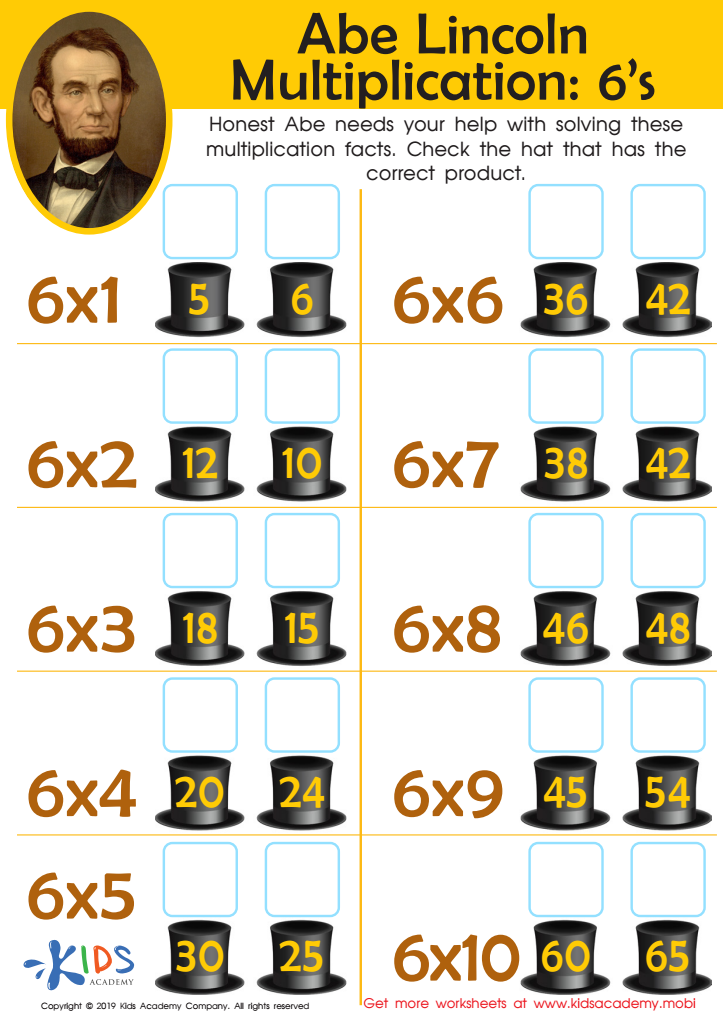
Abe Lincoln Multiplication: 6’s Worksheet
 Assign to My Students
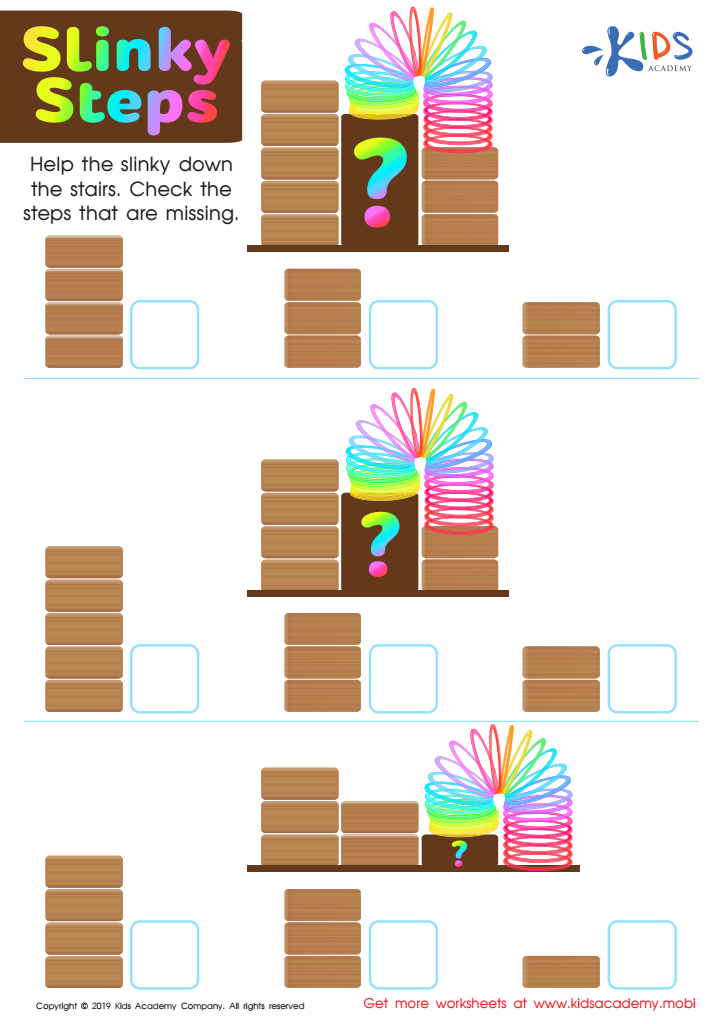
Slinky Steps Worksheet
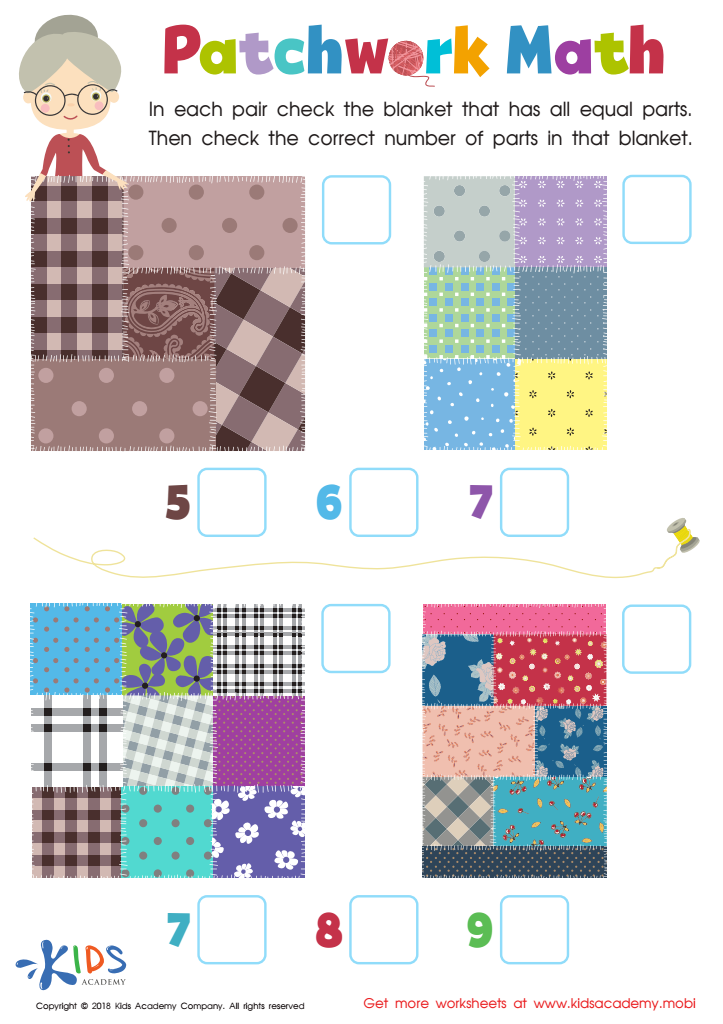
Patchwork Math Worksheet
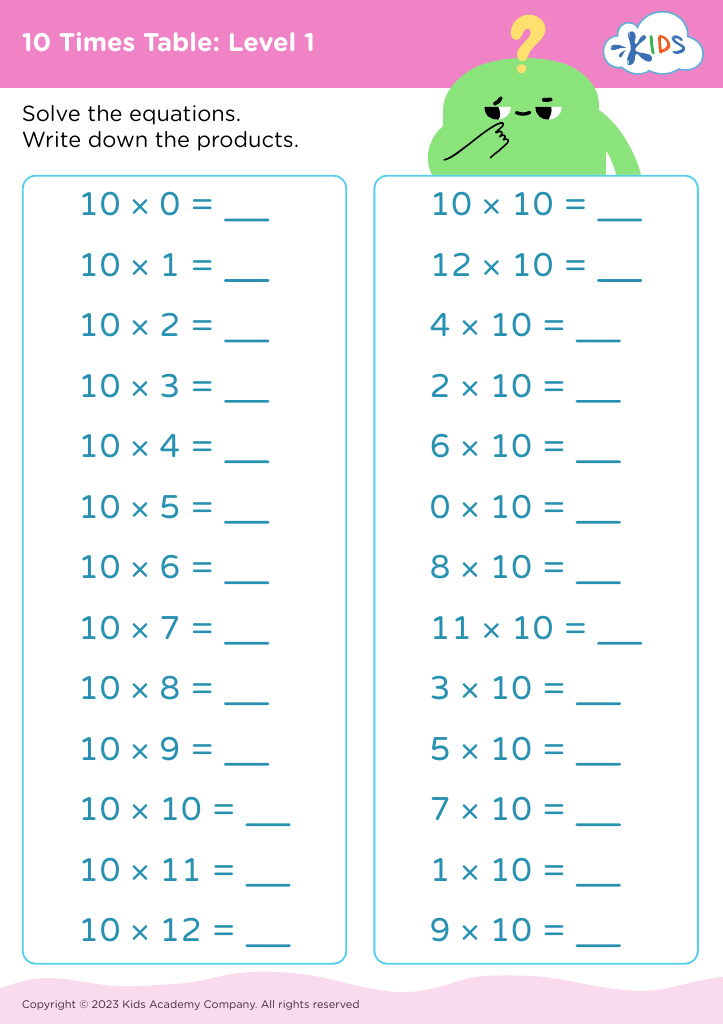
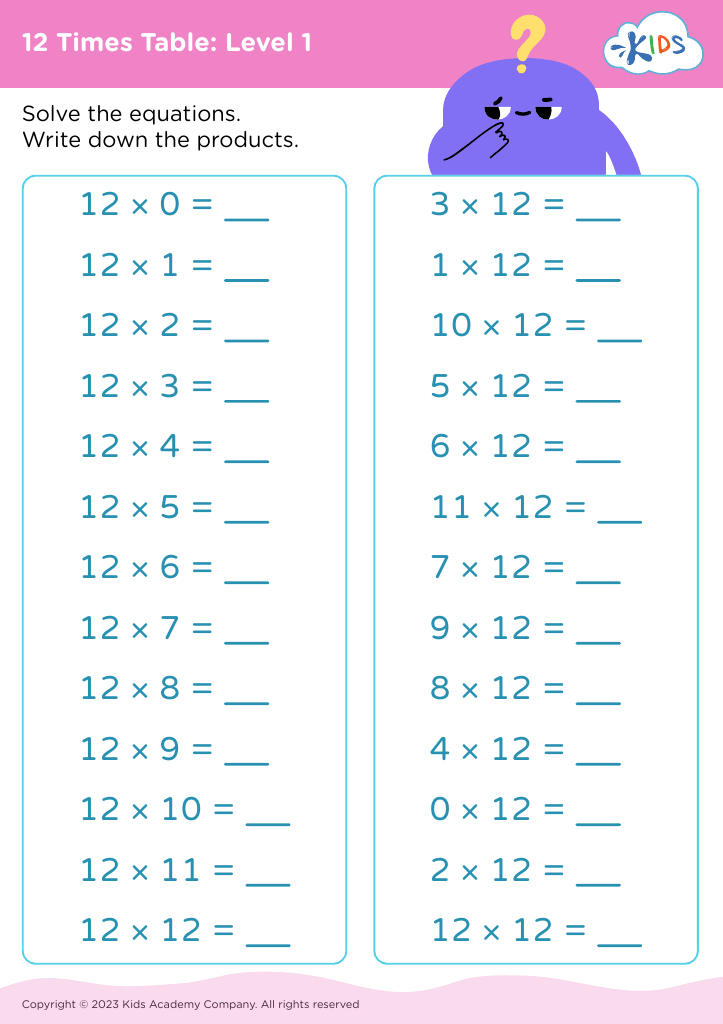
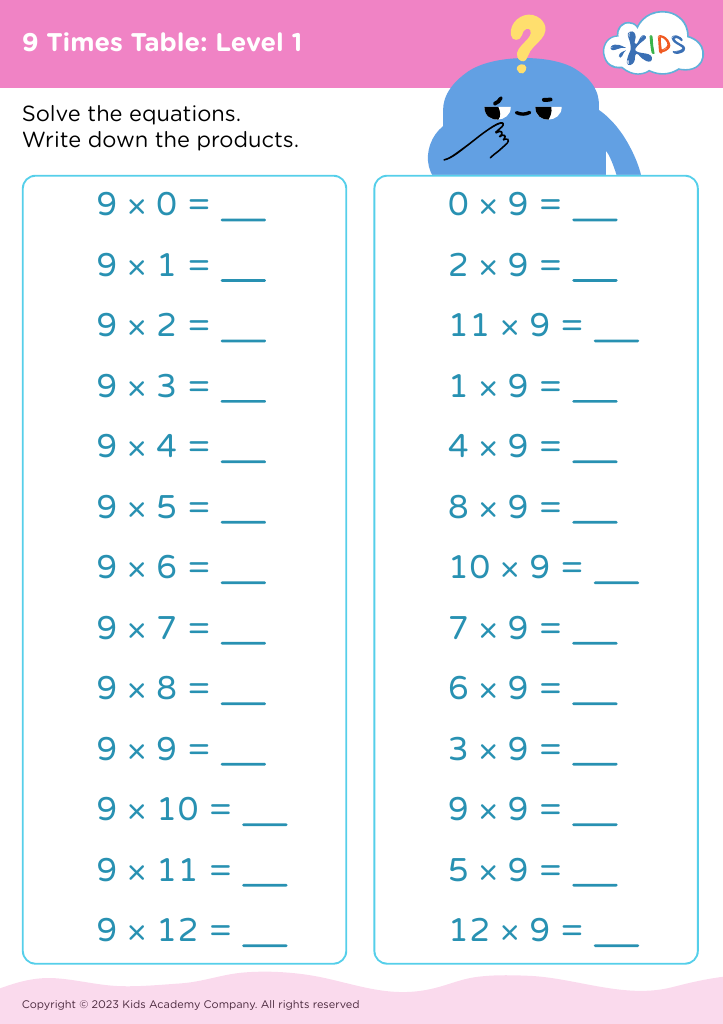








Understanding patterns is a fundamental skill that lays the groundwork for mathematical thinking in children aged 3-9. Parents and teachers should care about this subject because it nurtures critical cognitive abilities essential for problem-solving and logical reasoning. Recognizing and creating patterns helps children make sense of the world around them, enhancing their observational skills and attention to detail.
Engaging children in pattern-related activities fosters creativity and promotes cognitive flexibility, allowing them to find relationships between concepts. These early experiences with patterns help children understand more complex mathematics in later years, including addition, subtraction, and even geometry. Patterns are omnipresent in everyday life, from nature's cycles to rhythm in music. By instilling this understanding, adults help children connect mathematical concepts to real-world situations, making math more relatable and enjoyable.
Furthermore, introducing patterns at a young age boosts confidence, empowering children to tackle math challenges in the future. It also fosters a supportive learning environment where collaboration and exploration are encouraged, paving the way for children to develop a positive attitude towards learning. Therefore, investing time in teaching patterns can have long-lasting benefits for children’s academic success and overall cognitive development.








