Comparing heights Easy Measurement Worksheets for Ages 3-9
3 filtered results
-
From - To
Discover the joy of learning with our "Comparing Heights Easy Measurement Worksheets for Ages 3-9." Designed to develop early math skills, our fun and engaging worksheets help children compare and measure different heights using vibrant illustrations. Perfect for preschool to early elementary, kids will enhance their understanding of measurement concepts in an enjoyable way. Each worksheet encourages critical thinking and fosters a love for math. Ideal for parents and teachers, these printable activities support classroom lessons or fun home practice. Ignite your child’s curiosity and watch their confidence soar with our expertly crafted worksheets!
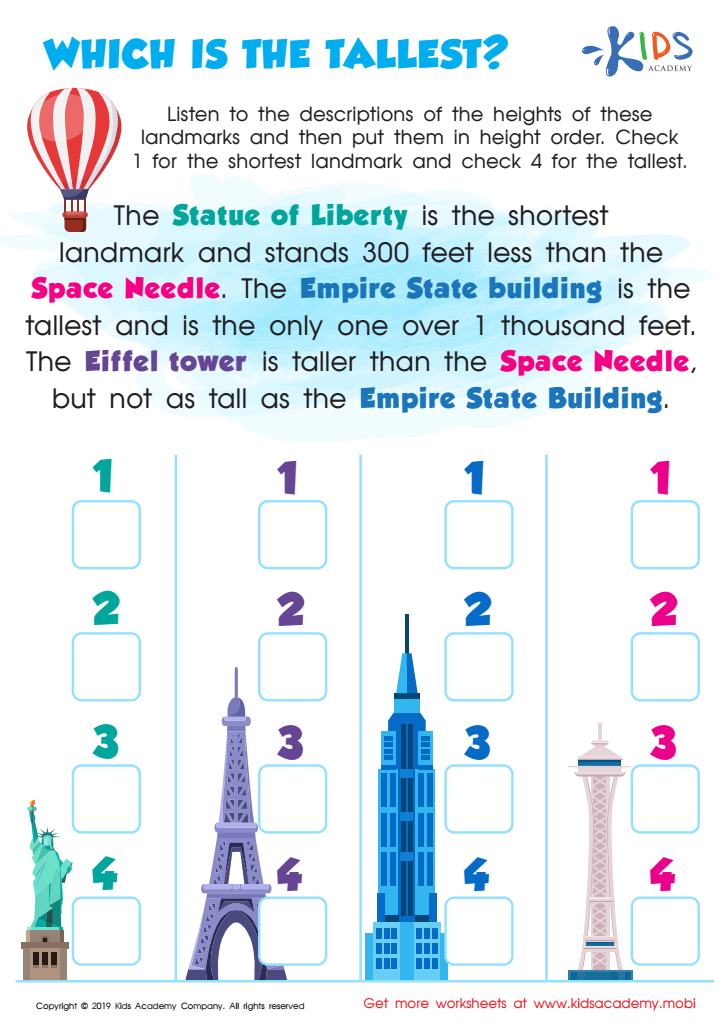
Which is the Tallest? Worksheet
 Assign to My Students
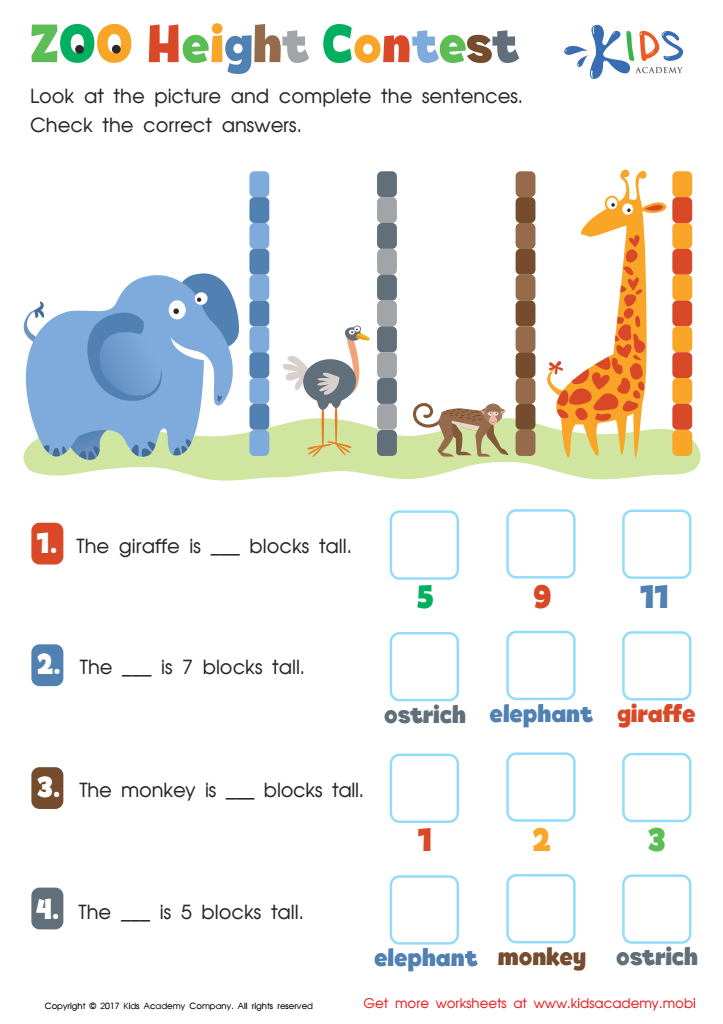
Zoo Height Contest Worksheet
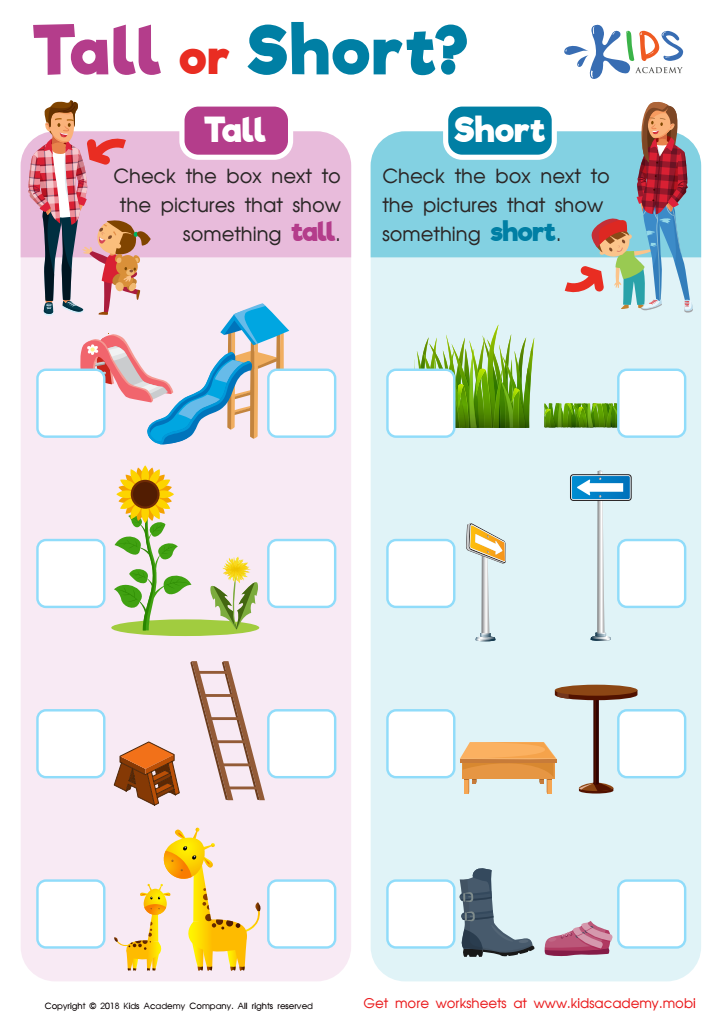
Tall or Short? Worksheet








Comparing heights is a fundamental aspect of early childhood education that parents and teachers should prioritize for several reasons. Firstly, it introduces children to the basic concepts of measurement, an essential mathematical skill. Through activities like comparing heights, children develop a concrete understanding of terms like "taller," "shorter," "tallest," and "shortest," which are foundational for more complex mathematical concepts they will encounter later.
Secondly, engaging in height comparison enhances children's observational and analytical abilities. They learn to notice and articulate differences and similarities in their environment, enhancing critical thinking skills. This also lays the groundwork for scientific inquiry and experimentation.
Moreover, such activities are highly interactive and engaging, promoting social interaction and communication among young learners. When children compare their heights with peers, they practice important social skills like taking turns, sharing observations, and collaborating.
Additionally, height comparison activities can be seamlessly integrated into play, making learning enjoyable and less intimidating for young children. Simple activities, like lining up by height or measuring with blocks, foster a positive attitude towards learning.
In essence, comparing heights is an age-appropriate, fun, and educational activity that builds foundational skills in measurement, critical thinking, social interaction, and a love for learning in young children.








