
Addition skills Easy Worksheets for 3-Year-Olds
5 filtered results
Difficulty Level
Grade
Age
-
From - To
Subject
Activity
Standards
Welcome to our Addition Skills Easy Worksheets for 3-Year-Olds! Designed for young learners, these engaging and colorful worksheets introduce the basics of addition in a fun and interactive way. Our materials encourage children to explore numbers through playful exercises, such as counting objects and completing simple addition problems. Each worksheet is crafted to boost cognitive development, enhance fine motor skills, and build confidence in early math concepts. Perfect for parents and teachers alike, these resources provide a gentle yet effective approach to help your child become comfortable with numbers. Start your child's mathematical journey today with our easy-to-use addition worksheets!
Favorites
With answer key
Interactive
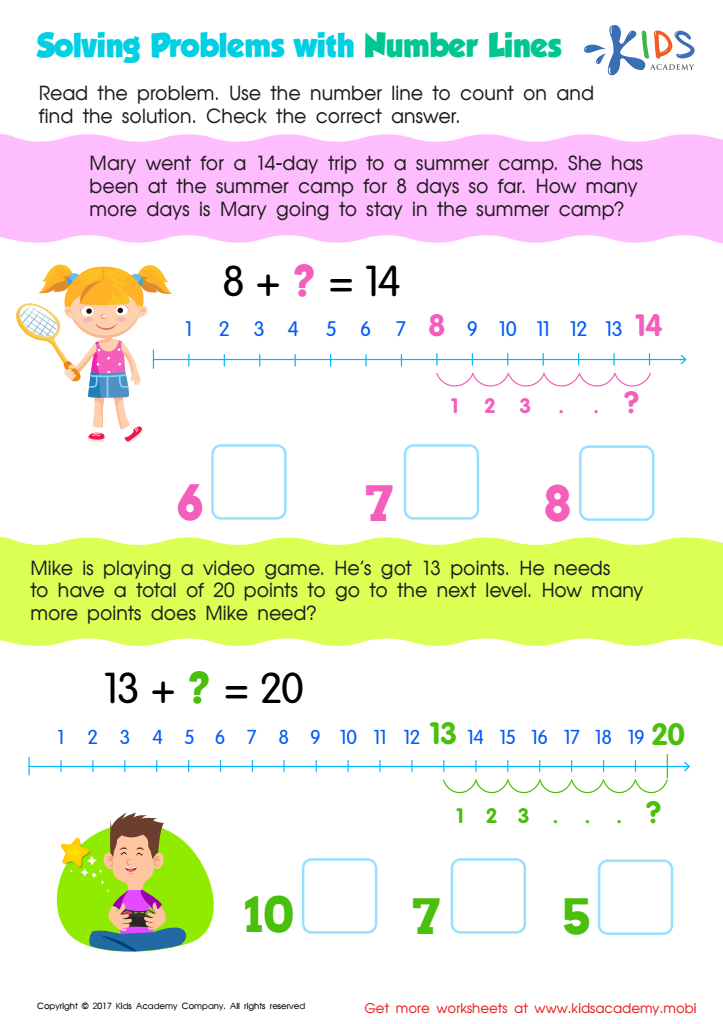
Solving Problems: Number Lines Worksheet
Number lines are fun and help build number sense and reasoning. This worksheet uses them to help students count on to find a solution to an equation. They'll have fun counting with familiar numbers and 10-bases, while also working on algebraic reasoning.
 Assign to My Students
Solving Problems: Number Lines Worksheet
Worksheet
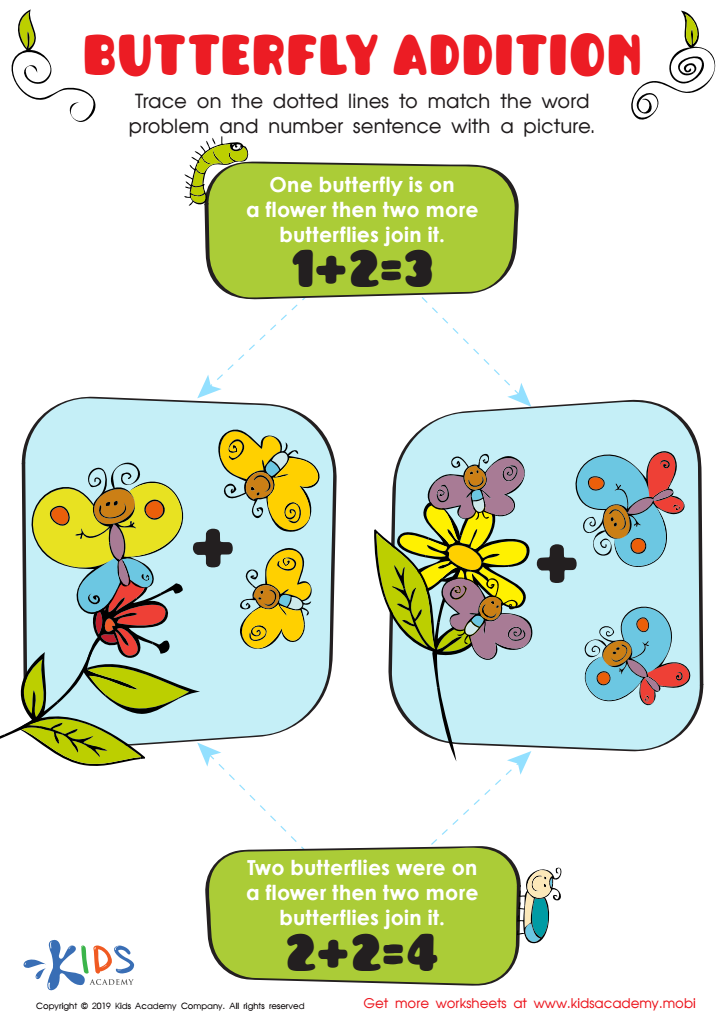
Butterfly Addition Worksheet
This tracing sheet is great for kids to work on math skills and have fun too. Read the word problems to them, then help them trace the dotted lines to match the problem and number sentence to a picture. Not only is it educational, it's beautiful too - your kids will love learning about butterflies!
Butterfly Addition Worksheet
Worksheet
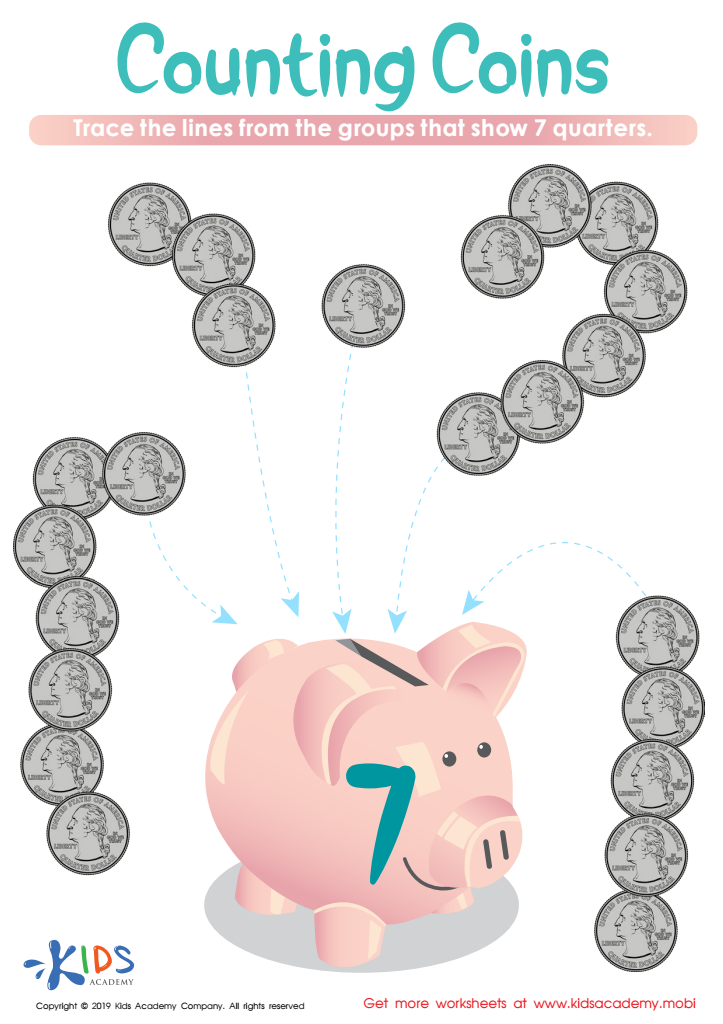
Counting Coins Worksheet
Help your students overcome their fear or aversion of counting and learning numbers with this fun worksheet! It features colorful pictures with four groups of coins. Ask the students to count each group, then trace the lines to the piggy bank. Show them it's easy to count and learn numbers!
Counting Coins Worksheet
Worksheet
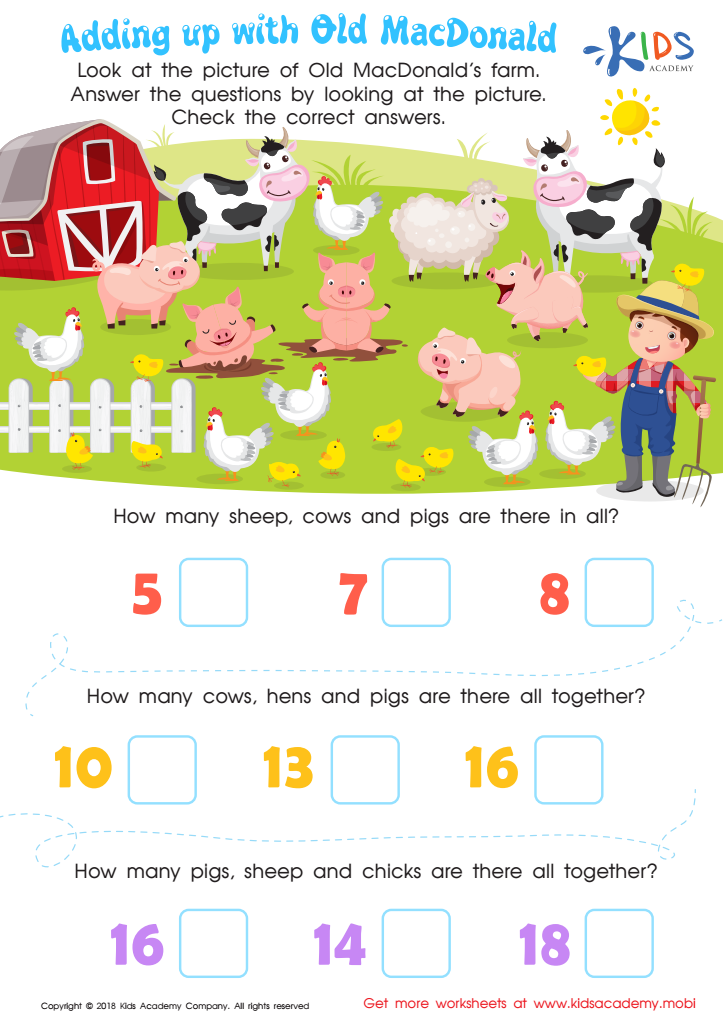
Adding Up with Old MacDonald Worksheet
Old MacDonald needs help counting his animals! Give your little math whiz a fun challenge with a free PDF worksheet. They'll love counting the animals and doing basic addition with two or three addends. Who knew math could be so much fun on the farm?
Adding Up with Old MacDonald Worksheet
Worksheet
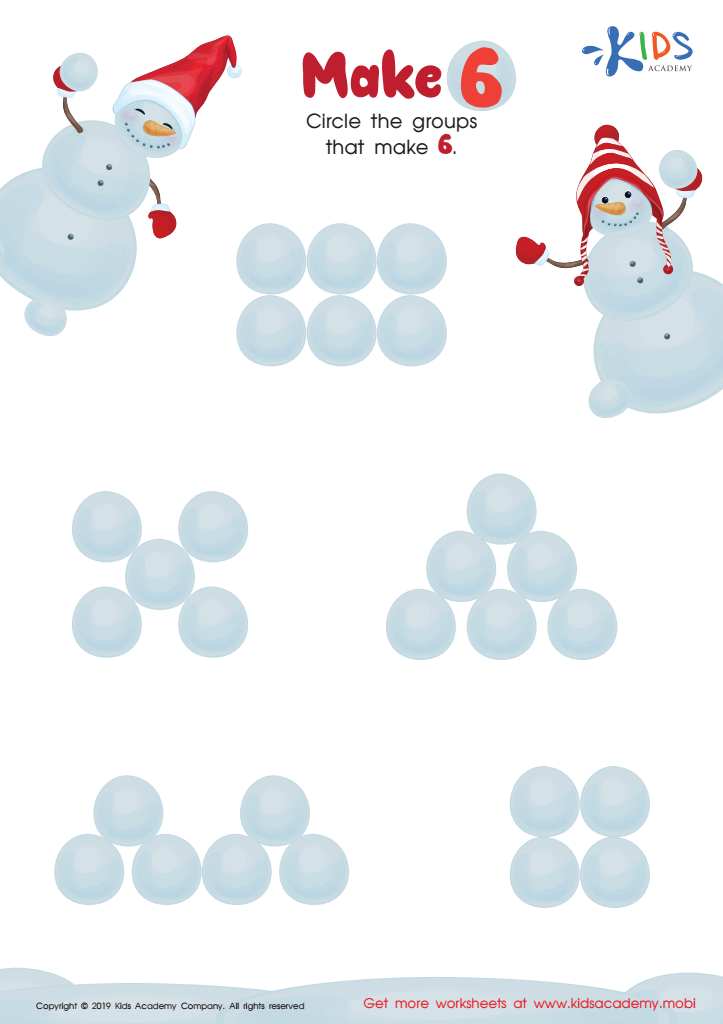
Make 6 Worksheet
Fun snowball fights are great! With lots of ammo, kids can join their snowman friends and count out groups of six. Through number sense practice, and seeing one-to-one picture representation, your child can strengthen their skills while having a blast. Don't forget to bundle up as they may ask for more!
Make 6 Worksheet
Worksheet
Join Kids Academy for Free
Who is primarily going to use this learning content?






Addition skills are essential for 3-year-olds as they build the foundation for future math learning and critical thinking. At this young age, children are naturally curious and eager to explore their world, making it an ideal time to introduce basic math concepts in an engaging way.
Learning addition helps 3-year-olds develop number sense, which includes recognizing numbers, understanding quantity, and grasping the ideas of more and less. These skills are vital for everyday activities, such as sharing toys, counting snacks, or playing games. Additionally, early exposure to addition fosters cognitive development and enhances problem-solving abilities.
Parents and teachers who encourage addition skills in a playful manner will not only motivate children to learn but will also strengthen their confidence in handling numbers. Incorporating fun activities—such as counting blocks, singing songs, or using visual aids—makes learning enjoyable and relatable.
Lastly, a supportive environment at home and school paves the way for positive attitudes toward math, reducing anxiety related to mathematics in later years. By prioritizing addition skills early on, parents and teachers can lay the groundwork for lifelong learning and achievement in mathematics.








