Object identification Easy Worksheets for 3-Year-Olds
3 filtered results
-
From - To
Discover the perfect learning tool for your toddler with our "Object Identification Easy Worksheets for 3-Year-Olds" at Kids Academy. These engaging printables are designed to develop your child's early learning skills by helping them recognize and identify various objects. Each colorful and fun worksheet emphasizes visual perception and vocabulary growth, making learning interactive and enjoyable. Suitable for both parents and teachers, our worksheets foster confidence and curiosity in young learners, laying a strong foundation for future academic success. Explore our collection today to enrich your child's educational journey in a playful and effective way.
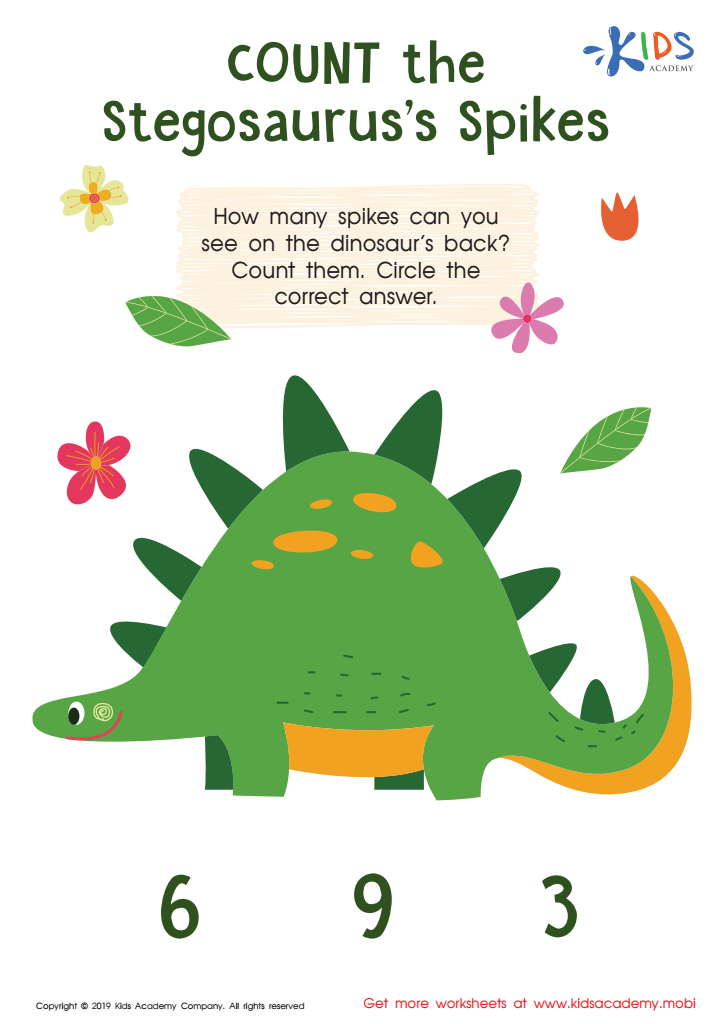
Count the Stegosaurus's Spikes Worksheet
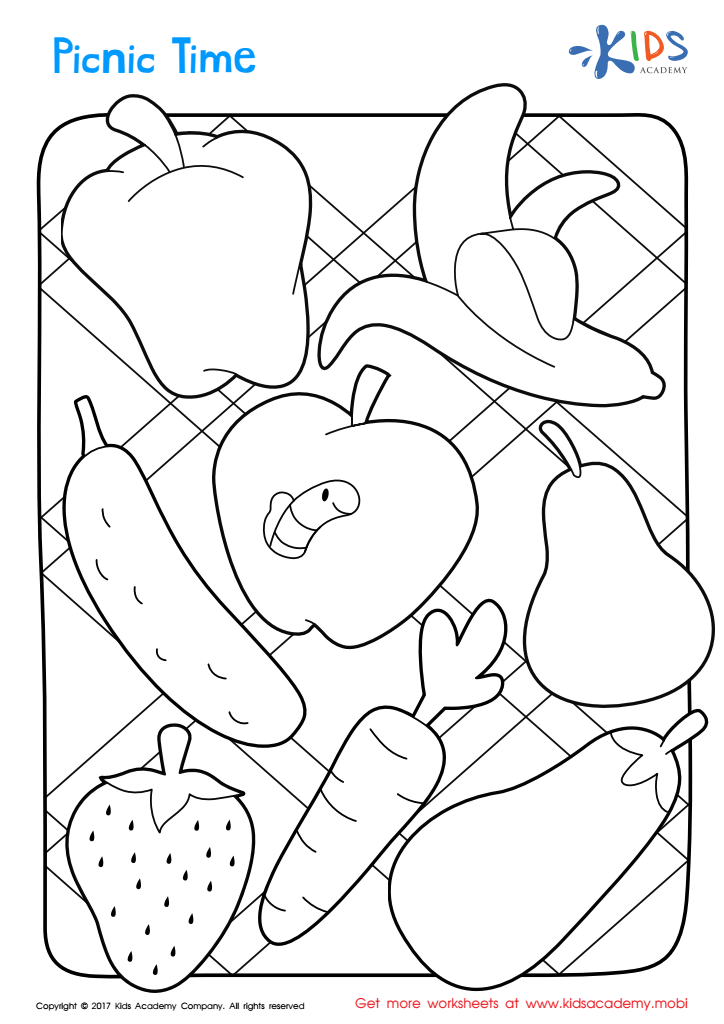
Picnic Time Coloring Page
 Assign to My Students
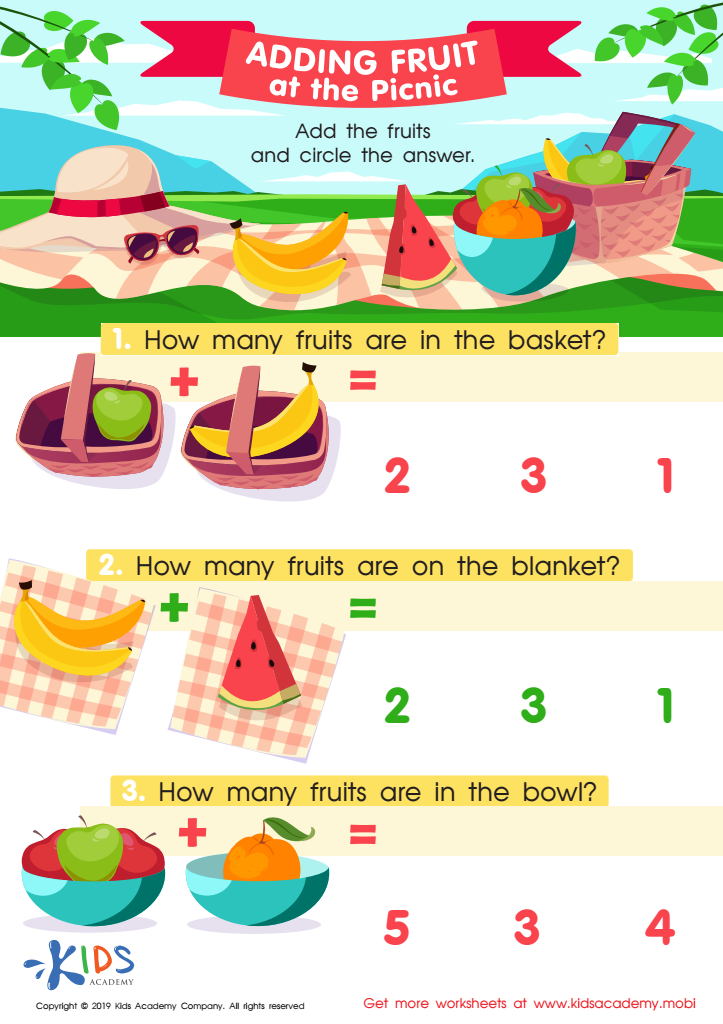
Adding Fruit at the Picnic Worksheet




.jpg)


Object identification is a crucial skill for 3-year-olds, and both parents and teachers should prioritize it because it lays the foundation for a host of other cognitive abilities. At this age, children are just beginning to explore and understand their environment, and learning to identify and name objects supports their language development. Proper object identification enables children to expand their vocabulary, enhancing their communication skills and giving them the tools to express their needs, thoughts, and experiences.
Additionally, the ability to identify objects promotes cognitive development by aiding in the formation of categorization skills. As children learn to recognize objects, they start to group them based on common attributes such as color, shape, or function. This early understanding of categorization is essential for problem-solving, critical thinking, and further learning in subjects like math and science.
Moreover, object identification supports social and emotional development. When children can accurately name and understand the items in their world, they feel more secure and confident. This competency also facilitates social interactions, as children can effectively communicate with peers and adults, thereby fostering more meaningful relationships.
In summary, parents and teachers should invest in teaching object identification at an early age to bolster language skills, cognitive development, and social-emotional well-being, setting the stage for future academic and personal successes.








