Spelling practice Easy Worksheets for 3-Year-Olds
6 filtered results
-
From - To
Introduce three-year-olds to the basics of spelling with our fun and engaging Spelling Practice Easy Worksheets. Designed specifically for young learners, our worksheets feature simple and colorful exercises that help kids recognize letters and form basic words. Through a variety of activities like tracing, matching, and coloring, children develop essential literacy skills in an enjoyable and interactive way. Perfect for early childhood educators and parents, these worksheets provide a solid foundation for spelling and language development. Make learning a delightful experience and boost your child's confidence with our carefully crafted spelling practice resources!
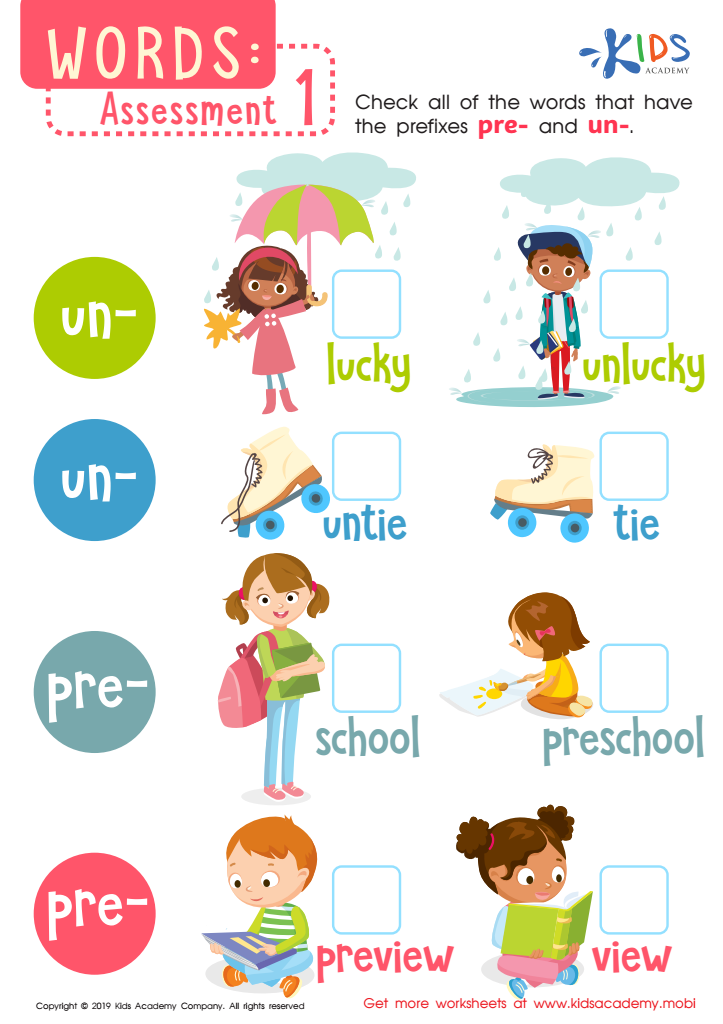
Words: Assessment 1 Worksheet
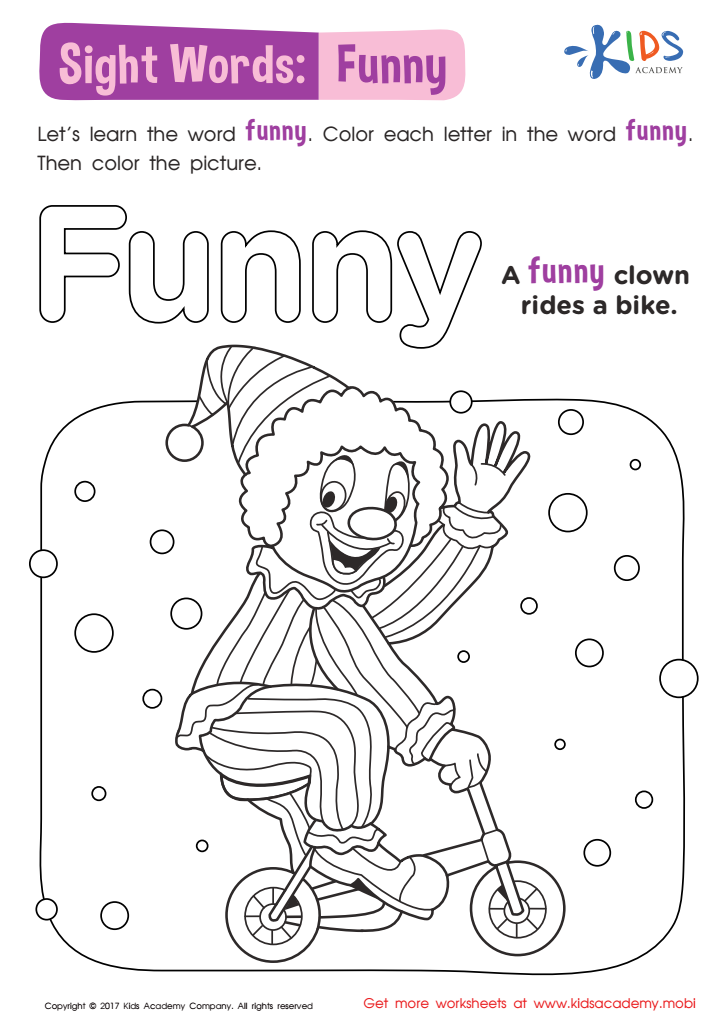
Funny Worksheet Sight Words Worksheet
 Assign to My Students
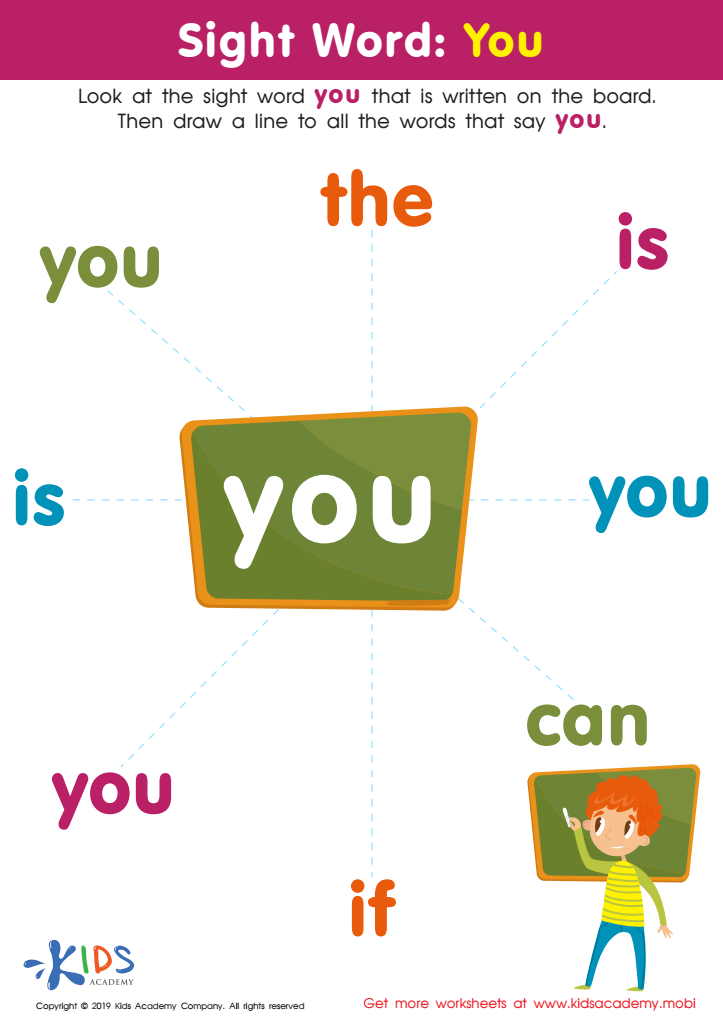
Sight Word You Worksheet
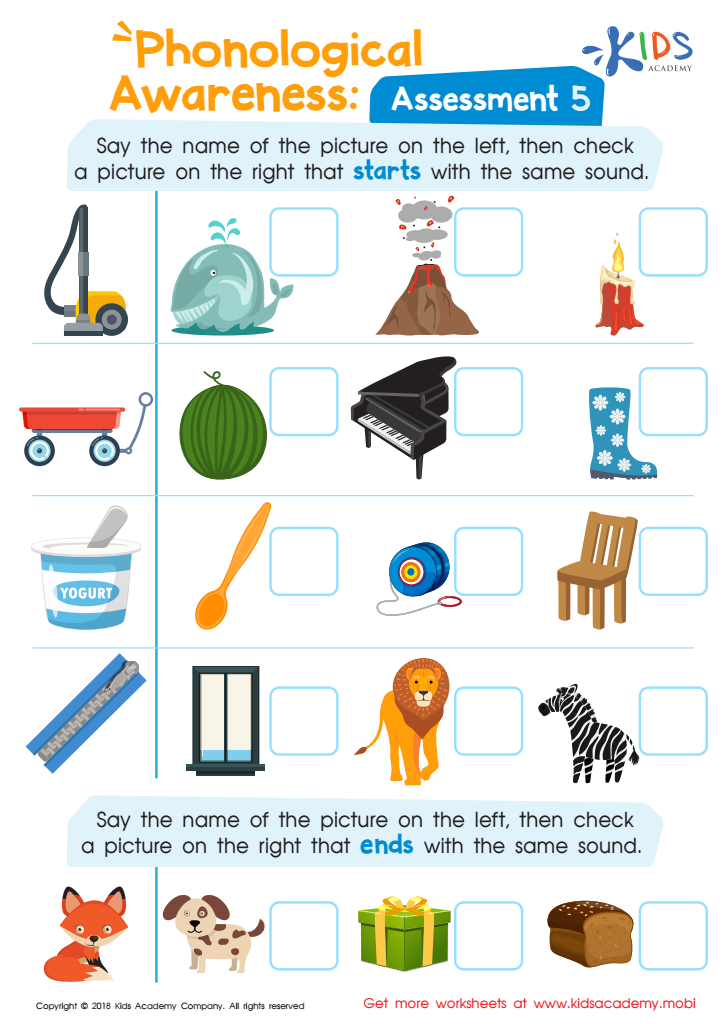
Phonological Awareness: Assessment 5 Worksheet
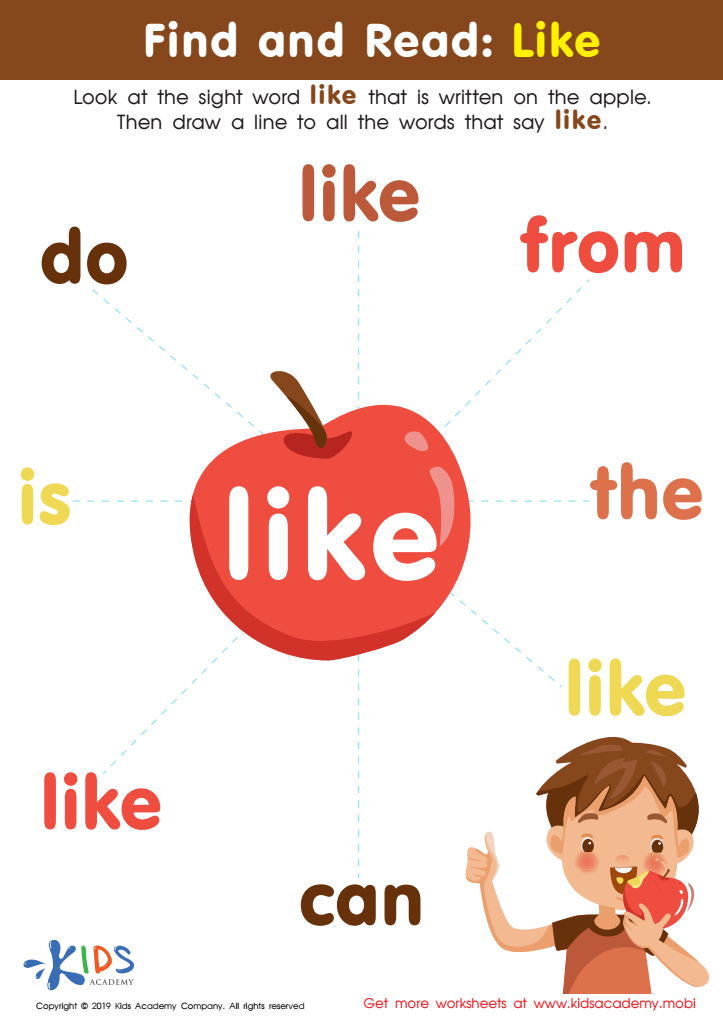
Find and Read: Like Worksheet
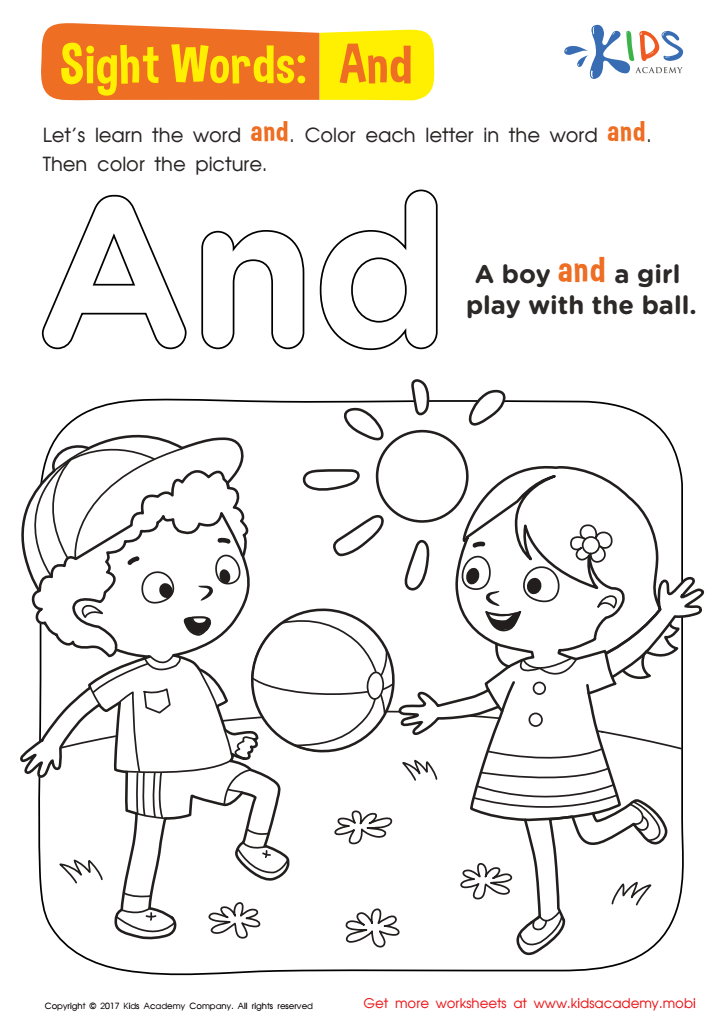
And Worksheet Sight Words Worksheet
Assign to My Students


%20(1).jpg)





Spelling practice is essential for 3-year-olds as it lays a critical foundation for their future literacy and learning skills. At this age, children are in a prime developmental stage where their brains are highly receptive to new information, making it an ideal time to introduce basic literacy skills.
For parents and teachers, prioritizing spelling practice can greatly enhance a child's language abilities. Engaging activities such as identifying and sounding out simple words, working with alphabet puzzles, and reading colorful picture books can make learning enjoyable and effective. These practices help children understand the relationship between letters and sounds, promoting phonemic awareness—an essential skill for reading proficiency.
Moreover, spelling practice supports fine motor skills development as children learn to write letters and words. It also boosts cognitive skills by encouraging memory retention, attention to detail, and pattern recognition. Early literacy experiences foster confidence in young learners, leading to a stronger motivation for learning and a positive attitude towards education.
Cultivating these skills at an early age equips children with a solid grasp of language, preparing them for more complex reading and writing tasks in the future. Consequently, parents and teachers should care deeply about integrating easy and fun spelling exercises into the daily routine of 3-year-olds.








