Introducing our "Counting Skills Easy Addition Worksheets for 3-Year-Olds," designed to spark a love for math from an early age! These engaging and colorful worksheets help young learners grasp basic counting and simple addition concepts through fun, interactive activities. Tailored for preschoolers, each worksheet encourages practicing numbers and counting objects, paving the way for a solid math foundation. With easy-to-follow instructions and appealing visuals, these resources promote independent learning while enhancing fine motor skills. Perfect for homeschooling or classroom use, our worksheets make learning math a delightful experience for your little ones. Start their counting adventure today!

Check out this FREE Trial Lesson on Addition for age 3!

Writing Number Sentences for Addition Story Problems

Favorites
With answer key
Interactive
  • 3
  • Counting skills
  • Addition
  • Easy
Cookie Addition Worksheet

Cookie Addition Worksheet

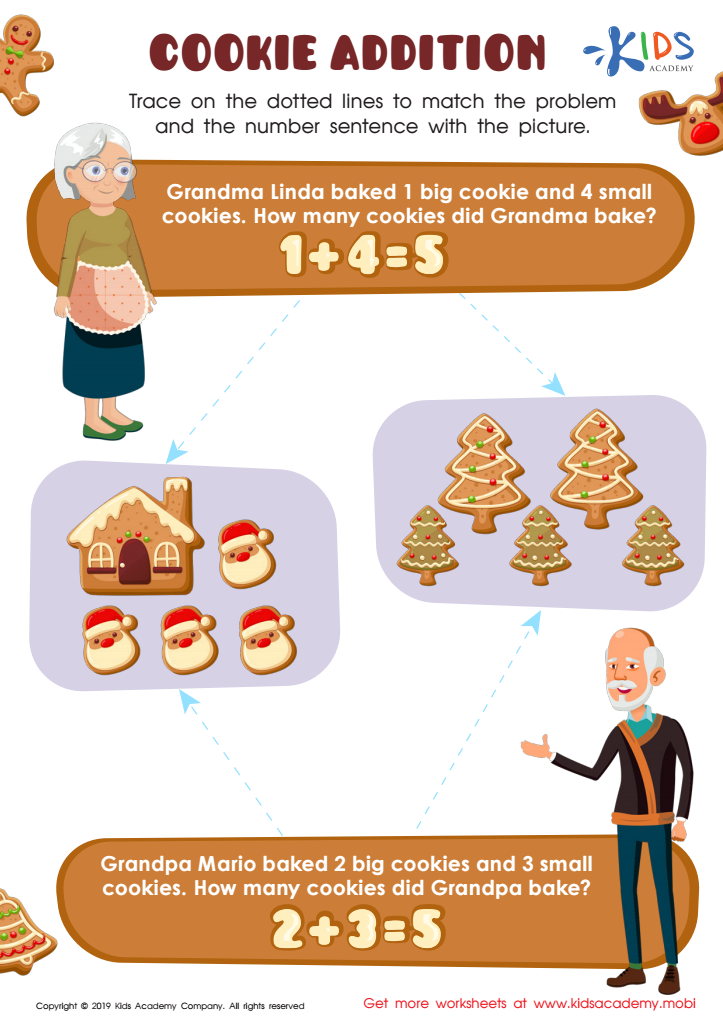
Let your kids have fun identifying pictures in their worksheet. Read word sentences to them and help them turn them into number problems. Then, get them to trace the lines to match the problem and the number sentence with the picture. They’ll love it, especially if they love cookies!
Cookie Addition Worksheet
Worksheet
Butterfly Addition Worksheet

Butterfly Addition Worksheet

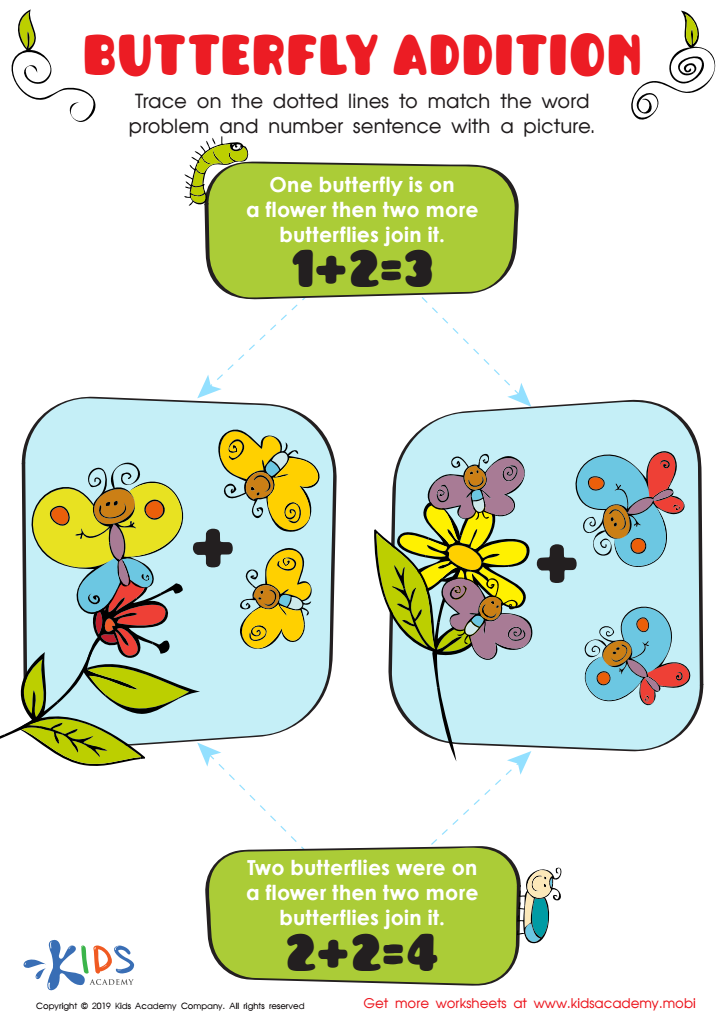
This tracing sheet is great for kids to work on math skills and have fun too. Read the word problems to them, then help them trace the dotted lines to match the problem and number sentence to a picture. Not only is it educational, it's beautiful too - your kids will love learning about butterflies!
Butterfly Addition Worksheet
Worksheet
Counting Seedlings Worksheet

Counting Seedlings Worksheet

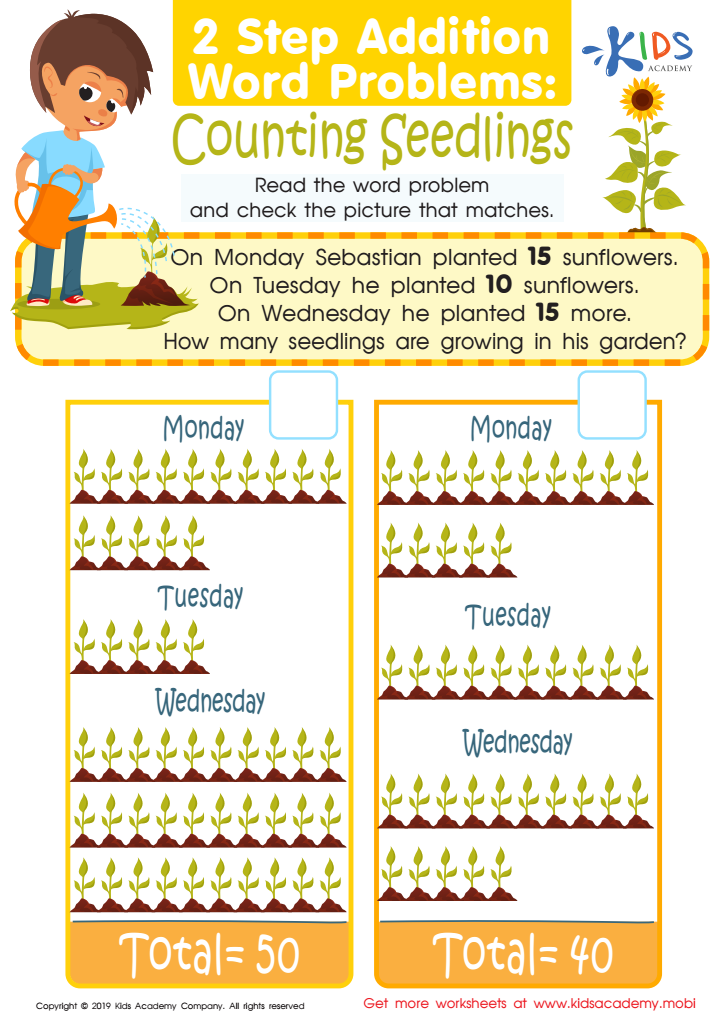
Understanding math word problems is key. Multiple steps can prove challenging - this free worksheet provides one-to-one picture representation to help kids solve multi-step addition word problems. Strengthen addition skills by choosing the matching picture to the answer.
Counting Seedlings Worksheet
Worksheet
Addition at the Zoo Worksheet

Addition at the Zoo Worksheet

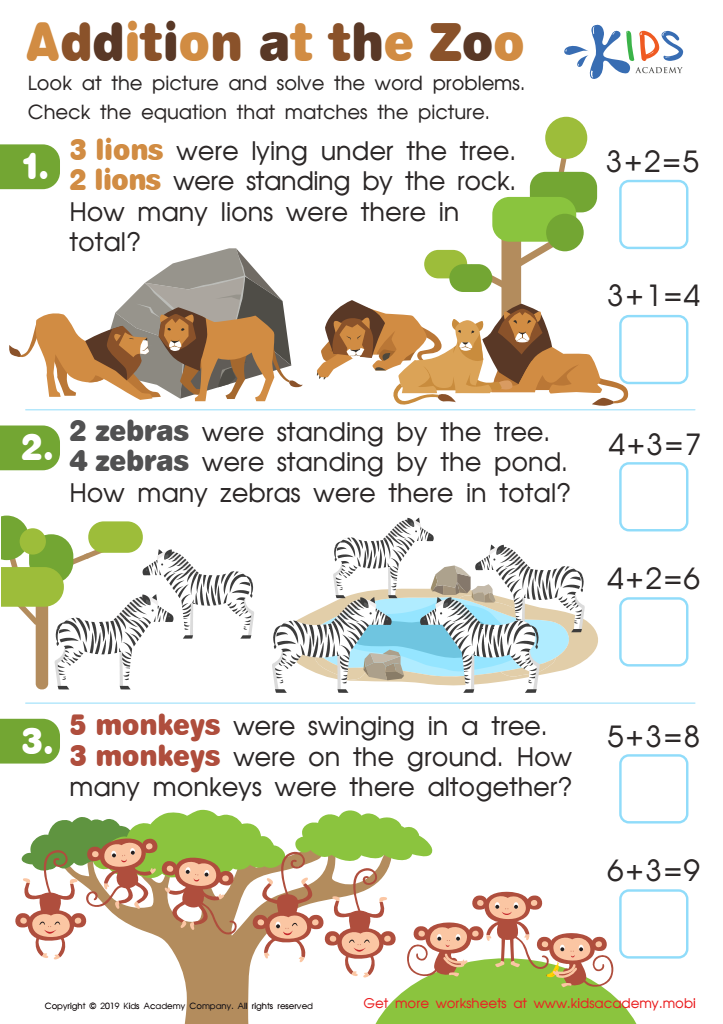
Visit the zoo with your kids and point out all the different animals. Ask them to name their favorites and identify animals on a worksheet. Challenge them to solve word problems related to the pictures. Ask them for the equation that fits the picture and check the answer.
Addition at the Zoo Worksheet
Worksheet
Adding in the Arctic Worksheet

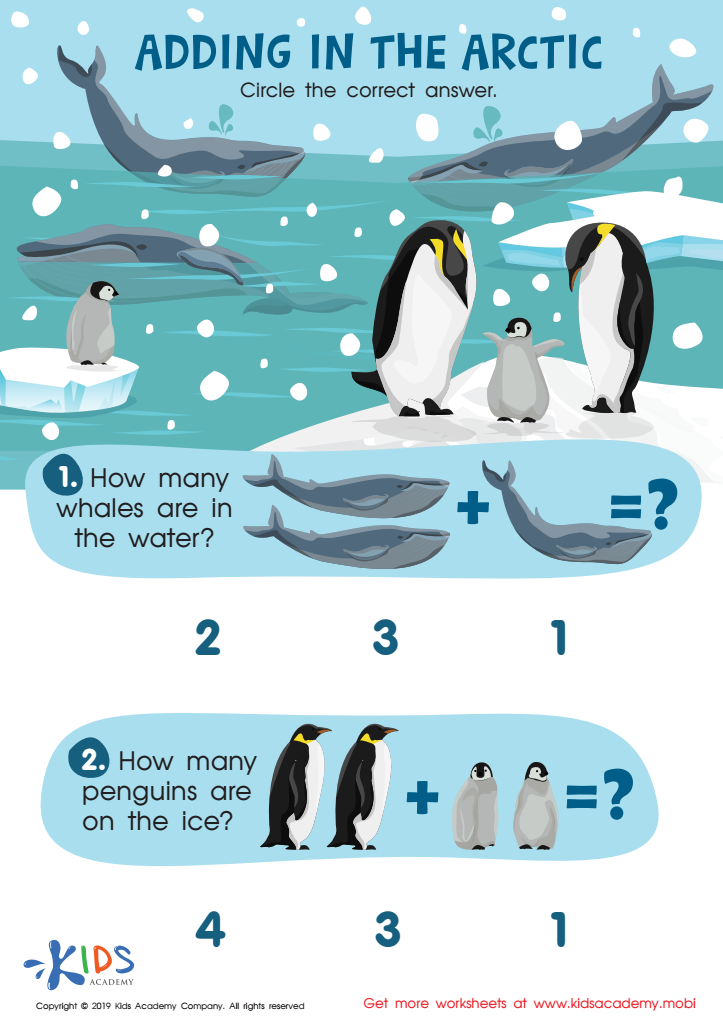
Adding in the Arctic Worksheet

Introduce your kids to the Arctic with this worksheet. Let them look at the pictures, teach them the name of the animals, and help them add up the correct number. Ask your kids to tell you some of the animals found there and what the weather is like. It's a fun and educational way to learn more about the Arctic.
Adding in the Arctic Worksheet
Worksheet
Adding Fruit at the Picnic Worksheet


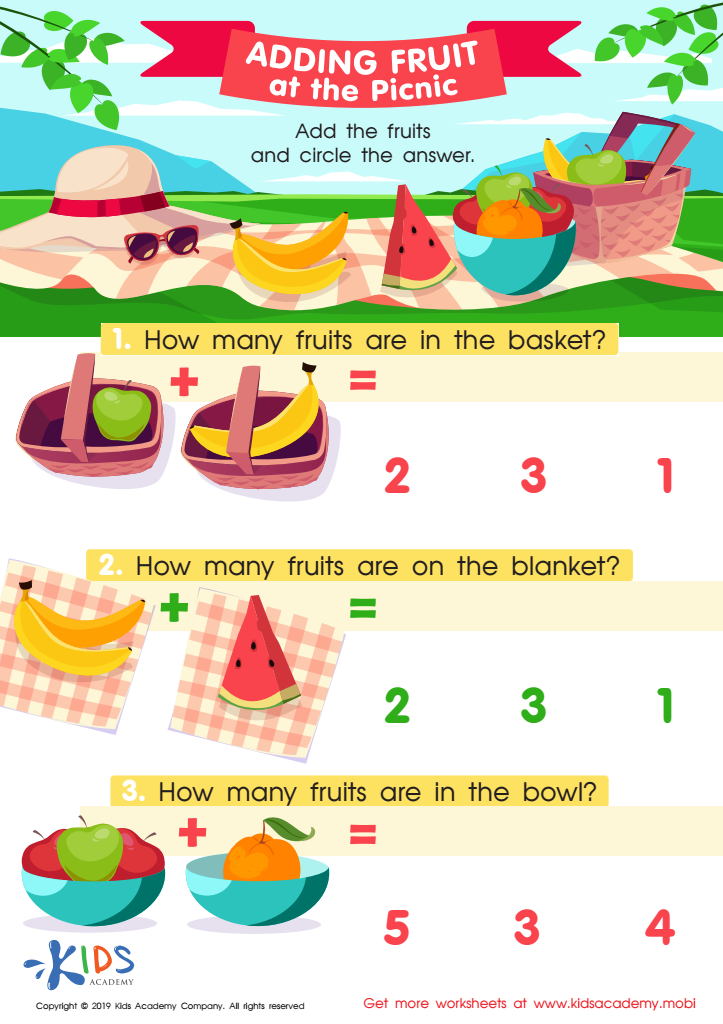
Adding Fruit at the Picnic Worksheet

Picnics are a great way for the family to enjoy a fun day in the sun! Get your kids involved by having them help load the picnic basket and do this worksheet to practice their math skills while they get ready. Identify the fruits in the picture, add them up, and circle the correct answer.
Adding Fruit at the Picnic Worksheet

Worksheet


Counting skills and easy addition are crucial for 3-year-olds as they form the foundational building blocks for more complex math concepts in later years. Developing these skills early helps enhance a child's cognitive abilities, reinforcing not just numeracy but also critical thinking. When children learn to count and engage in simple addition, they begin to understand the relationships between numbers, laying the groundwork for problem-solving and logic.

For parents and teachers, nurturing counting and addition skills can also significantly influence a child’s confidence and self-esteem. Mastering these basic concepts encourages a sense of accomplishment in young learners, making them more eager to tackle new challenges. Social interactions can also benefit as counting games can promote cooperative play, allowing children to learn turn-taking and patience.

Moreover, early engagement with numbers enhances language skills, as children learn to express themselves in measurable terms. Whether through fun activities like counting snacks, playing with blocks, or using educational games, it becomes a dynamic and enjoyable learning process. Ultimately, prioritizing these skills means giving children the tools they need for academic success and fostering a lifelong love of learning.