Welcome to our Spelling Practice Easy Alphabet Worksheets, designed specifically for children ages 4-5! These engaging worksheets provide young learners with exciting activities to develop their spelling skills while familiarizing themselves with the alphabet. Each worksheet features vibrant illustrations and fun exercises that encourage children to identify letters, trace words, and complete simple spelling tasks. Our resources are ideal for both classroom and home use, ensuring that early learners build a solid foundation in literacy. Watch as your child’s confidence and skills grow through interactive play. Start their spelling journey today with our easy and effective worksheets!

Check out this FREE Trial Lesson on Alphabet for age 4-5!

Form Regular Plural Nouns

Favorites
With answer key
Interactive
  • 4-5
  • Spelling practice
  • Alphabet
  • Easy
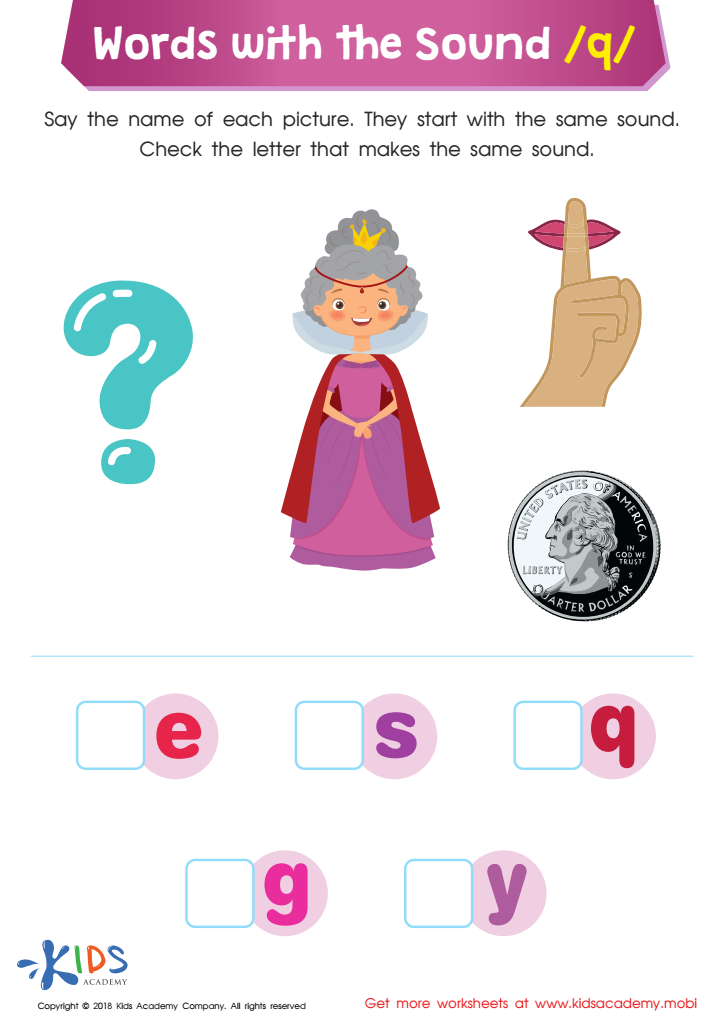
Words with Sound Q Reading Worksheet

Words with Sound Q Reading Worksheet

Beginning readers will love this free PDF worksheet! Bright colors and familiar pictures make it fun, as they say the name of each image and work on fine motor skills. Letters “q” is featured among others, helping to recognize and isolate its sound, which is often seen with a “u” behind it.
Words with Sound Q Reading Worksheet
Worksheet
Words with Sound L Reading Worksheet

Words with Sound L Reading Worksheet

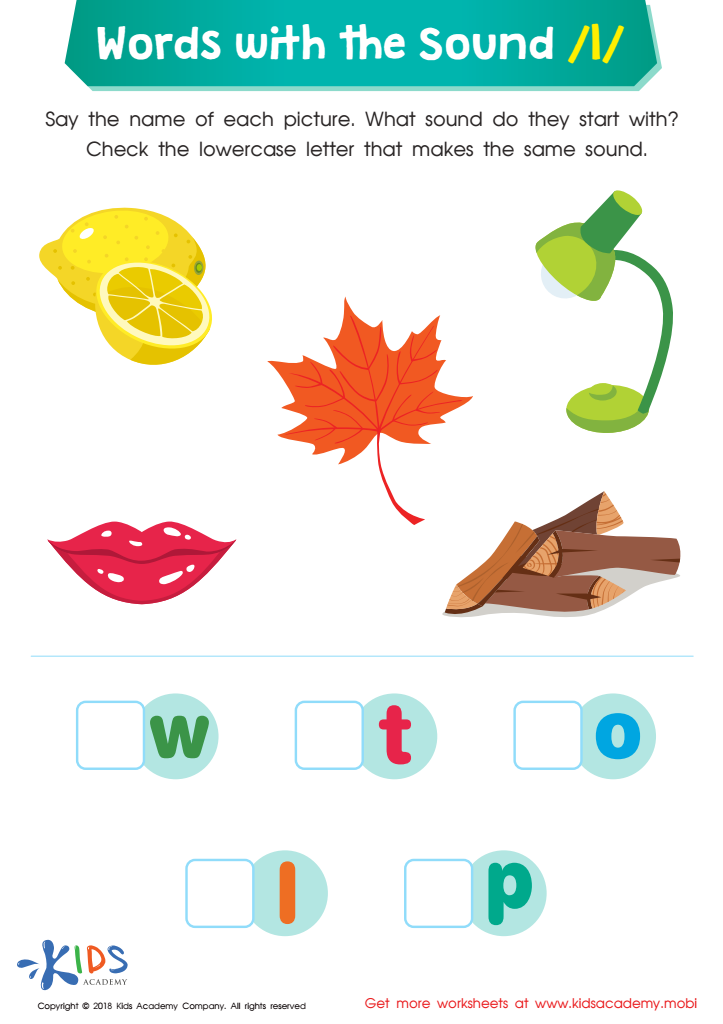
This PDF worksheet is great for helping emerging readers isolate initial sounds. Kids name familiar pictures, then identify the correct letter for the "l" sound. This worksheet strengthens fine motor skills, plus builds visual discernment. It's fun and colorful too!
Words with Sound L Reading Worksheet
Worksheet
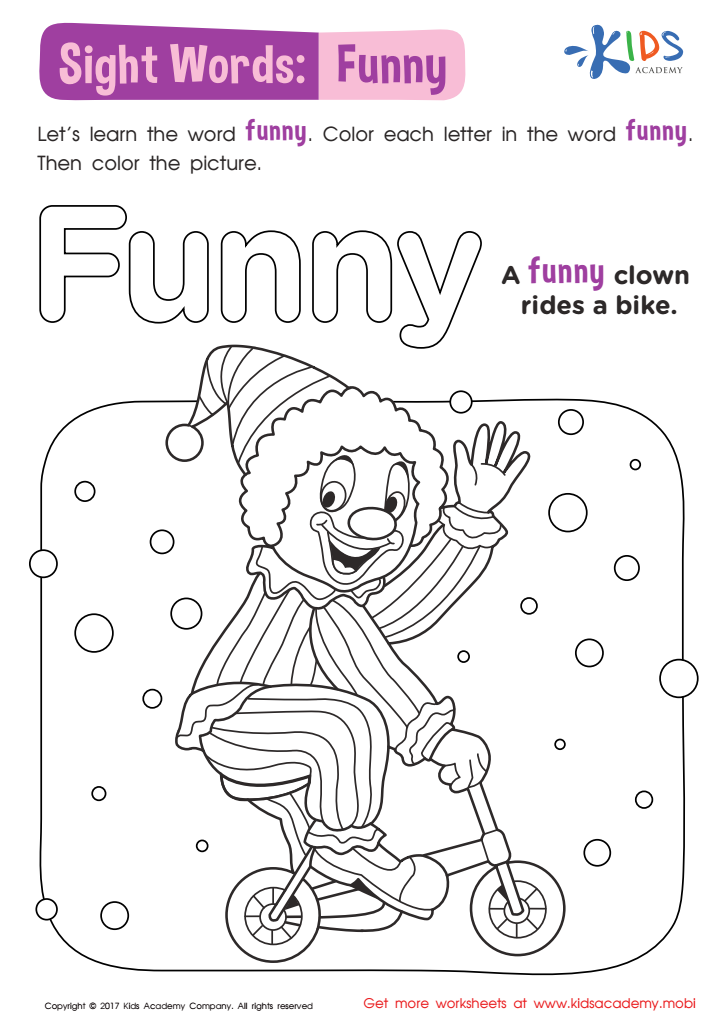
Funny Worksheet Sight Words Worksheet

Funny Worksheet Sight Words Worksheet

Love humor? Introduce "funny" as a sight word with this fun worksheet! Have your child read the sentence then color the word in the center. Let them use their imagination to color the silly clown in any way they like!
Download (PDF)
Assign to My Students
Funny Worksheet Sight Words Worksheet
Worksheet
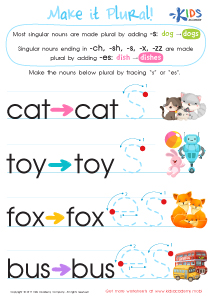
Make it Plural Worksheet

Make it Plural Worksheet

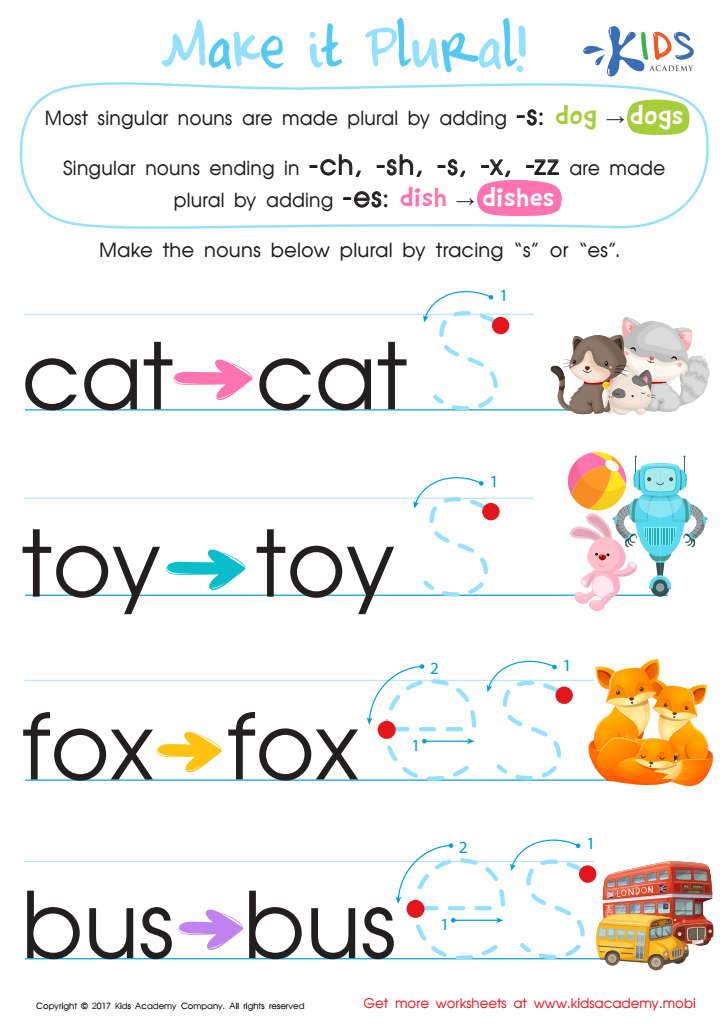
Changing words from singular to plural can be tricky as there are many word endings with special rules. Most words just need an -s, while endings like -ch, -sh, -s, -x or -zz need -es. This worksheet helps kids read words and trace the correct ending for each, making it easier to master these rules!
Make it Plural Worksheet
Worksheet
Phonological Awareness: Assessment 5 Worksheet

Phonological Awareness: Assessment 5 Worksheet

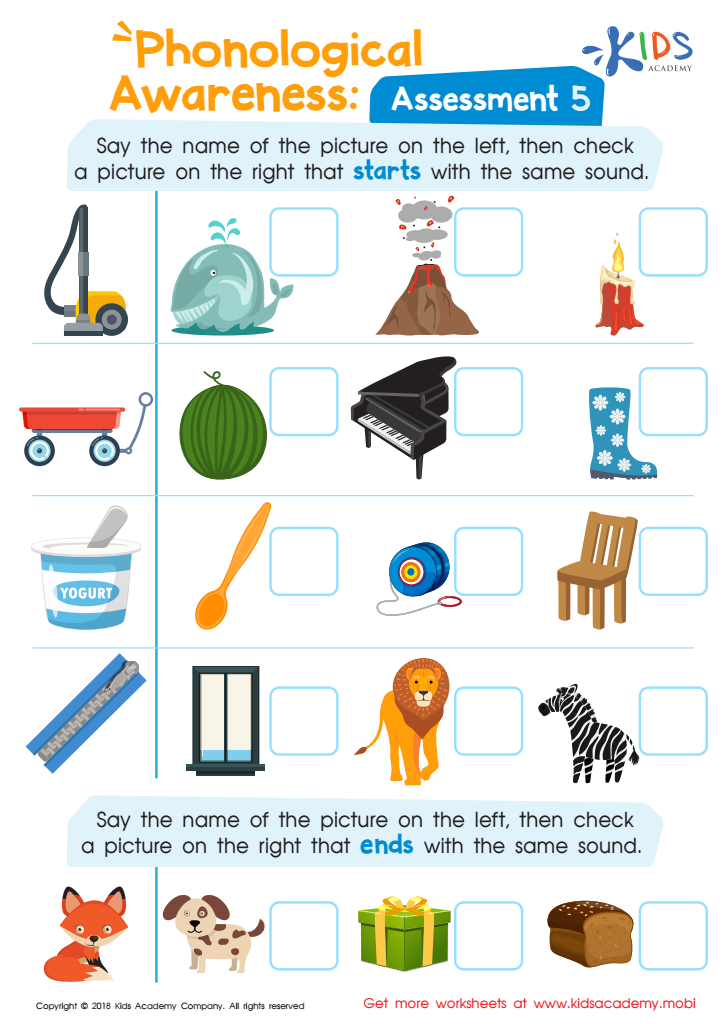
Repetition is key to success! This worksheet tests kids' ability to match beginning and ending sounds in words. Instruct them to say each word and listen closely to the sounds they make. Focus on the starting sounds for the first four pics, then the last one to hear ending sounds and find the right match!
Phonological Awareness: Assessment 5 Worksheet
Worksheet
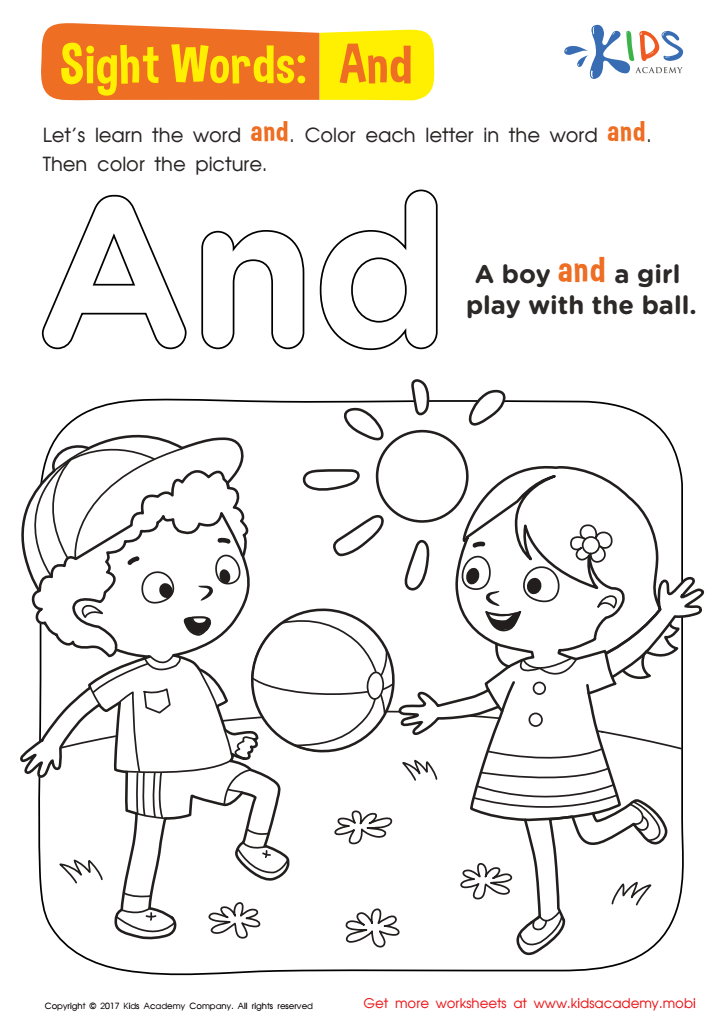
And Worksheet Sight Words Worksheet

And Worksheet Sight Words Worksheet

Help your child get a jumpstart on reading with sight words! Print out this fun worksheet and get your child to read the sentence. Point out the word "and", then color the word and enjoy the rest of the scene! It's a great way to introduce sight words and get their early reading skills going!
Download (PDF)
Assign to My Students
And Worksheet Sight Words Worksheet
Worksheet


Spelling practice, especially in the form of programs like Easy Alphabet for ages 4-5, is crucial for early literacy development. At this tender age, children are not only learning to recognize letters but are also beginning to associate those letters with their sounds and the formation of words. Engaging in early spelling activities helps build a strong foundation for reading and writing skills, which are essential for academic success.

Parents and teachers should care about these practices because they foster phonemic awareness, which is the ability to hear, identify, and manipulate individual sounds in spoken words. This skill is vital for decoding words and developing reading fluency later on. With consistent spelling practice, children can also enhance their vocabulary, enabling them to express their thoughts and ideas more effectively.

Moreover, playful and engaging spelling tasks inspire children’s love for learning and can boost their confidence in language skills. When children see themselves making progress in spelling, it reinforces their motivation to explore writing and reading further. Overall, early spelling practice promotes cognitive skills, supports literacy learning, and builds a solid linguistic foundation for children’s future education. Therefore, nurturing these skills from a young age is a priority for parents and educators alike.