Number comparison Easy Numbers Worksheets for Ages 4-5
3 filtered results
-
From - To
Introduce your child to the world of numbers with our "Number Comparison Easy Numbers Worksheets" tailor-made for ages 4-5. These engaging activities are perfect for young learners to develop essential math skills. Interactive exercises focus on comparing numbers, using vibrant images and simple prompts to guide children through understanding greater than, less than, and equal to concepts. Each worksheet is crafted to boost confidence, enhancing early numeracy skills while making learning fun. Start building a strong math foundation today with these easy-to-use, kid-friendly resources designed to set your child up for success.
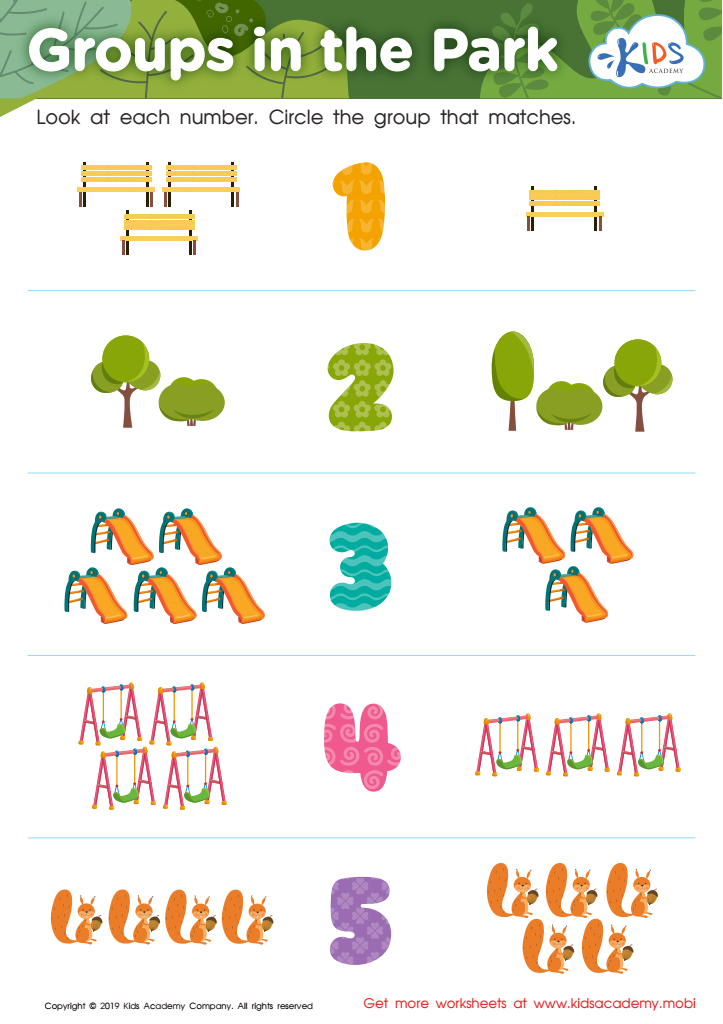
Groups in the Park Worksheet
 Assign to My Students
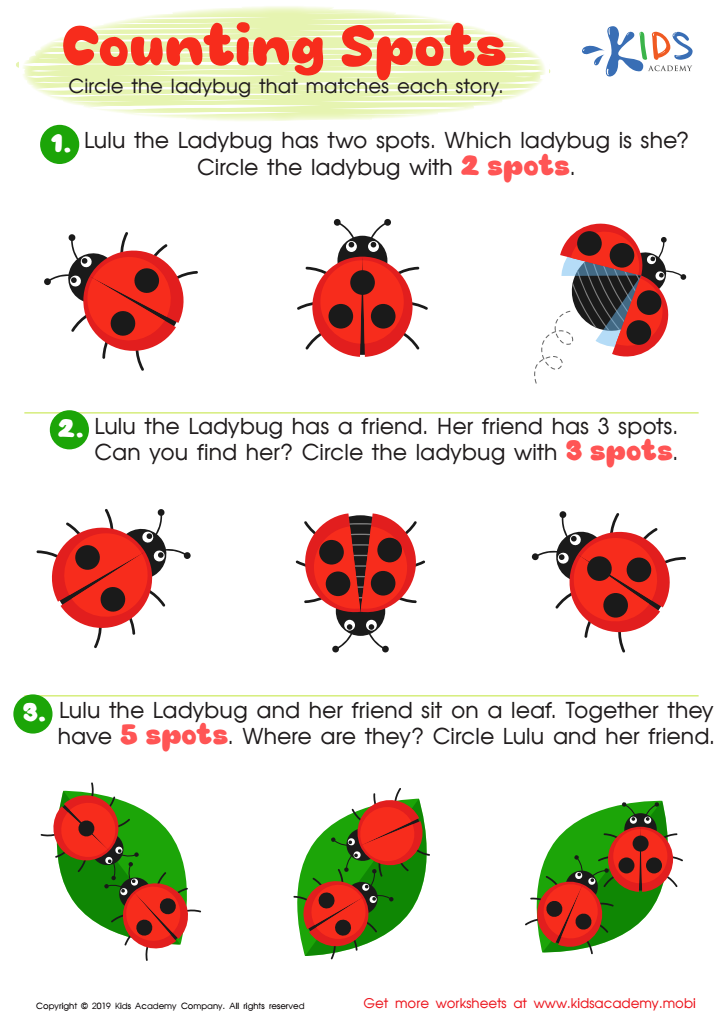
Counting Spots Worksheet
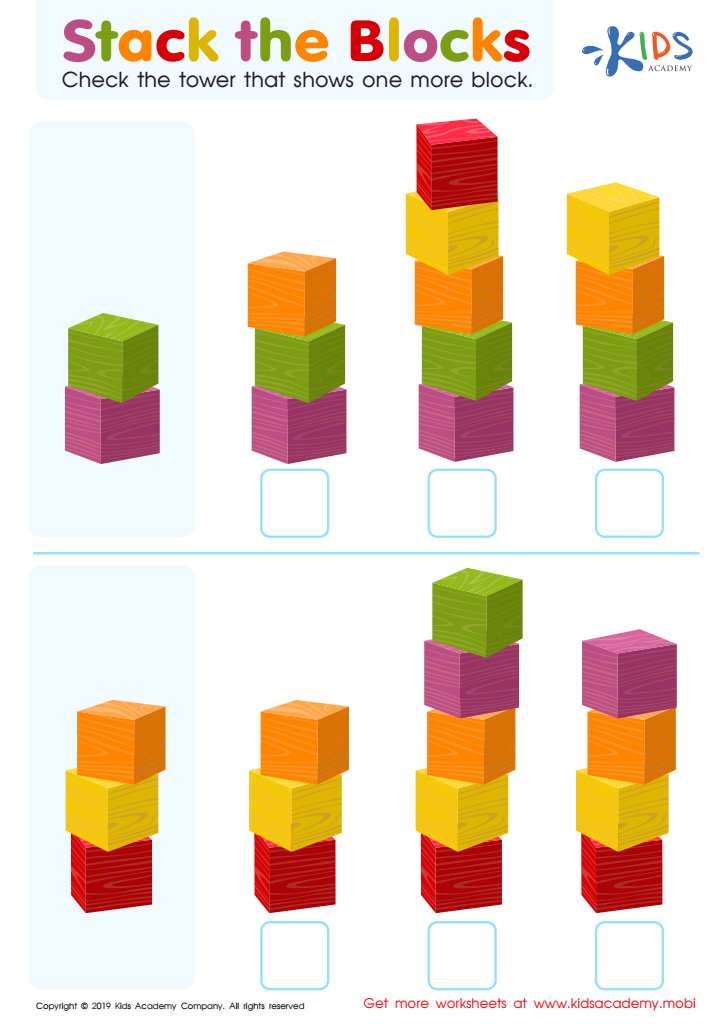
Stack the Blocks Worksheet








Number comparison is a fundamental skill that lays the groundwork for more advanced mathematical concepts, making it crucial for children ages 4-5. At this early age, children are naturally curious about the world around them, and understanding simple mathematical concepts can fuel this curiosity and aid cognitive development.
Parents and teachers should care about teaching easy number comparison because it helps young children grasp the basics of number sense, which is vital for all future math learning. Knowing how to compare numbers enables children to understand the concepts of "more than," "less than," and "equal to." These activities improve their ability to make judgments about quantities and sizes, which is not only relevant in math but also in everyday decision-making.
Engaging in number comparison games and activities develops a child’s critical thinking and problem-solving skills. It enhances their ability to recognize patterns and categorizes them, which are important cognitive abilities as they progress through school.
Furthermore, these exercises can boost a child’s confidence. When children receive positive reinforcement for correctly comparing numbers, they are more likely to feel confident in their abilities and be more willing to tackle challenging tasks in the future.
Ultimately, by prioritizing number comparison at an early age, parents and teachers set children on a path to success in mathematics and other related disciplines, fostering a lifelong love and understanding of learning.








