Comparing quantities Easy Math Worksheets for Ages 4-5
3 filtered results
-
From - To
Welcome to our "Comparing Quantities Easy Math Worksheets" designed for children aged 4-5! These engaging worksheets introduce preschoolers to foundational math concepts through fun and interactive activities. Young learners will explore comparing quantities using vibrant visuals and relatable examples, enhancing their understanding of more, less, and equal. Our carefully crafted exercises encourage hands-on learning, ensuring kids develop critical reasoning skills. Perfect for both classroom settings and at-home practice, these worksheets foster a positive attitude towards math and promote early problem-solving abilities. Start your child’s math journey today with our engaging resources designed to make learning enjoyable and effective!
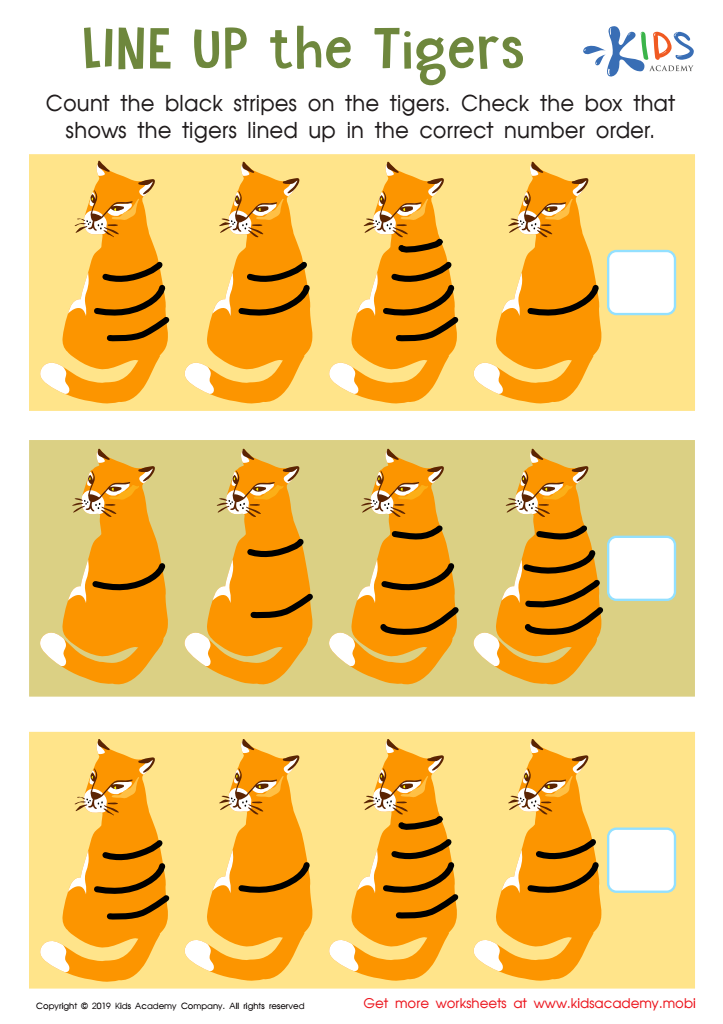
Line up the Tigers Worksheet
 Assign to My Students
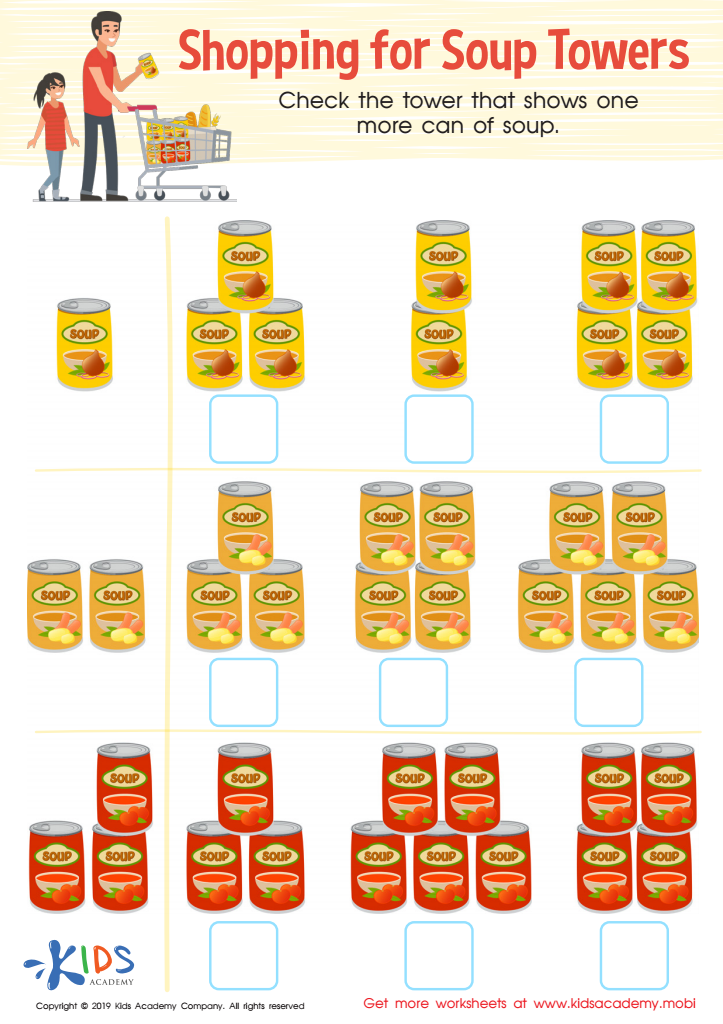
Soup Towers Worksheet
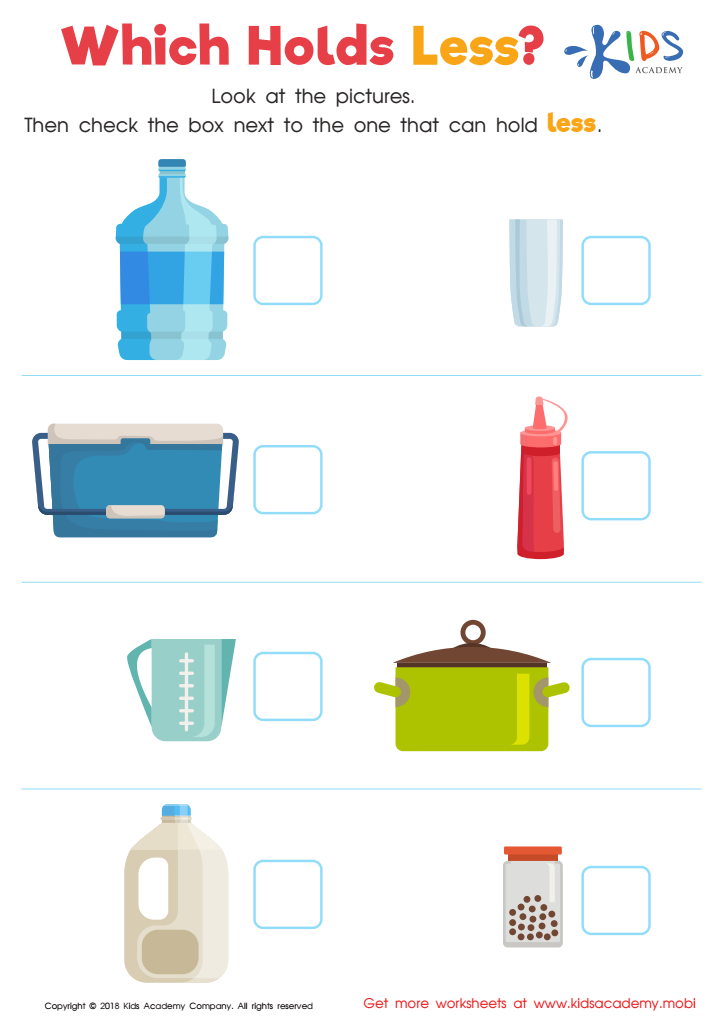
Which Holds Less? Worksheet








Comparing quantities is a foundational math skill that plays a crucial role in early childhood education. For children ages 4-5, it serves as a gateway to understanding more complex mathematical concepts. When parents and teachers focus on comparing quantities, they help children develop essential cognitive skills, including critical thinking, problem-solving, and logical reasoning.
Engaging children in activities that involve comparing quantities (such as counting toys, measuring items, or sorting objects) fosters their numerical awareness. It teaches them to discern differences and similarities, a skill that enhances their understanding of greater-than, less-than, and equal relationships. This foundation is vital for later topics in math, including addition and subtraction.
Additionally, early exposure to comparing quantities encourages children to articulate their thought processes, helping improve their language and communication skills. As they discuss and justify their comparisons, they build confidence in expressing their ideas.
By prioritizing these activities, parents and teachers equip children with the necessary tools for academic success and lifelong learning. The ability to compare quantities not only enriches their understanding of math but also promotes curiosity and engagement in learning—essential elements for their overall development.








