Money management skills Easy Math Worksheets for Ages 4-5
3 filtered results
-
From - To
Introducing our "Money Management Skills Easy Math Worksheets for Ages 4-5"! These engaging and interactive worksheets are designed to help young learners grasp essential money concepts through fun activities. Kids will explore the basics of money, including identification of coins, simple counting exercises, and basic transactions. Each worksheet fosters essential math skills, while also introducing early budgeting and spending lessons that promote financial literacy from a young age. Perfect for parents and educators, these resources are tailored to capture children's attention and ignite their interest in money management. Start building a strong financial foundation with our easy-to-use worksheets!
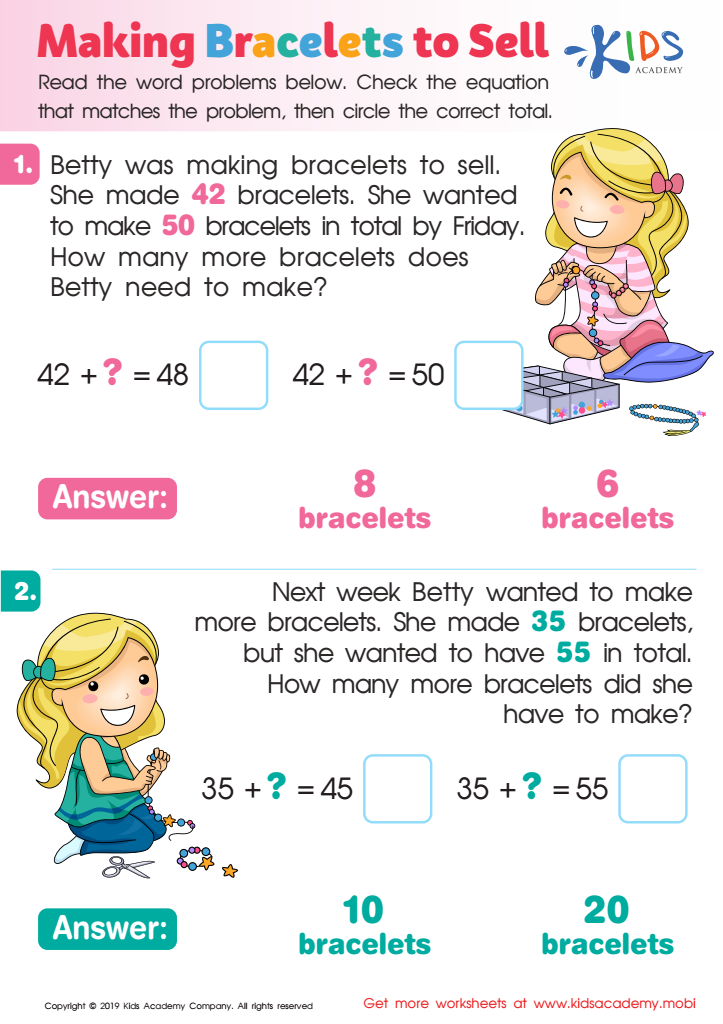
Making Bracelets to Sell Worksheet
 Assign to My Students
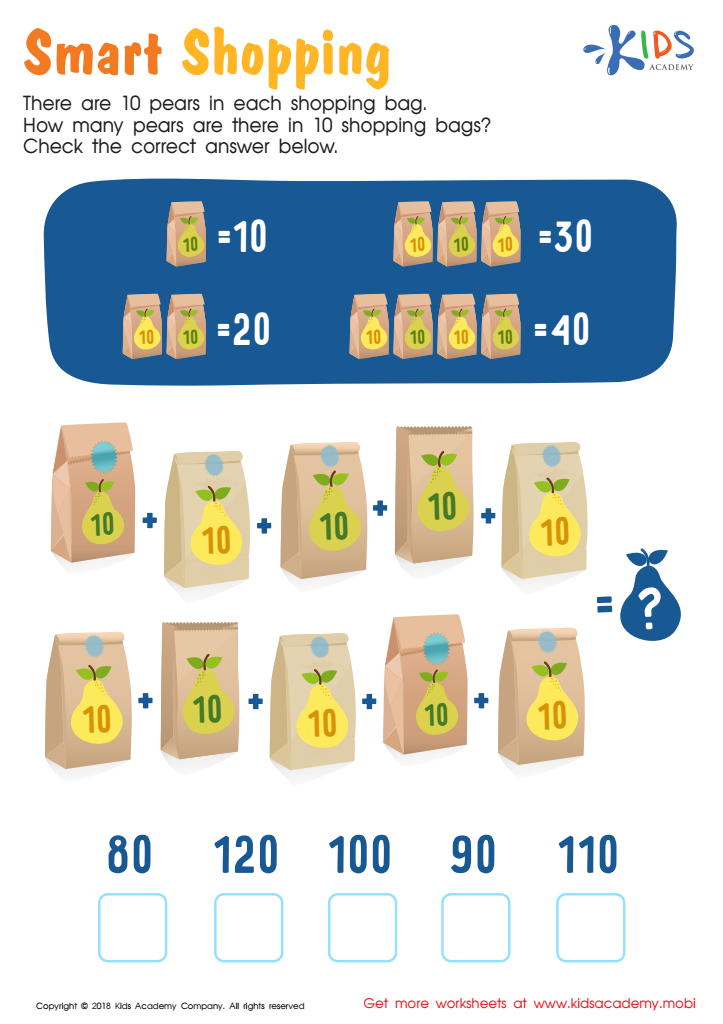
Smart Shopping: Trade Tens for a Hundred Worksheet
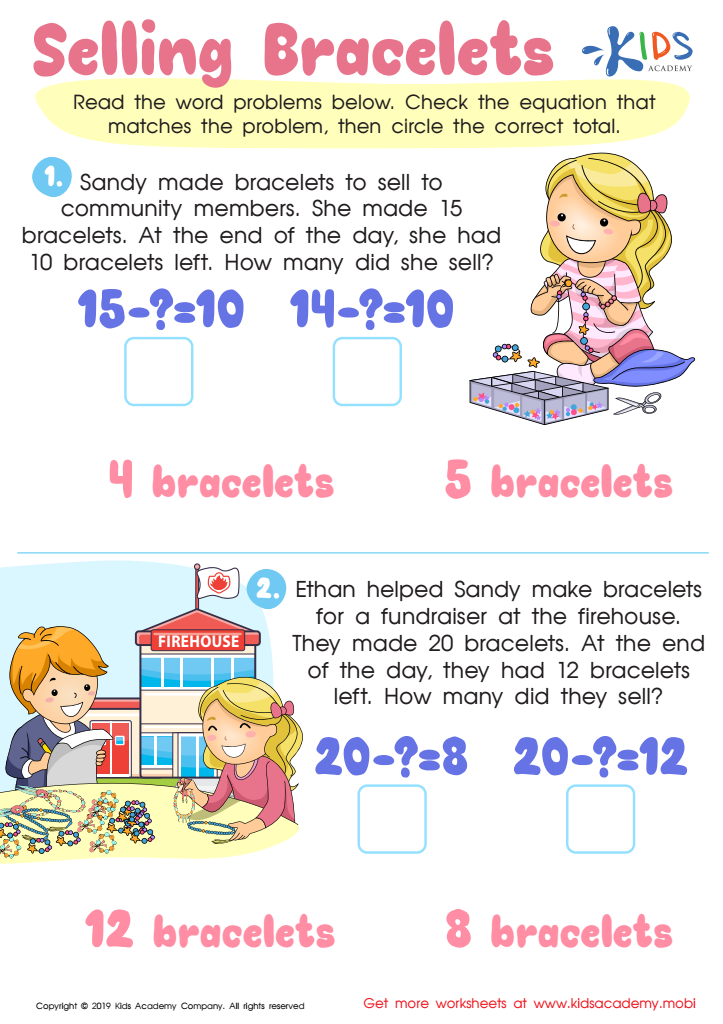
Selling the Bracelets Worksheet








Teaching money management skills through easy math for children aged 4-5 is crucial for several reasons. First, these foundational skills help children understand the concept of value and the importance of money in everyday life. At this age, kids are naturally curious and eager to learn, making it an ideal time to introduce counting and basic math through practical examples like coins and bills.
Engaging young children in activities related to money management, such as pretend shopping or saving, enhances their cognitive abilities while promoting critical thinking and decision-making. Learning to distinguish between needs and wants at a young age can foster a sense of responsibility and promote delayed gratification.
Additionally, teaching these skills encourages financial literacy from an early age. By equipping children with the knowledge of how to handle money, parents and teachers lay the groundwork for smart financial decisions in the future. This knowledge not only builds self-esteem as they confidently make choices but also serves to mitigate stress around finances as they grow and eventually manage their own budgets. Fostering healthy money habits early on contributes to nurturing future generations that are more financially aware and responsible, making it essential for parents and educators to prioritize this critical aspect of education.








