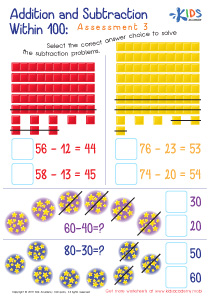
Number Recognition Easy Numbers 11–20 Worksheets for Ages 4-5
6 filtered results
-
From - To
Discover our engaging "Number Recognition Easy Numbers 11–20 Worksheets," specially designed for children ages 4-5. These fun and interactive worksheets help young learners master number recognition through colorful activities focusing on numbers 11 to 20. Each worksheet features a variety of exercises, including counting, tracing, and matching, tailored to enhance early math skills while keeping kids entertained. Ideal for preschool and kindergarten settings, our resource supports parents and educators in fostering numerical fluency in young learners. With clear instructions and playful designs, these worksheets make learning numbers an enjoyable adventure. Start building a strong math foundation today!
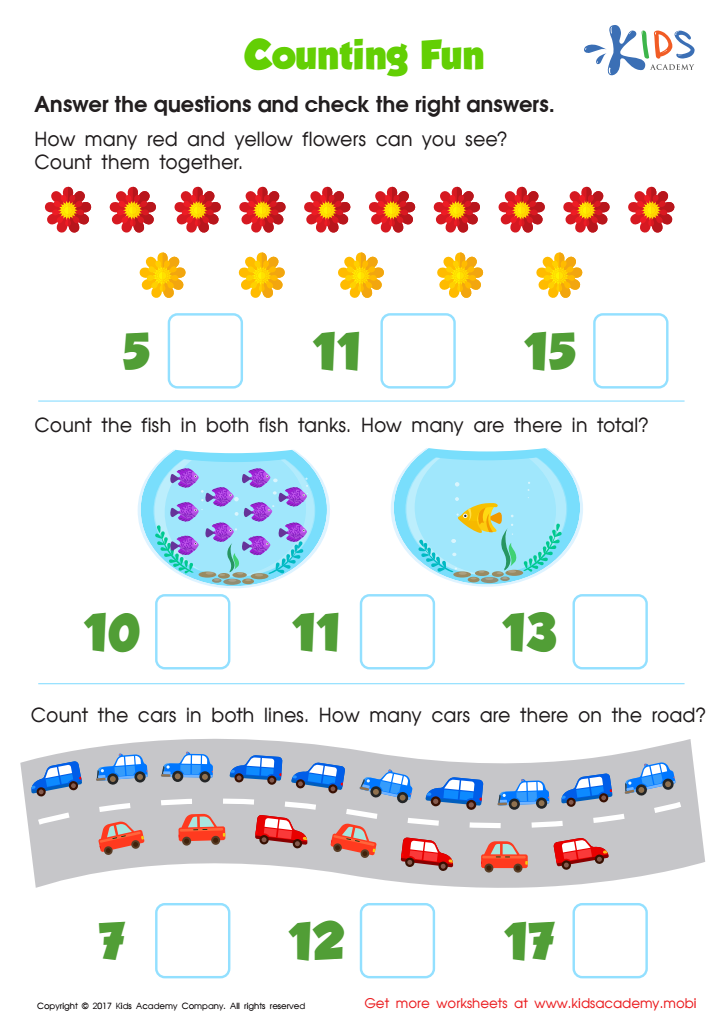
Counting Fun Worksheet
 Assign to My Students
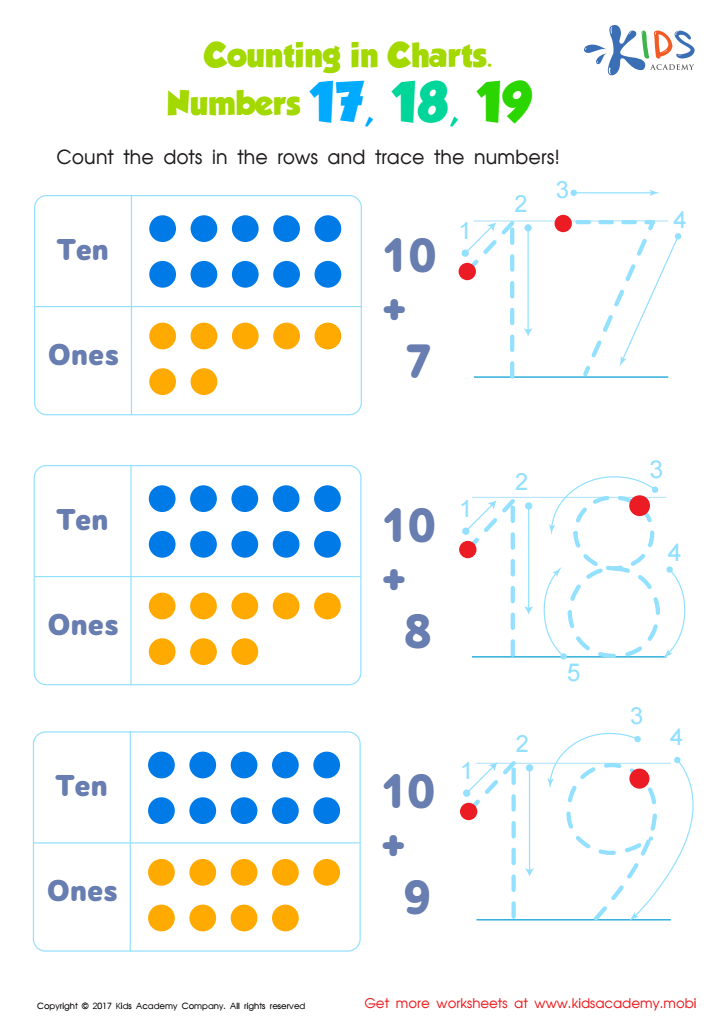
Kindergarten Number Tracing: Counting in Charts Worksheet
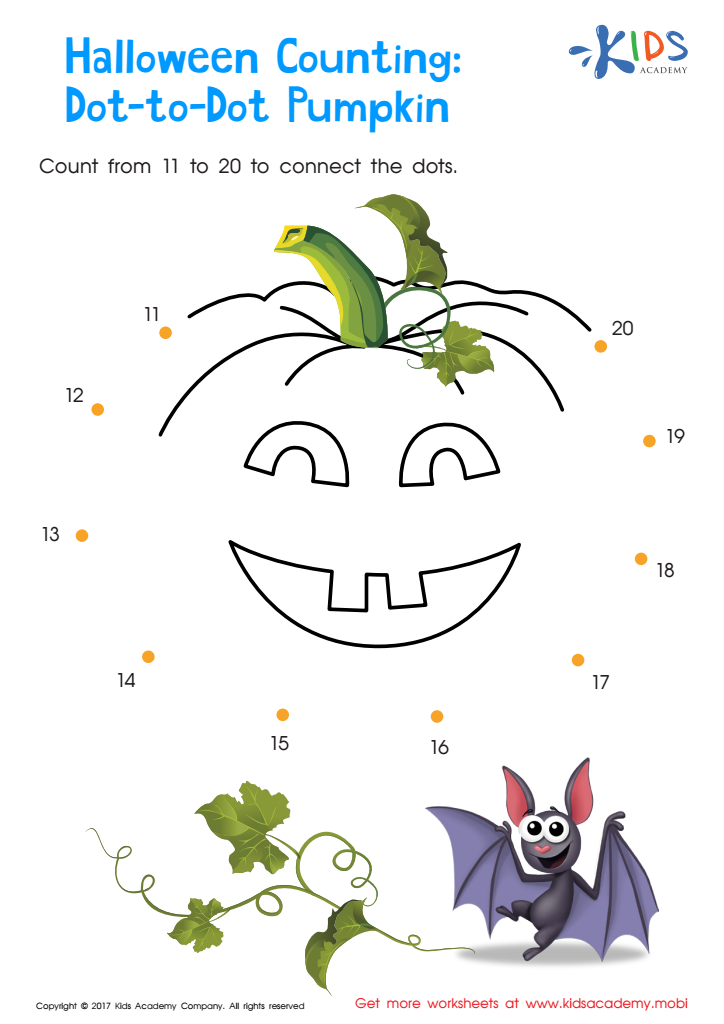
Ordering 11–20: Halloween Counting Worksheet
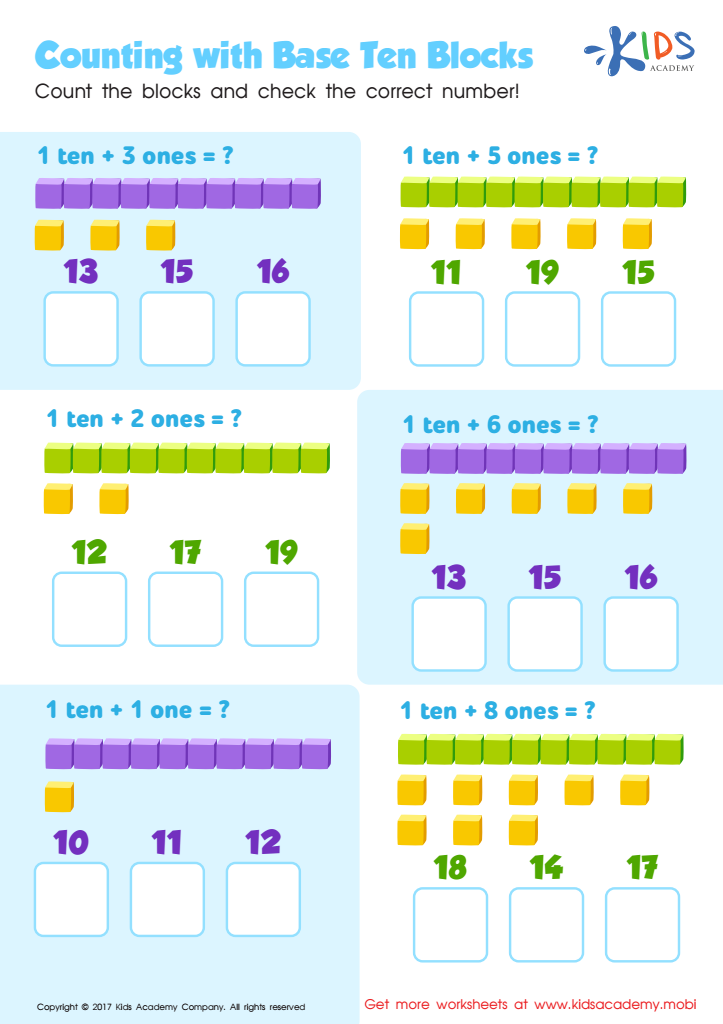
Counting with Base Ten Blocks Worksheet
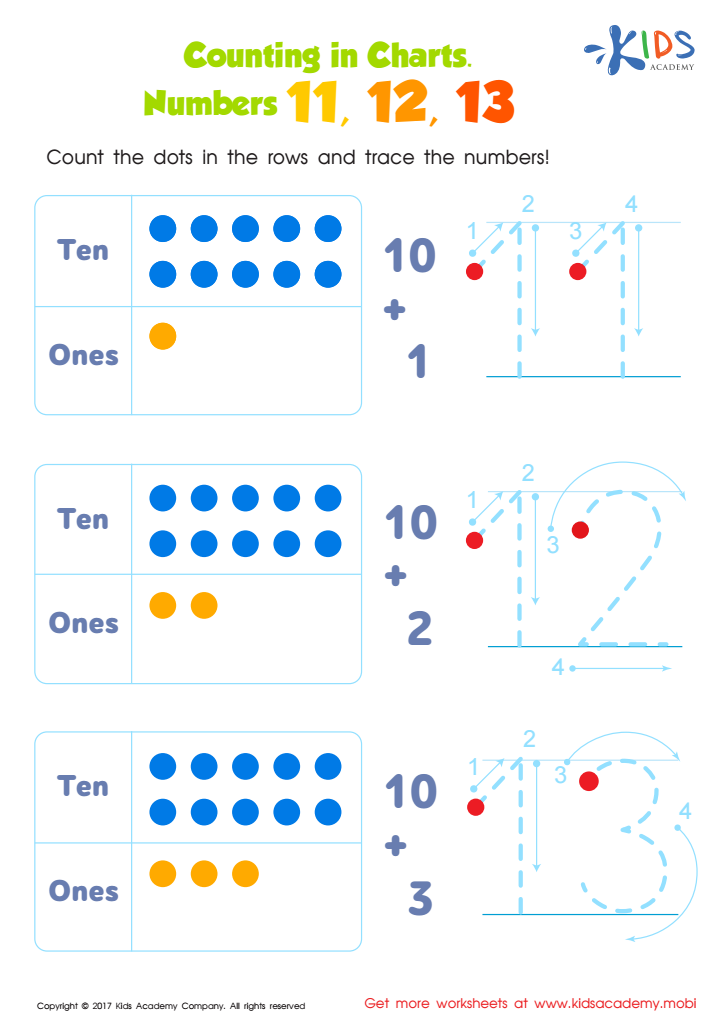
Number Tracing Worksheet For Kindergarten
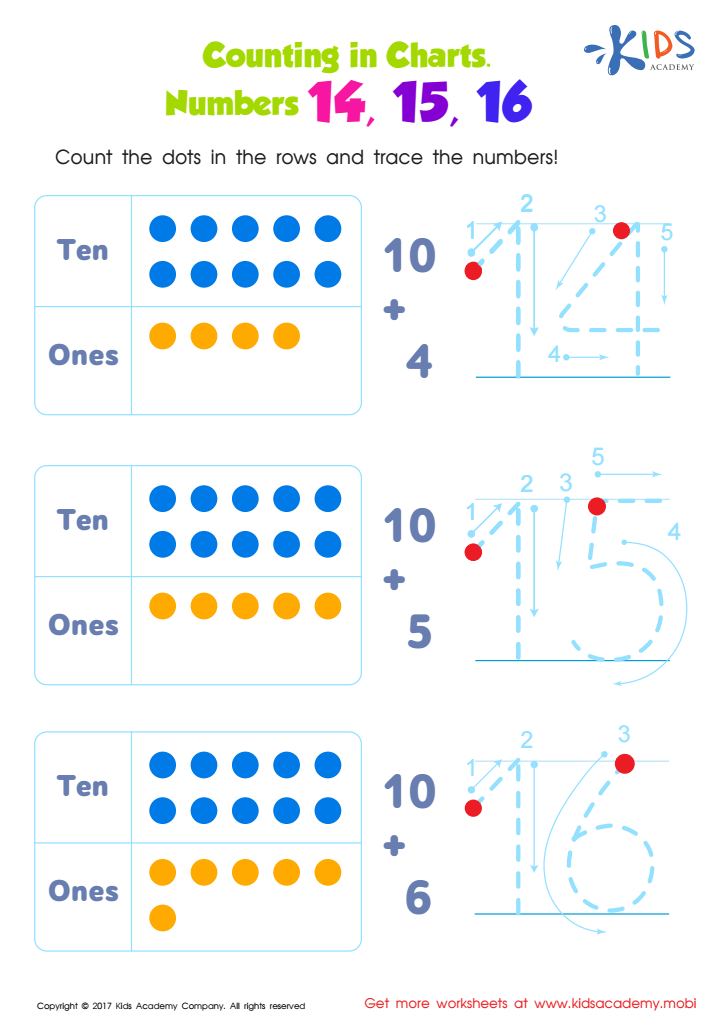
Number Tracing Worksheet



Number recognition for easy numbers 11–20 is crucial in the developmental journey of children ages 4-5. This age group is at a critical stage for cognitive and mathematical growth, where foundational skills are formed. Recognizing numbers 11-20 is not just about memorization; it builds essential concepts such as counting, number order, and basic addition and subtraction.
For parents and teachers, nurturing number recognition enhances a child's confidence and curiosity about math. When children can identify numbers, they become engaged problem solvers, laying the groundwork for advanced math topics in later years. Additionally, mastering these numbers fosters a sense of independence and helps them navigate their world.
Moreover, early number recognition aids in developing essential life skills, such as telling time, managing money, and understanding measurements. It also supports emotional and social growth by enabling kids to participate in group activities, games, and discussions involving numbers.
By emphasizing this skill, caregivers and educators can create rich learning environments that promote cooperative play, encourage exploration, and build communication skills. Ultimately, fostering number recognition in this age bracket is an investment in a child's future competence and success, paving the way for lifelong learning.