Number comprehension Easy Word Problems Worksheets for Ages 4-5
4 filtered results
-
From - To
Discover our engaging "Number Comprehension Easy Word Problems Worksheets" designed specifically for children aged 4-5! These worksheets introduce young learners to basic math concepts through fun and relatable word problems. By integrating everyday scenarios, students will develop essential problem-solving skills while enhancing their understanding of numbers. Our resources feature colorful visuals and simple language to keep kids engaged while they practice addition and subtraction in enjoyable ways. Ideal for parents and teachers alike, these worksheets are perfect for reinforcing math skills at home or in the classroom. Help your child build a solid foundation in mathematics through interactive learning today!
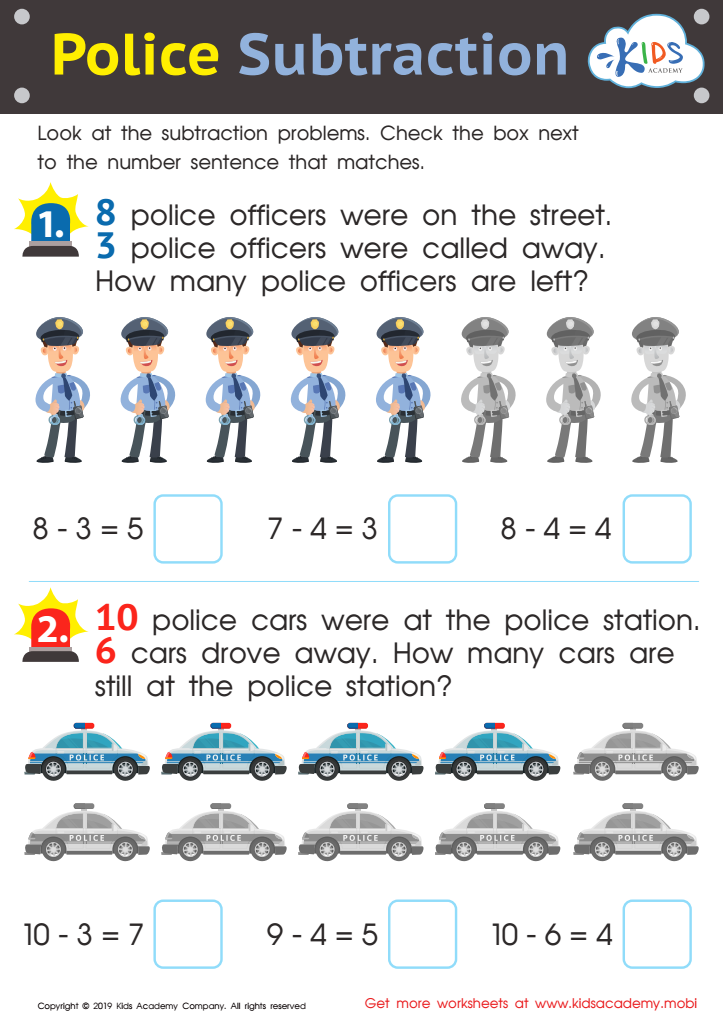
Police Subtraction Worksheet
 Assign to My Students
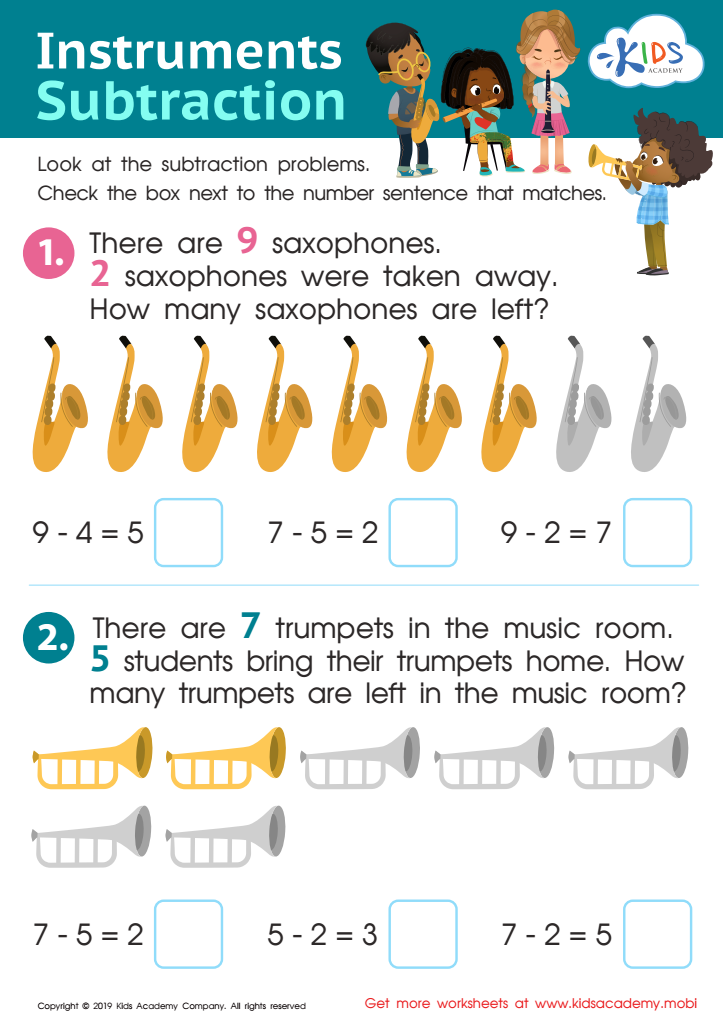
Instrument Subtraction Worksheet
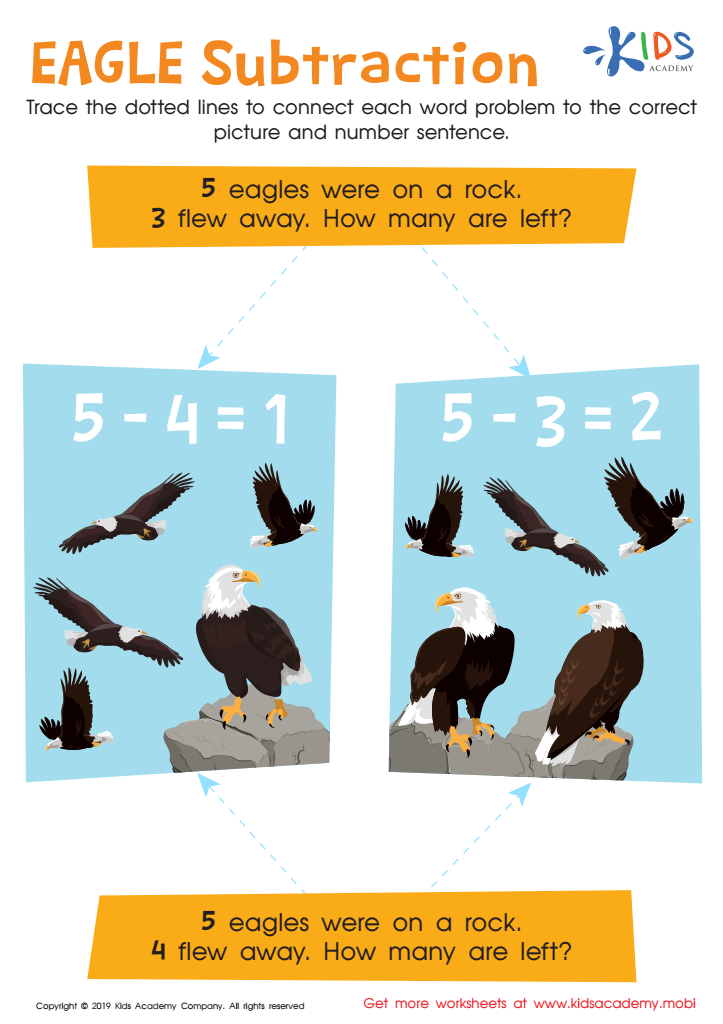
Eagle Subtraction Worksheet
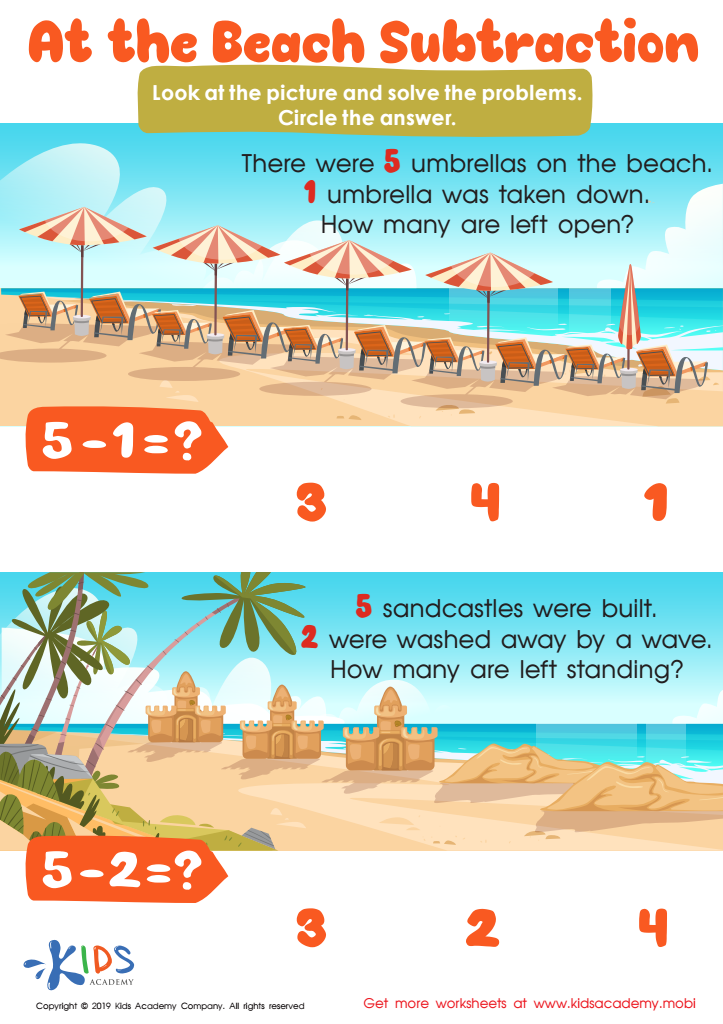
At the Beach Subtraction Worksheet








Understanding number comprehension and easy word problems is essential for children aged 4-5, as it lays the foundation for their mathematical thinking and cognitive development. At this age, children are naturally curious and eager to explore new concepts, making it an ideal time to introduce them to basic math skills. Engaging with easy word problems helps children develop critical thinking and problem-solving abilities, allowing them to apply mathematical concepts in everyday situations.
Parents and teachers should prioritize number comprehension because it encourages children to understand the relationship between numbers and quantities. This understanding fosters a love for learning and builds confidence when approaching more complex math in later grades. Easy word problems also enhance language skills, as children learn to dissect and interpret questions, boosting both their vocabulary and comprehension.
Furthermore, early number comprehension promotes collaboration and communication, as children often discuss problems and solutions with peers or adults. This social aspect of learning reinforces their understanding and makes math a shared, enjoyable experience. By focusing on number comprehension and easy word problems, both parents and teachers play a crucial role in shaping a child's positive attitude toward math, ultimately fostering lifelong skills that will benefit them in school and beyond.








