Following instructions Easy English for Beginners Worksheets for Ages 4-6
4 filtered results
Difficulty Level
Grade
Age
-
From - To
Subject
Activity
Standards
Welcome to our "Following Instructions Easy English for Beginners Worksheets" designed specifically for children ages 4-6! These engaging worksheets aim to enhance listening and comprehension skills while boosting vocabulary through fun and interactive activities. Each worksheet includes clear, age-appropriate instructions that encourage students to follow directions accurately. By practicing with these worksheets, young learners will build confidence in their English language abilities and develop essential skills for success in school. Perfect for classroom use or at home, our resources make learning fun and effective for your preschoolers and kindergarteners. Start their journey to mastering English today!
Favorites
With answer key
Interactive
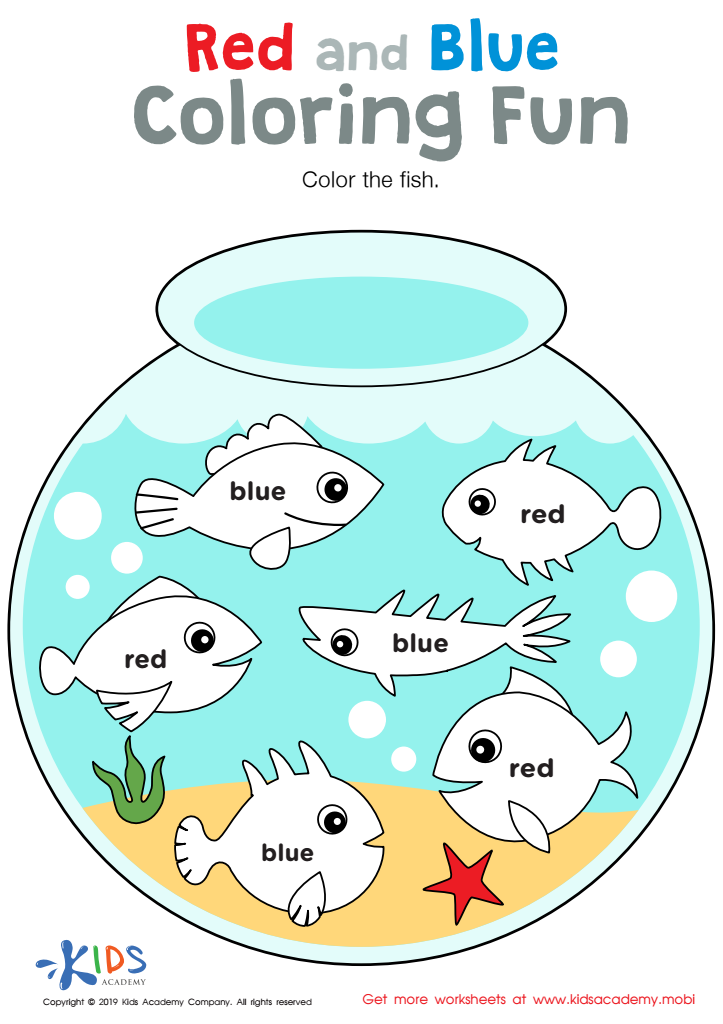
Red and Blue Coloring Fun Worksheet
Kids know colors like red and blue. But can they read these words? Give them practice with this fun fish bowl coloring sheet. They'll look at the fish, then color them the corresponding hue. Home or classroom, they'll be sure to get a kick out of learning colors in this creative way!
Download (PDF)
 Assign to My Students
Assign to My Students
Red and Blue Coloring Fun Worksheet
Worksheet
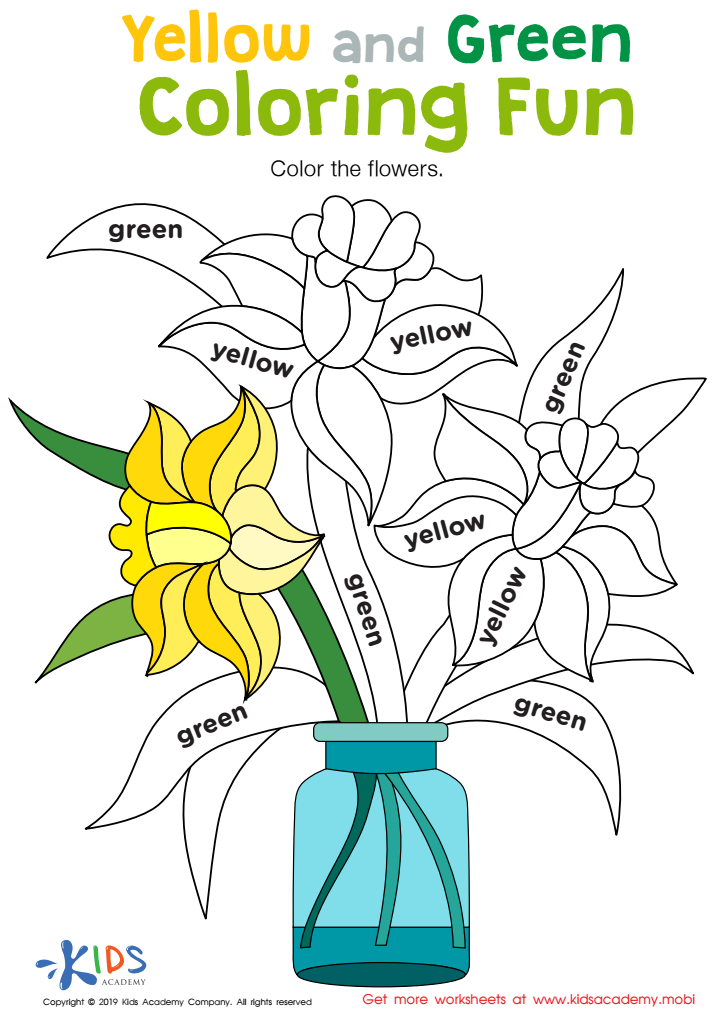
Yellow and Green Coloring Fun Worksheet
Sight words like "yellow" and "green" are easy to teach and fun for kids to learn. This free downloadable worksheet has kids read the color words and color the flower with yellow and green. A great activity for learning to read color words!
Download (PDF)
Assign to My Students
Assign to My Students
Yellow and Green Coloring Fun Worksheet
Worksheet
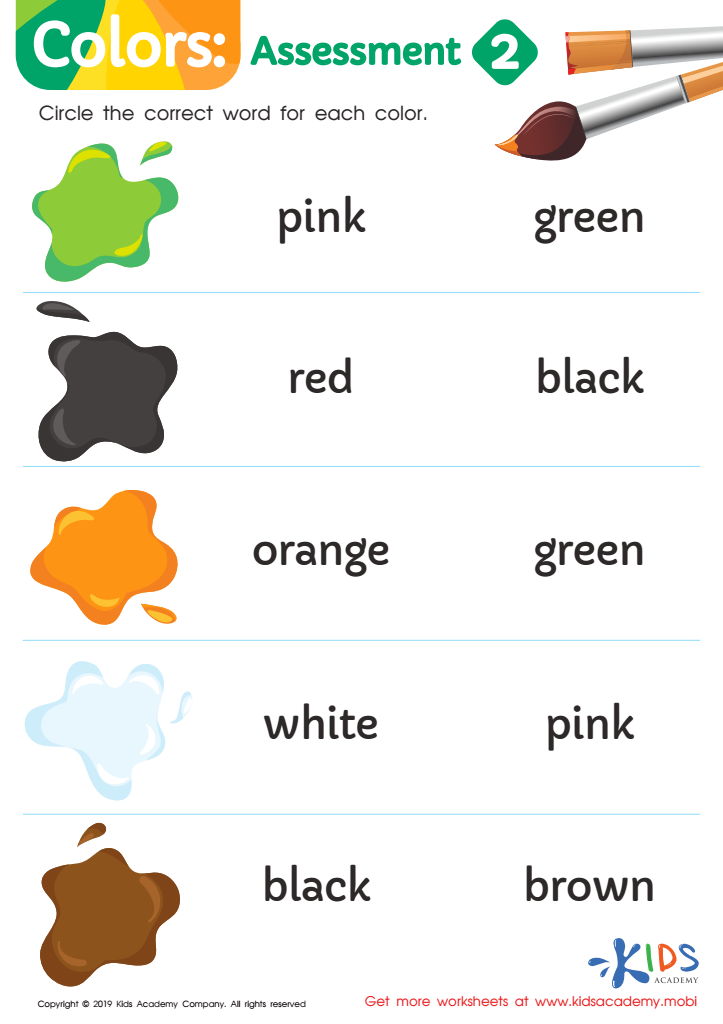
Colors: Assessment 2 Worksheet
Teach color words to young students to build fluency and confidence. Check knowledge with an assessment worksheet. Have students look at paint samples and circle the correct color word. This assessment helps parents and teachers measure a child’s accuracy when reading color words.
Colors: Assessment 2 Worksheet
Worksheet
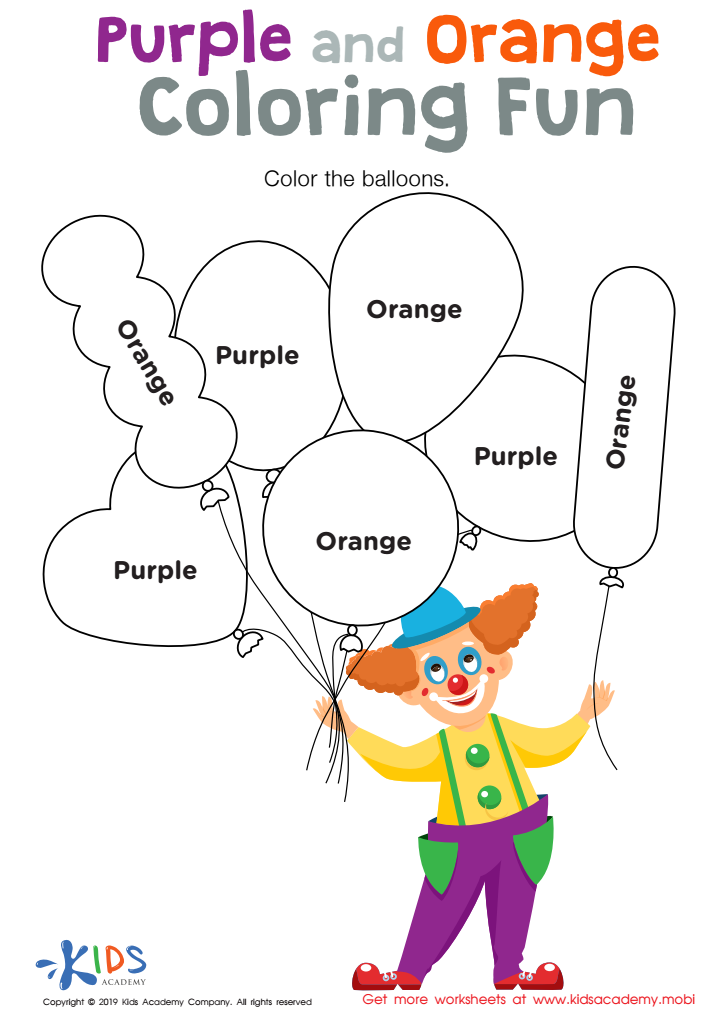
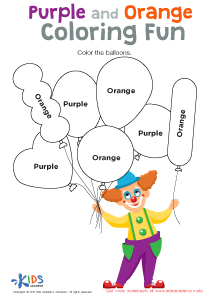
Purple and Orange Coloring Fun Worksheet
Children should learn to read color words early on. This coloring worksheet helps with that! Kids read the words "purple" and "orange" on each balloon and color them accordingly. It's a great activity for boosting literacy and having fun at the same time! Watch your child gain more reading confidence with this cute clown printable.
Download (PDF)
Assign to My Students
Assign to My Students
Purple and Orange Coloring Fun Worksheet
Worksheet
Join Kids Academy for Free
Who is primarily going to use this learning content?




Teaching children to follow instructions is crucial for their early development. For children aged 4 to 6, this skill forms the foundation for learning and interacting in the world around them. When teachers or parents emphasize following instructions, they help children understand the importance of listening and responding appropriately.
Firstly, following instructions improves communication skills. It teaches kids how to listen carefully and express their understanding. This is essential not only in school but also in everyday situations, like playing games or helping at home.
Secondly, mastering this skill boosts children's confidence. When they successfully follow instructions, they feel proud of their accomplishments and are more willing to take on new challenges. This builds a strong sense of self-esteem.
Additionally, understanding instructions supports children's ability to learn in structured environments, like classrooms, where following rules and routines is necessary.
Finally, teaching children to follow instructions encourages cooperation and patience. It helps them work together with peers and develop social skills, which are valuable as they grow.
In summary, parents and teachers should care about teaching these skills because they lay the groundwork for effective learning, improve social interactions, and promote confidence in young learners.