Hand-eye Coordination Easy Worksheets for Ages 4-6 - Page 2
25 filtered results
-
From - To
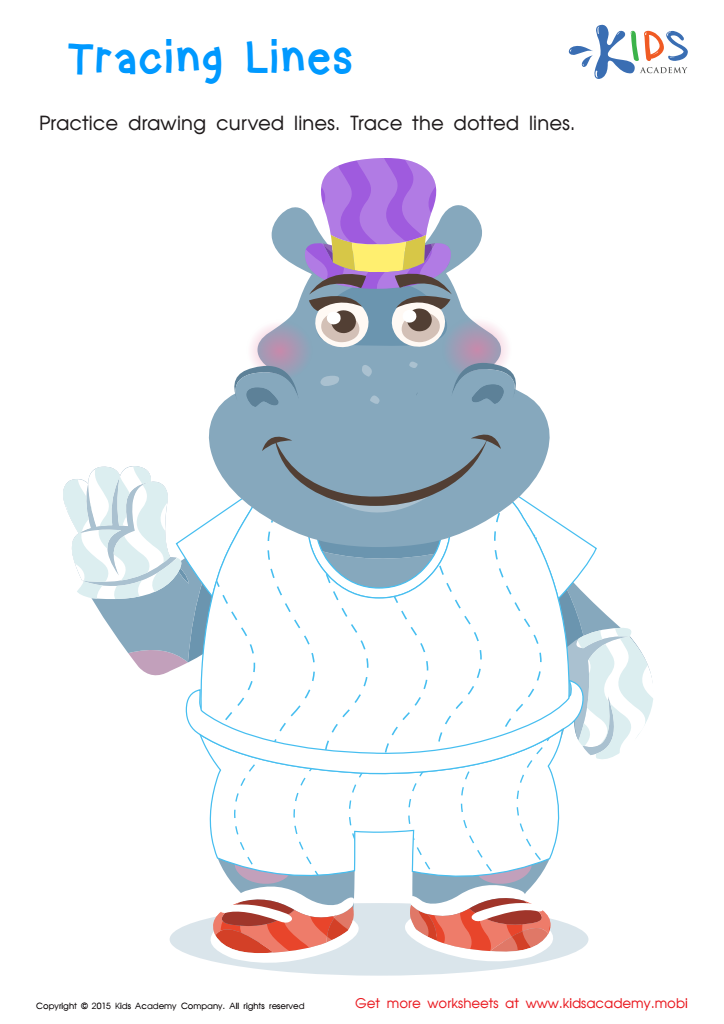
Tracing Lines Worksheet
 Assign to My Students




Hand-eye coordination is a vital skill that develops early in childhood and plays a crucial role in a child's overall growth and learning. Parents and teachers should care about enhancing hand-eye coordination in children aged 4-6 for several reasons.
Firstly, this skill is essential for daily activities and self-care, such as writing, buttoning shirts, and using utensils. Mastery of these tasks promotes independence and boosts self-esteem in young children.
Secondly, strong hand-eye coordination is foundational for academic skills. Activities like drawing, cutting with scissors, and playing with blocks require precise control. When children engage in these tasks, they also develop fine motor skills that support their future proficiency in writing.
Moreover, hand-eye coordination supports cognitive development. Engaging in activities that require coordination encourages problem-solving, spatial awareness, and focus. This skill also aids in physical activities like sports, promoting teamwork and physical fitness.
In summary, fostering hand-eye coordination enhances a child's independence, academic readiness, and social skills. By prioritizing activities that support this development, parents and teachers can significantly contribute to a child’s overall development and confidence.








