Matching skills Easy Worksheets for Ages 4-6
3 filtered results
-
From - To
Discover our "Matching Skills Easy Worksheets for Ages 4-6" to enhance your child's cognitive development and learning potential. These expertly designed worksheets focus on critical matching skills, including shapes, colors, and patterns, developed to cater to the abilities and curiosity of preschoolers and kindergarteners. With engaging and interactive activities, your child will build foundational skills such as attention to detail, visual discrimination, and fine motor skills, all while having fun. Our user-friendly, printable resources provide an effortless way to support your child’s education journey and promote confident, independent thinking. Start your child’s matching adventures today!
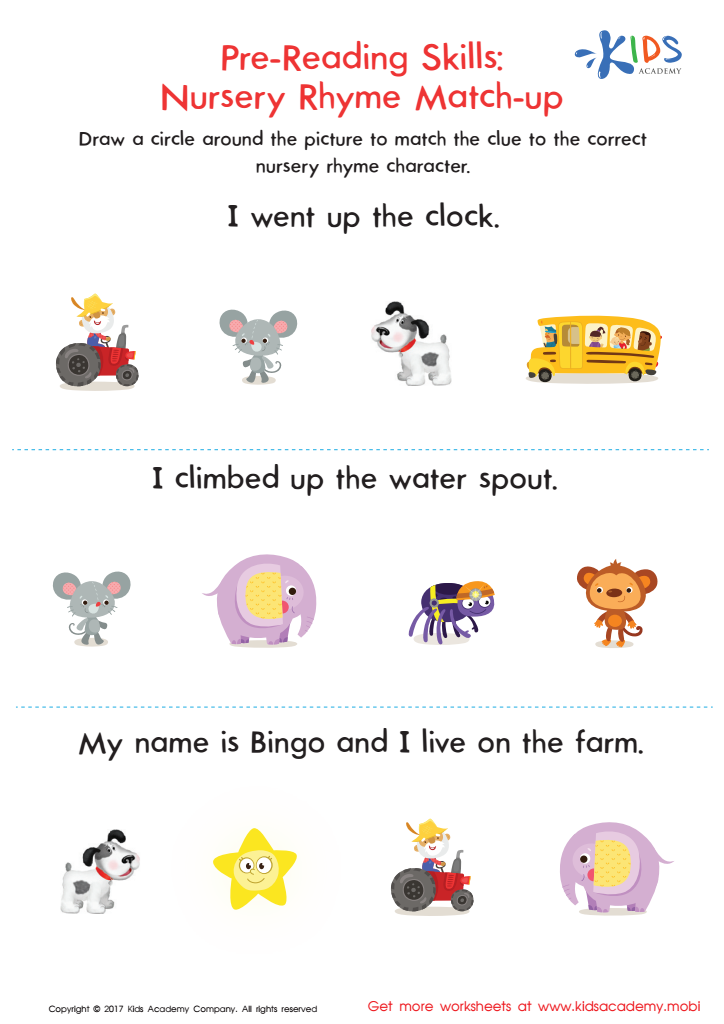
Nursery Rhyme Match–Up Worksheet
 Assign to My Students
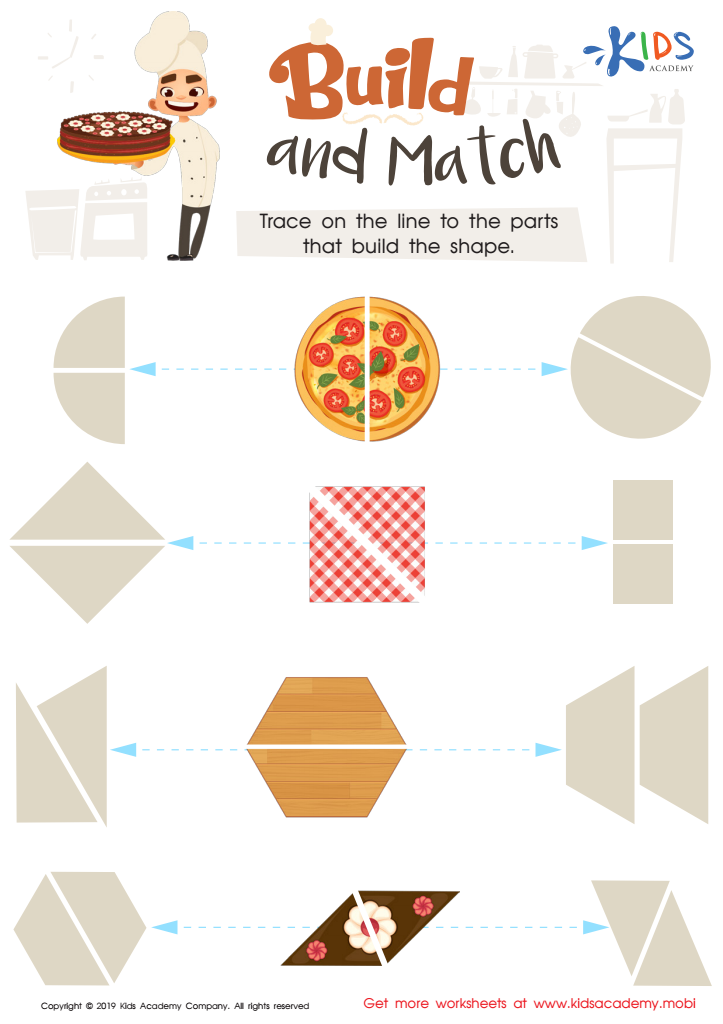
Build and Match Worksheet
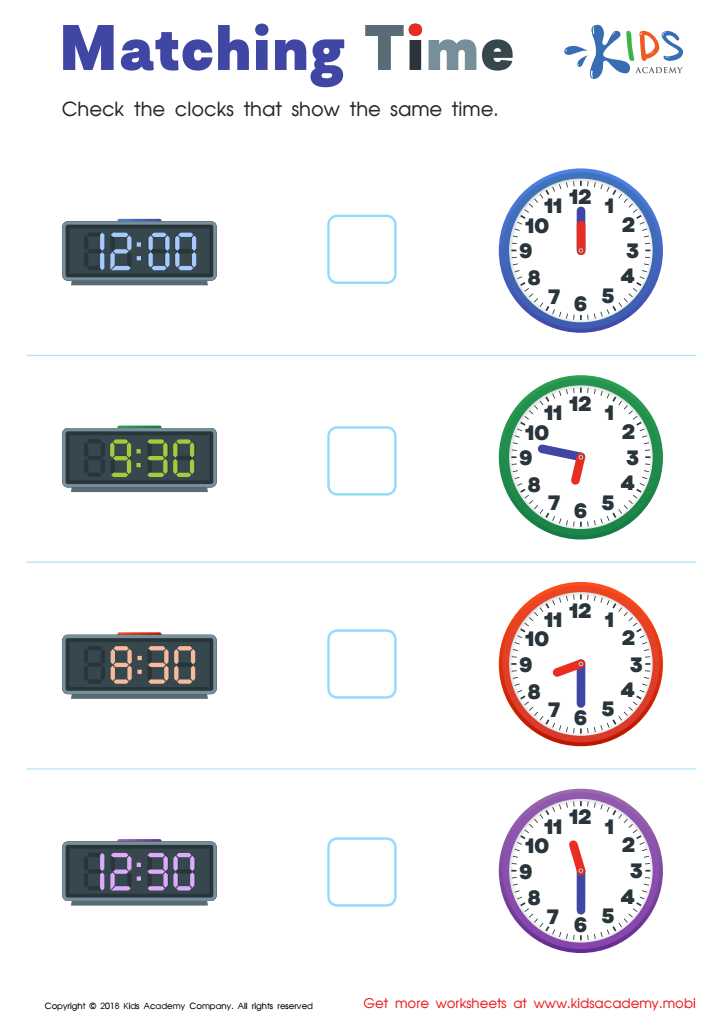
Matching Time Worksheet






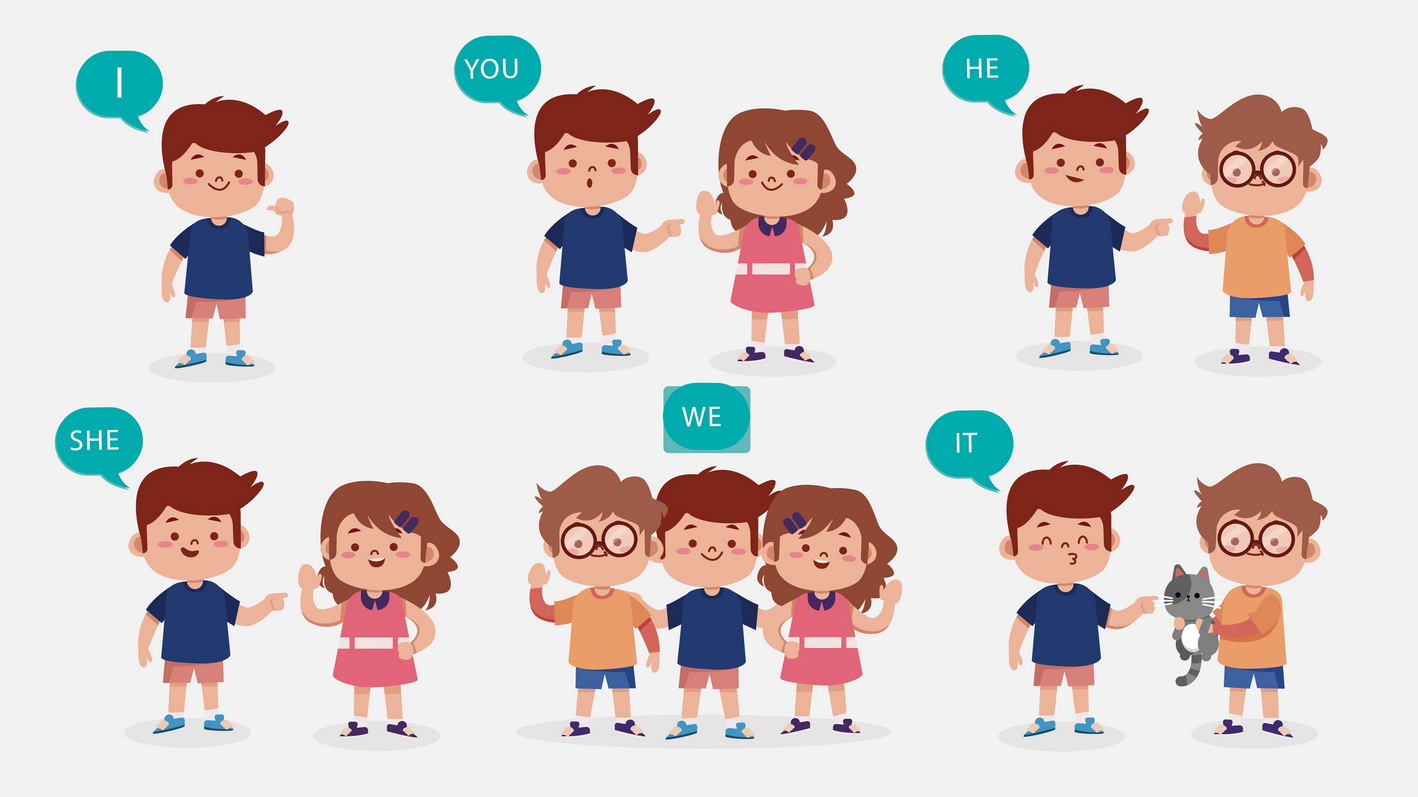
Matching skills are crucial for children aged 4-6 as they lay the foundation for a variety of essential cognitive and social abilities. Parents and teachers should care about cultivating these skills because they help establish critical thinking and problem-solving capabilities early on. Engaging in matching activities enhances a child's visual memory by requiring them to recall shapes, patterns, colors, and images.
At this developmental stage, children are honing their attention to detail and concentration. Matching exercises, such as pairing similar objects or images, improve focus and the ability to notice small differences and similarities. This attention to detail is a precursor to more complex tasks involving reading and arithmetic.
Moreover, matching activities support language development. As children describe the objects or images they match, they expand their vocabulary and grammar, which is vital for effective communication.
Socially, matching games can be collaborative, teaching children to work with peers, share, take turns, and improve their social interaction skills. These experiences are critical precursors to more organized social practices in a classroom setting.
Thus, incorporating matching exercises into a child's routine is fundamental for their cognitive, language, and social development, providing a scaffold for future academic and personal success.








