Sorting skills Easy Numbers Worksheets for Ages 4-6
3 filtered results
-
From - To
Introduce your young learners to the world of numbers with our "Sorting Skills Easy Numbers Worksheets" designed for ages 4-6. These engaging worksheets help children develop essential sorting and categorization skills through fun and interactive activities. Perfect for early learners, the exercises guide kids in sorting numbers, recognizing patterns, and enhancing their foundational math abilities. Each worksheet is crafted to be age-appropriate and exciting, fostering a love for learning while building critical thinking and problem-solving skills. Start your child's mathematical journey with our easy and enjoyable number sorting worksheets today!
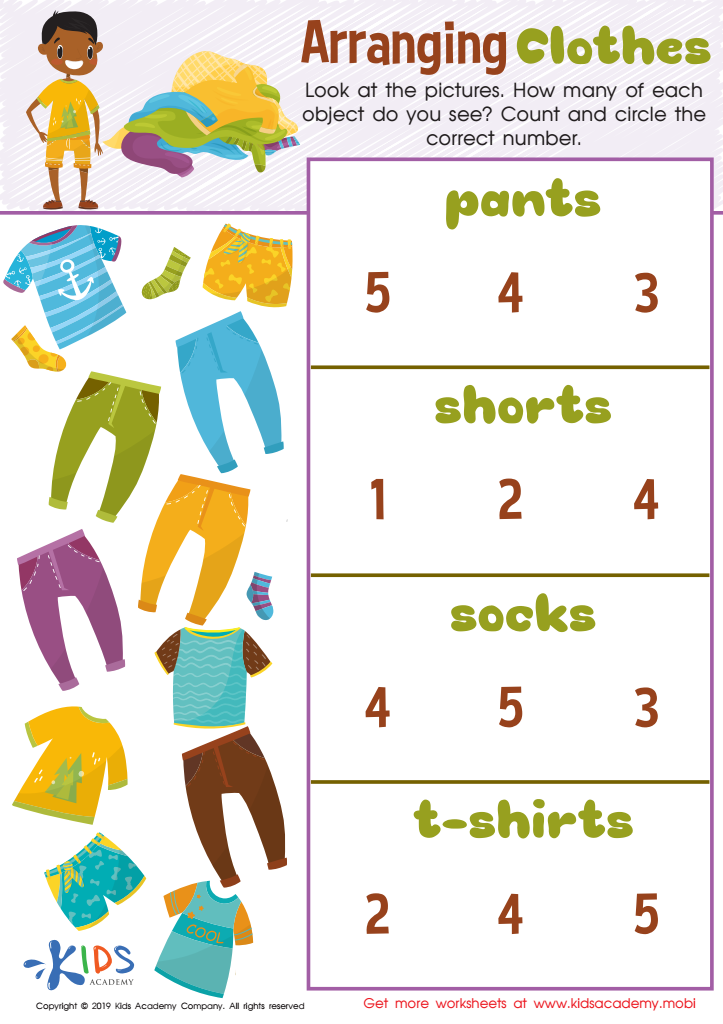
Arranging Clothes Worksheet
 Assign to My Students
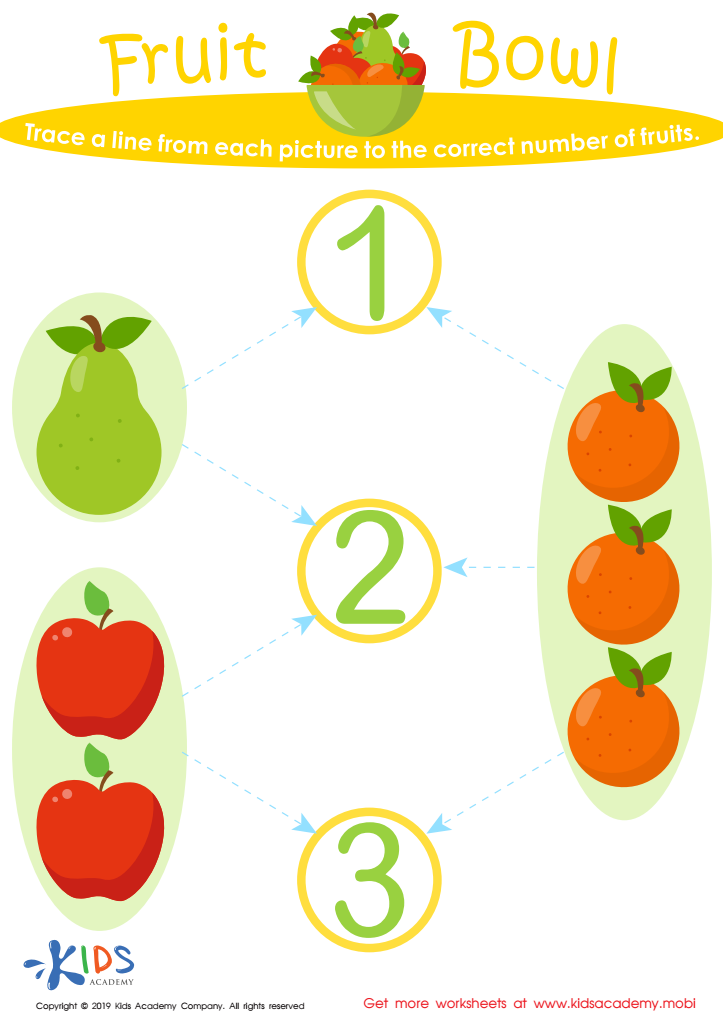
Fruit Bowl Worksheet
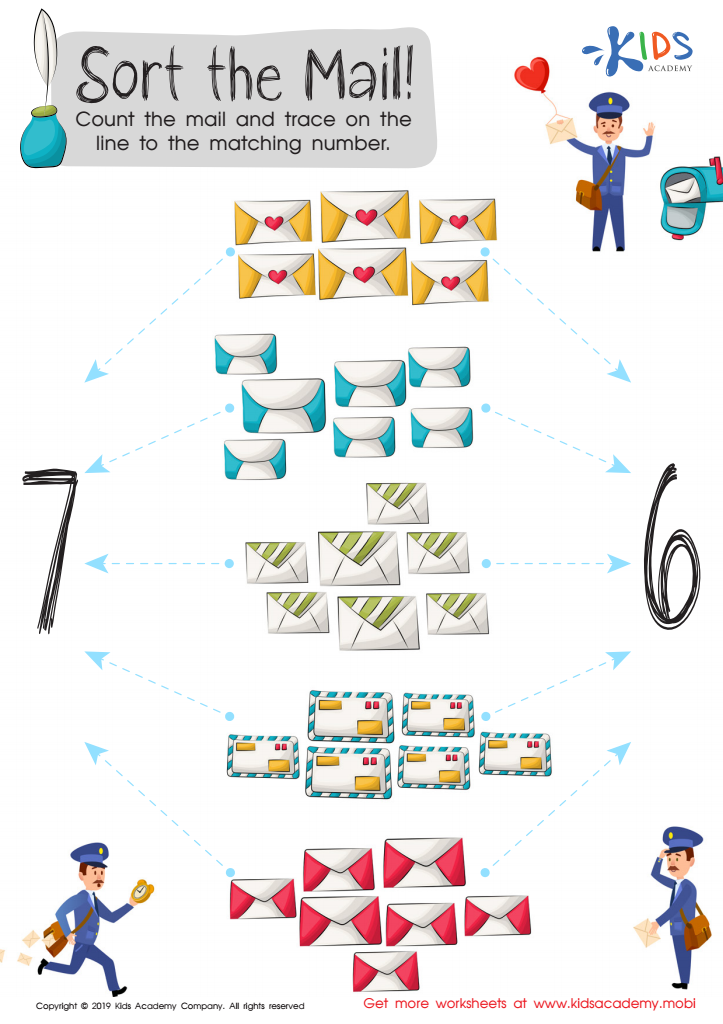
Sort the Mail Worksheet


%20(1).jpg)





Parents and teachers should care about sorting skills in early numbers for ages 4-6 because these abilities lay the foundation for critical cognitive development. At this age, children are like sponges, rapidly absorbing and processing new information. Learning to sort objects based on characteristics like size, shape, or color helps them understand how to categorize, a fundamental concept that aids in problem-solving and logical thinking.
Sorting also enhances a child's ability to recognize patterns and relationships between different items. This is crucial for tasks ranging from simple arithmetic to complex reasoning later in life. By practicing sorting activities, children improve their attention to detail and organizational skills, both of which are essential for academic success.
Furthermore, sorting easy numbers introduces basic math concepts in a fun and engaging way. It allows children to develop number sense, which includes counting, recognizing numbers, and understanding quantity. These early skills can fuel their enthusiasm for math and give them a head start as they enter primary school.
Lastly, sorting exercises done in a group setting encourage social skills and cooperation. As children work together to sort objects, they learn to communicate, share ideas, and problem-solve collaboratively. All these elements make sorting easy numbers a vital focus for both parents and educators.








