Improve counting skills Easy Math Worksheets for Ages 4-6
5 filtered results
-
From - To
Unlock your child's potential with our "Improve Counting Skills" easy math worksheets for ages 4-6! Designed specifically for young learners, these engaging worksheets provide a fun and interactive way to develop essential counting abilities. Each worksheet features colorful illustrations and age-appropriate exercises that encourage children to practice counting objects, recognizing numbers, and developing a foundational understanding of math concepts. Ideal for home or classroom use, our materials foster a love for learning while building confidence in counting skills. Download now and watch your child soar in their mathematical journey! Perfect for early learners ready to explore the world of numbers!
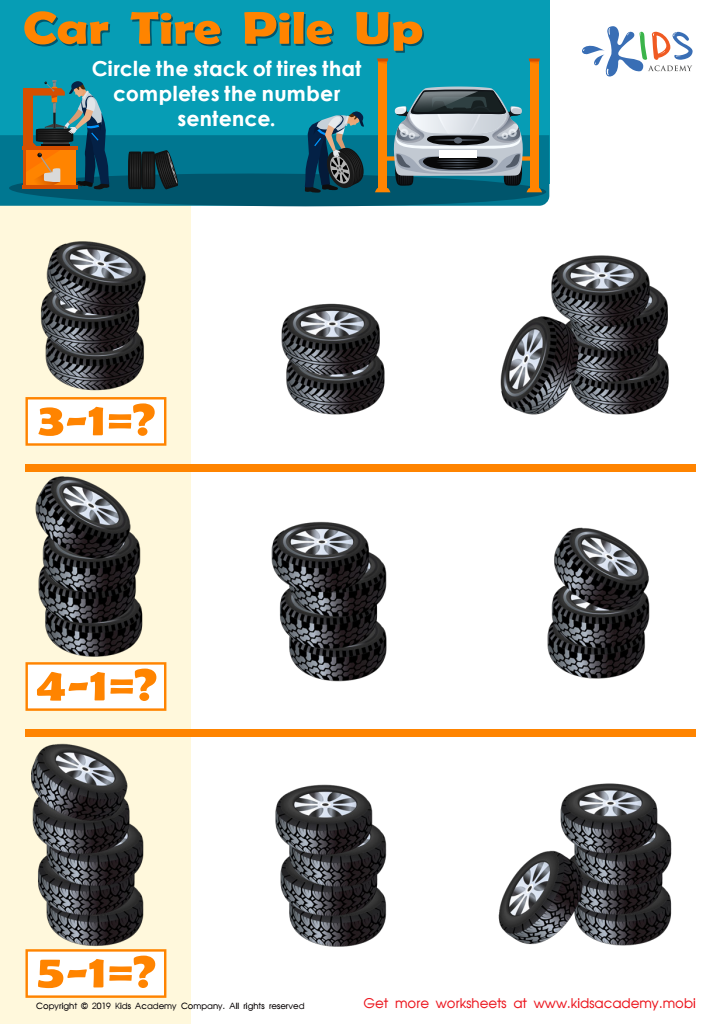
Car Tire Pile Up Worksheet
 Assign to My Students
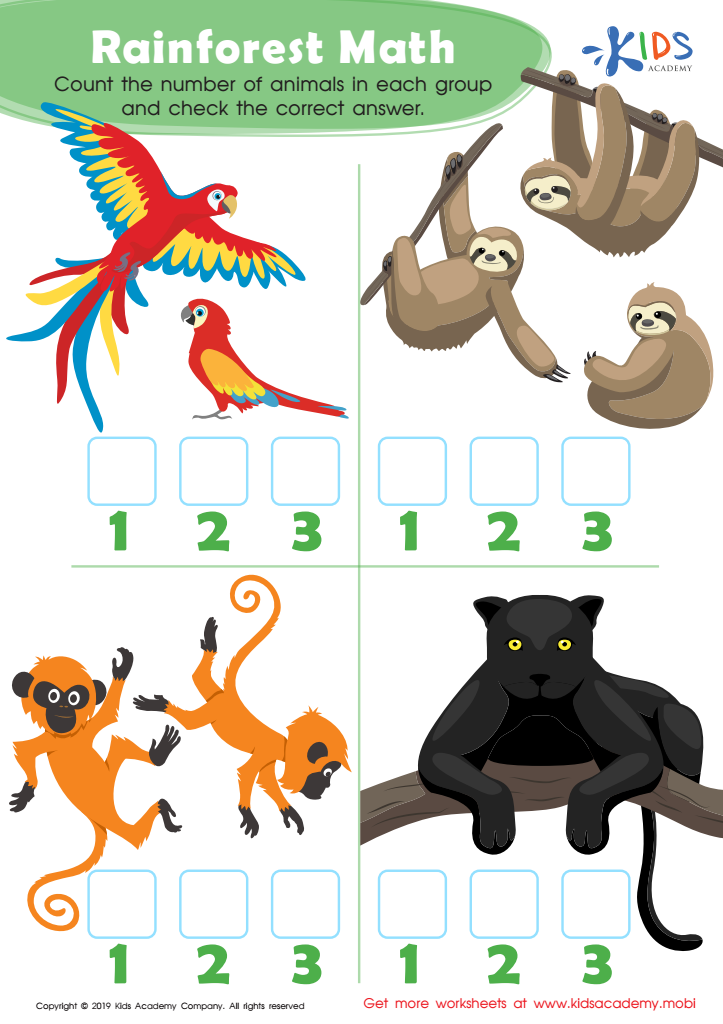
Rainforest Math Worksheet
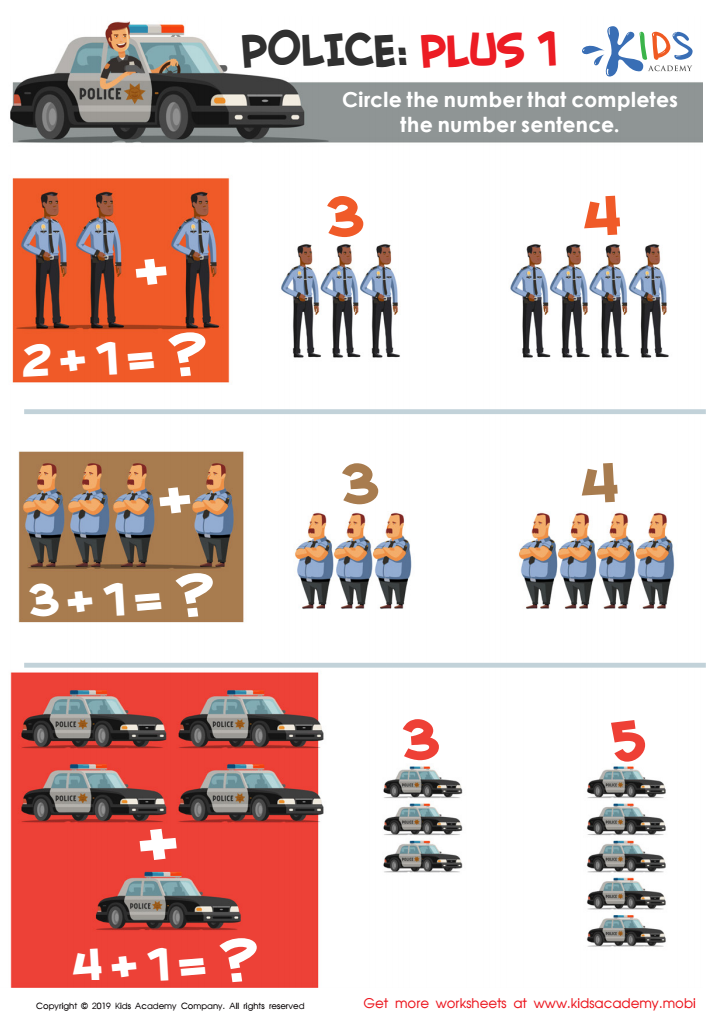
Police: Plus 1 Worksheet
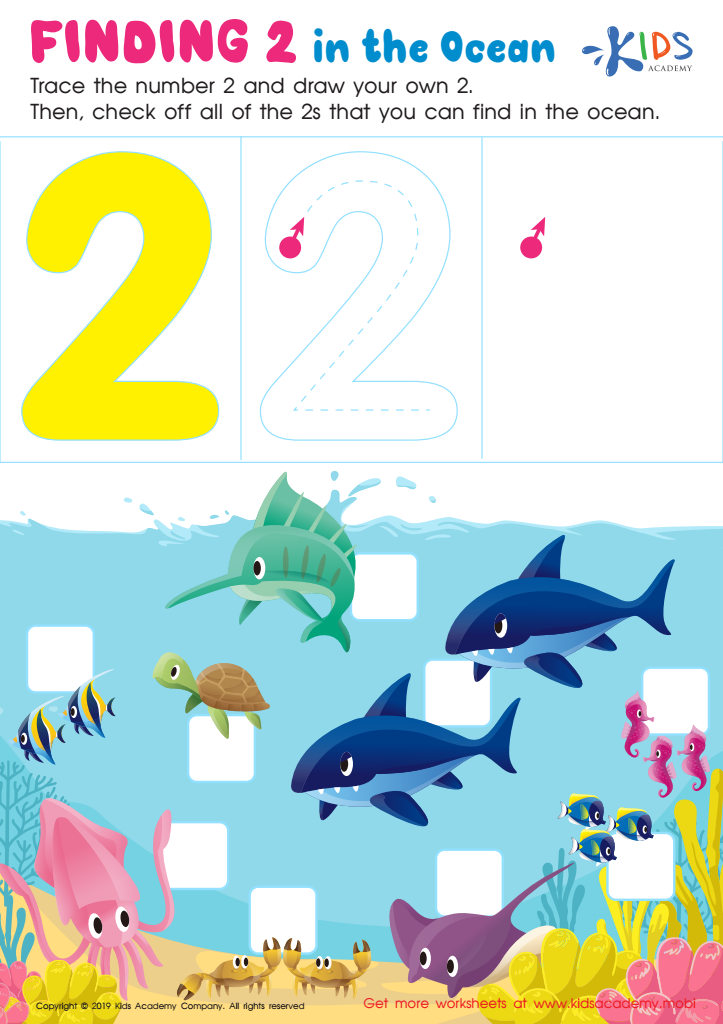
Finding 2: In the Ocean Worksheet
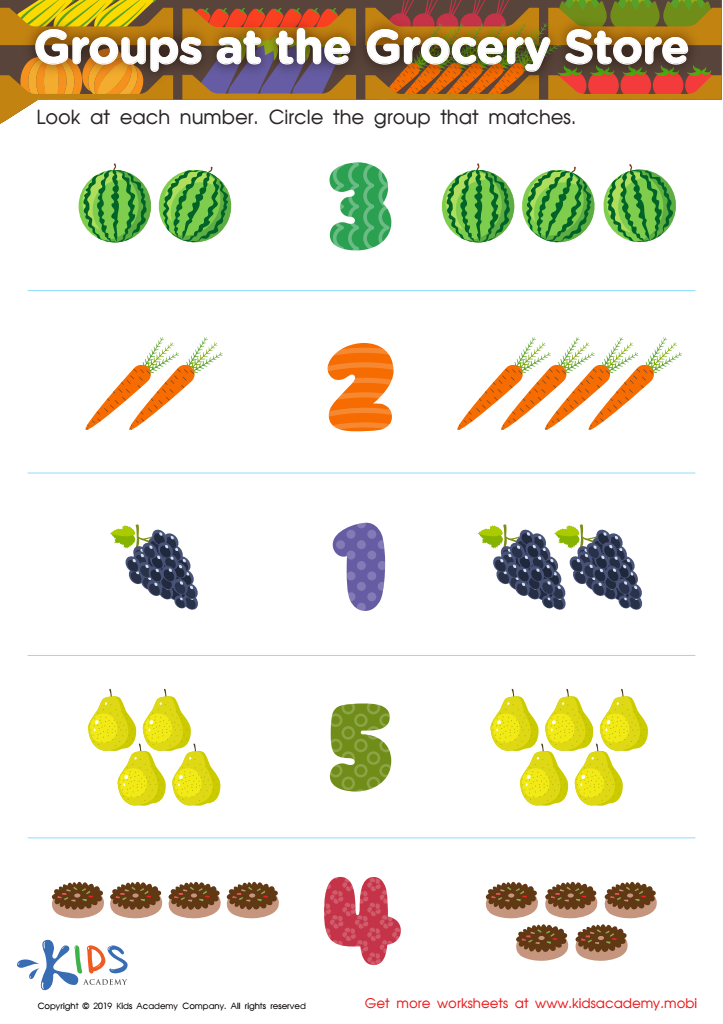
Groups at the Grocery Store Worksheet








Counting skills are fundamental for early math development and lay the groundwork for a child's future academic success. For parents and teachers of children aged 4-6, fostering these skills is essential for several reasons.
Firstly, counting serves as an introduction to more complex mathematical concepts, helping children understand number sequences, addition, and subtraction. Mastery of counting also enhances cognitive skills, such as problem-solving and critical thinking, which are pivotal across all areas of learning.
Secondly, counting is closely tied to everyday life and practical skills. Parents can reinforce counting through daily activities—counting fruits during grocery shopping or toys at home—which helps children understand the relevance of math beyond the classroom.
Moreover, developing strong counting skills builds confidence. Children who can count effectively often feel more empowered to tackle new challenges, leading to a positive attitude toward learning.
Finally, in a diverse classroom, teachers can tailor counting activities to cater to various abilities, ensuring inclusivity and engagement. By prioritizing counting skills in early education, both parents and teachers contribute to a solid educational foundation that not only supports academic achievement but also encourages a lifelong love for learning.








