Understanding subtraction Easy Math Worksheets for Ages 4-6
3 filtered results
-
From - To
Welcome to our "Understanding Subtraction Easy Math Worksheets" page, designed specifically for children ages 4-6. Our engaging worksheets make learning subtraction fun and approachable! Little learners will explore essential skills like counting, comparing amounts, and solving basic subtraction problems through colorful illustrations and interactive activities. Each worksheet is crafted to build confidence while reinforcing critical math concepts. Parents and teachers will find these resources ideal for guided practice or independent work, empowering young minds to grasp the magic of subtraction. Explore our collection today and watch your child become a subtraction superstar! Perfect for early math education at home or in the classroom.
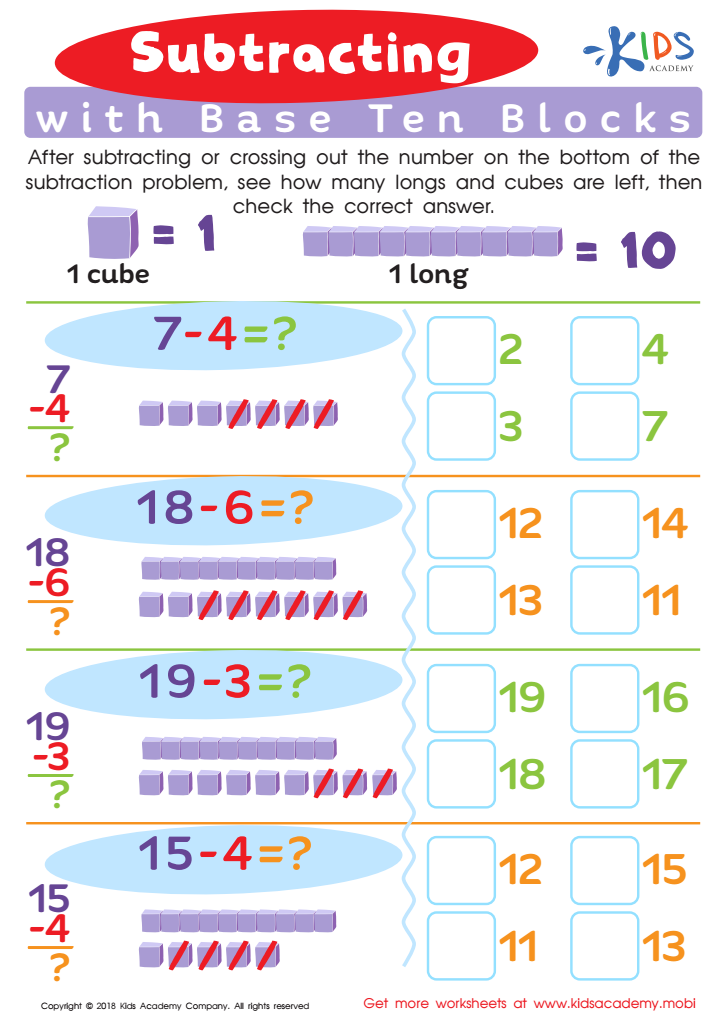
Subtracting With Base 10 Blocks Worksheet
 Assign to My Students
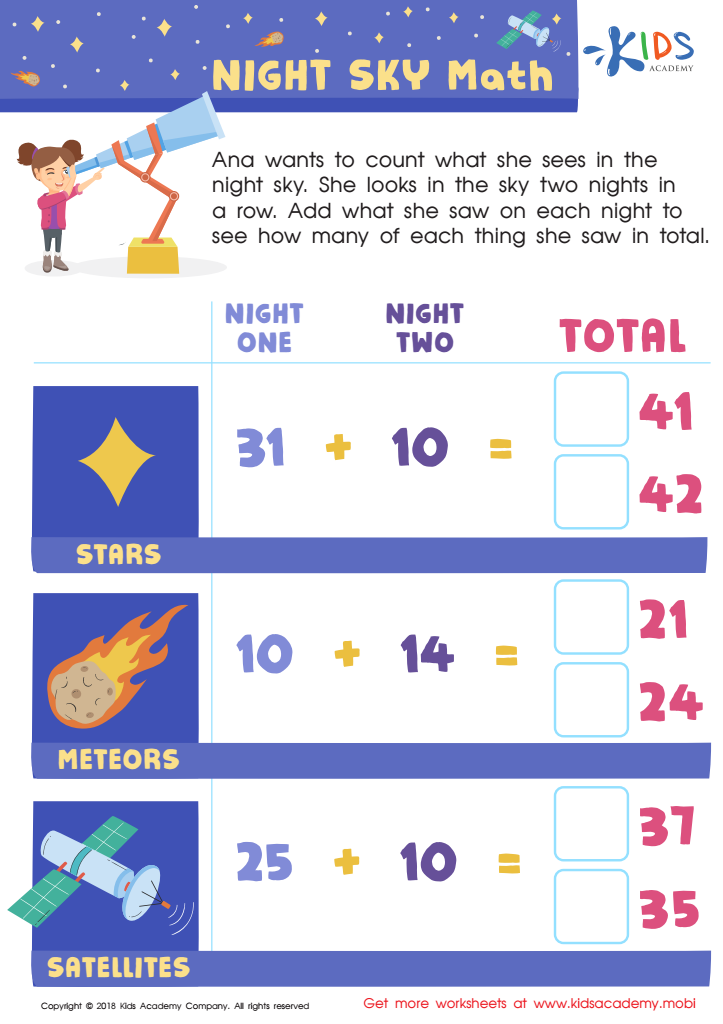
Night Sky Math Worksheet
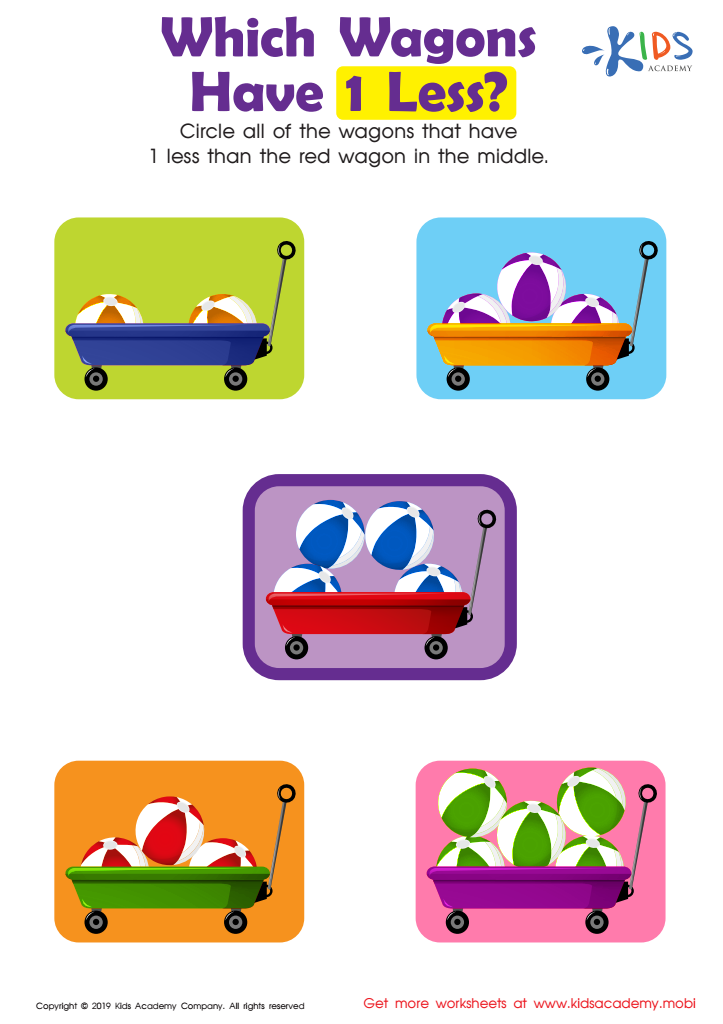
Which Wagons Have 1 Less? Worksheet



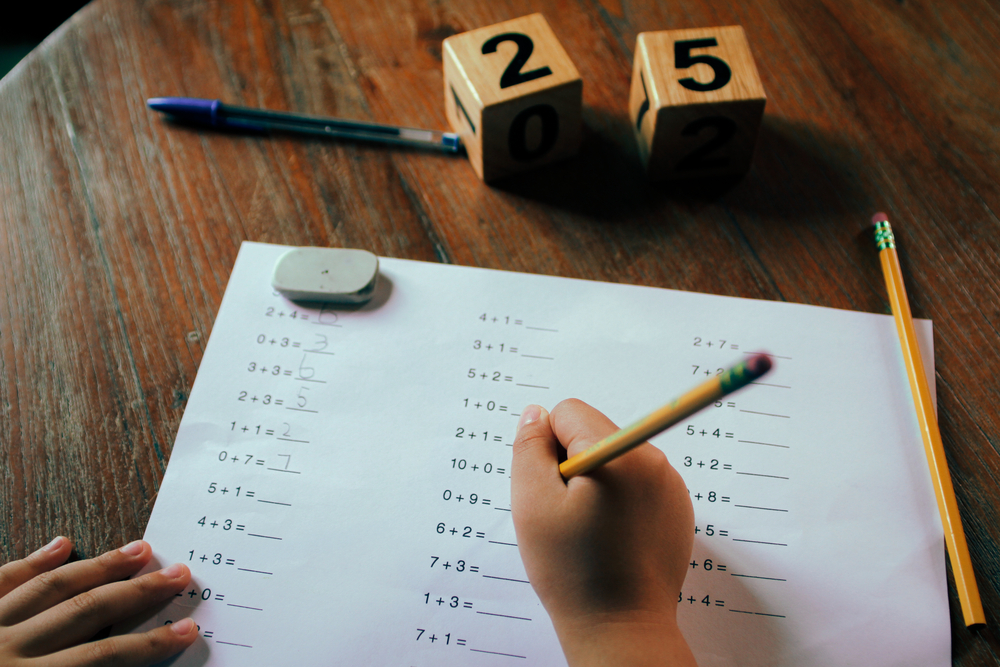
.jpg)



Understanding subtraction is a crucial building block in early mathematics and serves as a foundation for future learning. For children aged 4 to 6, grasping this concept helps develop critical thinking and problem-solving skills. When parents and teachers emphasize understanding subtraction, children not only learn to subtract numbers but also gain the ability to comprehend more complex math operations later on.
Moreover, mastering subtraction encourages numerical fluency, empowering children to approach math with confidence and enthusiasm. This is particularly important, as early negative experiences with math can linger and affect a child's attitude toward the subject throughout their educational journey. Engaging, age-appropriate methods of teaching subtraction—such as hands-on activities, visuals, and games—can make learning enjoyable and impactful.
Through subtraction, children also learn essential life skills, such as counting backward, recognizing patterns, and enhancing their analytical abilities. By creating a positive learning environment around subtraction, parents and teachers foster a sense of resilience and curiosity in children. Ultimately, a strong understanding of subtraction equips young learners with the foundational tools they need for future academic success, making it imperative for caregivers to prioritize this essential math skill.








