
Visual Perception Skills Easy Math Worksheets for Ages 4-6
3 filtered results
Difficulty Level
Grade
Age
-
From - To
Subject
Activity
Standards
Boost your child's early math and critical thinking abilities with our Visual Perception Skills Easy Math Worksheets, designed for ages 4-6. These engaging, expertly crafted activities aid in developing children's ability to recognize shapes, patterns, and spatial relationships, crucial for foundational math skills. Each worksheet is packed with colorful visuals and fun challenges to captivate young learners, making learning a delightful experience. Ideal for both classroom and home use, our worksheets encourage independent thinking and problem-solving skills, providing a solid groundwork for future math success. Ensure your child’s educational growth with our thoughtfully designed visual perception worksheets.
Favorites
With answer key
Interactive
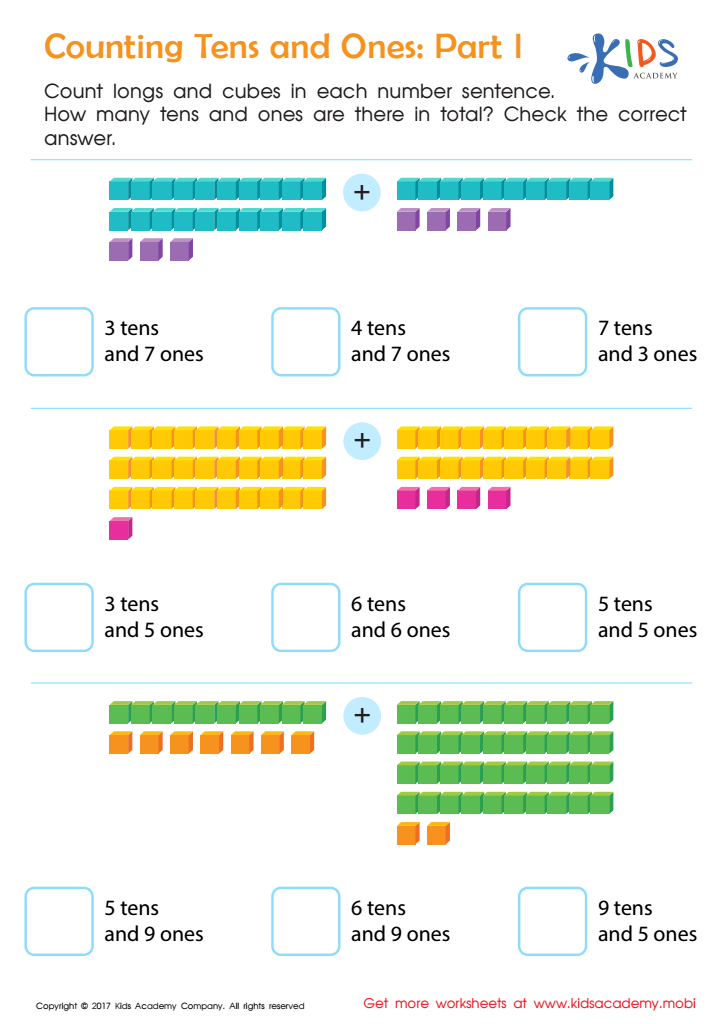
Counting Tens and Ones: Part 1 Worksheet
Kids Academy has a great place value worksheet to help kids learn when they don't have manipulatives at home! It includes longs and cubes that kids can count and add to find the sum. Colorful and downloadable, this page will help kids understand addition and place value better. Give it a try!
 Assign to My Students
Counting Tens and Ones: Part 1 Worksheet
Worksheet
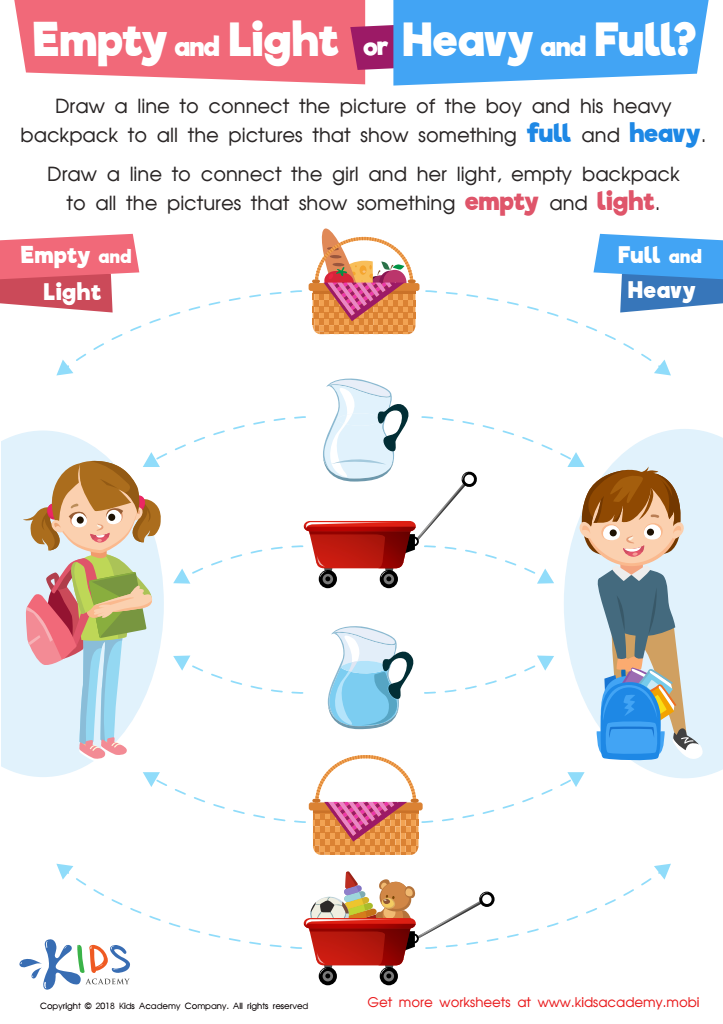
Empty and Light or Heavy and Full? Worksheet
Kids can have trouble understanding measurement, like the differences between heavy and light. This worksheet helps them associate full with heavy and empty with light, using familiar images. Plus, it's a fun way to practice fine motor skills, tracing the lines to connect the pictures.
Empty and Light or Heavy and Full? Worksheet
Worksheet
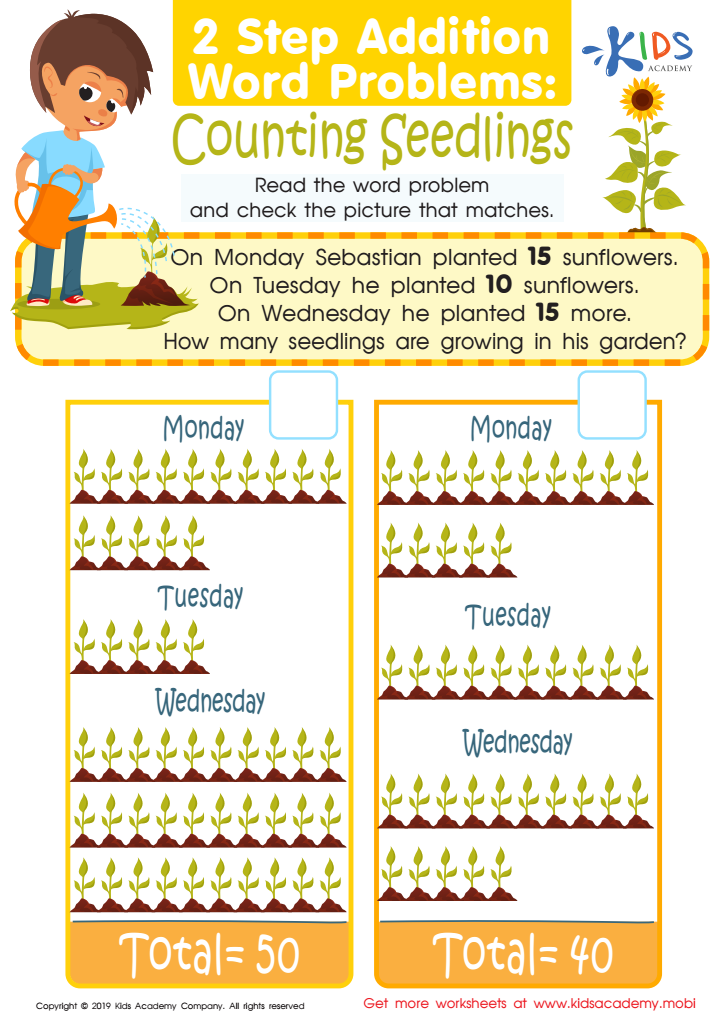
Counting Seedlings Worksheet
Understanding math word problems is key. Multiple steps can prove challenging - this free worksheet provides one-to-one picture representation to help kids solve multi-step addition word problems. Strengthen addition skills by choosing the matching picture to the answer.
Counting Seedlings Worksheet
Worksheet
Join Kids Academy for Free
Who is primarily going to use this learning content?








Visual perception skills are critical for young children, particularly for those aged 4 to 6, as they form the foundation for many cognitive and academic abilities, including math. Parents and teachers should prioritize these skills because they directly impact a child's ability to recognize, understand, and interpret visual information. This early development is integral to learning numbers, shapes, patterns, and spatial relationships—fundamental components of early math education.
Enhanced visual perception allows children to better discern differences and similarities in objects, which helps in tasks such as sorting, categorizing, and recognizing numerals and symbols. These skills play a significant role in problem-solving and logical reasoning, essential for tackling math problems effectively.
Moreover, strong visual perception skills aid in the development of hand-eye coordination, which is important for writing numbers and solving math problems on paper. Consistent practice helps in making abstract concepts more concrete, enabling young learners to grasp foundational math concepts more readily.
Ultimately, by nurturing visual perception skills during the formative years, parents and teachers can ensure children are better prepared to succeed in math and other academic areas, fostering confidence and a positive attitude toward learning. This creates a solid base for future educational achievement and a lifelong engagement with mathematics.








