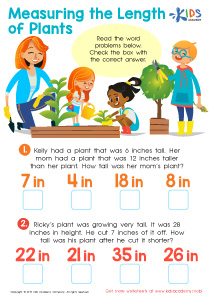
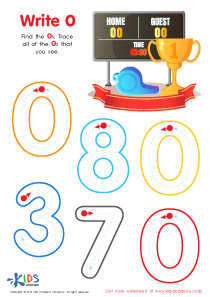
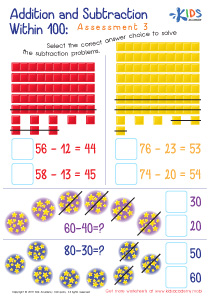
Welcome to our exciting collection of "Basic Addition Easy Numbers 0-10 Worksheets for Ages 4-6"! Designed to make learning fun and effective, these worksheets are perfect for young minds just beginning their math journey. Our engaging resources use playful illustrations and simple problems to help children grasp the concept of basic addition. Each worksheet focuses on numbers ranging from 0 to 10, offering plenty of practice to build confidence and foundational math skills. Ideal for home or classroom use, these worksheets are a valuable tool for parents and educators aiming to spark a love of math in young learners.

Check out this FREE Trial Lesson on Numbers 0–10 for age 4-6!

Review

Favorites
With answer key
Interactive
  • 4-6
  • Basic Addition
  • Numbers 0–10
  • Easy
Groups in the Park Worksheet

Groups in the Park Worksheet

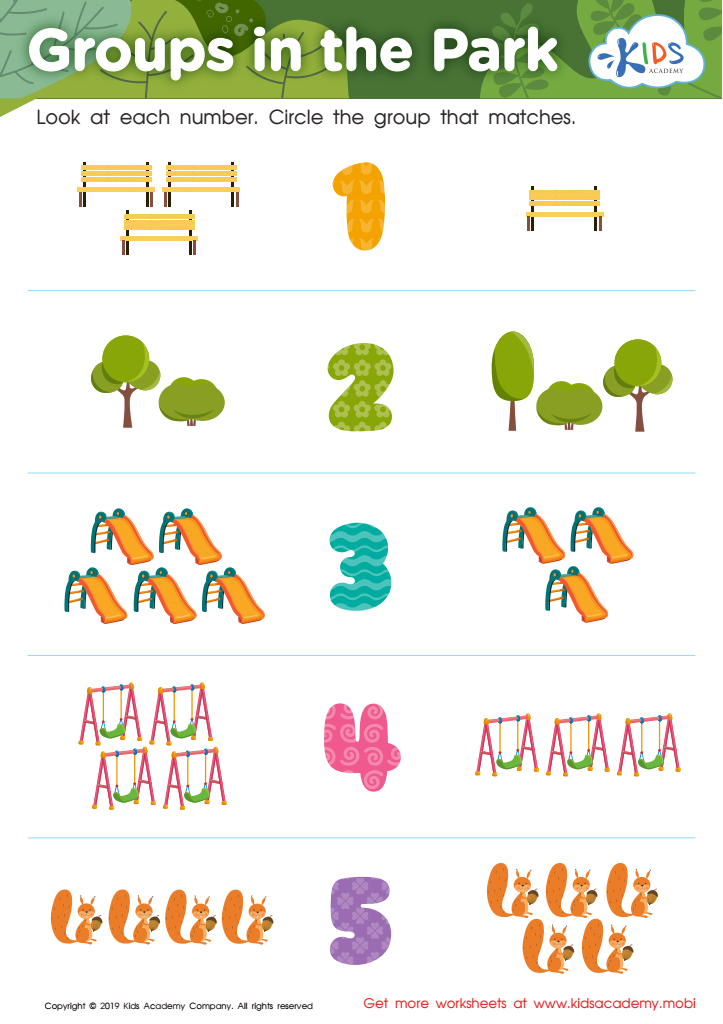
Take your kids to the park and let them enjoy the freedom to play! Ask them what they love doing most and study a picture together - name items and count objects in the sets, then circle the correct one. It's a fun way for your kids to learn.
Groups in the Park Worksheet
Worksheet
Counting Spots Worksheet

Counting Spots Worksheet

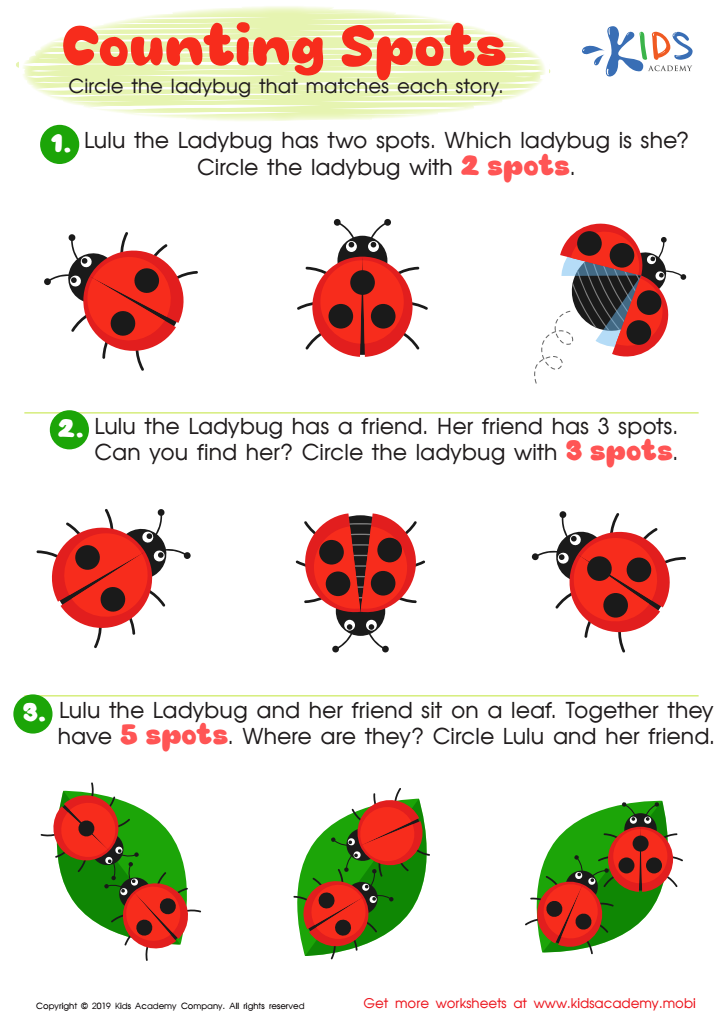
This worksheet is full of cute, colorful ladybugs. Help your kids identify Lulu, who has two spots on her body. Count the spots on each ladybug and circle the one with two spots. Then read the instructions on the other sections and help them find the ladybugs there, too!
Counting Spots Worksheet
Worksheet
Turtle Counting Worksheet

Turtle Counting Worksheet

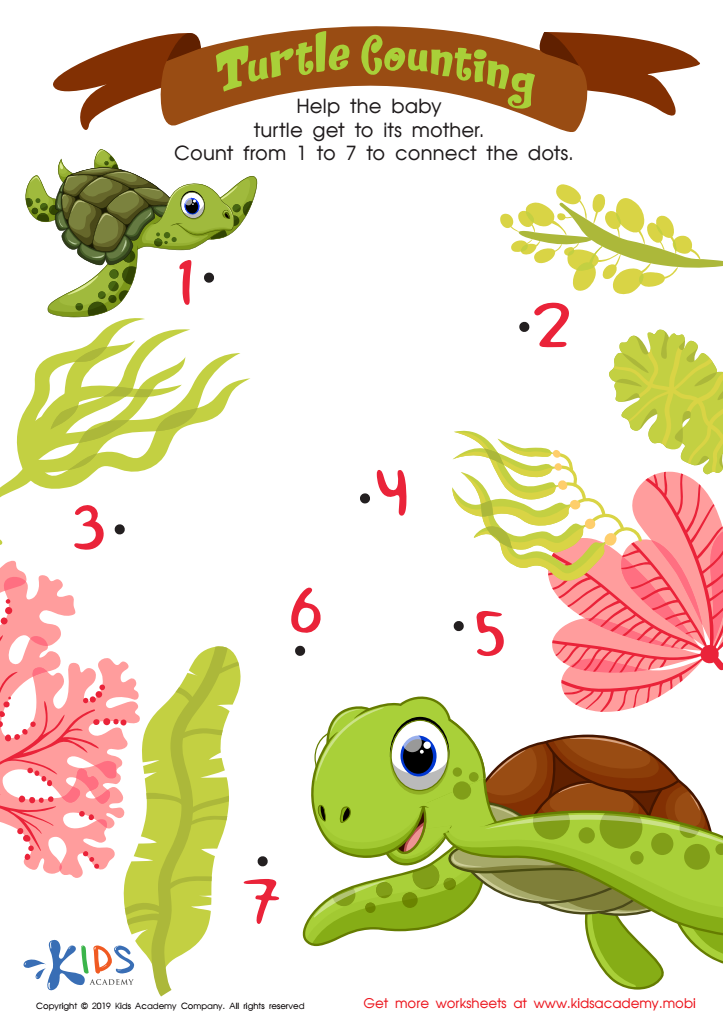
Help your child identify the turtle in the picture and teach them about turtles. From their diet to the life cycle, they'll learn a lot. Now, help the baby turtle return to its mother. Count from 1 to 7, then connect the dots on the printout.
Turtle Counting Worksheet
Worksheet
Counting at the Pond Worksheet

Counting at the Pond Worksheet

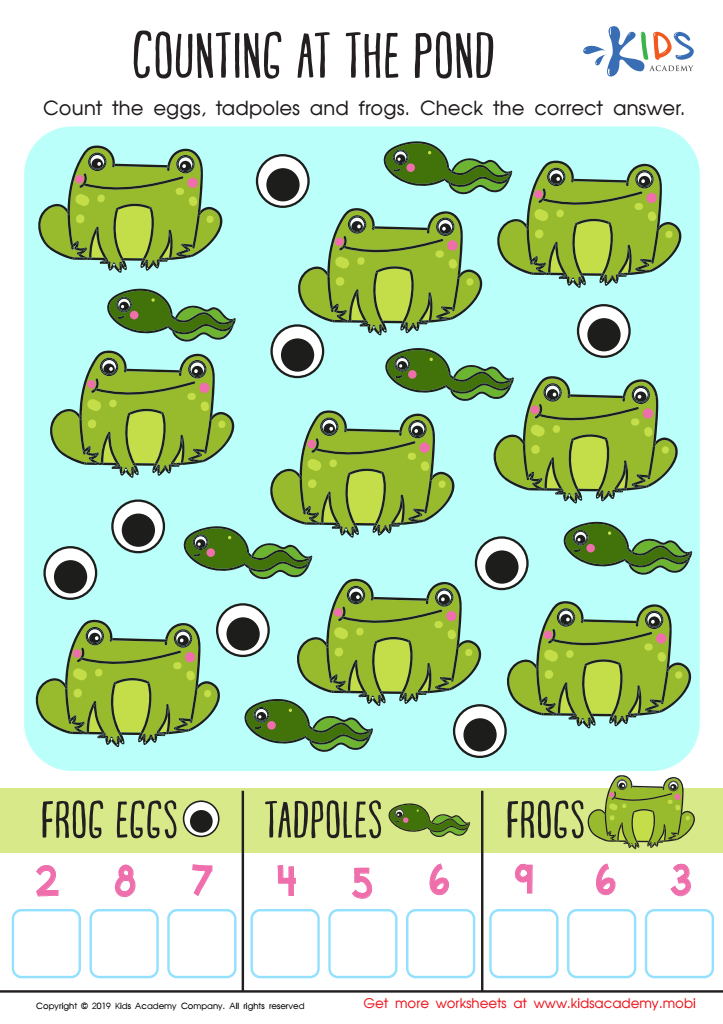
Ask your kids what they see in the picture. Can they identify the animal? Where does it live, what does it eat and what sound does it make? These questions will help get them in the math mood. Help them count the eggs, tadpoles and frogs, then check the answer.
Counting at the Pond Worksheet
Worksheet
Count up to 7 Worksheet

Count up to 7 Worksheet

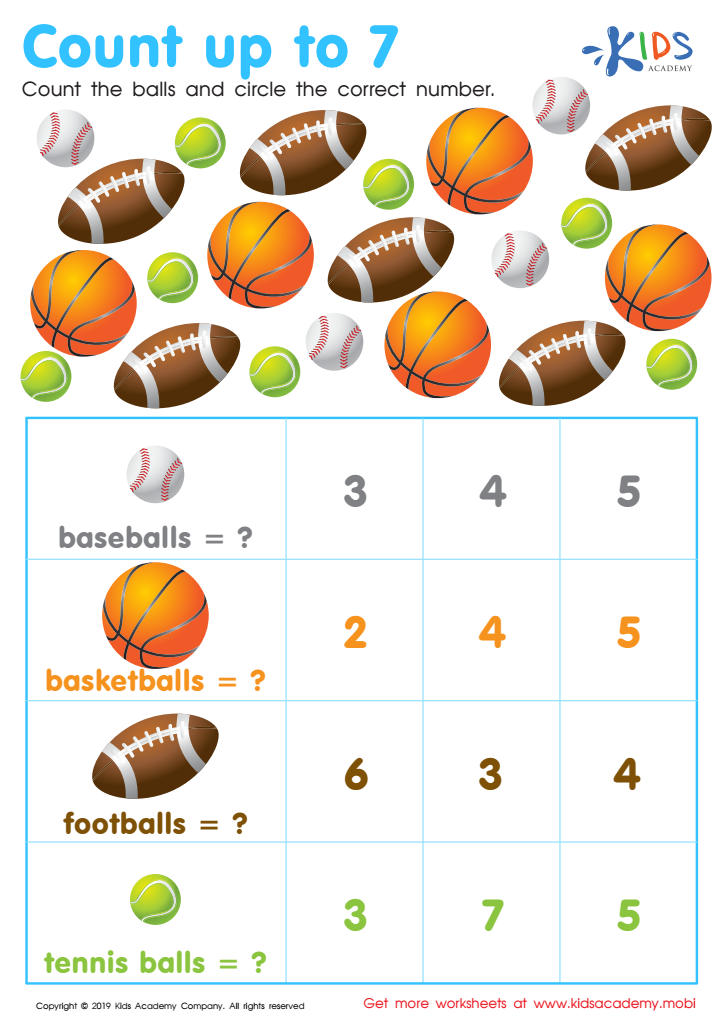
As your child starts learning math, one of the basics is counting. Download this PDF to let them practice counting up to 7 objects - such as baseballs, basketballs, footballs, and tennis balls - and hone their visual discrimination skills by selecting the right number of each. Regular practice will help them perfect their skills.
Count up to 7 Worksheet
Worksheet
Counting Flowers Worksheet

Counting Flowers Worksheet

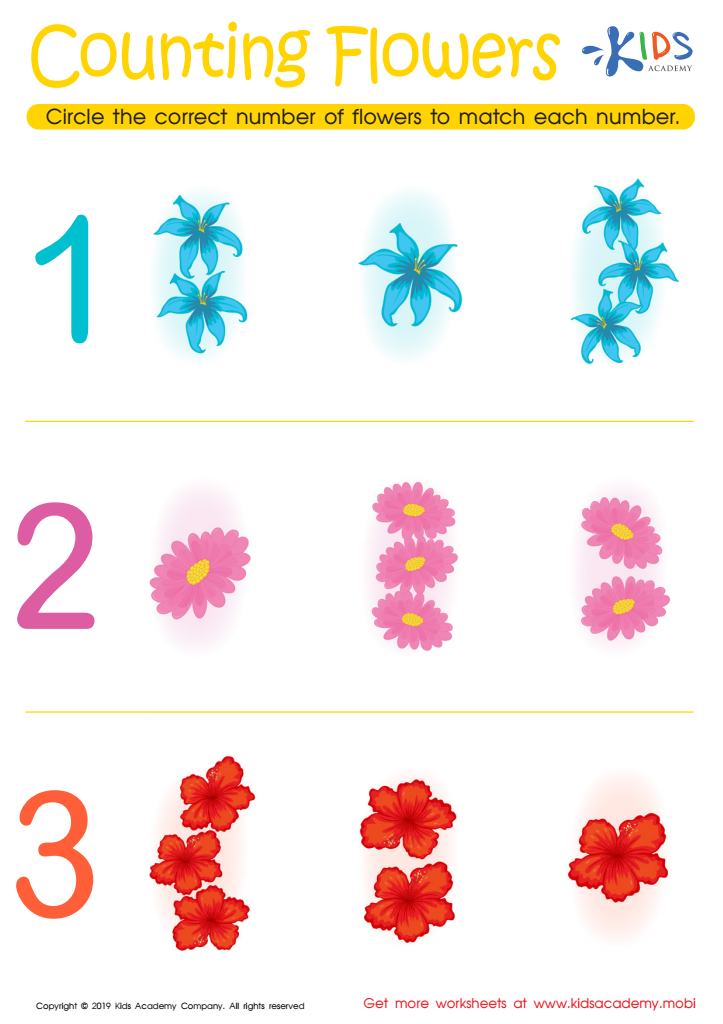
Kids love Flower Power! This free PDF helps kids practice basic number sense and counting. They match the correct number of colorful flowers to the corresponding numeral. An enjoyable game that improves basic number sense - perfect!
Counting Flowers Worksheet
Worksheet
Who Has 1 More? Worksheet

Who Has 1 More? Worksheet

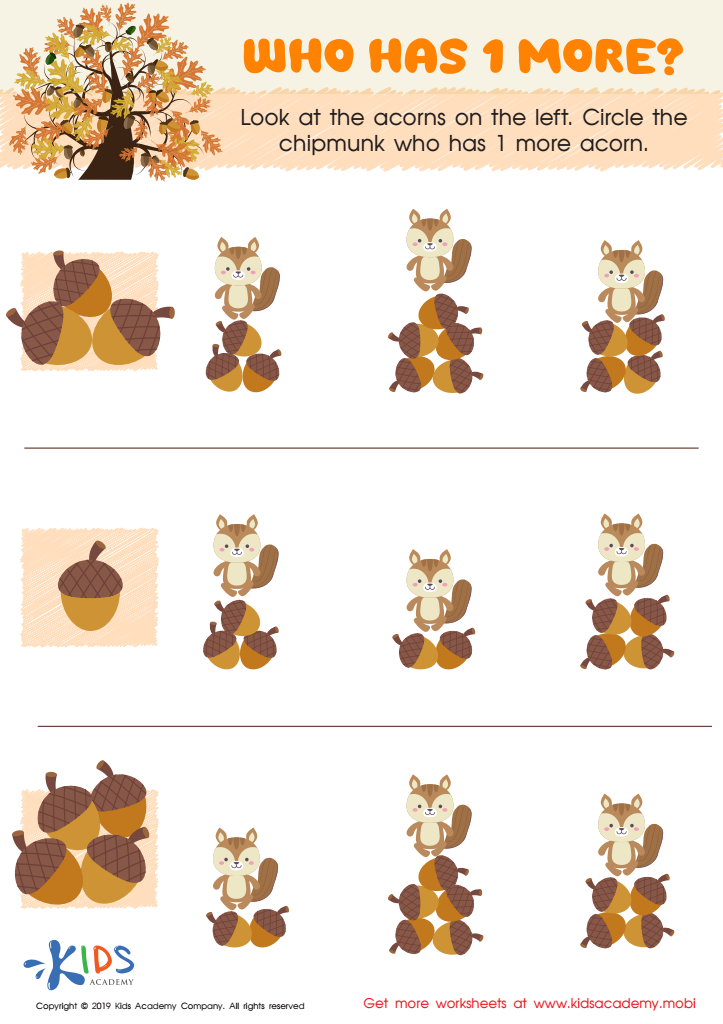
Do your kids know what chipmunks are? They eat acorns, store them for bad weather, and live in trees or on the ground. Count and circle the chipmunk with one more acorn than the others on the printout.
Who Has 1 More? Worksheet
Worksheet
Bugs Counting Printable Worksheet

Bugs Counting Worksheet

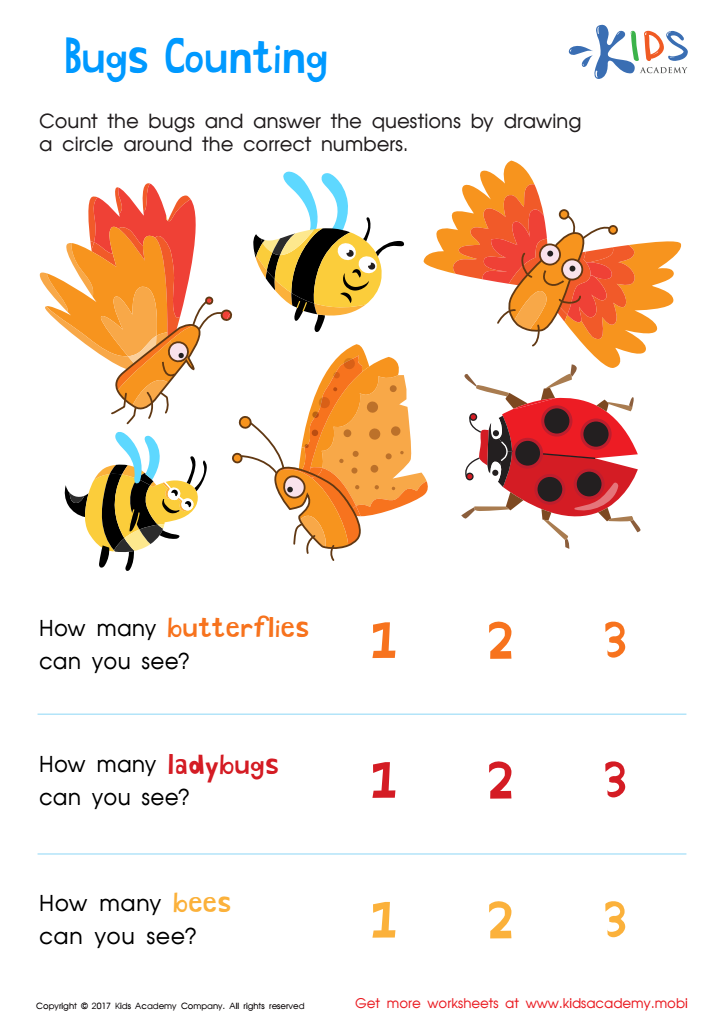
Filled with bright reds, yellows, and oranges, your child will love solving these fun bug-related math problems.
Bugs Counting Worksheet
Worksheet
Enrichment: High Fives with Friends! Worksheet

Enrichment: High Fives with Friends! Worksheet

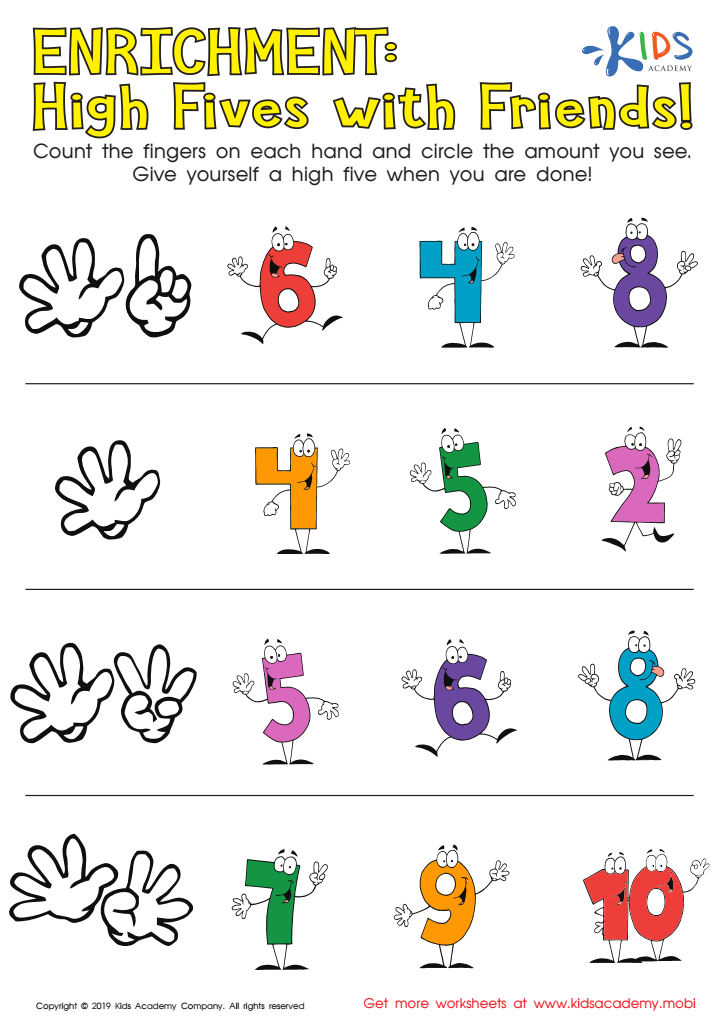
Get your kids learning and having fun with this coloring worksheet! Kids can get practice counting and identifying numbers by looking at the fingers on each hand. Help them circle the amount they see, then reward them with a high five for getting the answers right - learning has never been so much fun!
Enrichment: High Fives with Friends! Worksheet
Worksheet
Enrichment: Castle Counting Worksheet

Enrichment: Castle Counting Worksheet

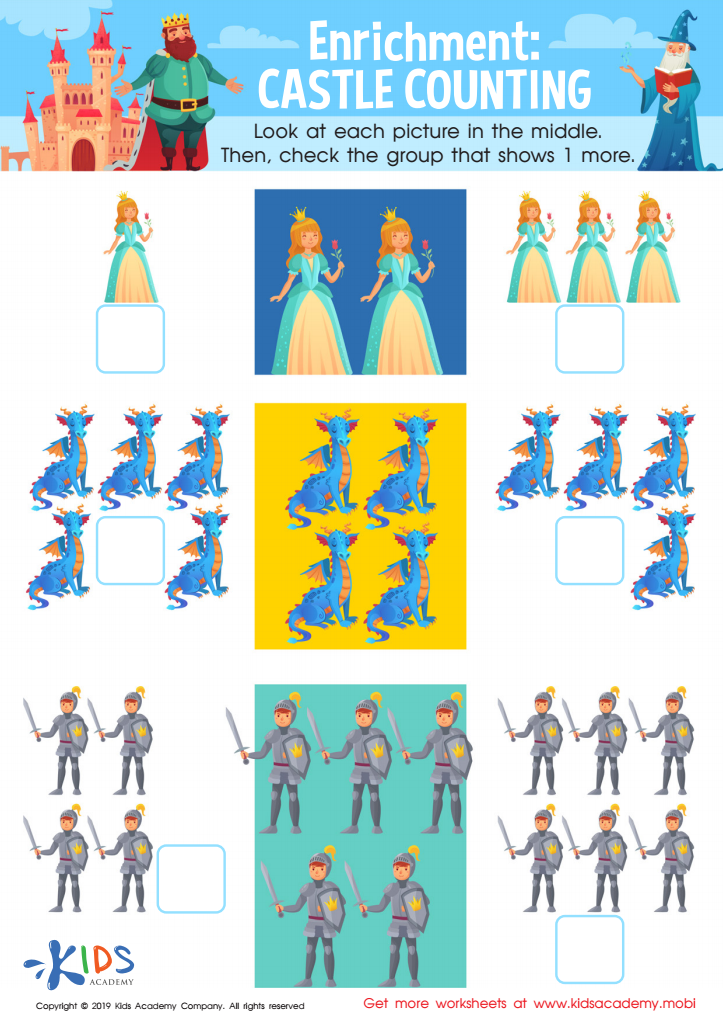
Help your kids learn to count. Start with easy counting of numbers as high as possible. Use the pictures in this printout. Point to the middle one, help them identify it and then count one more than it. Do this to help them get ready for more difficult math concepts like addition, subtraction and multiplication.
Enrichment: Castle Counting Worksheet
Worksheet
Firefighter Counting Worksheet

Firefighter Counting Worksheet

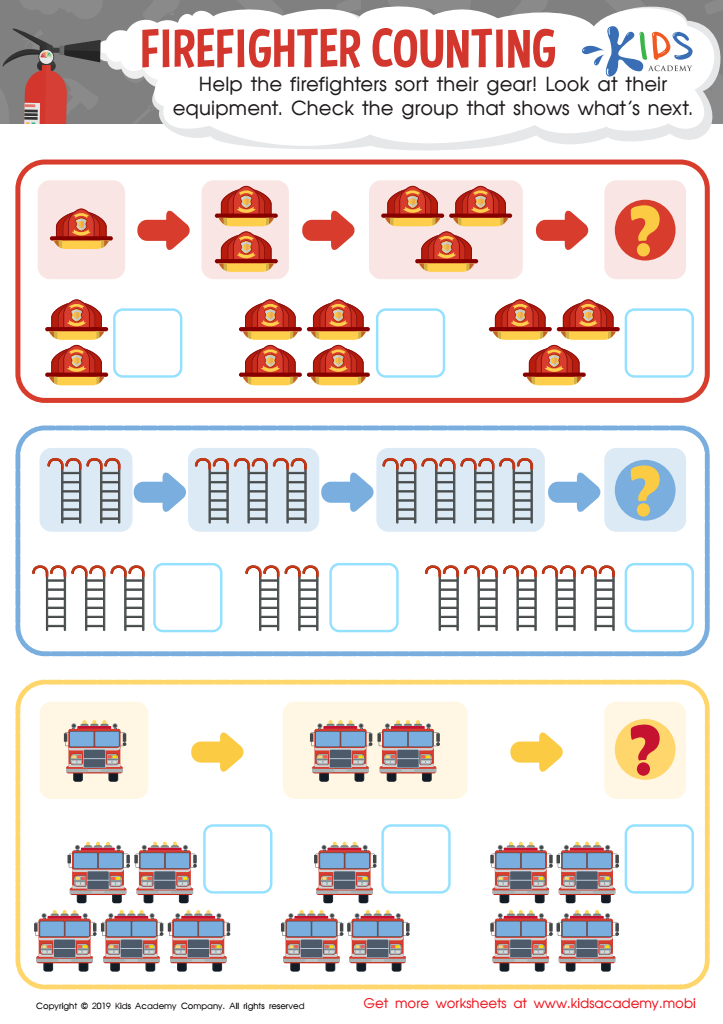
Firefighters are a vital part of any community. When a fire breaks out, they respond promptly to protect citizens and extinguish the blaze. Wearing specialized gear, they not only make the job easier, but safer too. Get your kids involved and help the firefighters sort their gear. Count the equipment, and check the group for the next steps.
Firefighter Counting Worksheet
Worksheet
Counting Birds Worksheet


Counting Birds Worksheet

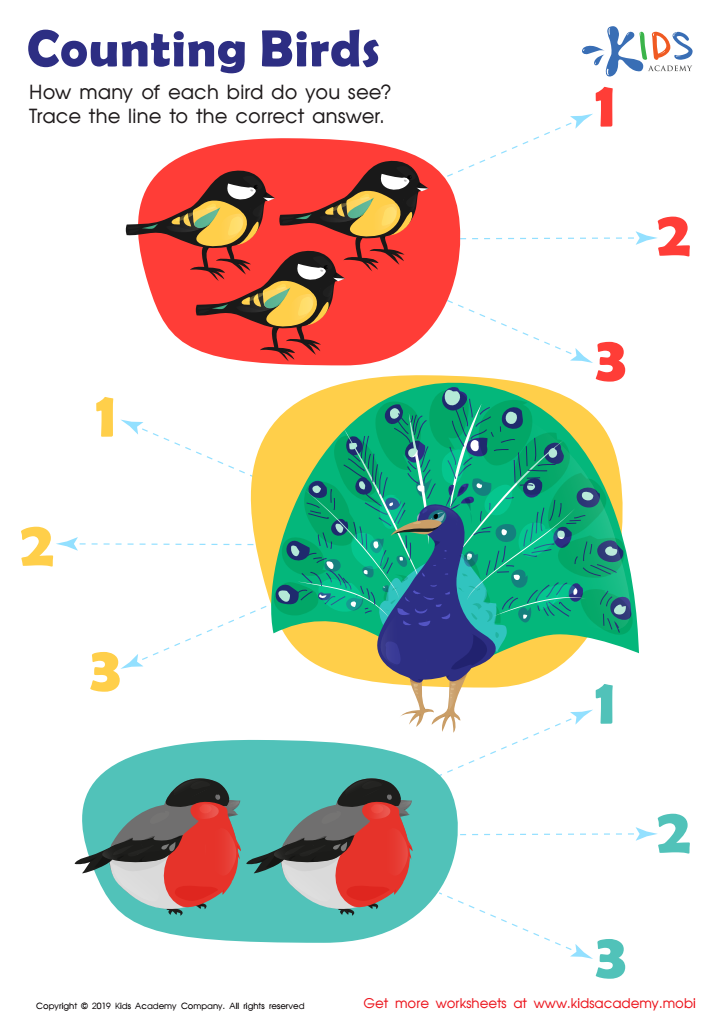
Kids love counting! With each number they learn, they can make a one-to-one representation with an item. The more practice they get, the better. Try this counting worksheet with traceable lines, to give your children practice and work on their fine motor skills. They will enjoy connecting the picture to the right number, and will feel like mathematicians with each success!
Counting Birds Worksheet
Worksheet


Basic addition using easy numbers from 0–10 is a fundamental building block for young children aged 4-6. This age is crucial for cognitive development and forming the foundations for later mathematical learning. Here’s why it deserves attention from both parents and teachers:

  1. Foundation for Future Math Skills: Mastering basic addition sets the stage for understanding more complex mathematical concepts. Without a secure grasp of simple arithmetic, children are likely to struggle with more advanced topics like subtraction, multiplication, fractions, and problem-solving in later grades.

  2. Develops Cognitive Skills: Engaging in adding numbers helps improve counting skills, number recognition, and memory. This is essential for brain development and enhances a child's ability to perform academic tasks across subjects.

  3. Builds Confidence: Early success in math can boost a child’s confidence in their abilities. It's encouraging when children as young as 4-6 can solve sums, giving them a sense of achievement and a positive attitude towards learning.

  4. Real-world Applications: Basic addition is used in everyday activities, such as sharing items equally among friends or determining the total number of toys or snacks. This practical understanding aids daily interactions and decision-making.

Both parents and teachers play vital roles in offering support, creating a positive learning environment, and offering practice opportunities that make learning addition enjoyable and effective.