Fine Motor Skills Easy Numbers 11–20 Worksheets for Ages 4-6
4 filtered results
-
From - To
Enhance your child's fine motor skills with our engaging Easy Numbers 11–20 worksheets, designed specifically for ages 4-6. These fun, interactive activities help young learners practice number recognition, counting, and tracing, all while improving hand-eye coordination and dexterity. Our worksheets feature vibrant illustrations and child-friendly exercises that make learning enjoyable and effective. As your child navigates through various tasks, they'll develop essential skills crucial for their academic journey. Perfect for homeschooling or classroom activities, these worksheets provide an excellent resource for fostering confidence in math and fine motor development. Download and start your child's learning adventure today!
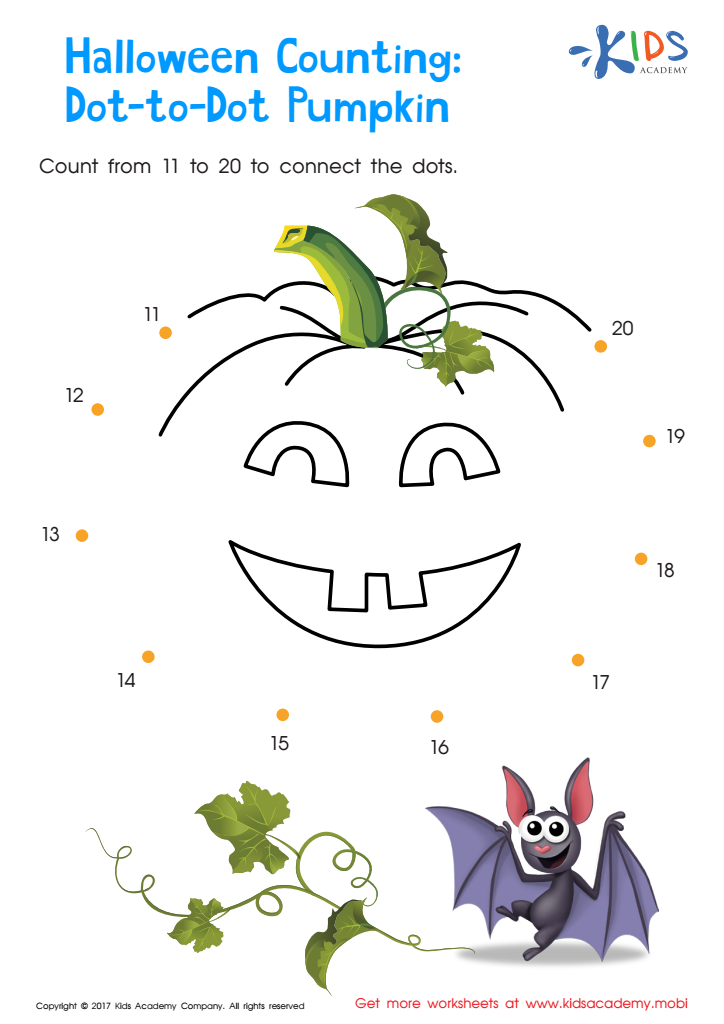
Ordering 11–20: Halloween Counting Worksheet
 Assign to My Students
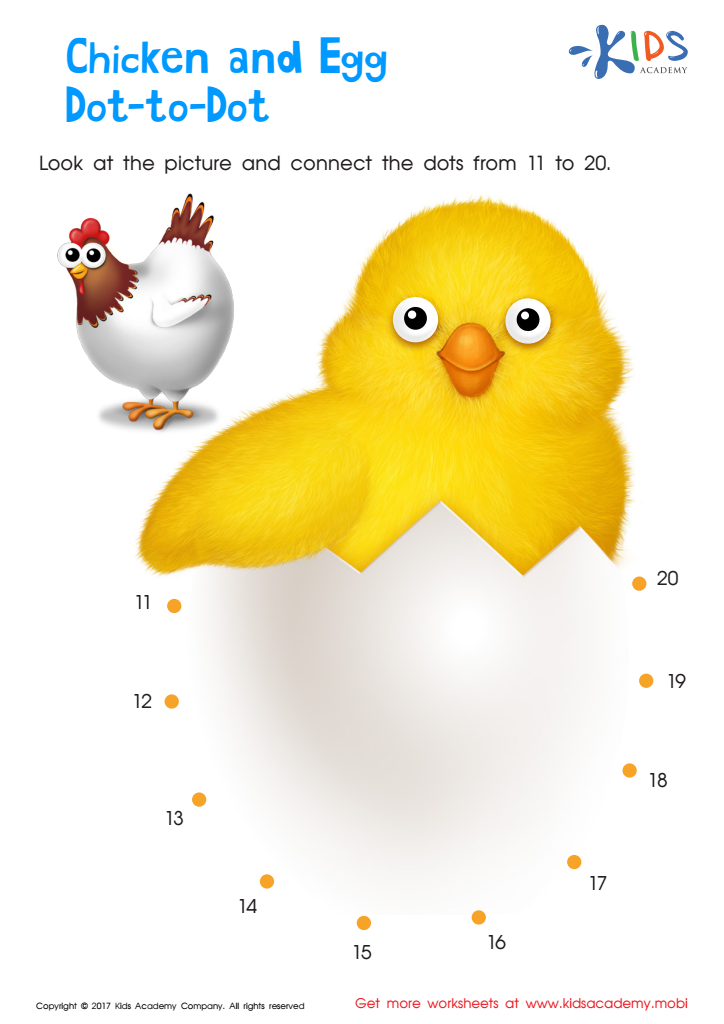
Ordering 11–20: Chicken & Egg Dot–to–dot Worksheet
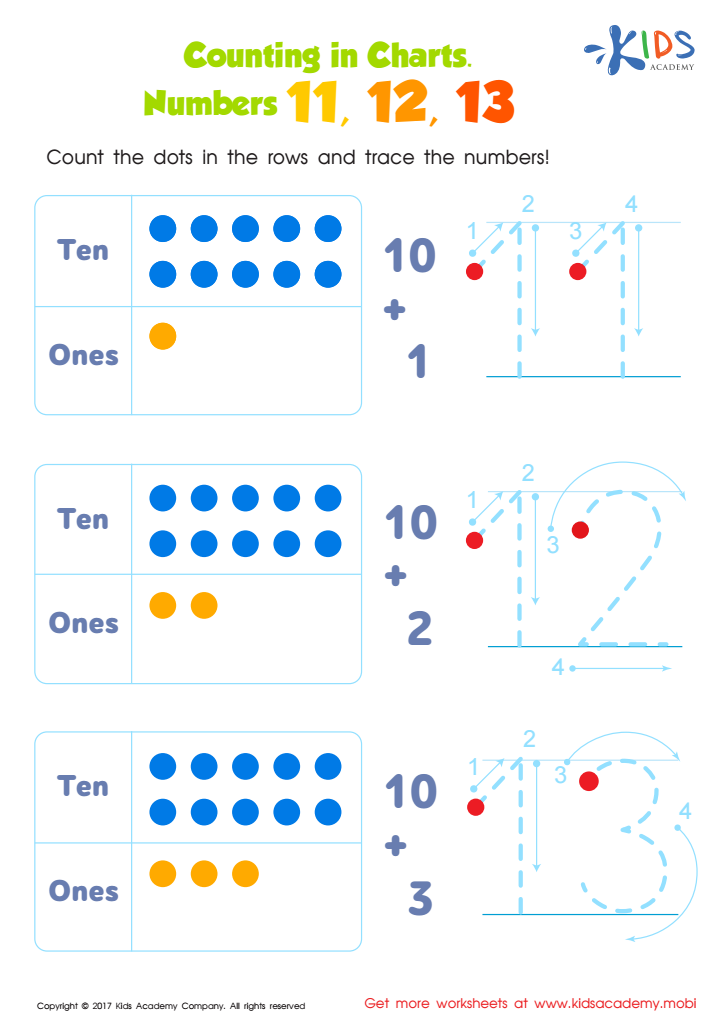
Number Tracing Worksheet For Kindergarten
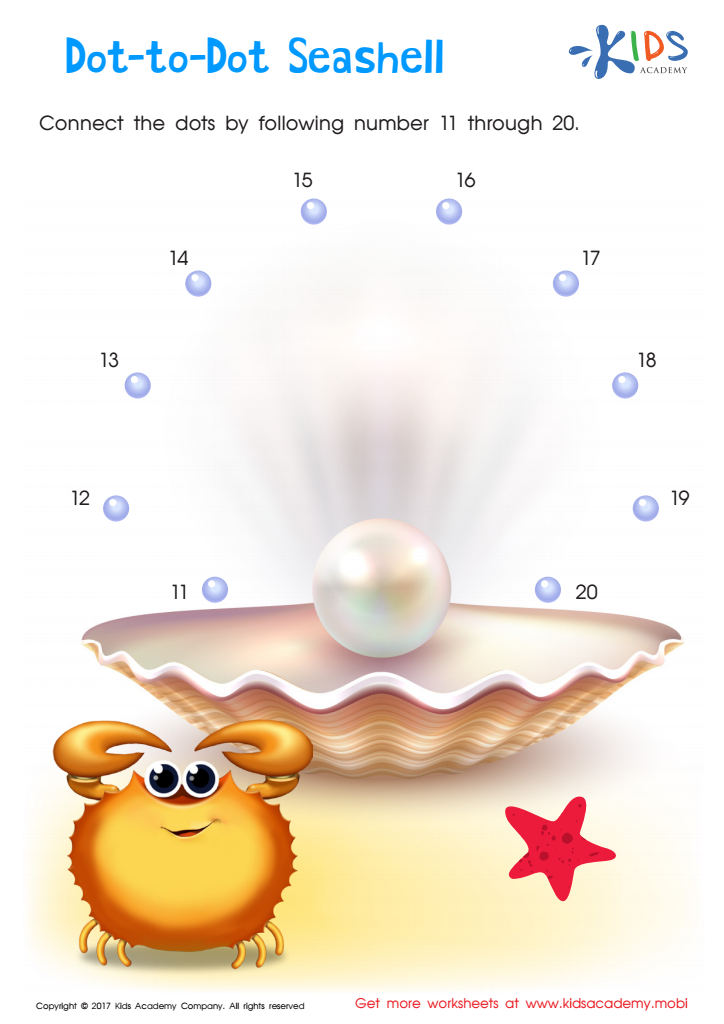
Ordering 11–20: Dot–to–dot Seashell Printable



Fine motor skills are crucial for children, especially those aged 4-6, as they form the foundation for various everyday tasks and future academic success. The development of these skills involves the coordination of small muscles in the hands and fingers, necessary for activities like writing, drawing, and manipulating small objects. As children begin to engage with numbers, particularly in the range of 11-20, fine motor skills enable them to effectively use materials such as pencils, scissors, and counting manipulatives, enhancing their learning experiences.
Parents and teachers should pay close attention to fine motor skill development because it impacts cognitive development, self-confidence, and independence. Strong fine motor abilities assist children in better grasping numerical concepts, as they can physically engage with counting tasks, sequence numbers, and even perform basic operations with manipulatives. This hands-on approach lays the groundwork for more complex math skills in the future.
Moreover, fostering fine motor skills can be a fun and engaging activity for both parents and teachers. Incorporating games and hands-on activities not only strengthens these skills but also promotes a positive attitude toward learning. In summary, supporting fine motor development is essential for academic progress and overall growth during these formative years.