Alphabet Recognition Easy ABC Letters Worksheets for Ages 4-7
7 filtered results
-
From - To
Discover our "Alphabet Recognition Easy ABC Letters Worksheets" designed for ages 4-7. These engaging worksheets help young learners master letter identification and improve their alphabet skills in a fun and interactive way. Each worksheet features colorful illustrations and age-appropriate activities that promote recognition of both uppercase and lowercase letters. Perfect for parents and educators, these tools enhance early literacy and prepare children for future reading success. Explore a variety of exercises ranging from tracing to matching, ensuring a comprehensive learning experience for your child. Download now and watch your little ones become confident with their ABCs!
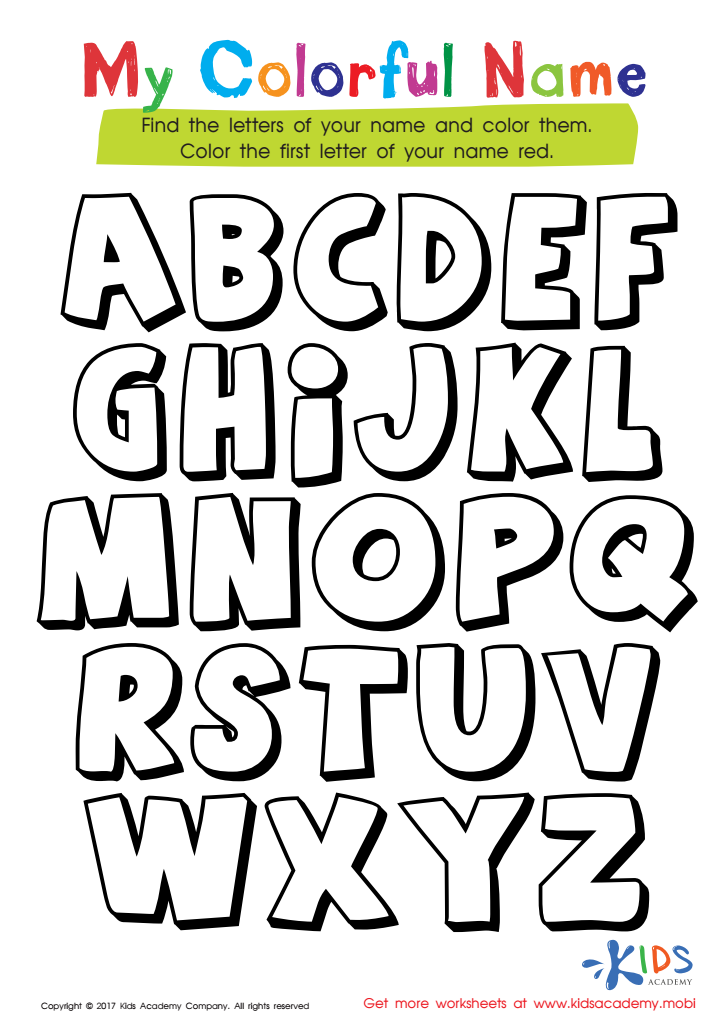
My Colorful Name Worksheet
 Assign to My Students






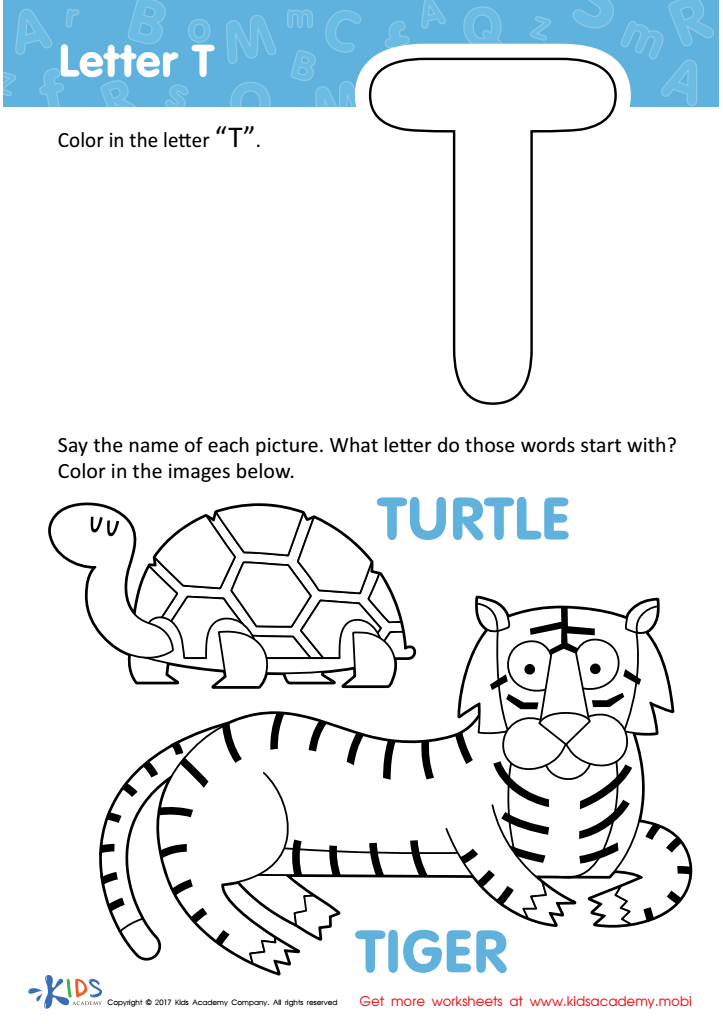
Letter T Coloring Sheet
Assign to My Students
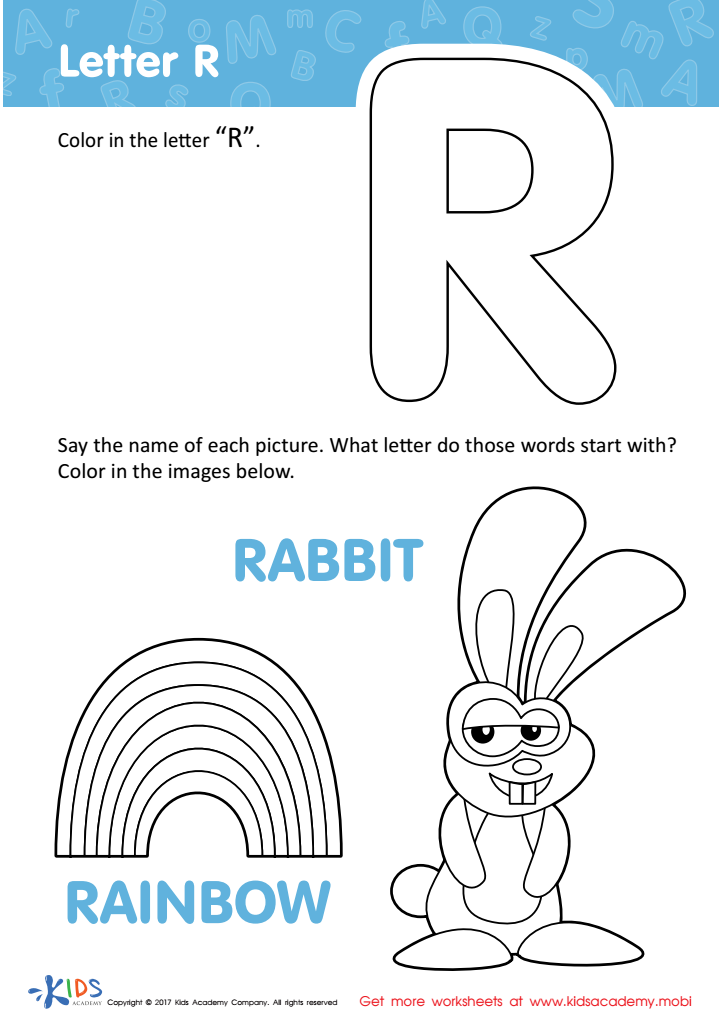
Letter R Coloring Sheet
Assign to My Students
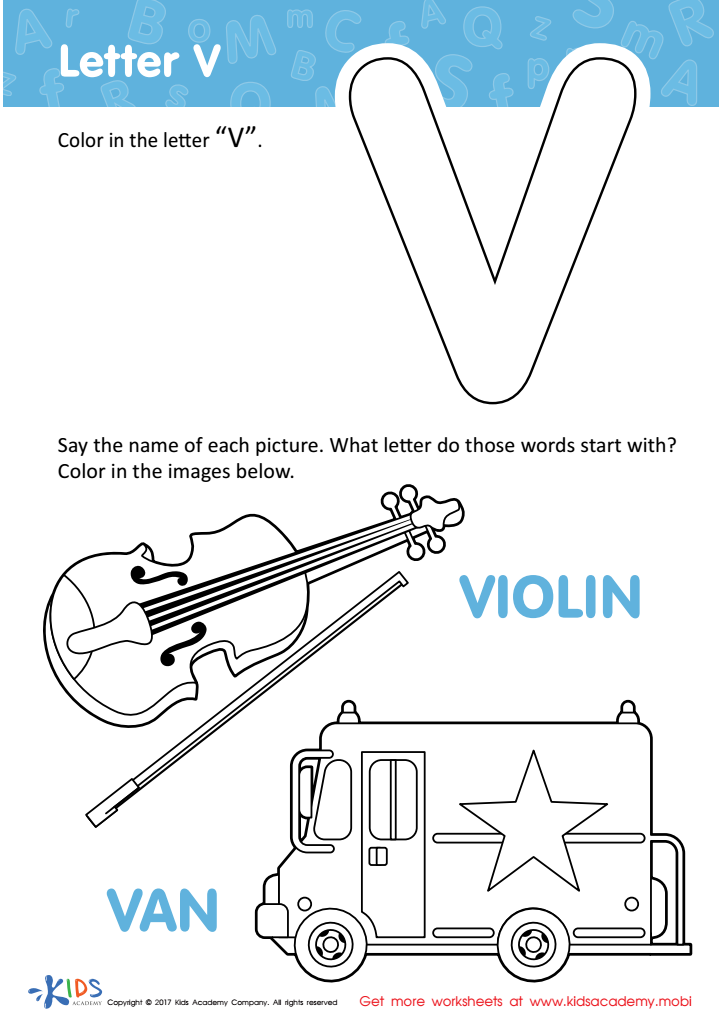
Letter V Coloring Sheet
Assign to My Students
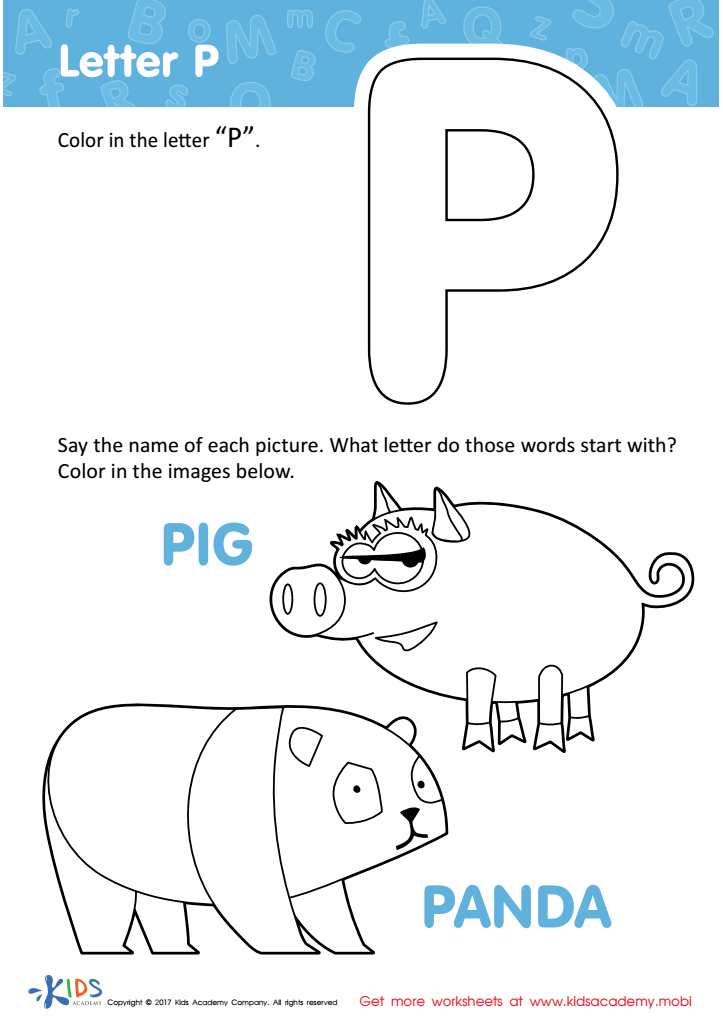
Letter P Coloring Sheet
Assign to My Students
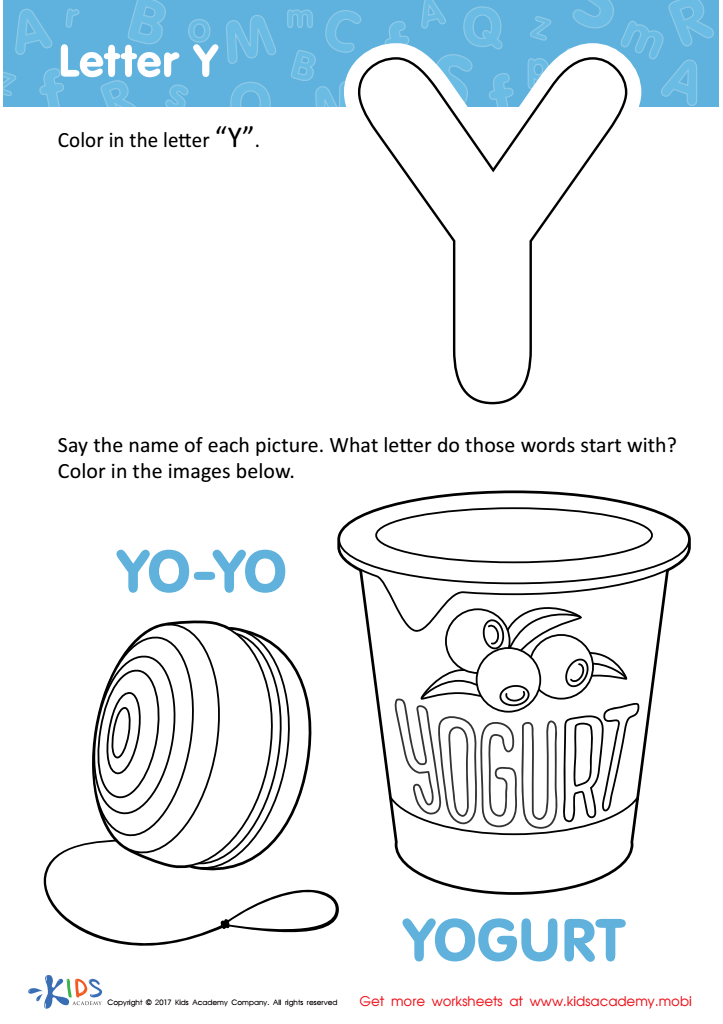
Letter Y Coloring Sheet
Assign to My Students
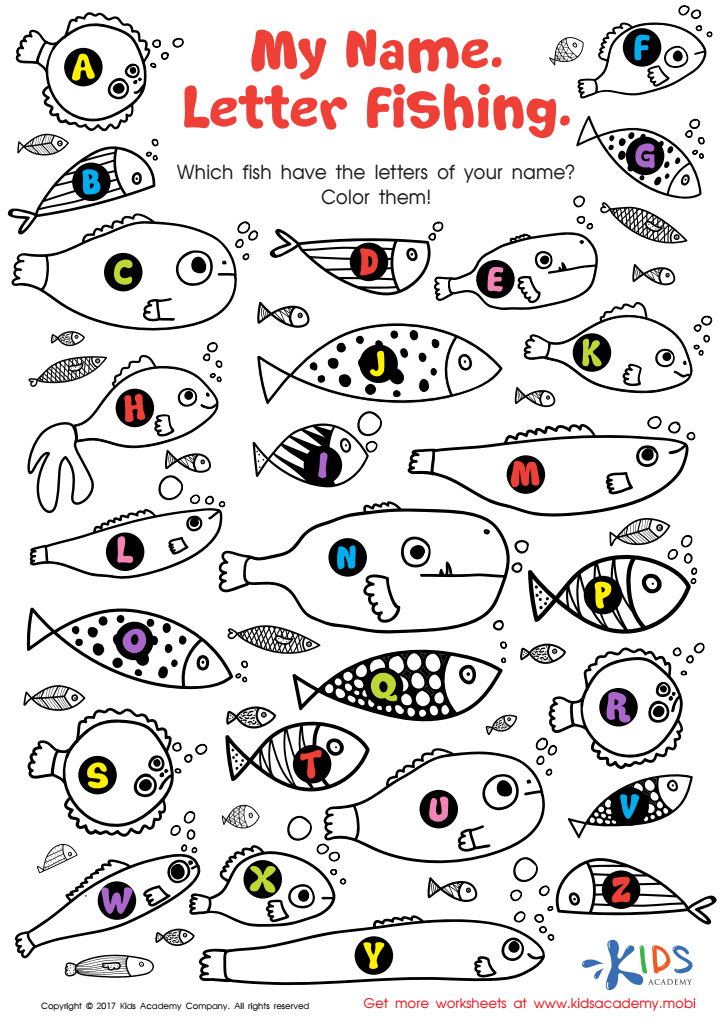
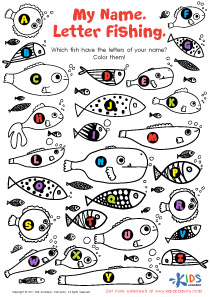
My Name: Letter Fishing Worksheet
Assign to My Students







Alphabet recognition is a fundamental skill for children aged 4-7, bridging the gap between early literacy and academic success. Parents and teachers should prioritize Alphabet Recognition Easy ABC Letters for several key reasons.
Firstly, recognizing letters lays the groundwork for reading. By familiarizing children with the alphabet, they can begin to understand the connection between sounds and written language, leading to improved phonemic awareness and decoding skills essential for reading fluency.
Secondly, developing alphabet recognition at an early age boosts children's confidence and motivation to learn. Engaging with interactive letters ensures that children feel encouraged to explore language, leading to a positive attitude towards reading and writing.
Additionally, mastering the alphabet has far-ranging effects beyond literacy. It supports cognitive development through pattern recognition, spatial reasoning, and memory skills. This foundational knowledge also allows children to engage in more complex educational activities as they progress through school.
Most importantly, consistent exposure to alphabet recognition fosters a love for learning. Times spent engaging with ABC materials—be it through games, songs, or storybooks—creates valuable bonding experiences between parents and children and enriches the classroom environment, setting the stage for lifelong learning and curiosity.