Easy Beginning Sounds Worksheets for Ages 4-7
4 filtered results
-
From - To
Welcome to our collection of Easy Beginning Sounds Worksheets for Ages 4-7! Designed for early learners, these engaging worksheets help children strengthen their phonemic awareness by focusing on identifying and networking letters with their corresponding sounds. With colorful visuals and fun activities, kids will enjoy practicing beginning sounds through tracing, matching, and drawing. Perfect for home or classroom use, these worksheets cater to various learning styles, ensuring your child builds confidence in their reading skills. Make learning enjoyable and effective with our thoughtfully crafted materials, paving the way for successful literacy development. Explore our resources today to enhance your child's learning journey!
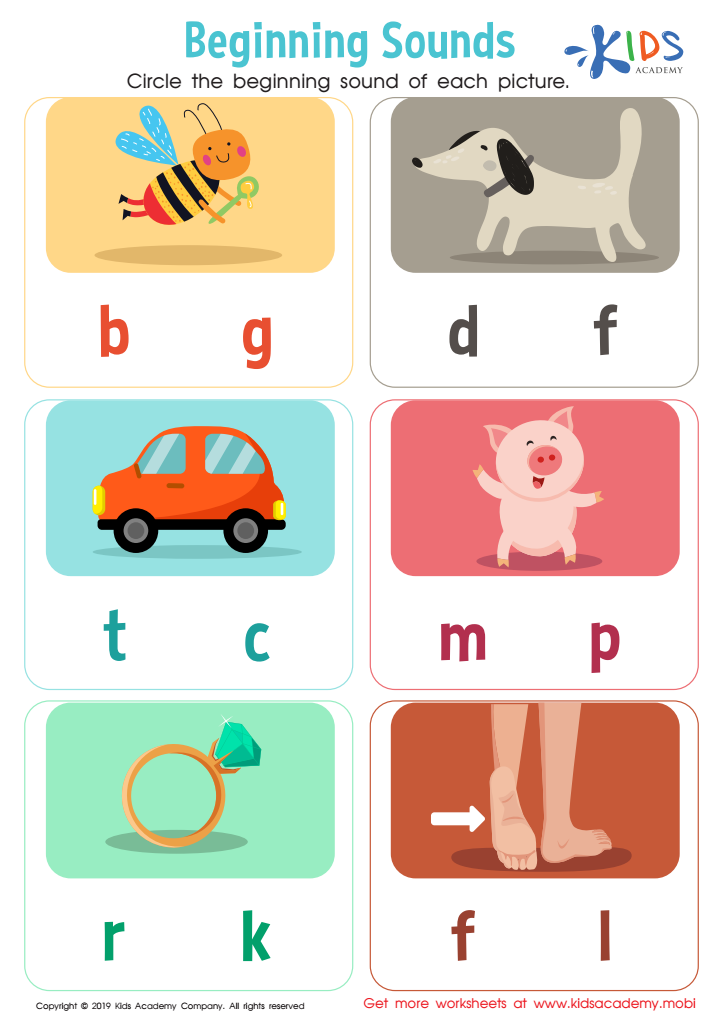
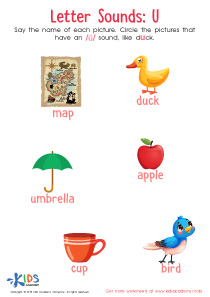
Beginning Sounds Worksheet
 Assign to My Students
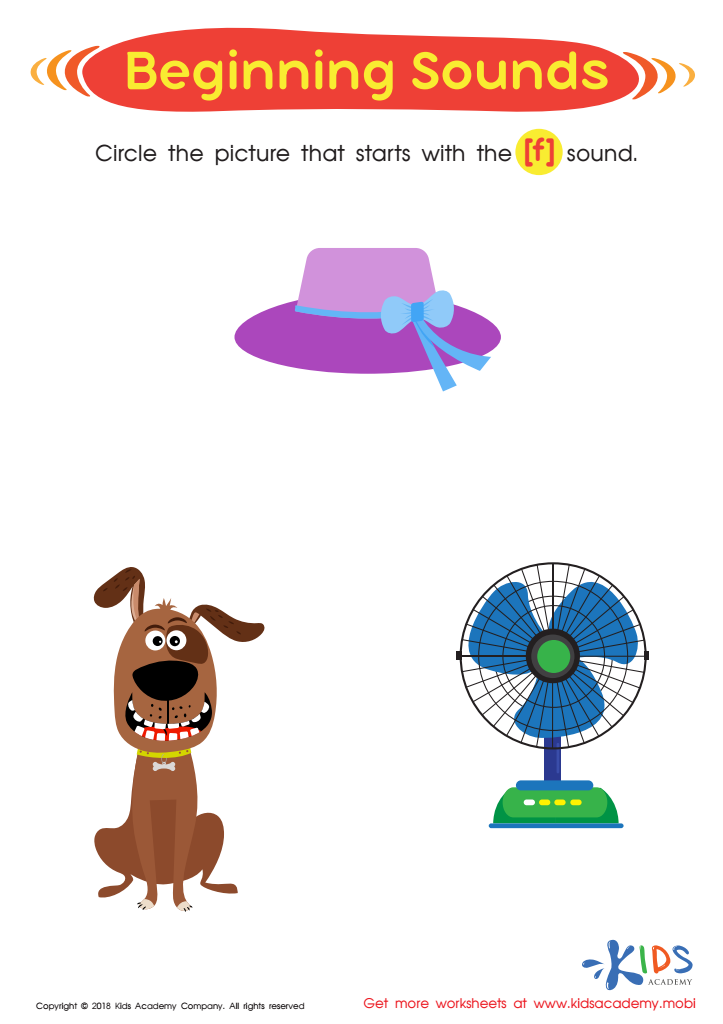
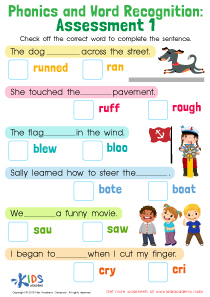
Beginning Sounds Assessment Printable
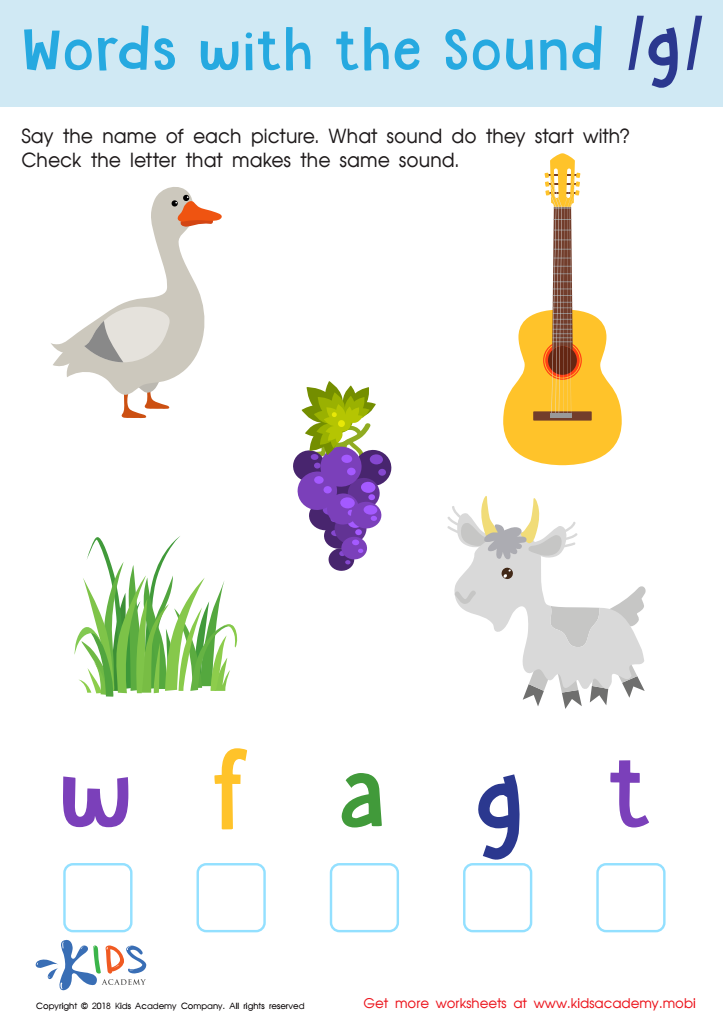
Words with sound g Reading Worksheet
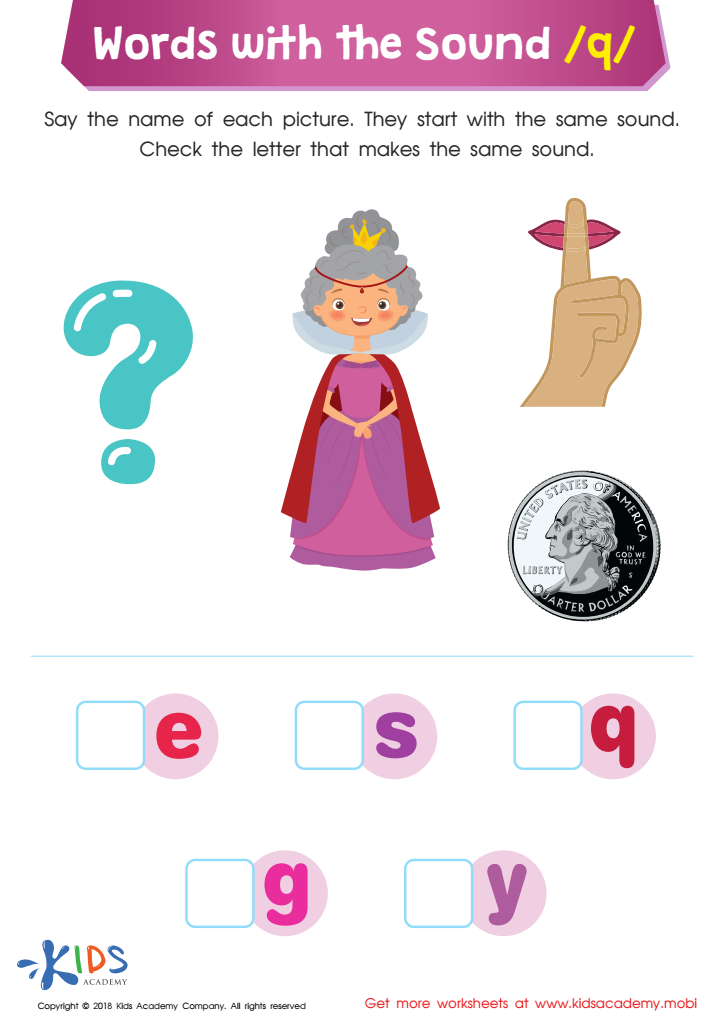
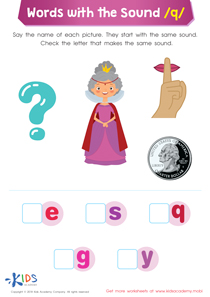
Words with Sound Q Reading Worksheet








Understanding Easy Beginning Sounds is crucial for children aged 4-7 as it forms the foundation for their reading and phonetic skills. This early stage of literacy development is when children start to identify and manipulate sounds in words, enhancing their ability to decode and recognize whole letters and words. Parents and teachers should prioritize these sounds because they aid in the phonemic awareness that is essential for reading fluency and comprehension.
By focusing on beginning sounds, children learn to connect letters with their corresponding sounds, facilitating smoother transitions into more complex language structures. Engaging with these sounds enhances vocabulary development and boosts confidence in early readers. Moreover, supporting this learning at home and in the classroom provides a structured approach that helps identify any reading difficulties early on, allowing for timely interventions.
Incorporating activities that teach beginning sounds can be both fun and educational. Doing so strengthens the bond between parents, teachers, and children as they embark on the exciting journey of literacy together. Ultimately, grasping beginning sounds empowers young learners, giving them the necessary tools for successful reading experiences throughout their academic careers and overall communication skills.