Easy Feelings and Emotions Worksheets for Ages 4-7
4 filtered results
Difficulty Level
Grade
Age
-
From - To
Subject
Activity
Standards
Enhance your child's emotional intelligence with our engaging "Easy Feelings and Emotions Worksheets for Ages 4-7" from Kids Academy. Our expertly designed worksheets use fun and colorful activities to help young learners identify, understand, and express their emotions. Perfect for early childhood education, these resources support emotional development through relatable scenarios and simple exercises. Ideal for both classroom and home use, our worksheets foster open communication, empathy, and self-awareness in a playful and interactive way. Visit Kids Academy today to explore our easy-to-use printables and support your child's emotional growth!
Favorites
With answer key
Interactive
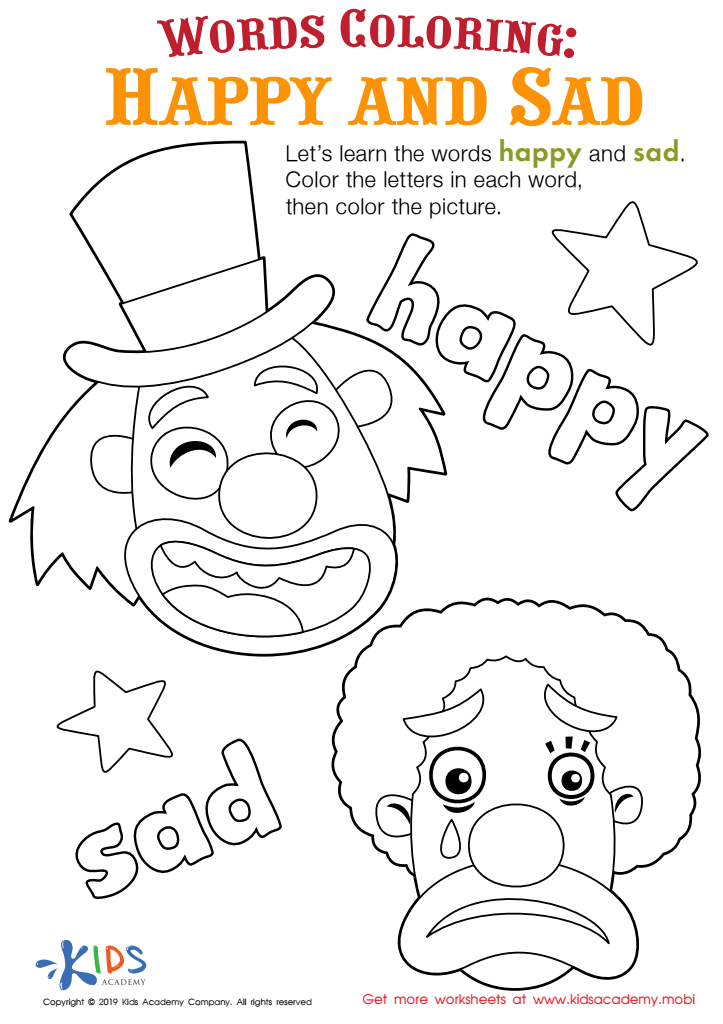
Happy and Sad Words Coloring Worksheet
Help students understand emotions by using this fun worksheet. It features smiling and sad clowns and the words 'happy' and 'sad'. Read the words with your students, then have them color the clowns and the emotion words. This PDF is an effective way to teach kids how to express how they feel.
Download (PDF)
 Assign to My Students
Assign to My Students
Happy and Sad Words Coloring Worksheet
Worksheet
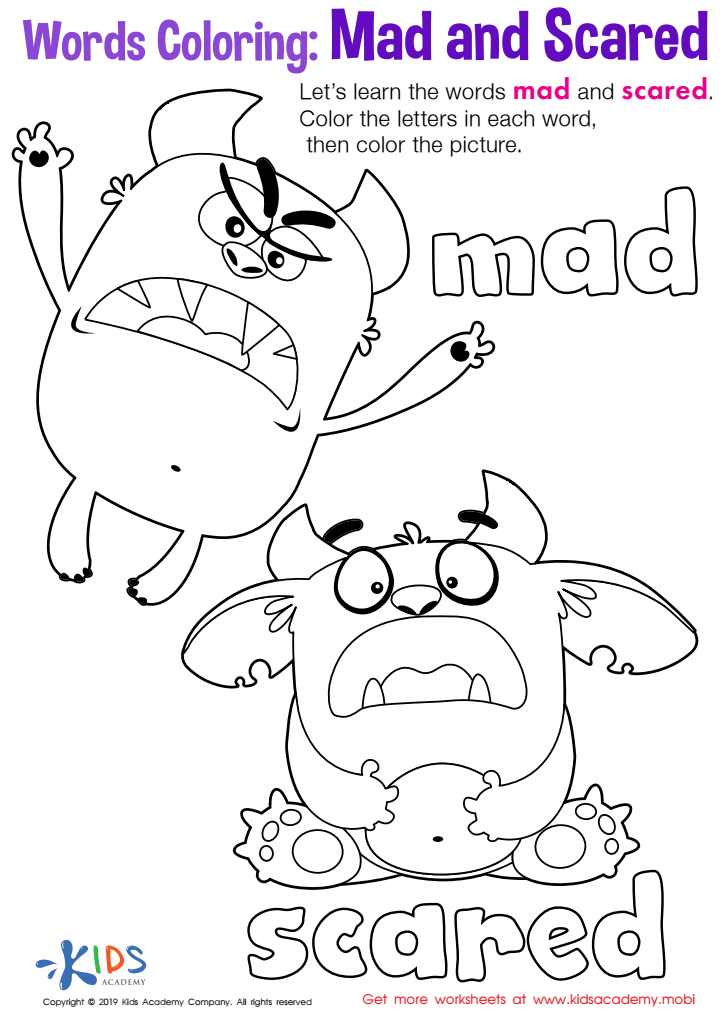
Mad and Scared Words Coloring Worksheet
This worksheet teaches "mad" and "scared" with fun monster pictures to color. Helping students learn by sight, it encourages sharing what makes them feel those strong emotions. Perfect for social studies, it expands student's vocabulary in an entertaining way.
Download (PDF)
Assign to My Students
Assign to My Students
Mad and Scared Words Coloring Worksheet
Worksheet
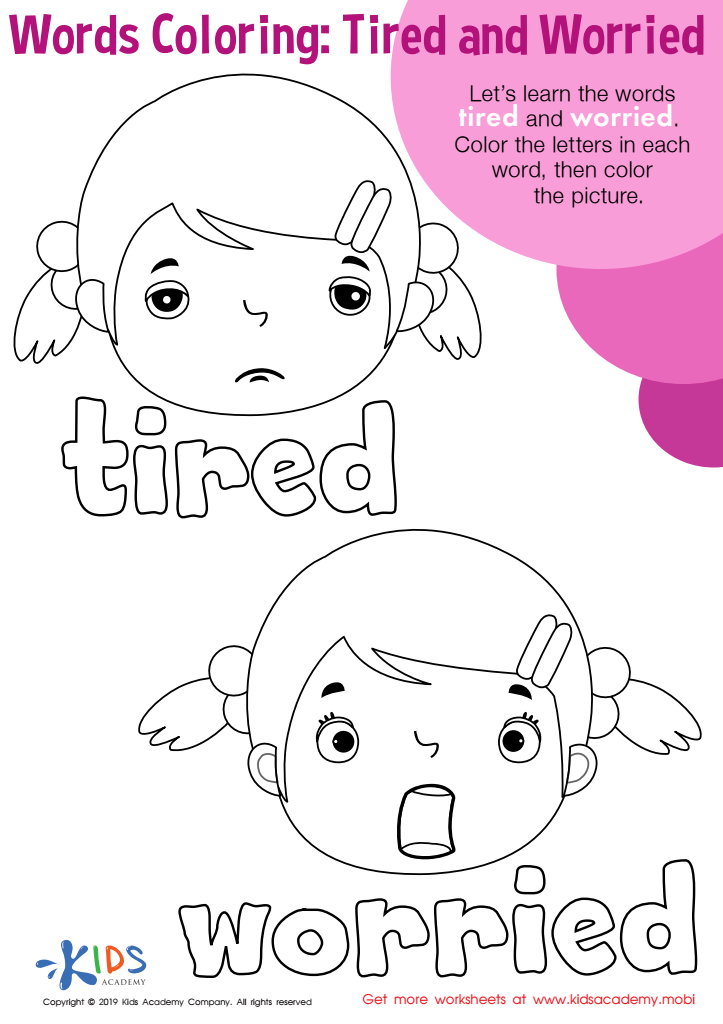
Tired and Worried Words Coloring Worksheet
Teach your students about "tired" and "worried" with this worksheet. Have them read and color the emotion words, then color the pictures of a tired girl and a worried girl. Discuss what makes them tired and worried. Expand their vocabulary with this fun coloring activity!
Download (PDF)
Assign to My Students
Assign to My Students
Tired and Worried Words Coloring Worksheet
Worksheet
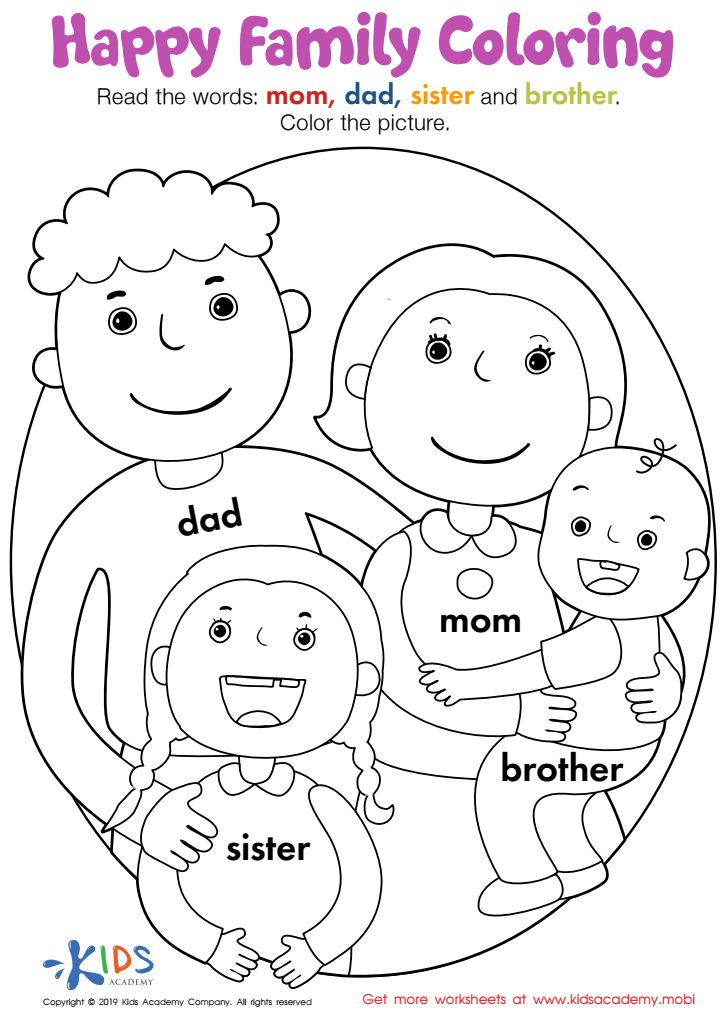
Happy Family Coloring Worksheet
Help your students gain confidence in family vocabulary with this worksheet. Labelled images of a family (dad, mom, sister, brother) are featured, along with an accompanying activity to colour in the picture. Your students will feel a sense of accomplishment after reading and completing the printable.
Download (PDF)
Assign to My Students
Assign to My Students
Happy Family Coloring Worksheet
Worksheet
Join Kids Academy for Free
Who is primarily going to use this learning content?



Understanding and managing feelings and emotions is paramount for young children, particularly between the ages of 4 and 7. During these formative years, children build the foundational skills for emotional regulation, self-awareness, and social interactions, which will benefit them throughout their lives. Parents and teachers can significantly nurture this development.
Firstly, fostering emotional intelligence helps children communicate their needs and desires more effectively. When children have the vocabulary and awareness to express their feelings, parents and teachers can better understand and respond to their needs, leading to healthier and more supportive environments.
Secondly, early emotional education prevents behavioral challenges. Children who understand their feelings are less likely to exhibit frustration and anger in destructive ways. By teaching them to identify and manage emotions like sadness, anger, or anxiety, adults can guide them toward positive coping mechanisms.
Furthermore, emotional awareness enhances social skills. Interacting with peers is a crucial part of childhood, and children who grasp empathy and compassion are better equipped to build meaningful friendships and resolve conflicts amicably.
In conclusion, investing time in teaching children about feelings and emotions sets them up for future success. It equips them with essential tools for navigating their own emotional landscapes and the social world around them. Both parents and teachers play a vital role in this early-stage emotional education.