Addition Practice Easy Worksheets for Ages 4-7 - Page 2
27 filtered results
-
From - To
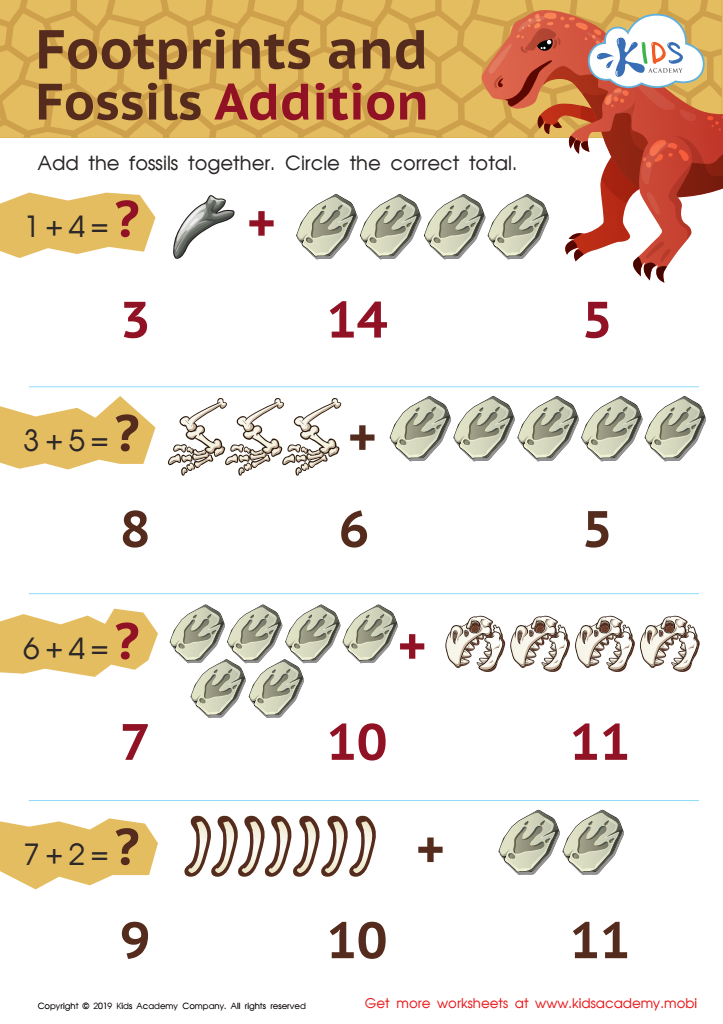
Footprints and Fossils Addition Worksheet
 Assign to My Students
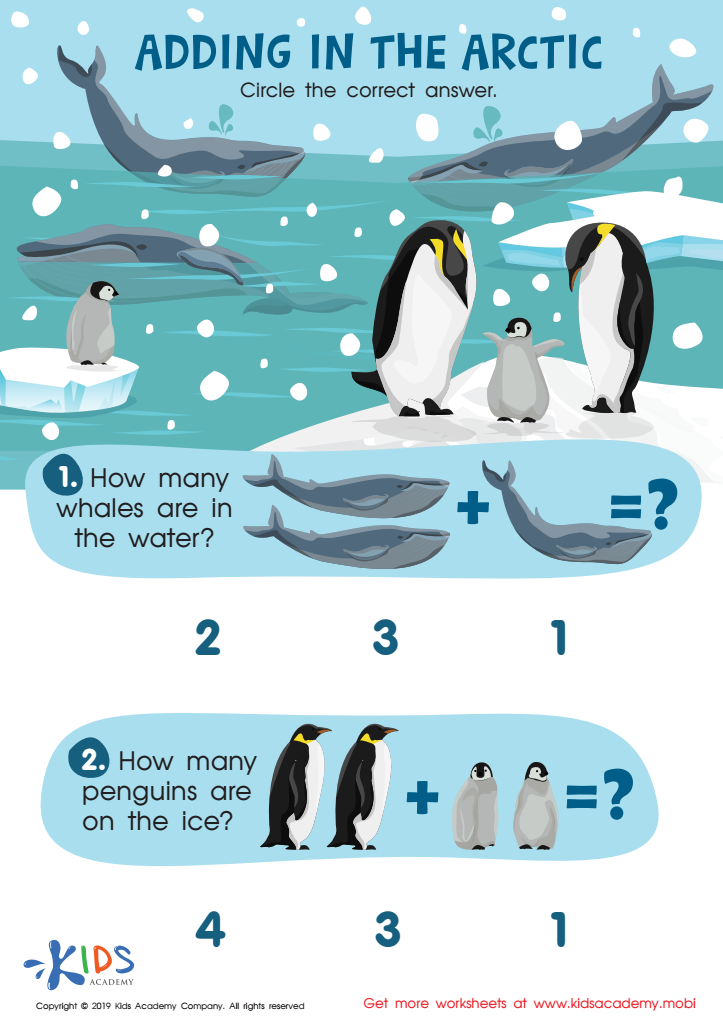
Adding in the Arctic Worksheet
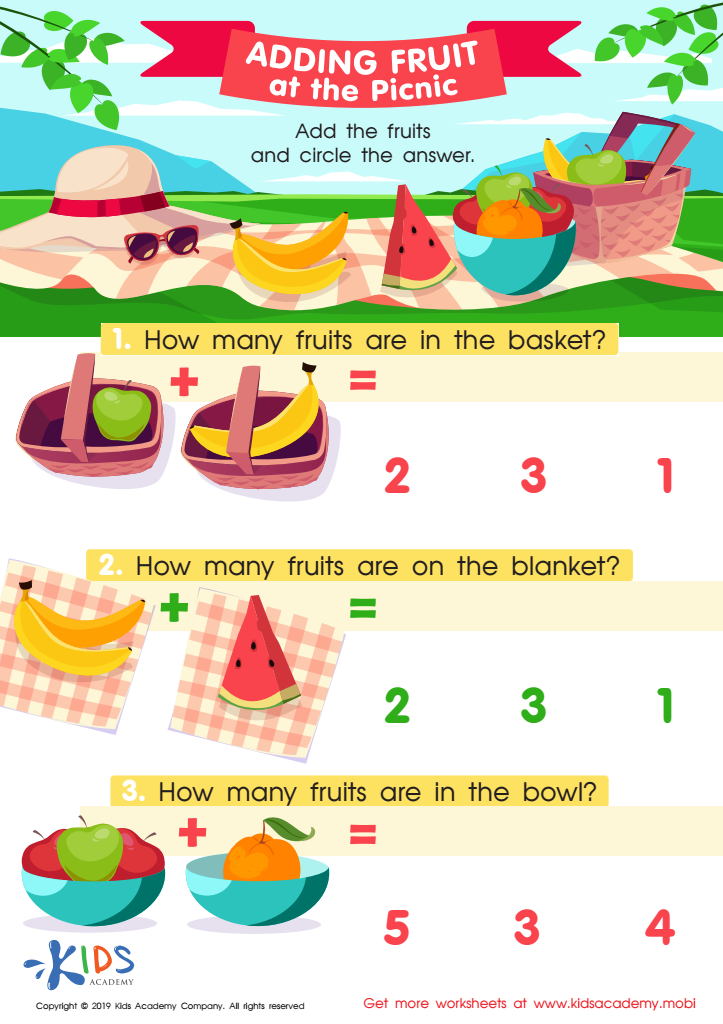
Adding Fruit at the Picnic Worksheet







Addition practice for children aged 4-7 is crucial for developing foundational math skills. At this formative stage, children are building the cognitive tools necessary for more complex mathematical concepts they will encounter in later years. Engaging in addition practice not only strengthens their ability to perform calculations but also enhances their problem-solving abilities and logical reasoning skills.
Caring about addition practice is essential because it promotes confidence in math. Children who engage with these skills early on are often more willing to take on challenges in the future. A strong grasp of basic addition makes learning subtraction, multiplication, and even division much easier. Moreover, practicing addition can be an enjoyable and interactive experience—utilizing games, visuals, or daily activities makes learning hands-on and engaging, promoting enthusiasm for mathematics.
Furthermore, the social aspect—whether it's parents or teachers guiding this learning—fosters bonding moments. Parents involved in their child’s education often help cultivate a love for learning. In essence, addition practice forms the building blocks for all future numeracy skills, making it a significant area for attention, support, and enthusiasm from adults. Ultimately, a solid understanding of addition sets the stage for success in both math and critical thinking throughout a child's educational journey.








