Observational skills Easy Worksheets for Ages 4-7
5 filtered results
-
From - To
Enhance your child's observational skills with our engaging worksheets designed for ages 4-7! These easy-to-use printable resources foster critical thinking and attention to detail while keeping learning fun. Whether at home or in the classroom, our worksheets encourage young learners to identify patterns, differences, and objects, promoting a deeper understanding of their surroundings. Each worksheet is filled with colorful illustrations and age-appropriate activities that spark curiosity and creativity. Ideal for parents and educators, these materials support cognitive development and prepare children for future academic success. Explore our collection today and give your child the tools to become keen observers of the world!
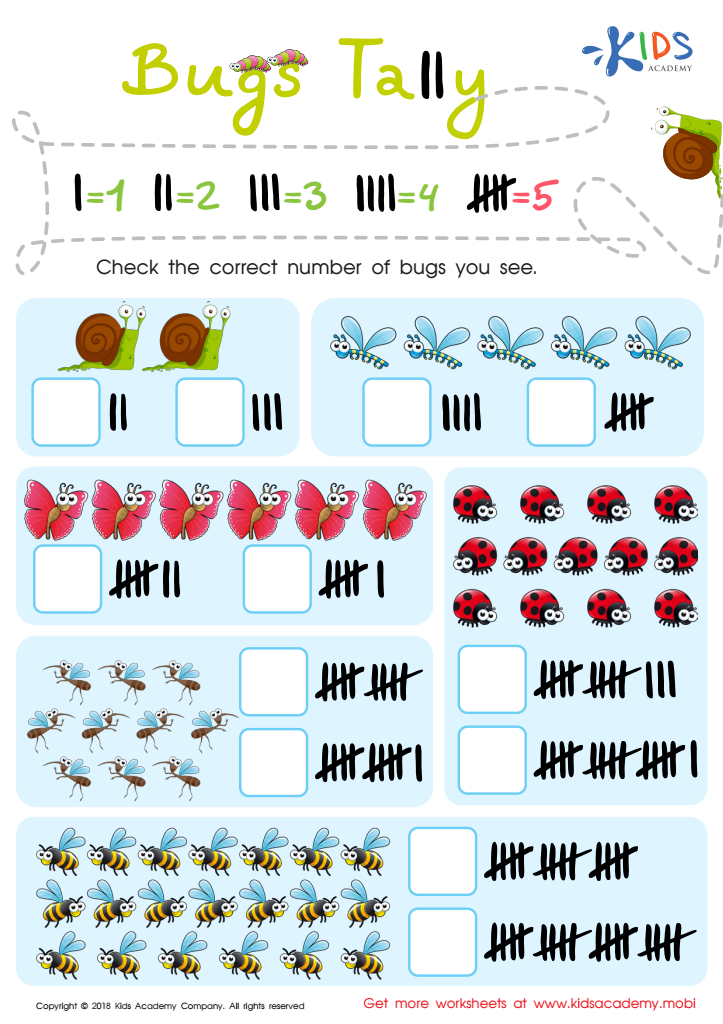
Bugs Tally Worksheet
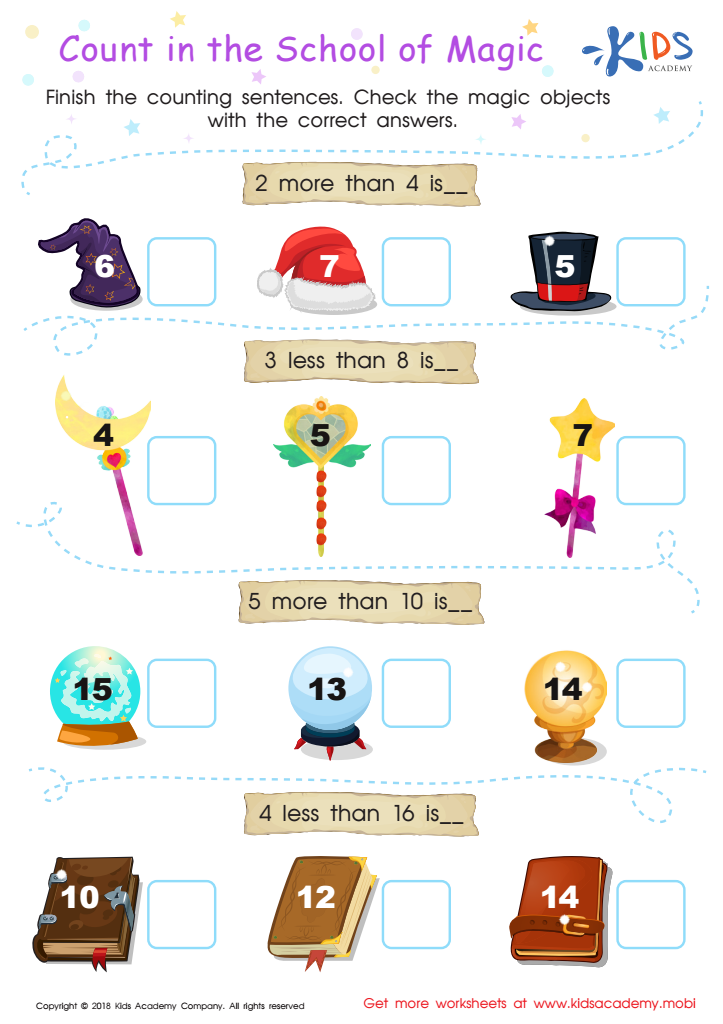
Count in the School of Magic Worksheet
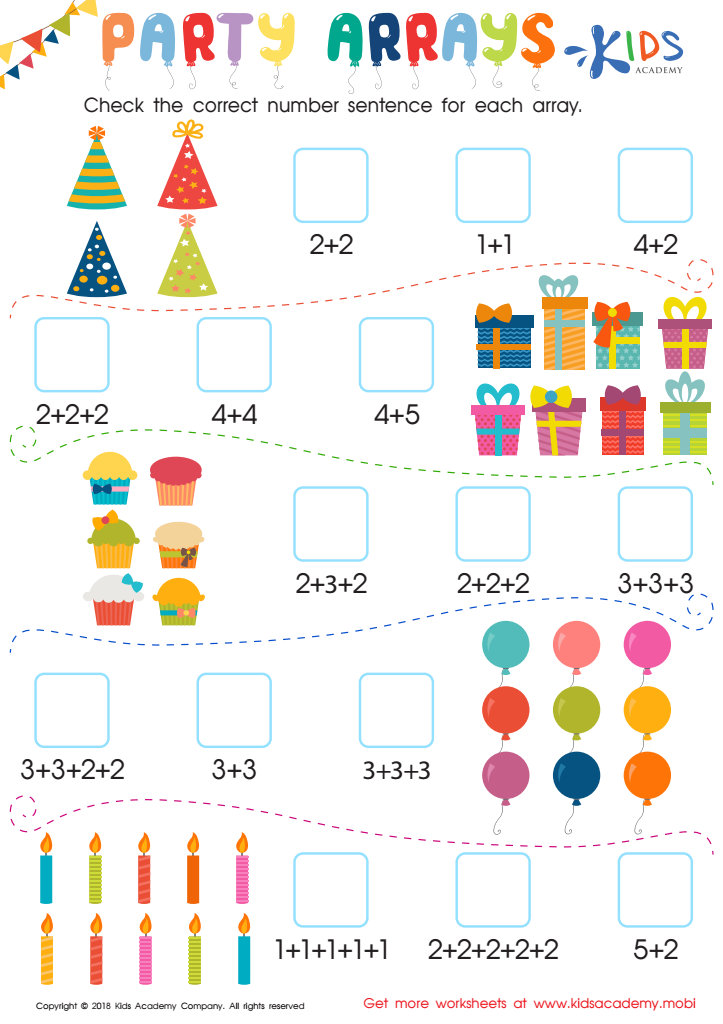
Party Arrays Worksheet
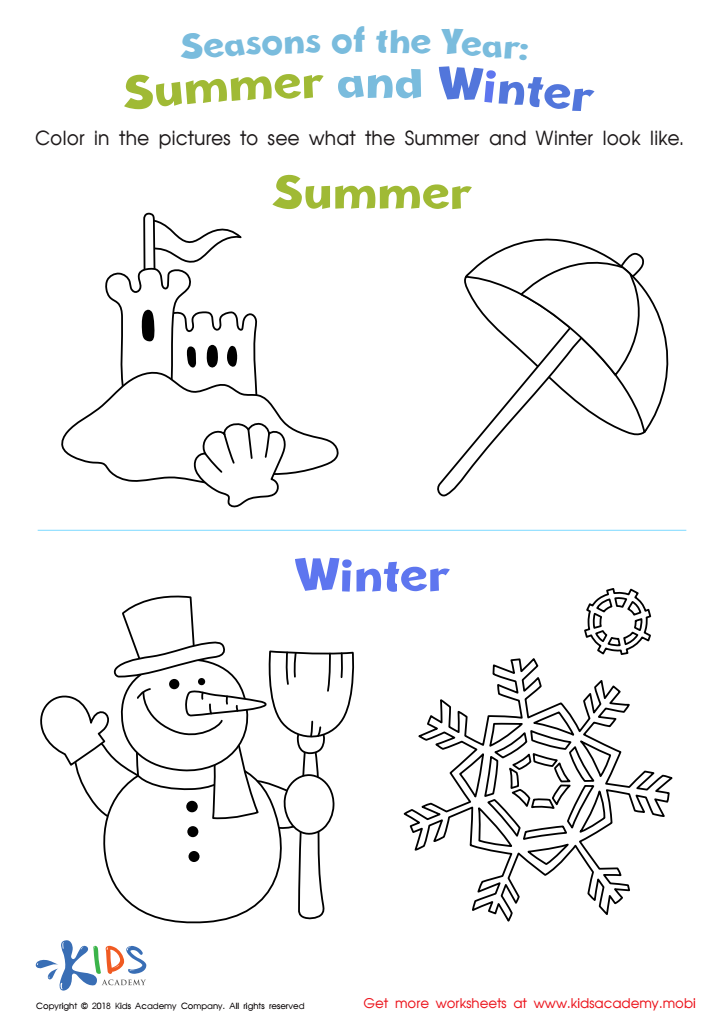
Summer and Winter Worksheet
 Assign to My Students
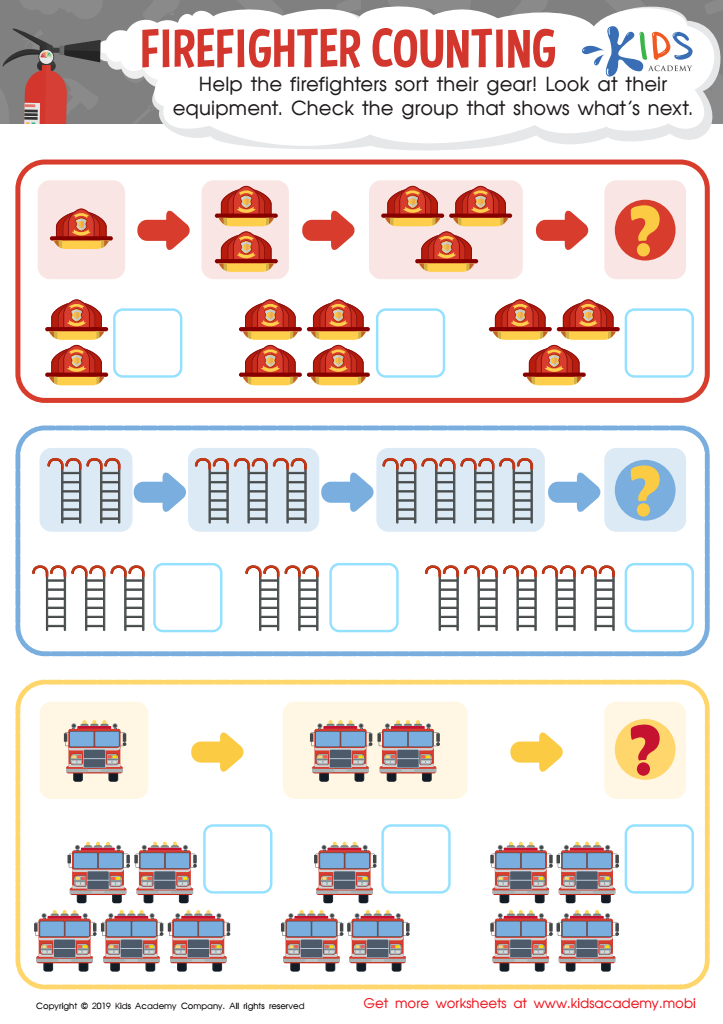
Firefighter Counting Worksheet






.jpg)
Observational skills are critical for children aged 4-7 as they form the foundation for learning and development. Parents and teachers should care about these skills because they directly impact a child's ability to engage with the world around them. Effective observation helps kids make sense of their environment, fosters curiosity, and encourages critical thinking.
At this age, children are naturally inquisitive, and robust observational abilities enable them to learn through exploration and interaction. Improved observation leads to better communication skills, as children learn to describe what they see, hear, and feel. This practice also enhances vocabulary development and social skills, as they discuss their observations with peers and adults.
Moreover, strengthening observational skills can help children with problem-solving. By teaching them to notice details or patterns, they become more adept at identifying solutions and making connections between concepts. Encourage activities like nature walks, classroom observations, or scavenger hunts, allowing children to express their findings. Ultimately, prioritizing observational skills ensures that children not only absorb knowledge effectively but also develop confidence and independence as they navigate their surroundings, preparing them for future academic success and real-world challenges.








