Visual discrimination Easy Worksheets for Ages 4-7
5 filtered results
-
From - To
Discover our "Visual Discrimination Easy Worksheets" designed for children ages 4-7! These engaging and fun worksheets help young learners sharpen their visual discrimination skills, essential for reading, writing, and everyday problem-solving. Each worksheet includes vibrant visuals and interactive activities that captivate children's attention while reinforcing their ability to identify differences and similarities among objects. Perfect for both home and classroom settings, these resources support early childhood development and enhance critical thinking. Encourage your child’s growth with our thoughtfully crafted worksheets that make learning enjoyable and effective. Explore our collection now and watch your little ones thrive!
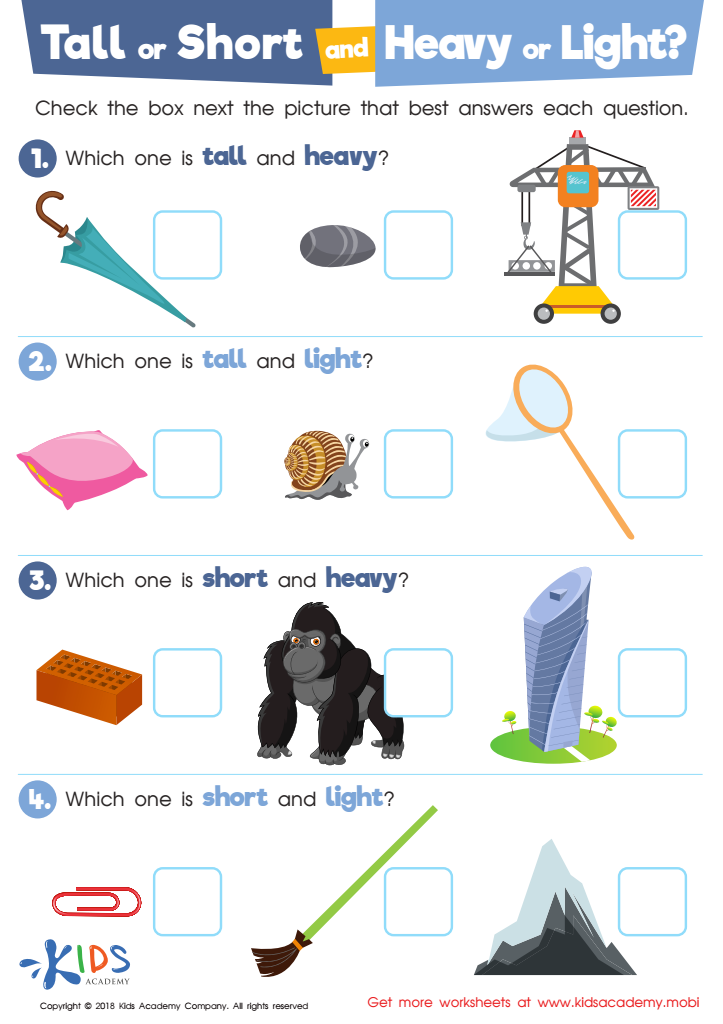
Tall or Short and Heavy or Light? Worksheet
 Assign to My Students
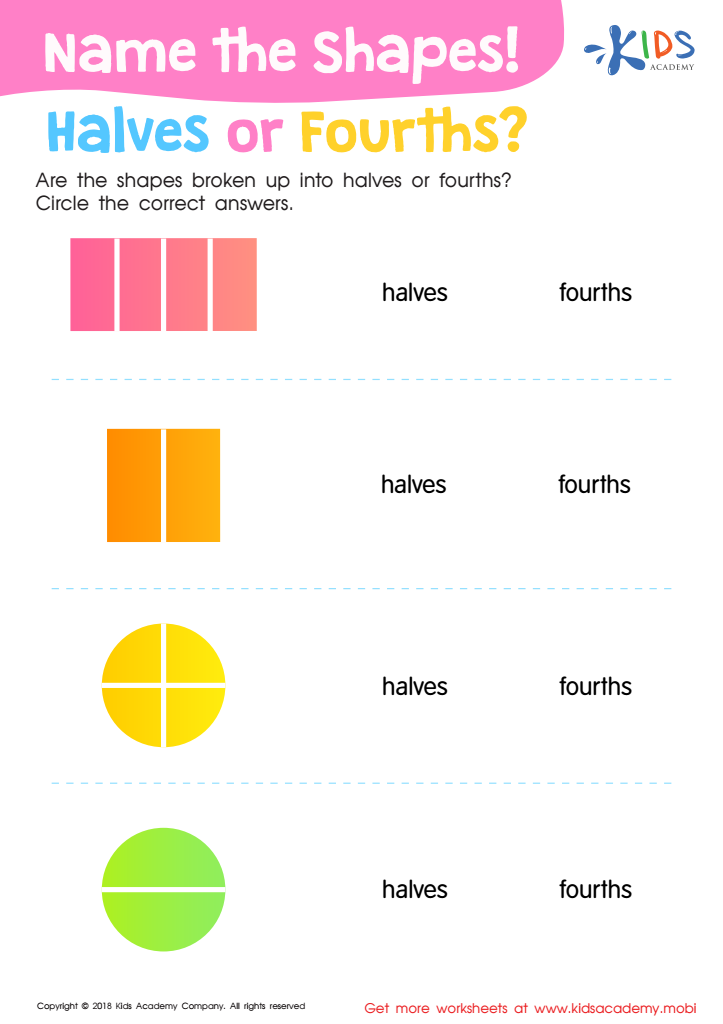
Name the Shapes Halves or Fourths? Worksheet
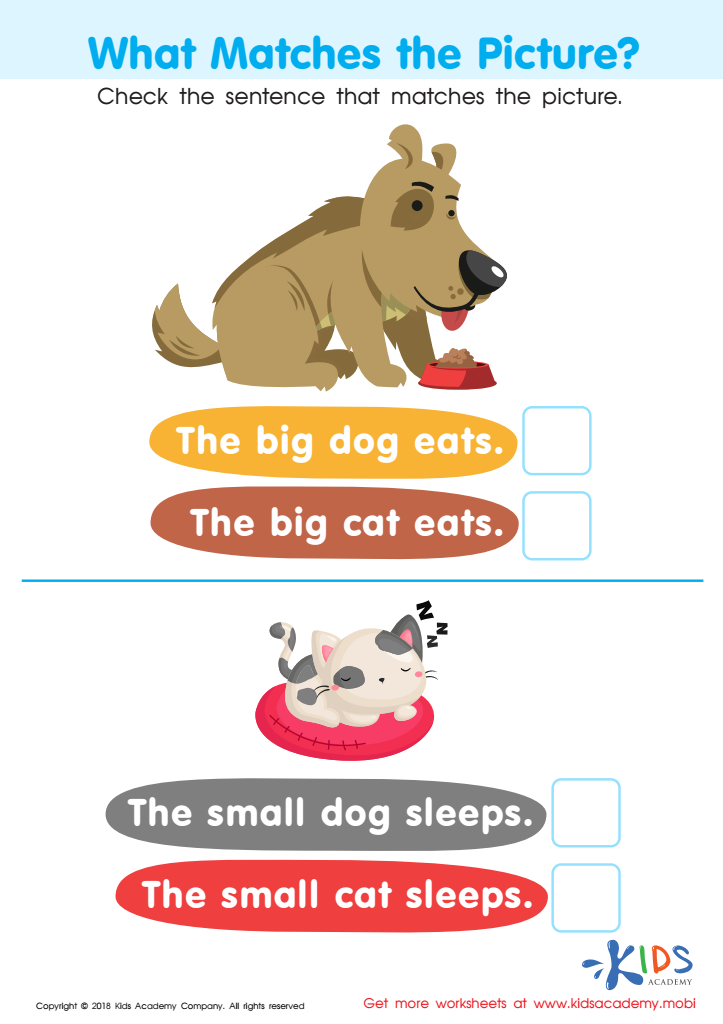
What Matches the Picture? Worksheet
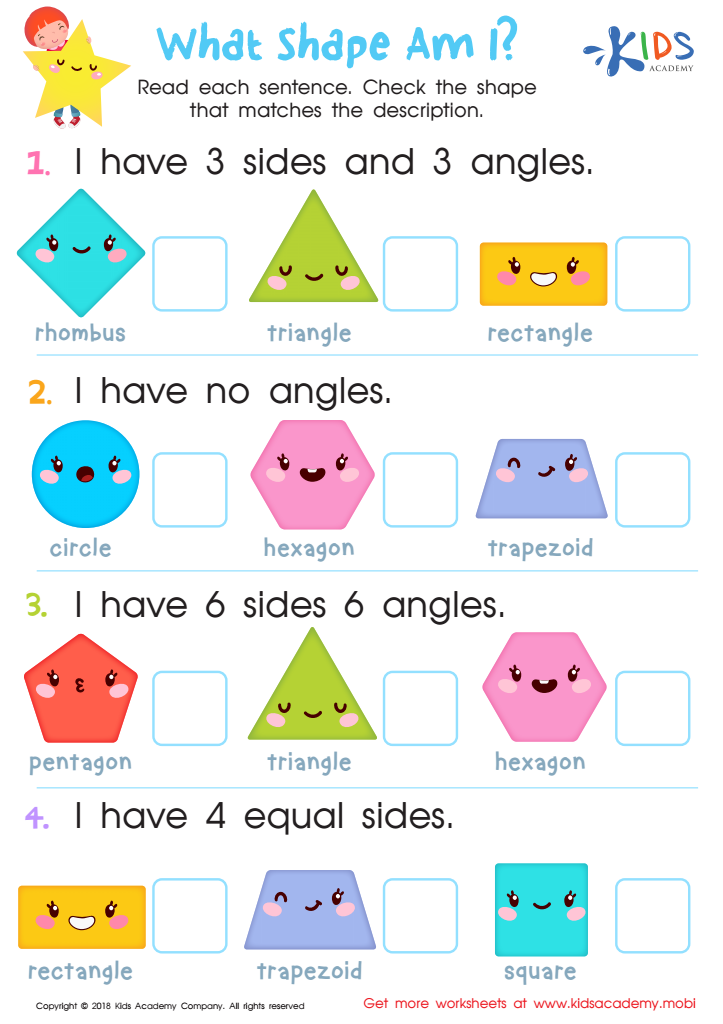
What Shape Am I? Worksheet
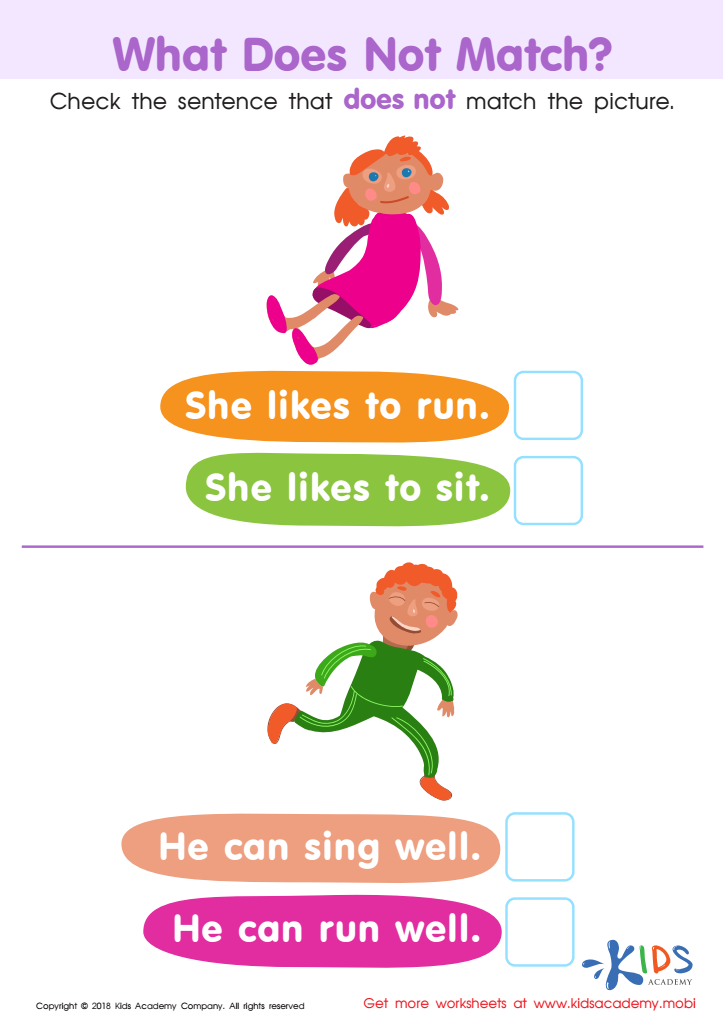
What Does Not Match? Worksheet








Visual discrimination is an essential skill for young children, typically aged 4 to 7, as it involves the ability to differentiate between similar images, shapes, letters, and numbers. For parents and teachers, understanding the importance of visual discrimination is crucial for several reasons.
Firstly, strong visual discrimination skills underpin early literacy and numeracy development. When children can identify differences in letters, such as 'b' and 'd', or distinguish between the shapes of different numbers, they are better equipped to read and write effectively. This foundational skill translates into improved academic performance.
Additionally, visual discrimination enhances cognitive skills, such as attention to detail and critical thinking. When children learn to observe and interpret visual information, they develop analytical skills that are both valuable in school and in life. These skills also support problem-solving ability, helping children approach challenges with confidence.
Moreover, engaging activities that promote visual discrimination—like sorting games, puzzles, or drawing—can foster creativity and improve fine motor skills. For parents and teachers, nurturing this skill sets children up for success, creating a solid base for their educational journey and laying the groundwork for future learning experiences. Thus, prioritizing visual discrimination is essential for healthy cognitive development.








