Visual discrimination skills Easy Worksheets for Ages 4-7
3 filtered results
-
From - To
Boost your child's visual perception with our engaging Visual Discrimination Skills Easy Worksheets, perfect for ages 4-7! These expertly designed activities help young learners sharpen their ability to notice visual details, improving crucial skills like letter and number recognition, and object differentiation. With colorful, easy-to-understand exercises, children will enjoy building their confidence while having fun. Our worksheets encompass various themes, ensuring sustained interest and comprehensive skill development. Ideal for both classroom settings and at-home practice, these worksheets are a valuable resource for nurturing early academic success. Start enhancing your child’s visual discrimination skills today with Kids Academy!
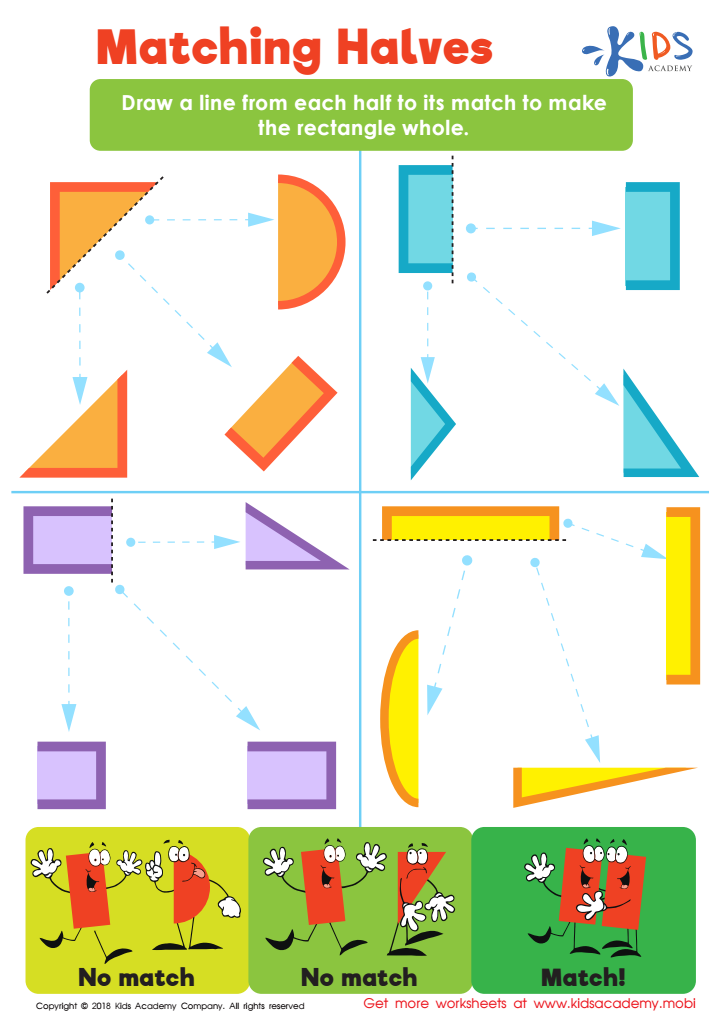
Matching Halves Worksheet
 Assign to My Students
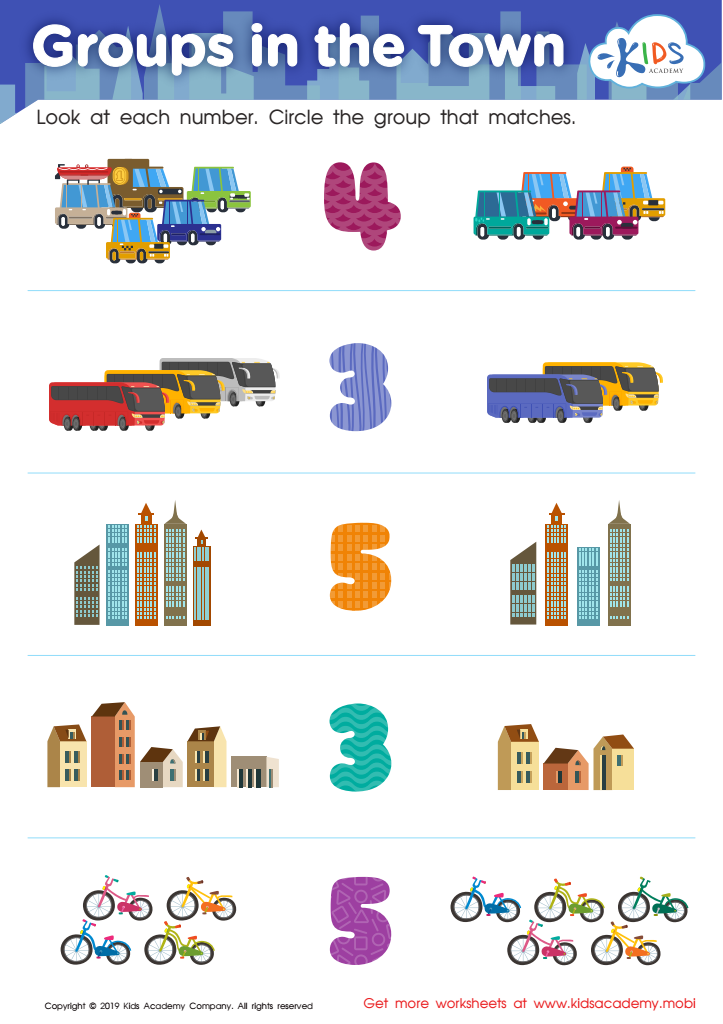
Groups in the Town Worksheet
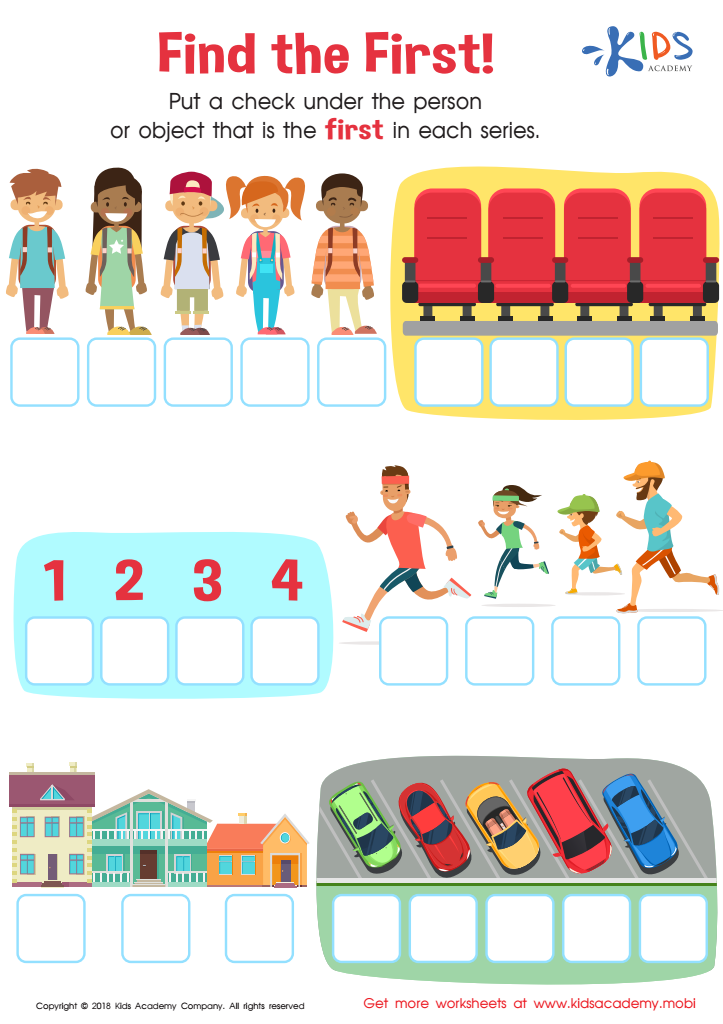
Find the First! Worksheet







Visual discrimination skills refer to the ability to notice and compare the features of different items, such as shapes, patterns, and colors. These skills are essential for young children, particularly those aged 4-7, because they form the foundation for more complex tasks and learning milestones.
-
Reading and Writing: Visual discrimination helps children differentiate between letters and numbers, which is crucial for learning to read and write. Distinguishing between 'b' and 'd' or 'p' and 'q' is essential for literacy.
-
Mathematics: In math, children need to identify numbers, recognize patterns, and understand shapes. Strong visual discrimination skills help children spot differences and similarities, aiding in comprehension and problem-solving.
-
Daily Life Skills: Recognizing symbols, traffic signs, and menus are practical applications of visual discrimination. These skills promote independence and confidence in navigating the world.
-
Attention to Detail: By honing visual discrimination, children develop the ability to pay attention to detail and improve focus, which benefits all areas of learning and general activities.
-
Social Interaction: Nonverbal cues like expressions and body language become clearer, promoting better social interactions and empathy.
Given these benefits, investing time in activities that strengthen visual discrimination, such as puzzles, matching games, and memory tasks, is worthwhile. Encouraging its development provides children with crucial tools for academic success and everyday functionality.








