Basic Addition Skills Easy Addition & Subtraction Worksheets for Ages 4-7
6 filtered results
-
From - To
Discover engaging "Basic Addition Skills" worksheets designed specifically for ages 4-7 on our website! These easy addition and subtraction resources help young learners build foundational math skills through fun and interactive activities. Each worksheet encourages children to practice simple mathematical concepts while developing their problem-solving abilities in a stress-free environment. Perfect for home or classroom use, our worksheets are thoughtfully created to suit early learners, sparking their interest in math with colorful visuals and relatable examples. Equip your child with essential math skills in an enjoyable way, and watch them gain confidence as they master basic addition and subtraction!
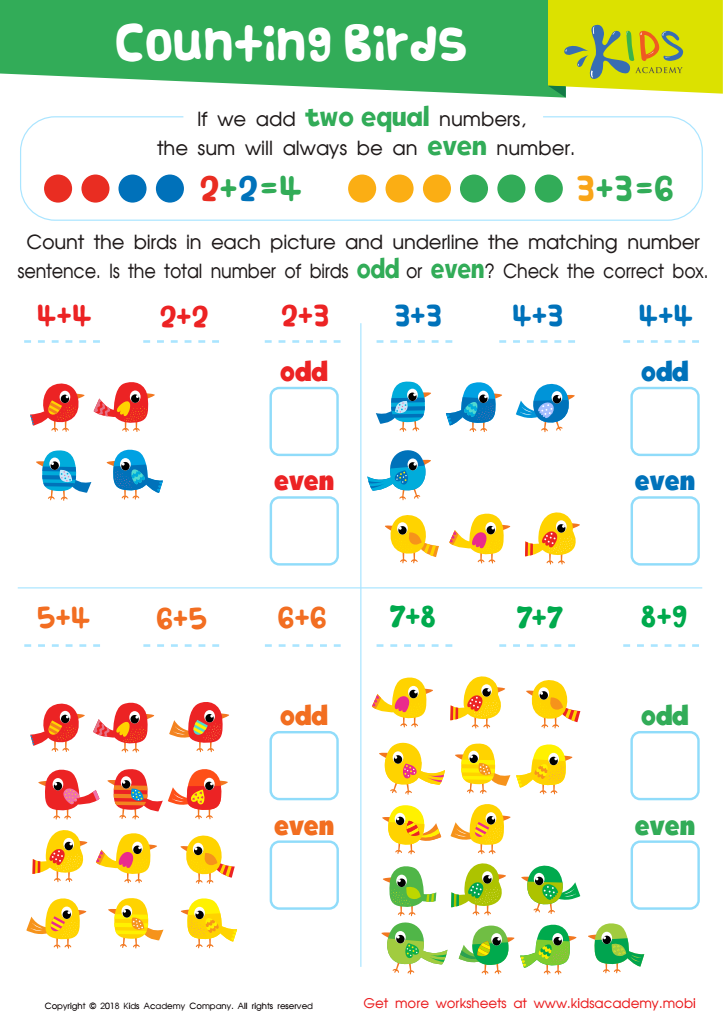
Counting Birds Worksheet
 Assign to My Students
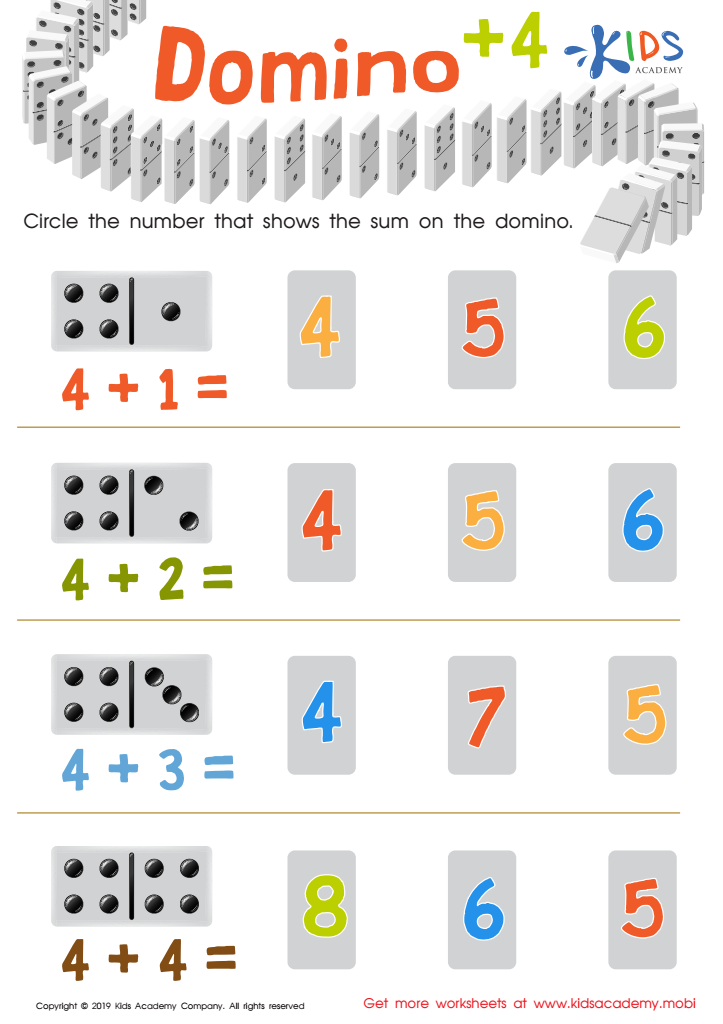
Domino +4 Worksheet
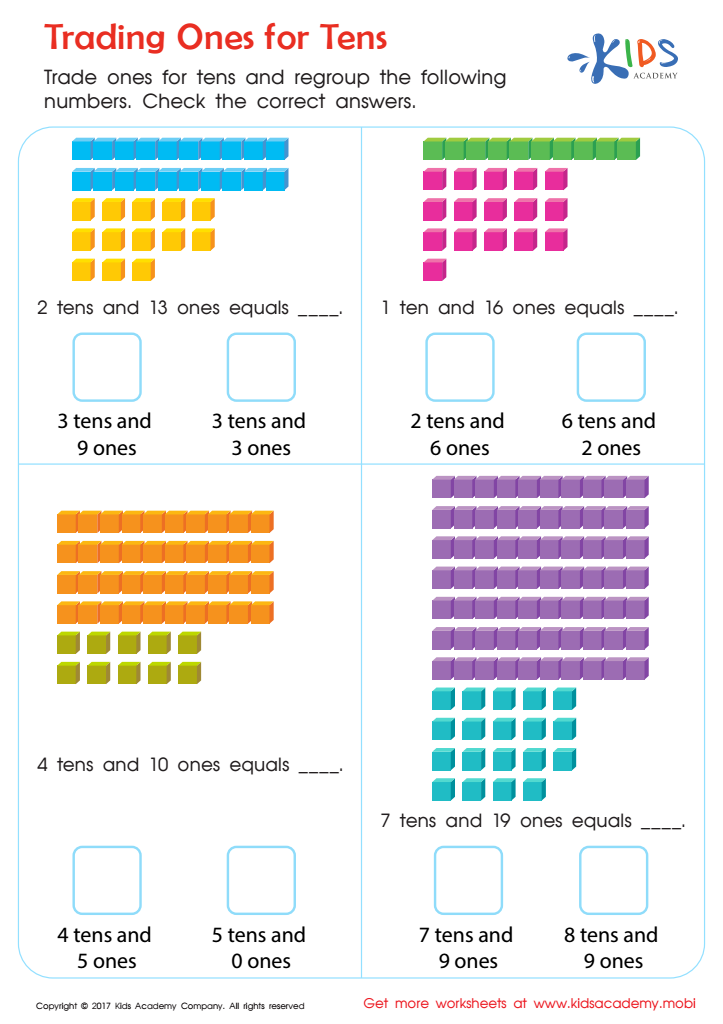
Trading Ones for Tens Worksheet
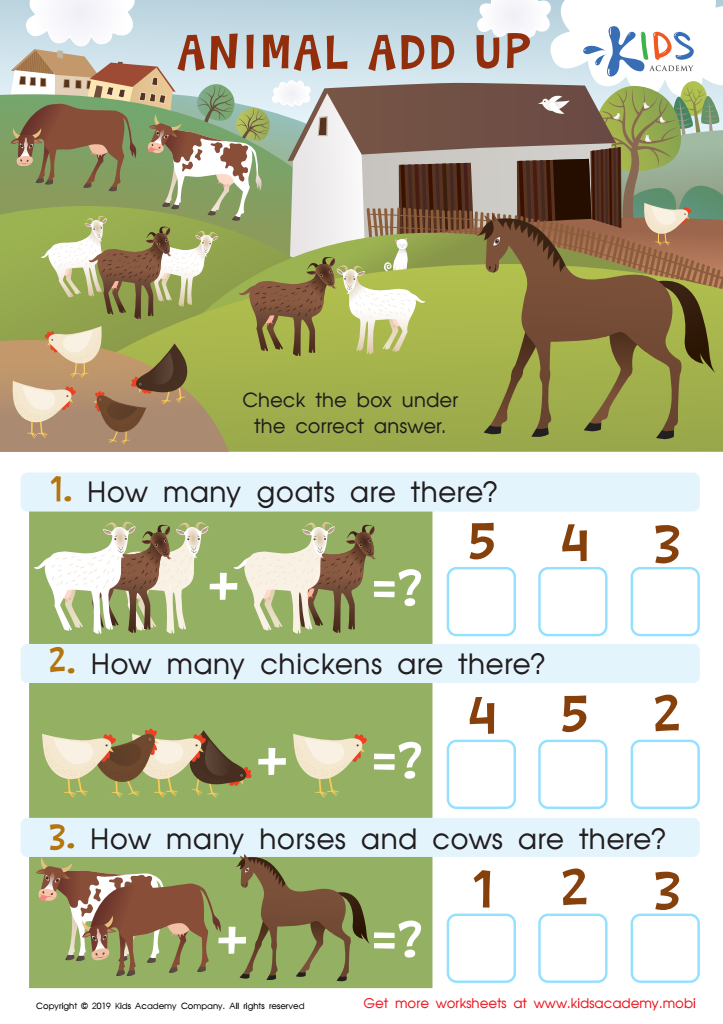
Animal Add Up Worksheet
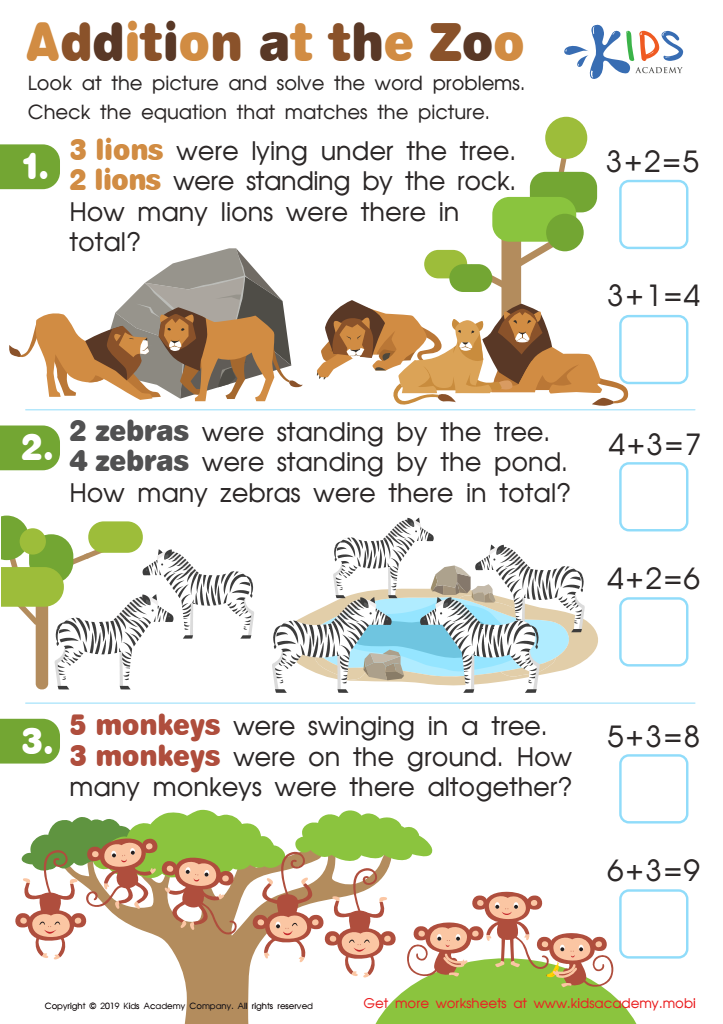
Addition at the Zoo Worksheet
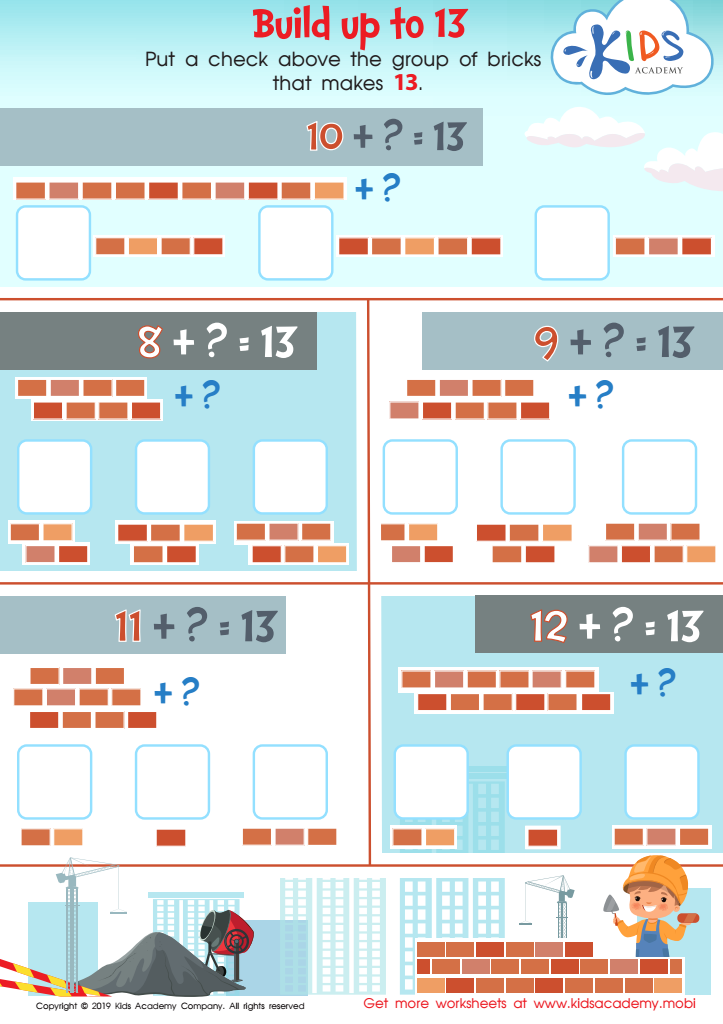
Build up to 13 Worksheet








Basic addition and subtraction skills are foundational to a child’s mathematical education and overall cognitive development. For parents and teachers working with children ages 4-7, these skills lay the groundwork for more complex mathematical concepts that will be encountered later on. Mastering basic arithmetic boosts confidence, fosters a positive attitude towards math, and enhances problem-solving abilities, which are essential in daily life and future academic pursuits.
Engaging children in easy addition and subtraction activities builds numerical fluency and improves counting skills, enabling them to make sense of quantities and relationships. This age is critical for brain development, with neural pathways being established for future learning; thus, timely intervention and support can prevent future struggles with math.
Furthermore, strong basic math skills encourage critical thinking and analytical capabilities, making connections to other subjects, like science and even language arts. Encouraging practice through games, hands-on activities, and real-life scenarios also makes learning enjoyable, fostering a love of learning. As children learn to navigate numbers confidently, they become more adept at handling everyday tasks, setting them on a path for academic success and a positive lifelong relationship with mathematics. Ultimately, fostering these skills has lasting benefits for a child's development.








