Problem-Solving Skills Easy Addition & Subtraction Worksheets for Ages 4-7 - Page 2
28 filtered results
-
From - To
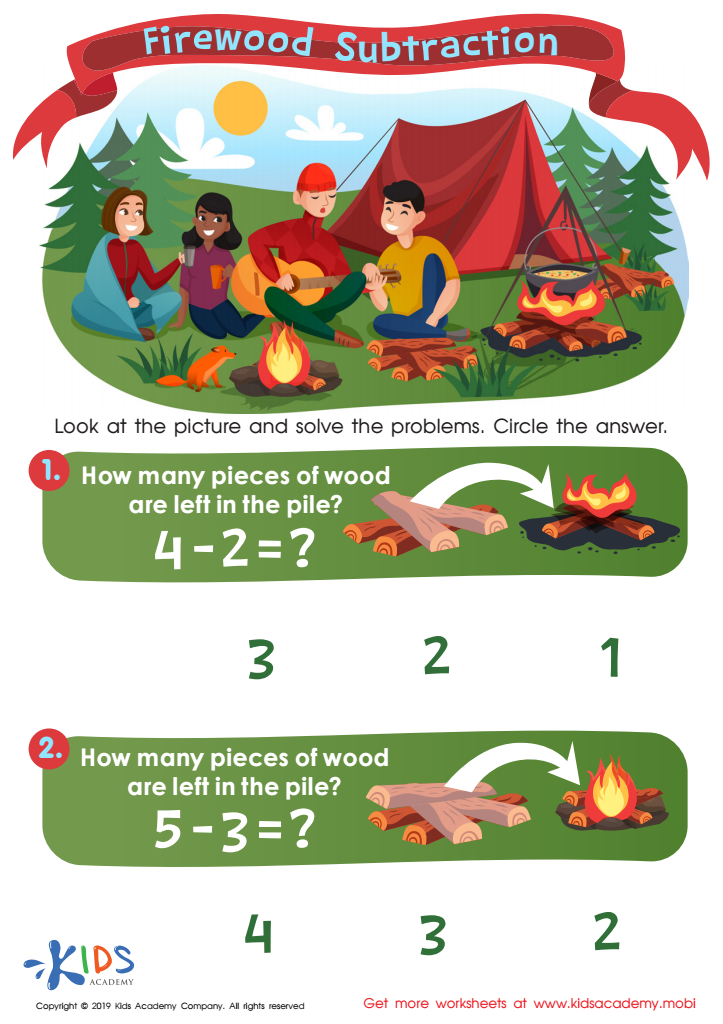
Firewood Subtraction Worksheet
 Assign to My Students
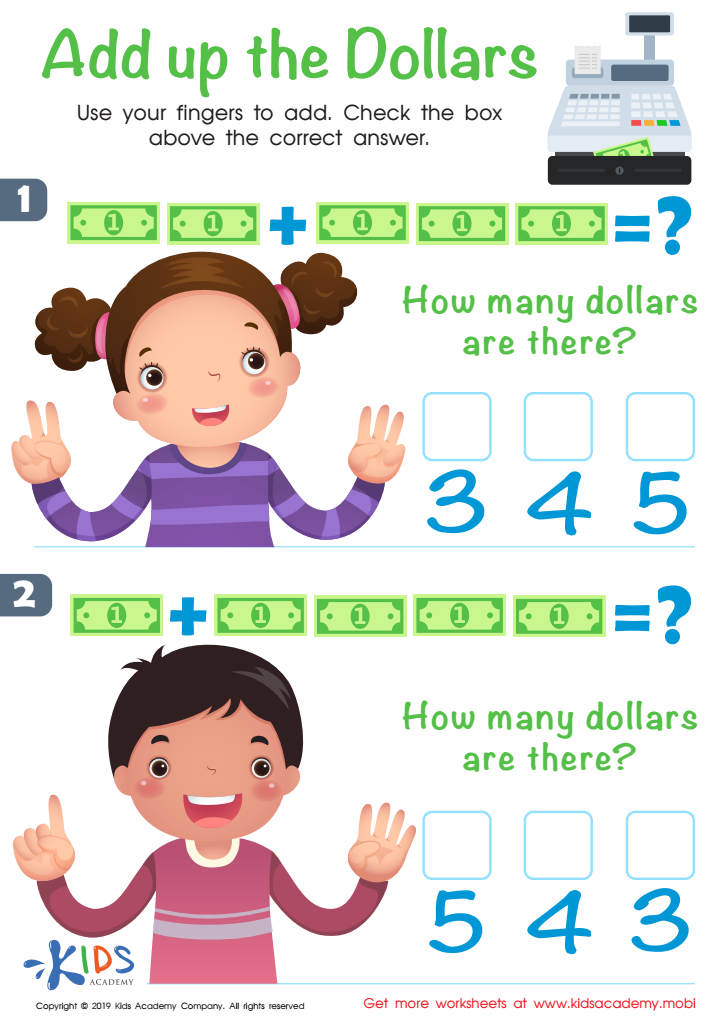
Add up the Dollars Worksheet
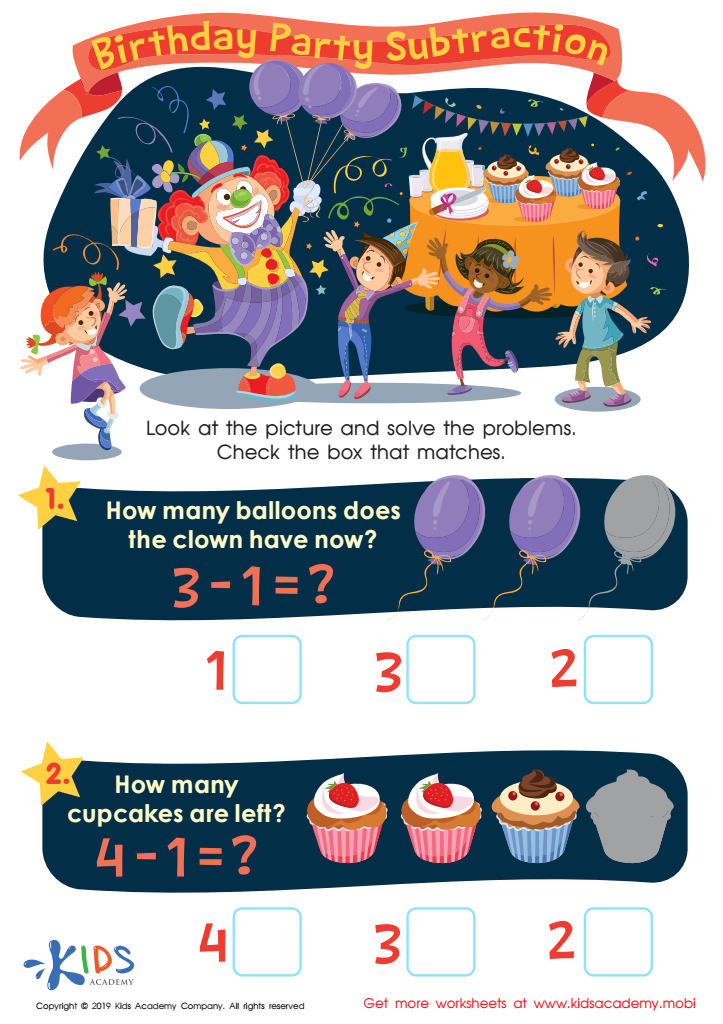
Birthday Party Subtraction Worksheet
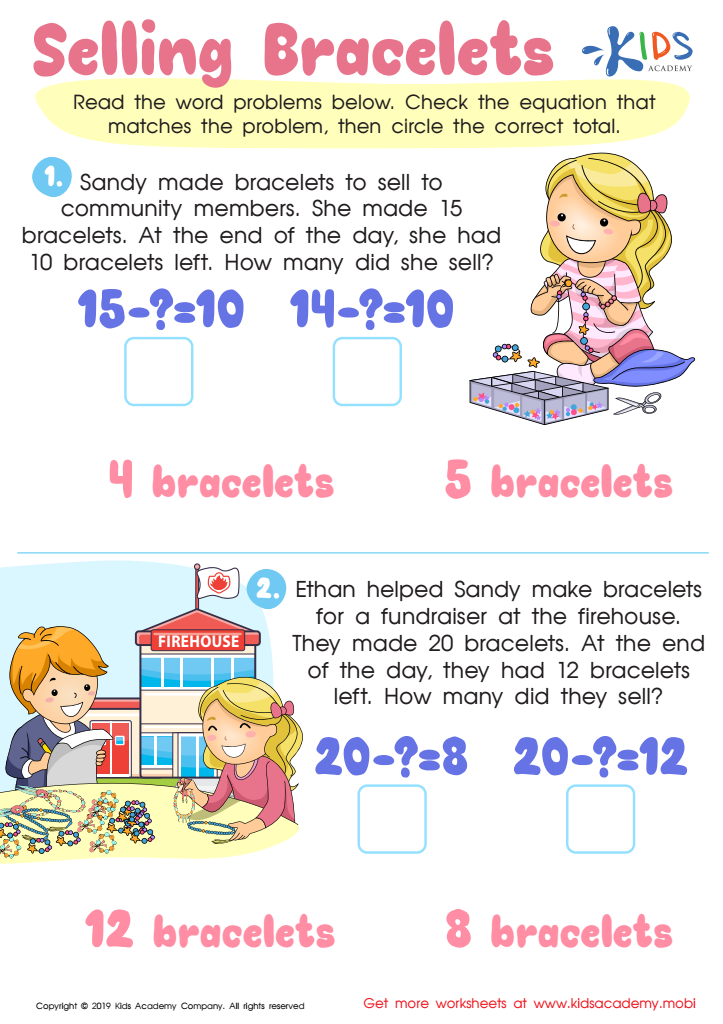
Selling the Bracelets Worksheet






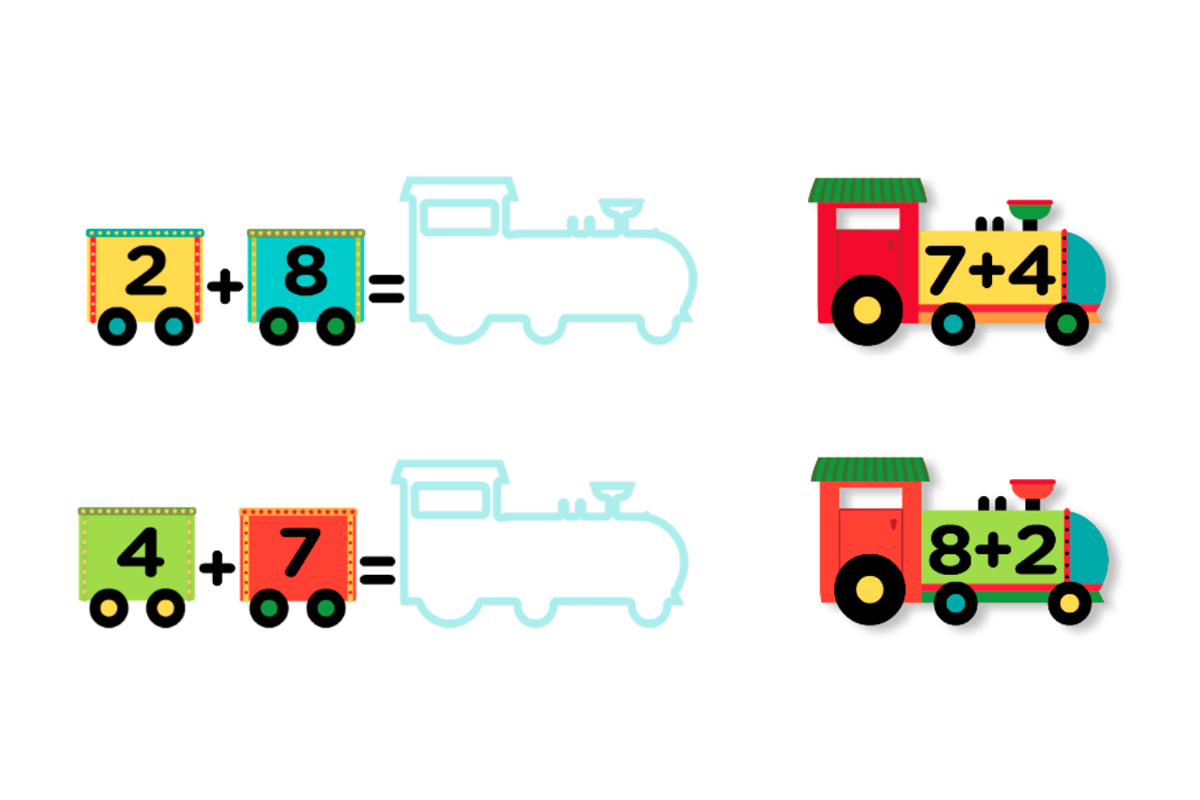

Parents and teachers should prioritize problem-solving skills in easy addition and subtraction for ages 4-7 because these foundational mathematical abilities are essential for a child's cognitive development and future academic success. In early childhood, children are like sponges; they absorb new concepts better when they engage actively with mathematical problems. Developing problem-solving skills enhances their critical thinking and analytical abilities, fostering independence and resilience.
Engaging young learners in addition and subtraction helps them understand the relationships between numbers, boosts their confidence, and lays the groundwork for more complex mathematical processes, such as multiplication and division. Furthermore, these skills are not just academic; they nurture persistence and adaptability as children navigate challenges.
Incorporating fun, hands-on activities into learning processes keeps children motivated and interested in math. Parents and teachers can use everyday situations, like sharing snacks or counting toys, to demonstrate these concepts in real life. Cultivating problem-solving skills early helps instill a love for learning and reinforces the idea that math is a valuable and accessible part of everyday life. This holistic approach not only prepares children for academic challenges but equips them with essential life skills that extend beyond the classroom.








