Filters

28 filtered results

Clear all filters
Favorites
With answer key
Interactive

28 filtered results

Difficulty Level

Grade


Check out this FREE Trial Lesson on Math for age 4-7!

Making a Whole

Favorites
With answer key
Interactive
  • 4-7
  • Basic Math Skills
  • Math
  • Easy
Count and Subtract Worksheet

Count and Subtract Worksheet

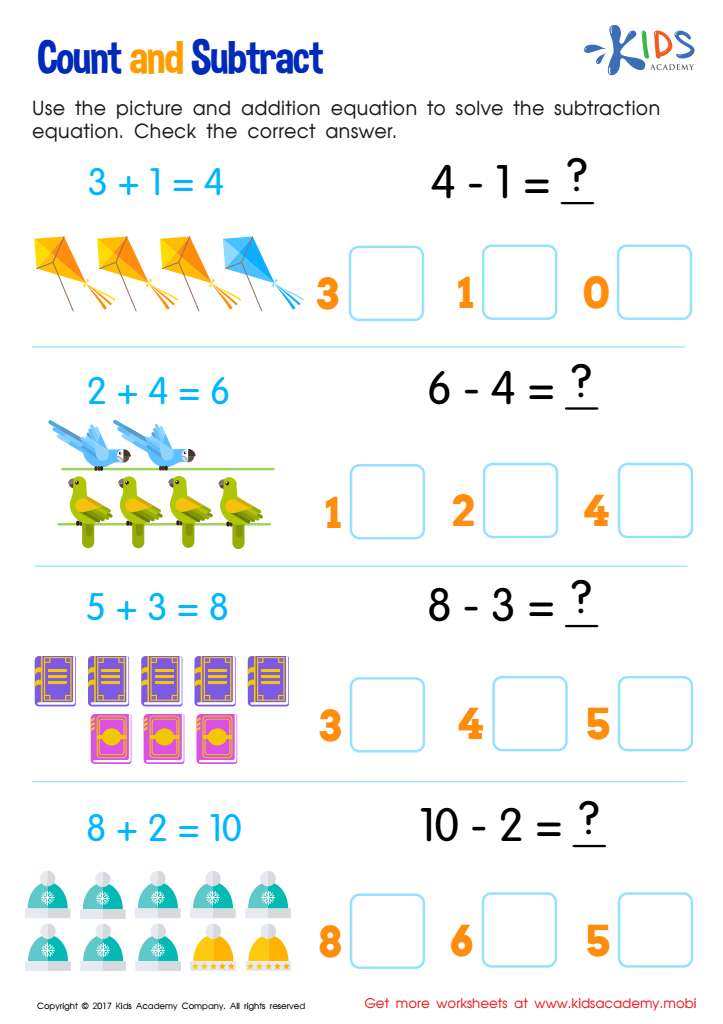
This worksheet helps your child learn math via colorful pictures and equations. Count the items together, adding and subtracting as necessary. Your child will be challenged to get the correct total, thereby developing their math skills.
Count and Subtract Worksheet
Worksheet
Pet Survey Worksheet

Pet Survey Worksheet

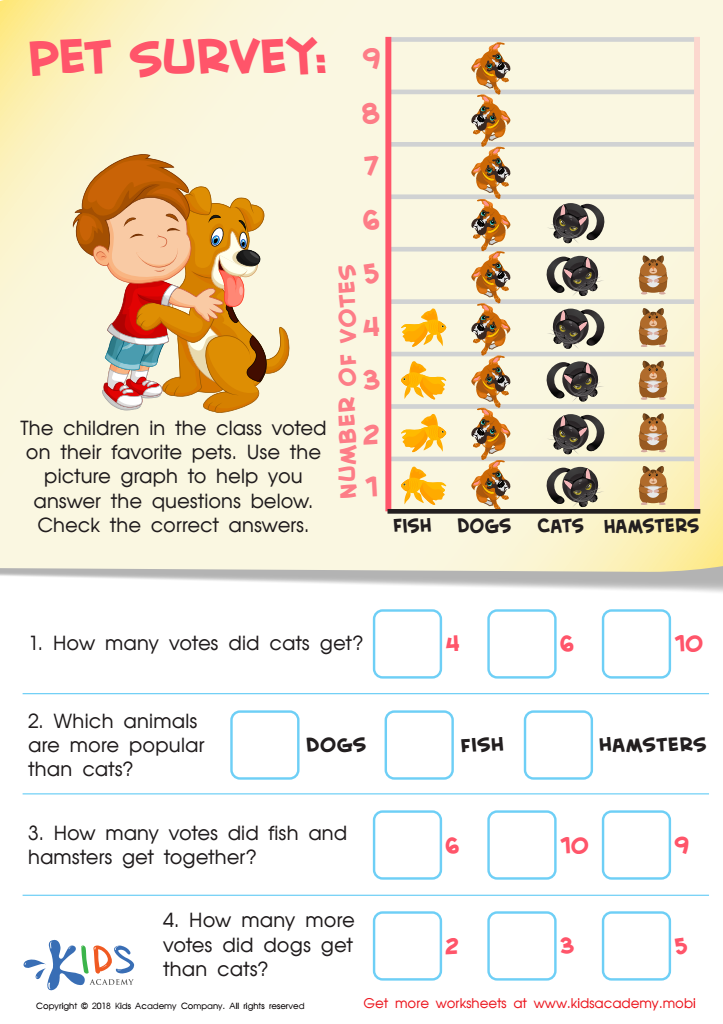
Do you have a furry family member? If the answer is yes and your kids love animals, they'll enjoy this worksheet. The picture graph shows the children's votes for their favorite pet - fish, dog, cat and hamster. Ask your child to use the graph to answer the questions. Guide them to check the right answer.
Pet Survey Worksheet
Worksheet
Whole Shape from Halves, Thirds and Fourths Worksheet

Whole Shape from Halves, Thirds and Fourths Worksheet

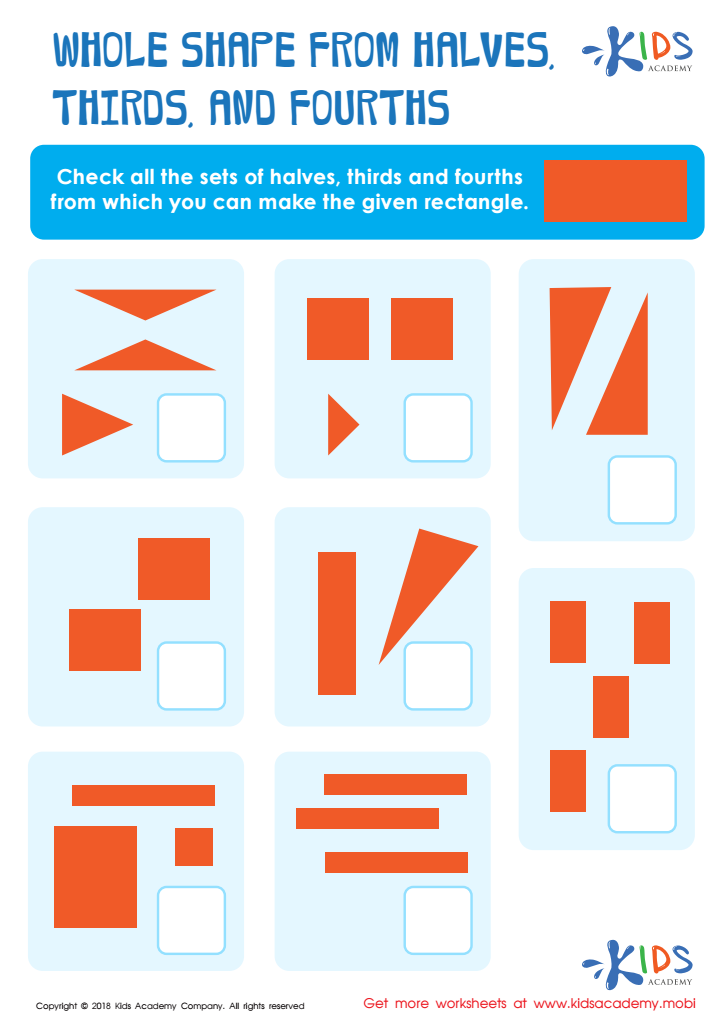
Explain to your students that they can make a new shape by combining halves, thirds, and fourths of a shape. Show them the worksheet with the rectangle at the top and ask them to find which sets of halves, thirds, and fourths make it. Have them check all the correct sets.
Whole Shape from Halves, Thirds and Fourths Worksheet
Worksheet
Triceratops Counting to 9 Worksheet


Triceratops Counting to 9 Worksheet

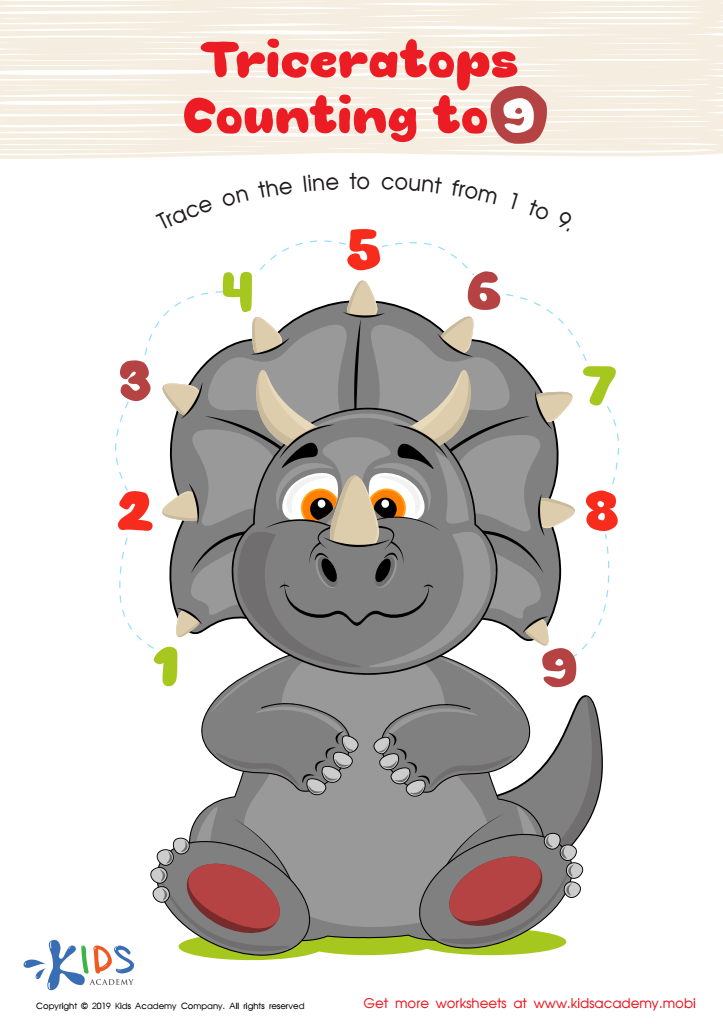
This little triceratops is here to help kids learn to count! Dinosaurs lived long before us and we've never seen one alive, but through research, we know a lot about them. Let the dinosaur help trace on the line from 1 to 9 for a fun counting practice.
Triceratops Counting to 9 Worksheet
Worksheet


Parents and teachers should prioritize Basic Math Skills for ages 4-7 because foundational math knowledge significantly influences a child's academic trajectory. At this age, children are curious learners, and introducing them to basic math concepts—such as counting, addition, subtraction, and simple shapes—can lay the groundwork for more complex math skills in later years.

Developing these skills fosters critical thinking and problem-solving abilities, which are essential in everyday life. A strong math foundation can enhance a child’s confidence, encouraging them to engage with more challenging concepts as they progress through school. Moreover, studies show that early math proficiency is often linked to success in other subjects, including reading and science.

Additionally, engaging in fun, interactive math activities can strengthen the parent-child or teacher-student bond, making learning a positive experience. Since children’s cognitive development is rapid during these years, it's crucial for adults to support their mathematical growth through games, stories, and creative lessons. By fostering basic math skills early on, we not only prepare children for academic success but also help them become well-rounded individuals equipped to navigate a numerically driven world.