
Improving concentration Easy Math Worksheets for Ages 4-7
4 filtered results
Difficulty Level
Grade
Age
-
From - To
Subject
Activity
Standards
Boost your child's focus and concentration with our Easy Math Worksheets designed specifically for ages 4-7. These engaging worksheets feature fun, interactive math exercises that capture young learners' attention while developing essential skills. Created by educational experts, our resources help children practice counting, simple addition, and pattern recognition in a playful way. Each worksheet encourages critical thinking and problem-solving abilities while promoting a love for math. Perfect for at-home learning or classroom use, these worksheets provide an excellent way for parents and teachers to support concentration and improve academic performance. Explore our collection and watch your child's confidence grow!
Favorites
With answer key
Interactive
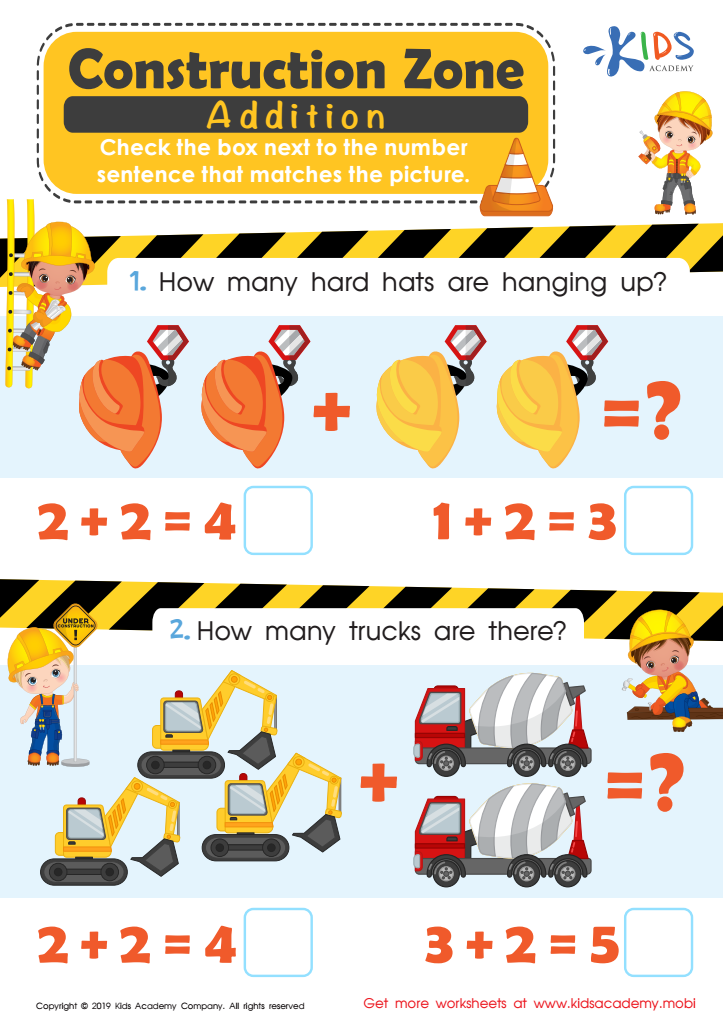
Construction Zone Addition Worksheet
Construction sites are bustling with professionals called construction workers. They use equipment while working, so they must wear protective gear. With kids, look at the pictures and name each object. Then help them check the box next to the number sentence that matches the picture. (80 words)
Construction Zone Addition Worksheet
Worksheet
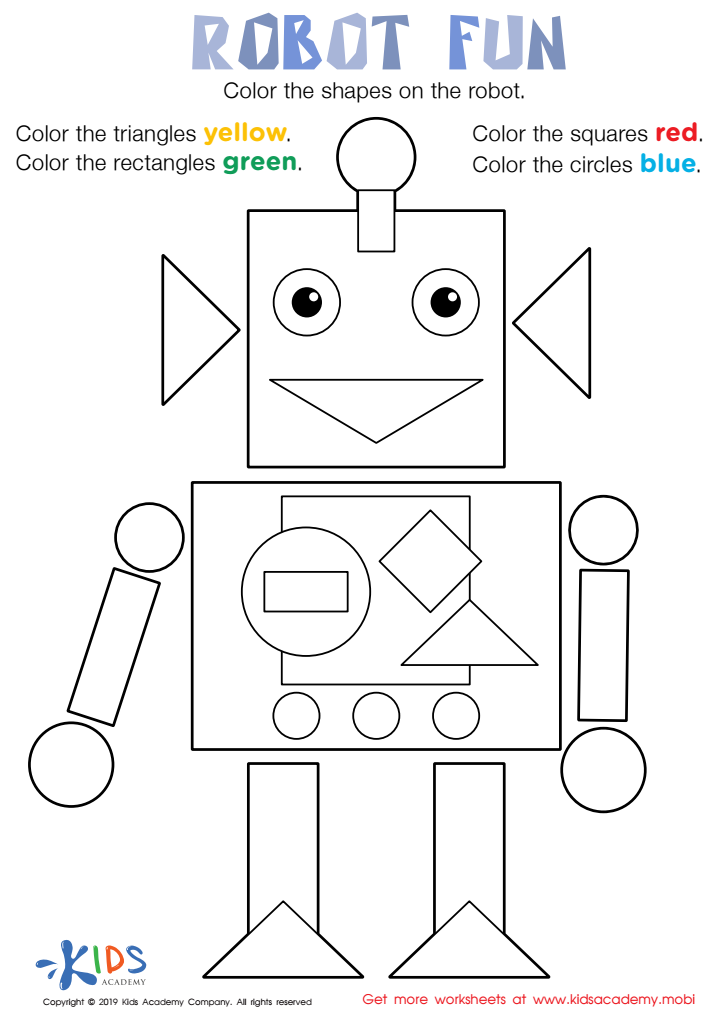
Robot Fun Worksheet
Help your child learn about basic shapes with this fun robot worksheet! Kids practice identifying circles, squares, rectangles and triangles, then color each shape according to directions. Make math practice enjoyable with this coloring page that teaches all four basic shapes - it's an important math skill!
Download (PDF)
 Assign to My Students
Assign to My Students
Robot Fun Worksheet
Worksheet
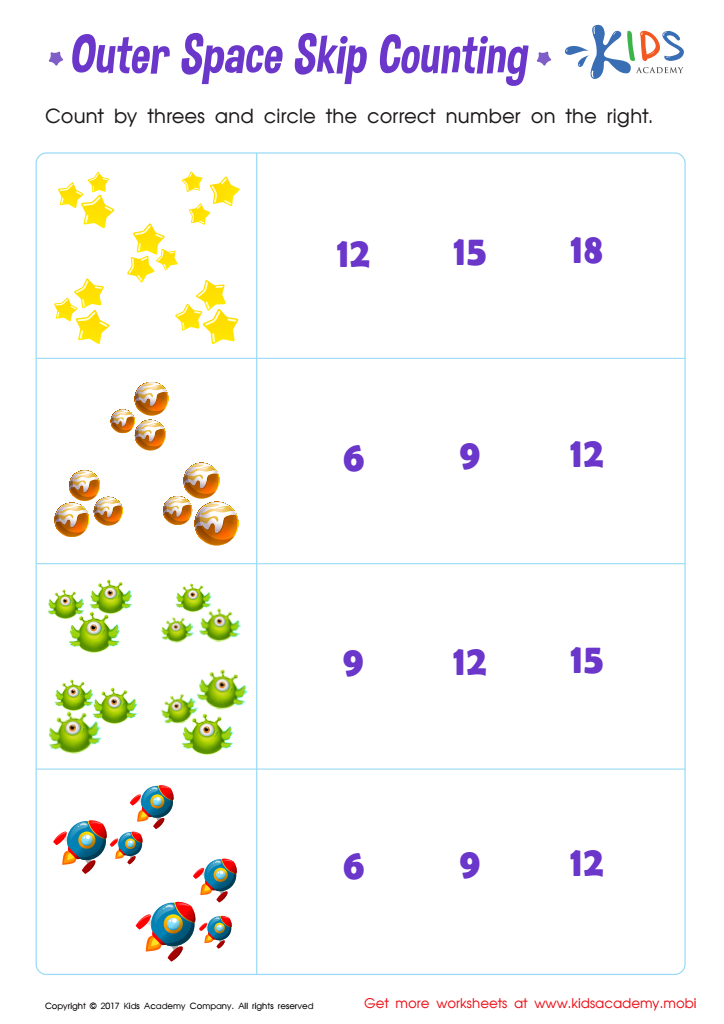
Skip Counting by 3s: Outer Space Skip Counting Printable
Want to set your child up for math success? Get them this printable worksheet that helps them practice counting in groups of 3’s, building a foundation for more advanced math skills. Skipping counting helps kids master logical reasoning and cognitive skills, making a connection between counting objects individually and in groups. The colorful images will keep them engaged and having fun - without realizing how hard they're working!
Skip Counting by 3s: Outer Space Skip Counting Printable
Worksheet
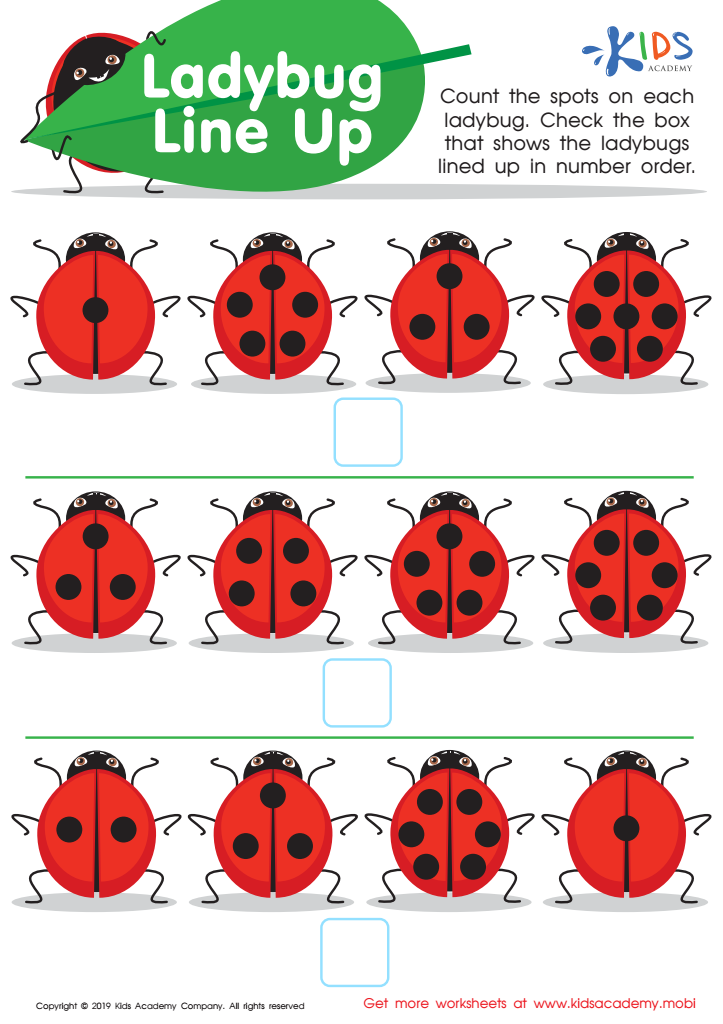
Ladybug Line Up Worksheet
Count the spots on the back of each ladybug in the three groups. Help kids check the box under each group that shows the ladybugs in proper number order. Ladybugs are an adorable insect with unique spots. This worksheet encourages counting and ordering.
Ladybug Line Up Worksheet
Worksheet
Join Kids Academy for Free
Who is primarily going to use this learning content?








Improving concentration in young learners, particularly in subjects like math, is crucial for their overall academic success and development. For children ages 4-7, early experiences with math establish foundational skills that set the stage for future learning. Enhancing concentration during this critical phase helps children engage more effectively with math concepts, fostering problem-solving abilities and numerical understanding.
Teachers and parents play a vital role in cultivating this concentration. Engaging activities tailored to this age group can make learning enjoyable, helping children to focus and retain information better. When children concentrate during math exercises, they build confidence, which is essential for tackling more complex topics later on. Moreover, improved concentration reduces frustration and behavioral issues related to distractions.
Importantly, fostering concentration helps develop self-regulatory skills that are valuable beyond the classroom. Children learn to manage their attention and stay on task, preparing them for more structured environments as they progress in their education. Therefore, prioritizing efforts to improve concentration in math not only aids in immediate learning outcomes but also builds essential life skills that will benefit children throughout their lives. In essence, teachers and parents should care about this aspect because it plays a significant role in shaping a child's educational journey and overall development.








