Mental math practice Easy Math Worksheets for Ages 4-7
3 filtered results
-
From - To
Discover our engaging collection of mental math practice worksheets designed specifically for children aged 4-7! Perfect for young learners, these worksheets offer fun activities to enhance addition and subtraction skills without relying on written notes. Our easy-to-use resources help children build confidence in their math abilities while developing critical thinking skills. Each worksheet encourages quick mental calculations through vibrant illustrations and interactive exercises that make learning enjoyable. Ideal for teachers, parents, and caregivers wishing to strengthen their child's number sense, these easy math worksheets promote a solid foundation for future mathematical success. Start your child's mental math journey today!
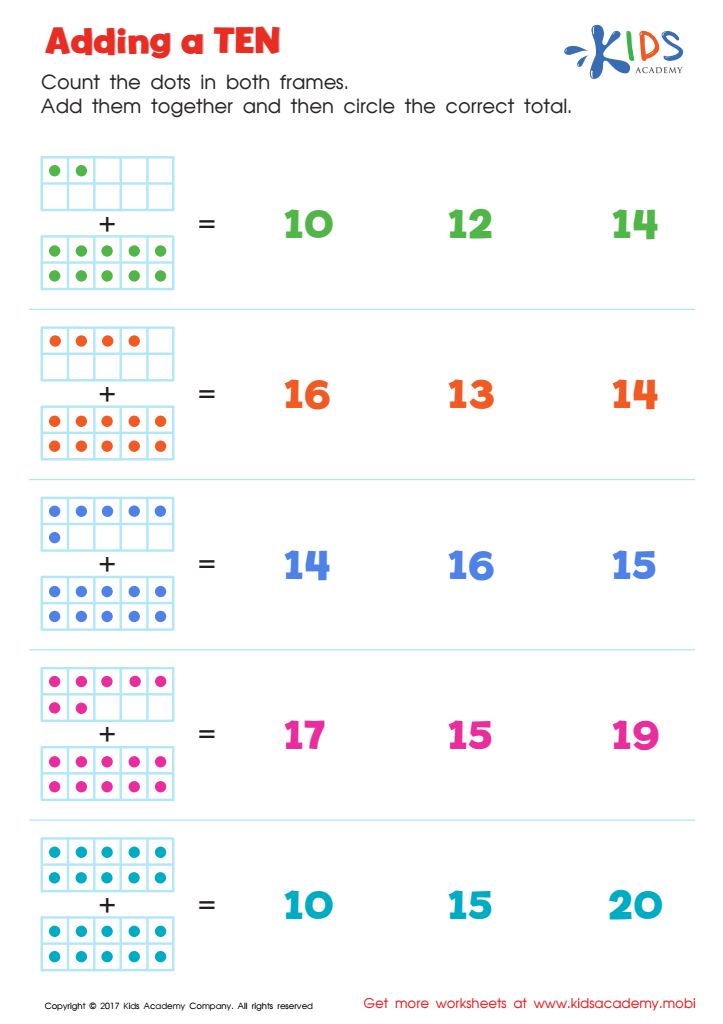
Adding a Ten Worksheet
 Assign to My Students
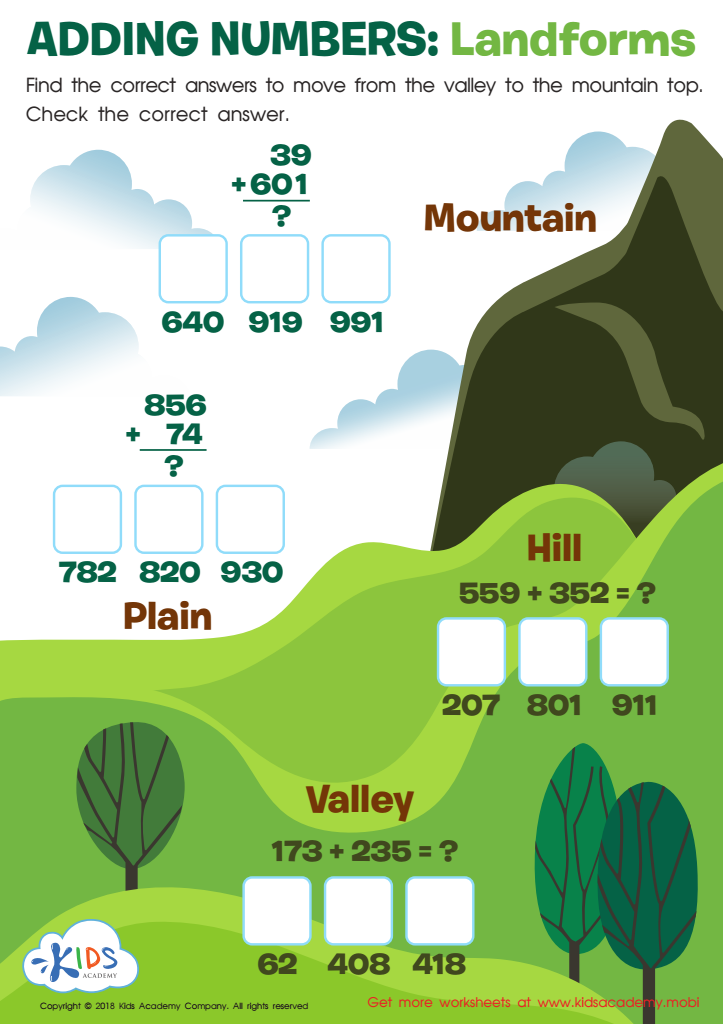
Adding Numbers: Landforms Worksheet
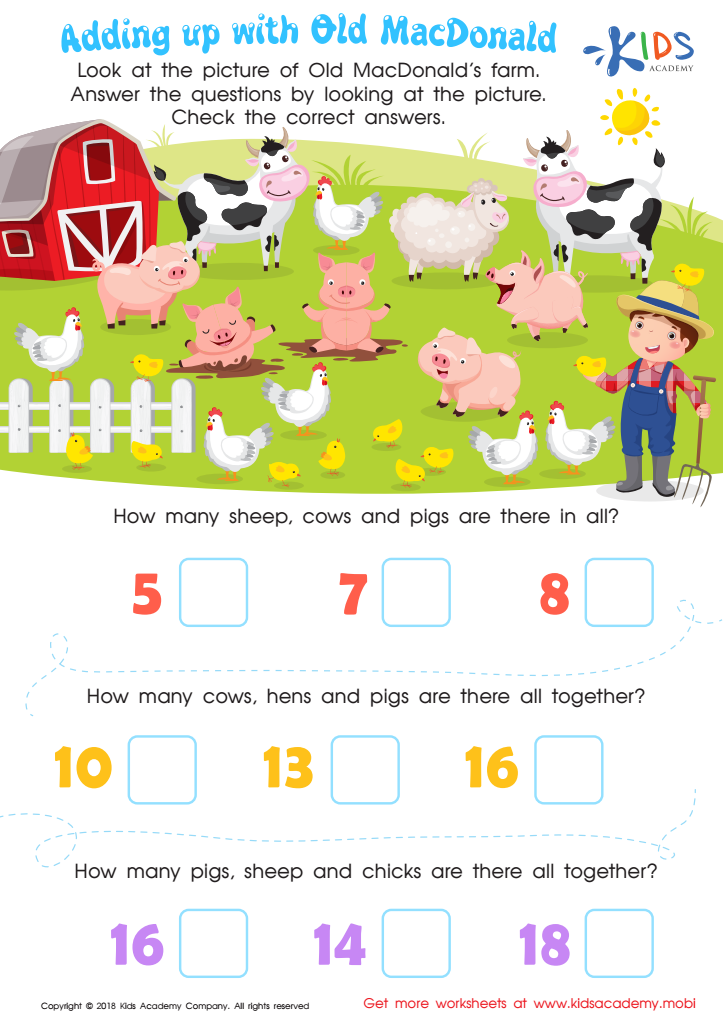
Adding Up with Old MacDonald Worksheet







Mental math practice is crucial for young children aged 4-7 as it lays the foundation for their mathematical understanding and skills. Parents and teachers should prioritize this type of learning for several reasons. First, mental math boosts confidence. When children can perform calculations in their heads, they feel more competent and willing to engage with more complex math problems.
Second, mental math enhances cognitive development. It encourages critical thinking and problem-solving skills, essential for their overall intellectual growth. As children practice mental math, they refine their ability to visualize numbers and relationships, which translates to better handling of mathematical concepts later in life.
Moreover, integrating mental math into daily routines makes mathematics enjoyable and relatable. It encourages children to see math as a practical and useful skill rather than a daunting subject. This positive association is crucial for fostering a lifelong appreciation of math.
Finally, practicing mental math prepares kids for standardized tests and academic challenges they will face in school. By weaving these exercises into everyday activities, parents and teachers can cultivate a solid mathematical foundation that encourages critical thinking, enhances confidence, and makes learning more enjoyable. Investing time in mental math is, therefore, an investment in a child's future success in mathematics.








