
Shape identification Easy Math Worksheets for Ages 4-7
5 filtered results
Difficulty Level
Grade
Age
-
From - To
Subject
Activity
Standards
Explore our "Shape Identification Easy Math Worksheets" designed specifically for children ages 4 to 7! These engaging and interactive worksheets help young learners familiarize themselves with basic shapes while enhancing their math skills. Featuring colorful illustrations and fun activities, kids will easily identify and differentiate between circles, squares, triangles, and more. Our thoughtfully crafted exercises encourage critical thinking and provide multiple learning opportunities. Perfect for home or classroom use, these worksheets make learning shapes enjoyable and effective. Help your child build a solid foundation in mathematics with our user-friendly resources tailored for early learners! Start their math journey today!
Favorites
With answer key
Interactive
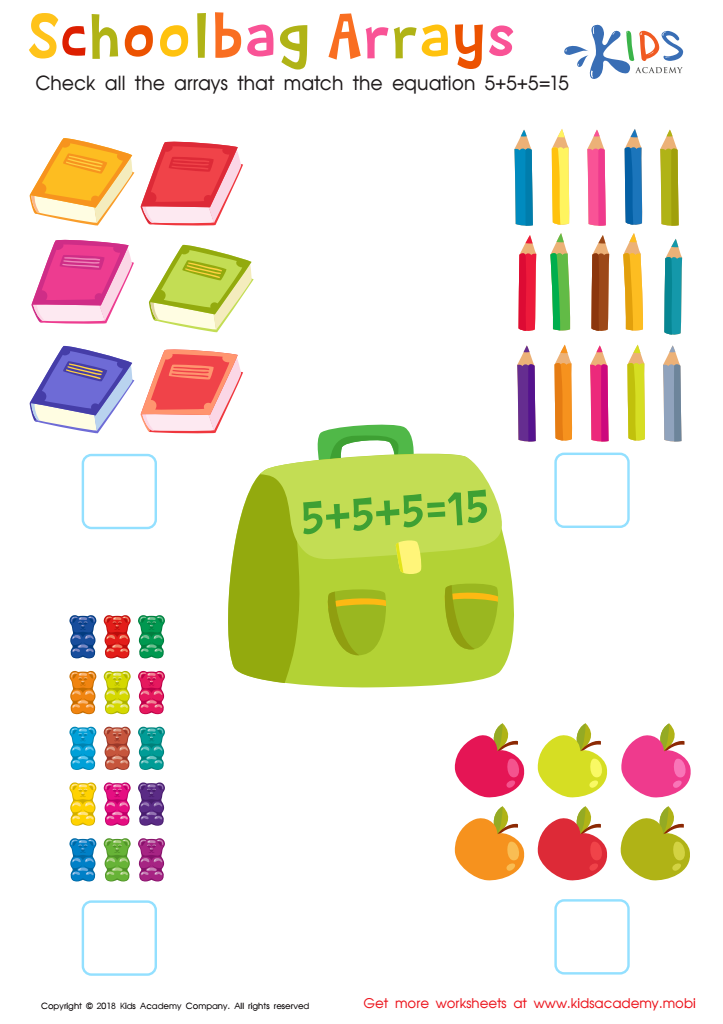
Schoolbag Arrays Worksheet
Help your child spot the correct arrays in this worksheet: having them count the items in each and check the boxes for the ones with 15 objects. Ask them to differentiate between rows and columns and explain which ones match the equation 5+5+5=15.
Schoolbag Arrays Worksheet
Worksheet
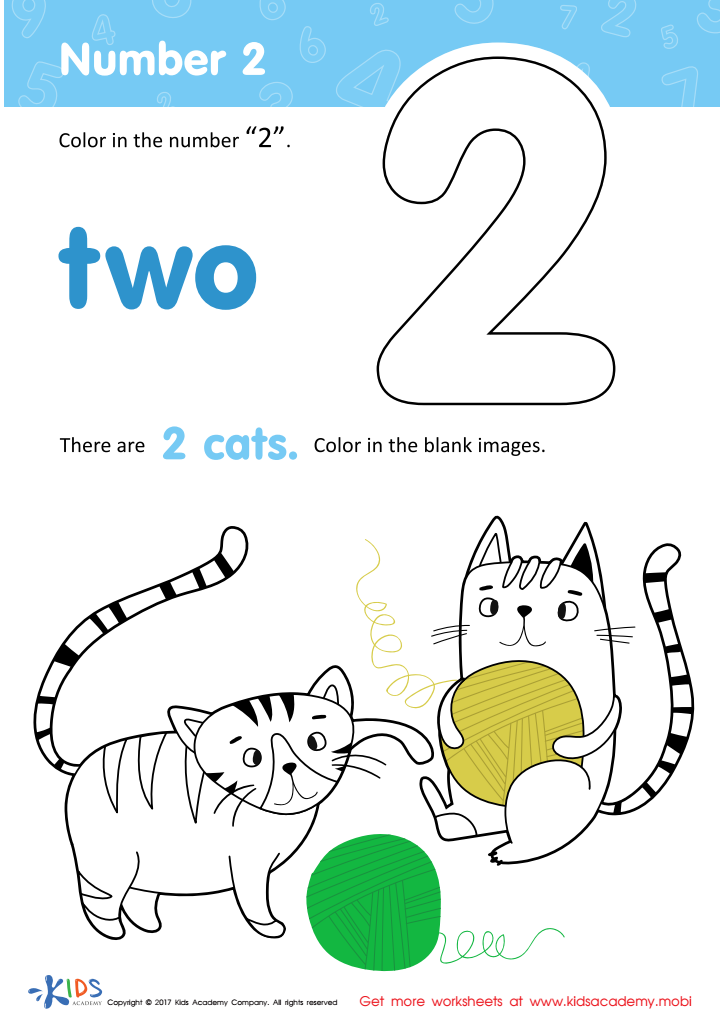
Number 2 Printable
Help your child learn to recognize the number two with these cats and their yarn balls. Print this coloring page – it's great for counting and coloring fun! Your child will develop basic numeracy skills as they visually see numbers in action.
Download (PDF)
 Assign to My Students
Assign to My Students
Number 2 Printable
Worksheet
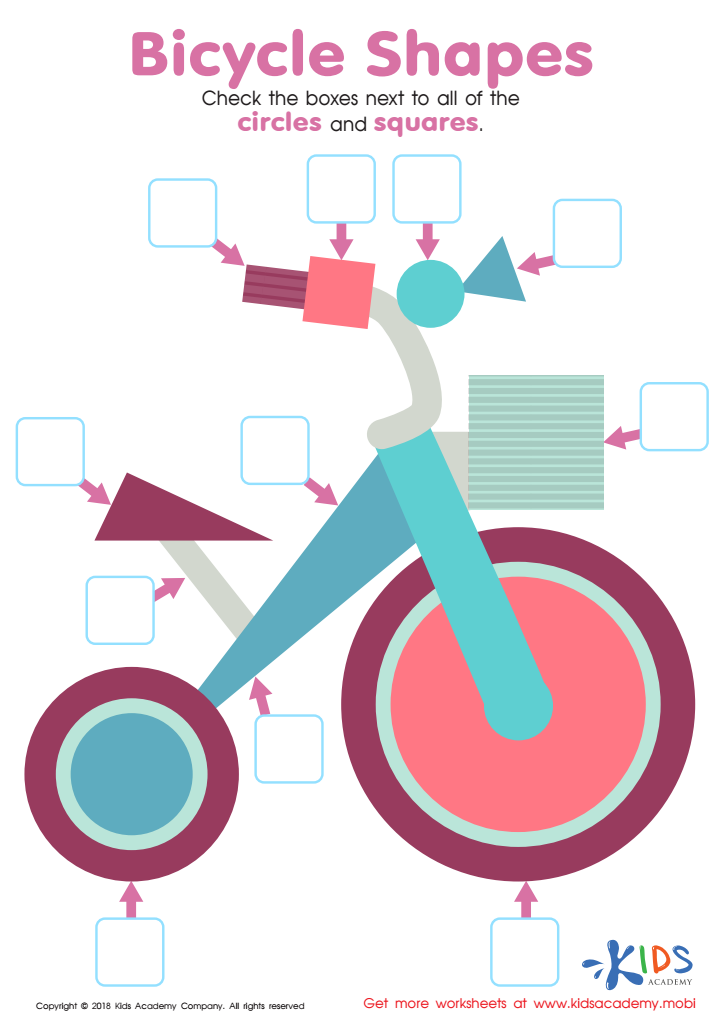
Bicycle Shapes Worksheet
This fun geometry worksheet for preschoolers asks the child to spot hidden shapes (circles, squares) in a colorful bicycle. Each shape varies in size and the child checks the box when it's found. It's a visual way to teach shapes.
Bicycle Shapes Worksheet
Worksheet
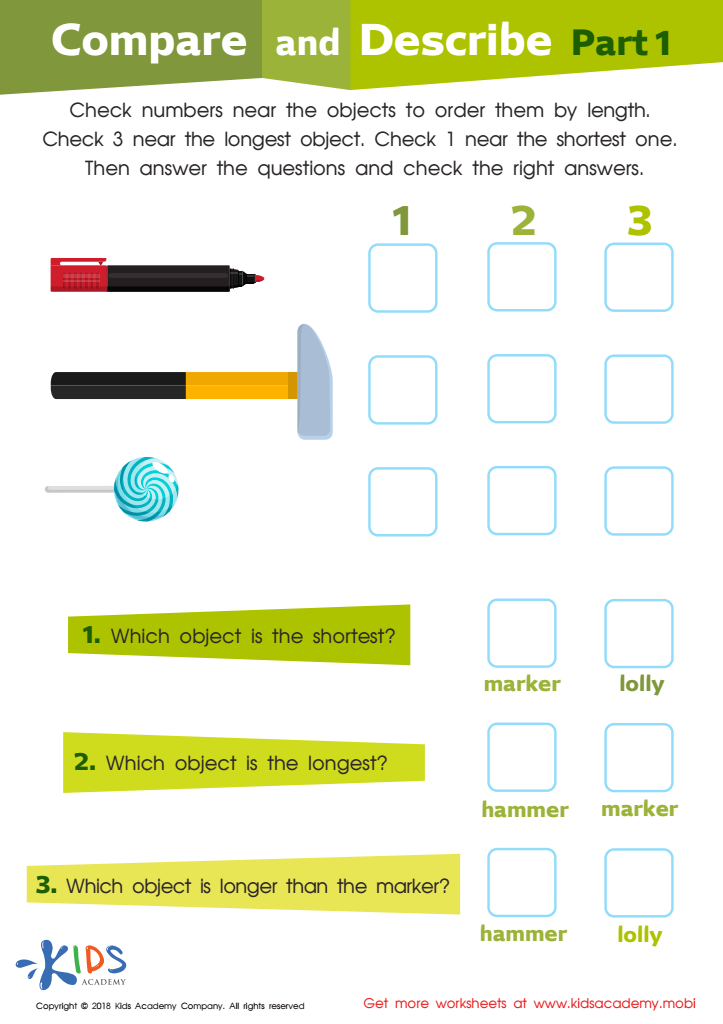
Compare and Describe: Part 1 Worksheet
In this worksheet from Kids Academy, kids can start learning measurement in stages. Observe the images, then compare their length - which one is shortest? Which one is longest? Answer the questions at the bottom to complete the sheet. It's an easy way to help kids understand measurement basics.
Compare and Describe: Part 1 Worksheet
Worksheet
Join Kids Academy for Free
Who is primarily going to use this learning content?








Shape identification is a fundamental skill that lays the groundwork for math and spatial awareness in young children aged 4 to 7. For parents and teachers, focusing on this aspect of early education is crucial for several reasons.
Firstly, recognizing shapes helps develop critical thinking skills. Children learn to differentiate between various shapes, which enhances their ability to classify and organize information, vital skills for problem-solving in math and everyday life. Additionally, shape recognition is often linked to understanding geometry concepts in later grades, making it a foundational skill for future math success.
Moreover, engaging with shapes encourages creativity and imagination. Activities involving shapes—such as crafting, drawing, or building—allow children to explore and express themselves while learning. This playful exploration enhances motor skills and cognitive development.
Furthermore, incorporating shape identification into routines can boost communication skills. Parents and teachers can use shape-related vocabulary to expand children’s language, fostering early literacy.
In short, prioritizing shape identification in early education is essential for building cognitive, creative, and communication skills, setting the stage for acquired knowledge and a positive attitude towards learning in math and beyond.








