Understanding sequencing Easy Math Worksheets for Ages 4-7
3 filtered results
-
From - To
Welcome to our "Understanding Sequencing Easy Math Worksheets" designed specifically for children ages 4-7! These engaging worksheets help young learners grasp the essential skill of sequencing, a foundational aspect of early math education. Through fun activities and colorful illustrations, kids will explore ordering numbers, patterns, and sequences in a playful way. Our worksheets promote critical thinking and enhance problem-solving skills, making learning enjoyable. Perfect for home or classroom use, these resources are ideal for reinforcing sequencing concepts while keeping little ones engaged. Discover the joy of learning math through sequencing today!

One More Jumps In Worksheet
 Assign to My Students
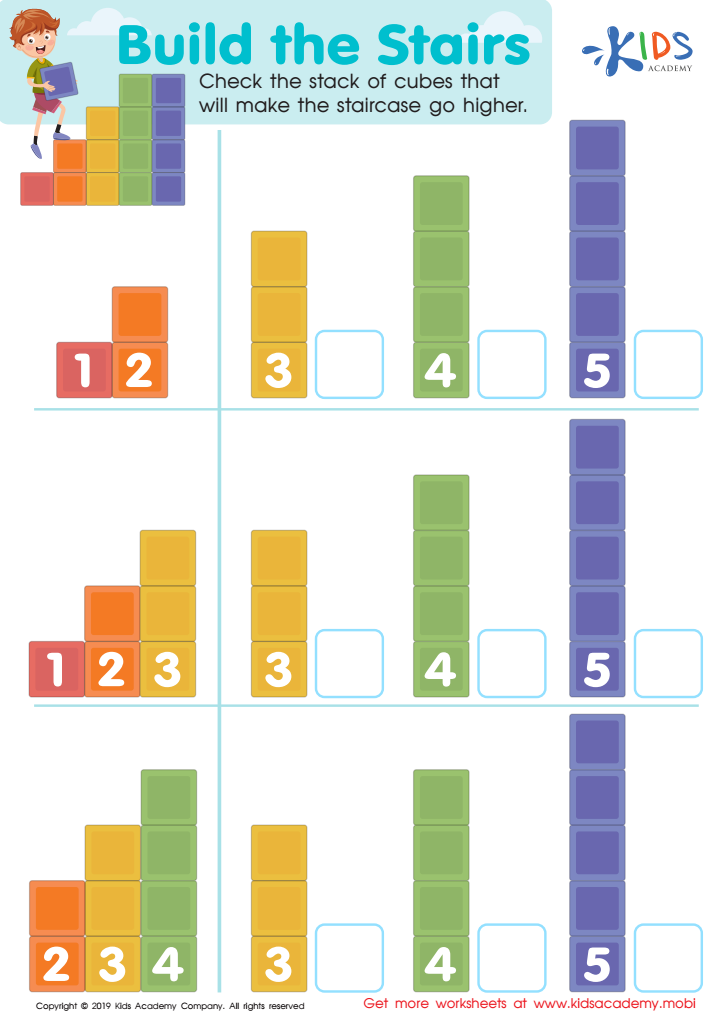
Build the Stairs Worksheet
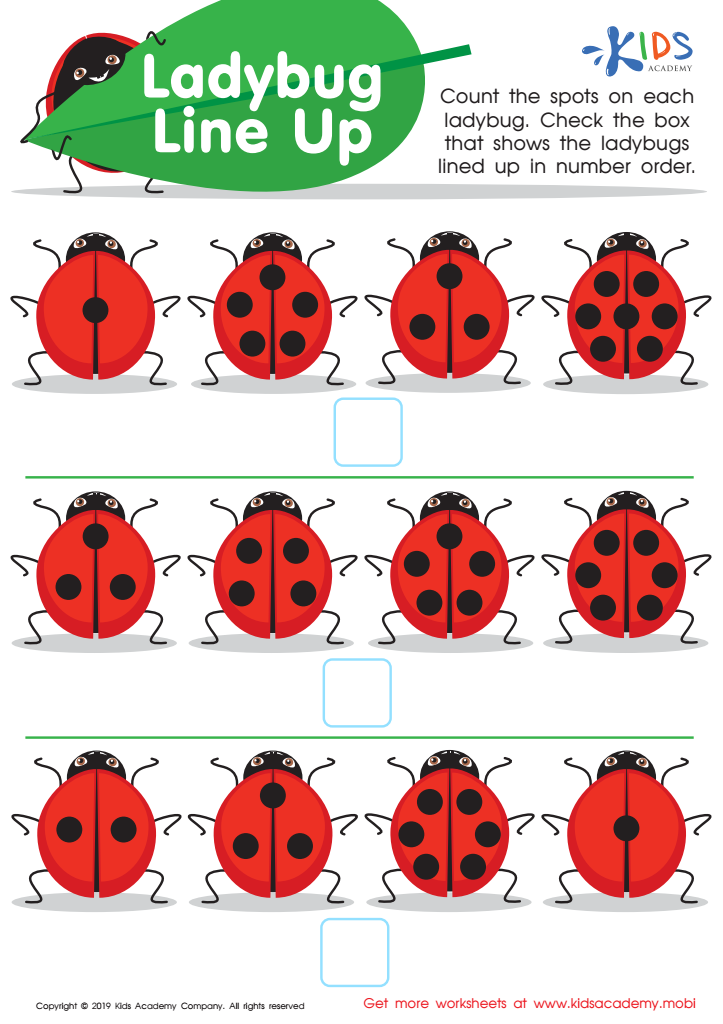
Ladybug Line Up Worksheet



%20(1).jpg)




Understanding sequencing is an essential mathematical concept for children aged 4-7, laying the foundation for critical thinking and problem-solving skills. For parents and teachers, emphasizing this skill is paramount because sequencing reflects how children learn to recognize patterns and establish relationships in their daily lives, making it more than just a mathematical exercise.
Parents and teachers can utilize simple tools, like number lines and daily routines, to demonstrate the importance of order. For example, sequencing activities can range from arranging pictures in a story sequence to following steps in a recipe. These activities help children comprehend a logical progression, enhancing their ability to follow instructions and improve their memory.
Additionally, mastering sequencing builds skills that contribute to literacy development, as reading often involves understanding the order of events. It also fosters a sense of accomplishment, reinforcing a child's confidence in their problem-solving capabilities. By nurturing this critical skill early on, parents and teachers can equip children with the cognitive tools they need to succeed in more complex mathematical concepts in the future and encourage a logical approach to the world around them. Ultimately, investing in a child’s understanding of sequencing can pave the way for lifelong learning.








