Comparing numbers Easy Measurement Worksheets for Ages 4-7
3 filtered results
-
From - To
Discover our engaging "Comparing Numbers Easy Measurement Worksheets" designed for ages 4-7! These fun and interactive worksheets help young learners develop essential number comparison skills through relatable activities. Each worksheet features colorful illustrations and age-appropriate exercises, promoting number recognition, measurement concepts, and critical thinking. Ideal for both home and classroom use, these resources will keep kids motivated while they practice comparing quantities and understanding greater than or less than. Foster a solid foundation in mathematics with our easy-to-use worksheets, perfect for shaping confident learners. Dive into the world of numbers today and watch your child thrive!
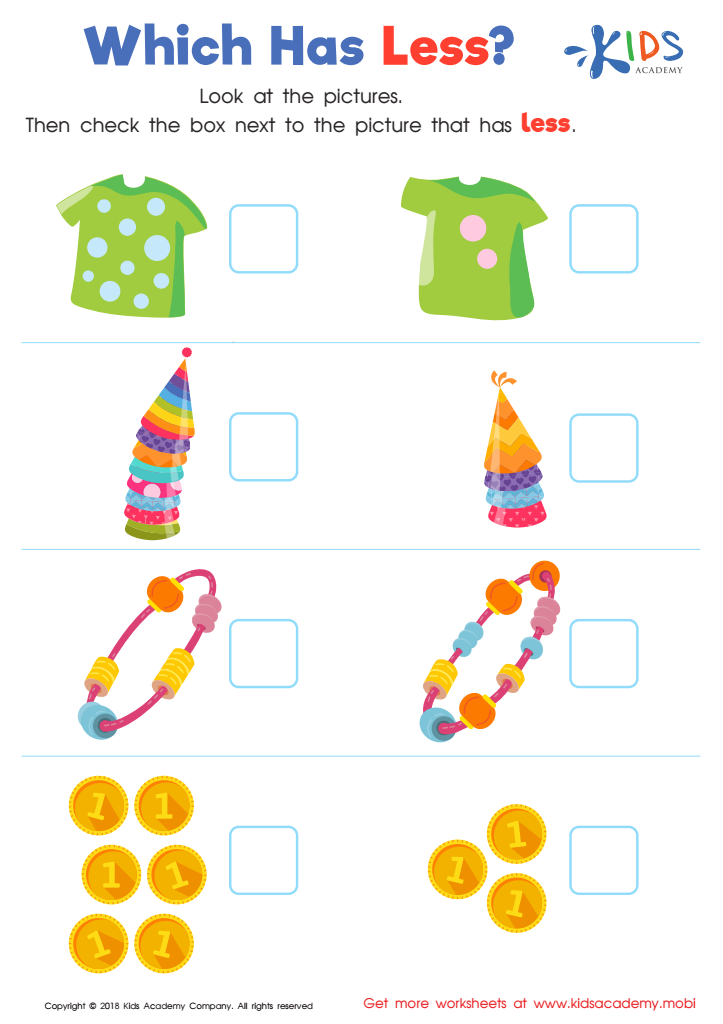
Which Has Less? Worksheet
 Assign to My Students
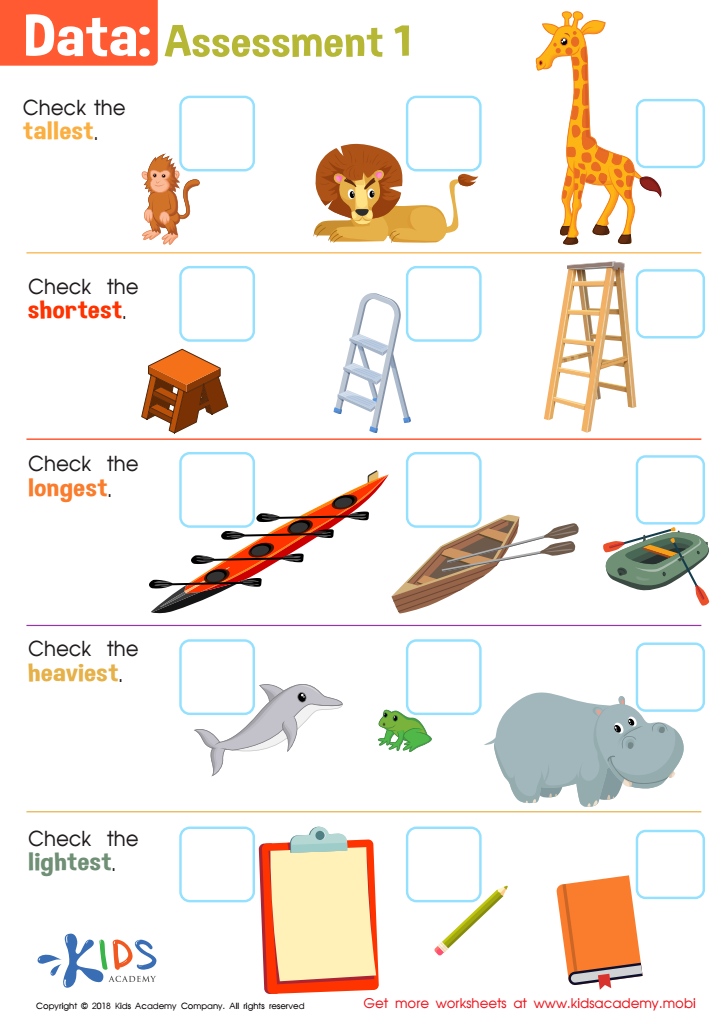
Data: Assessment 1 Worksheet
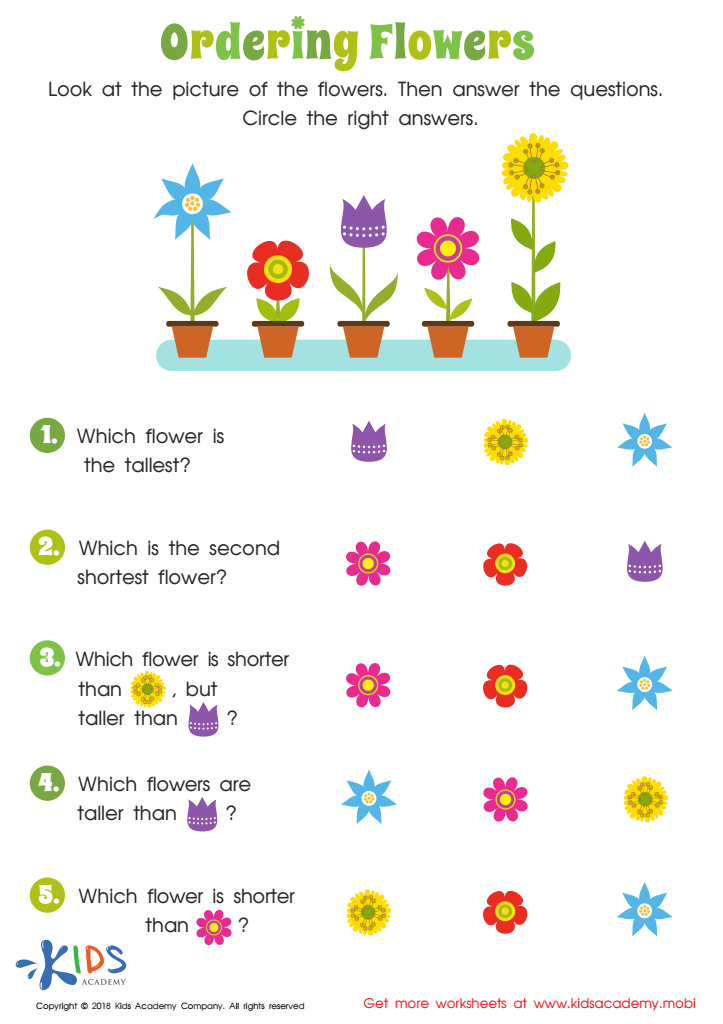
Ordering Flowers Worksheet








Parents and teachers should prioritize teaching young children about comparing numbers and easy measurement because foundational math skills are crucial for academic success and everyday life. At ages 4 to 7, children are at a key developmental stage where they start to grasp basic concepts of quantity, size, and measurement. Understanding how to compare numbers helps children develop critical thinking and problem-solving abilities, laying the groundwork for more complex mathematical concepts in the future.
Engaging children in fun activities that involve comparing sizes and quantities — such as sorting objects, measuring ingredients for a simple recipe, or comparing heights of family members — makes learning memorable and enjoyable. These activities not only enhance numerical literacy but also strengthen fine motor skills and boost confidence as children learn to articulate their reasoning.
Moreover, mastering these concepts at a young age can reduce math anxiety later in life, promoting a positive attitude towards numbers. By integrating comparing numbers and measurement into daily routines and educational activities, parents and teachers equip children with essential skills that will benefit them in school and in real-world scenarios, ultimately enabling them to make informed decisions and foster independence.








