Sentence construction Easy Reading Worksheets for Ages 4-7
4 filtered results
Difficulty Level
Grade
Age
-
From - To
Subject
Activity
Standards
Introduce your young learners to the basics of sentence construction with our Easy Reading Worksheets designed for ages 4-7! These engaging worksheets are perfect for helping children build essential reading and writing skills. With a focus on forming simple sentences, kids will discover the joy of connecting words meaningfully. Each worksheet is thoughtfully crafted to be fun and educational, making it easier for children to practice and improve their sentence structure. Let your child embark on this exciting learning journey, and watch their confidence in reading and writing soar! Download your worksheets today and make learning to read and write a delightful adventure.
Favorites
With answer key
Interactive
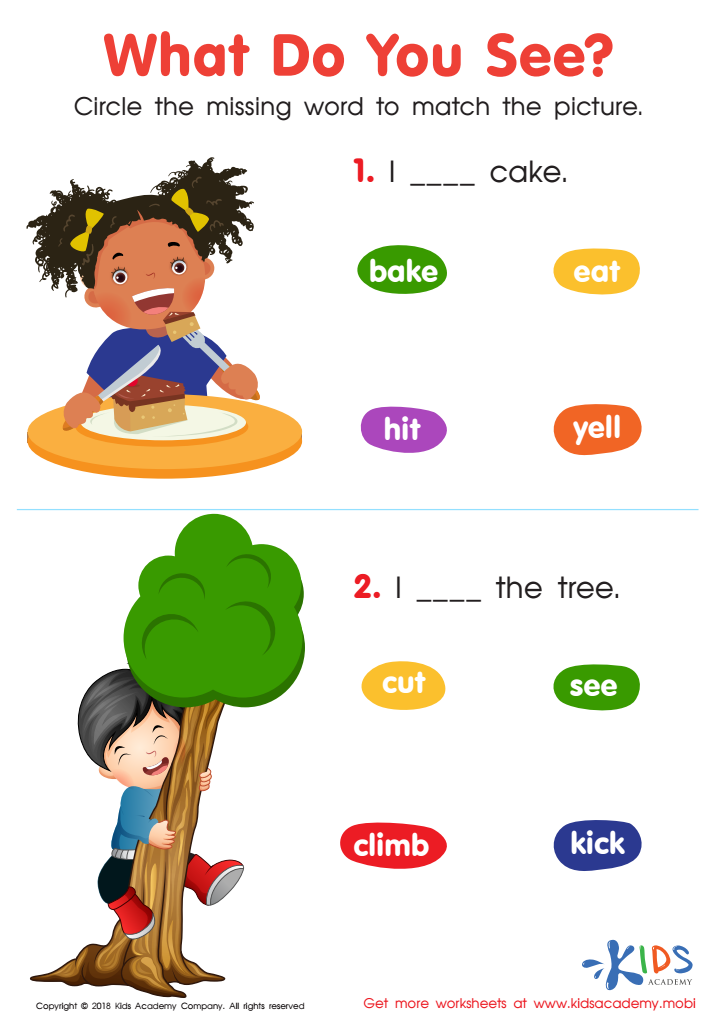
What Do You See? Reading Worksheet
New readers can use the attractive pictures and high-frequency words on this worksheet to practice expressive language skills and decode as they fill in the blanks. As they circle the correct words, they'll feel like reading superstars!
 Assign to My Students
What Do You See? Reading Worksheet
Worksheet
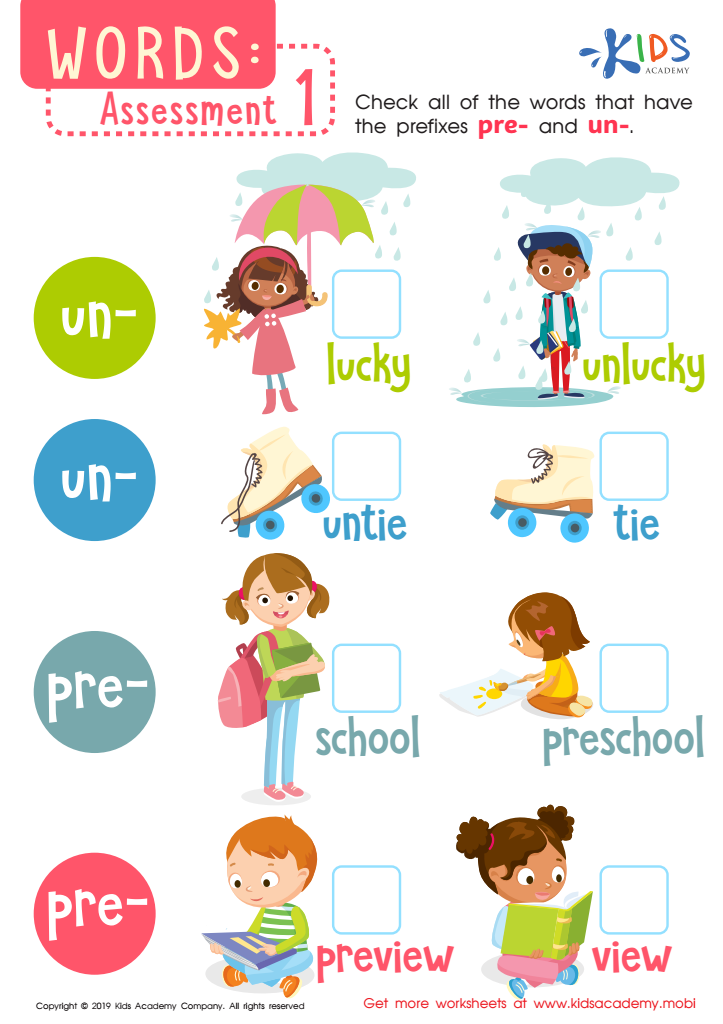
Words: Assessment 1 Worksheet
Help your child develop their knowledge of prefixes and suffixes with Kids Academy! This worksheet can test their understanding of pre- and un-. Have them view the illustrations and read the words to find the targeted prefix in each row. This is a great way to enhance their words and clarify meanings!
Words: Assessment 1 Worksheet
Worksheet
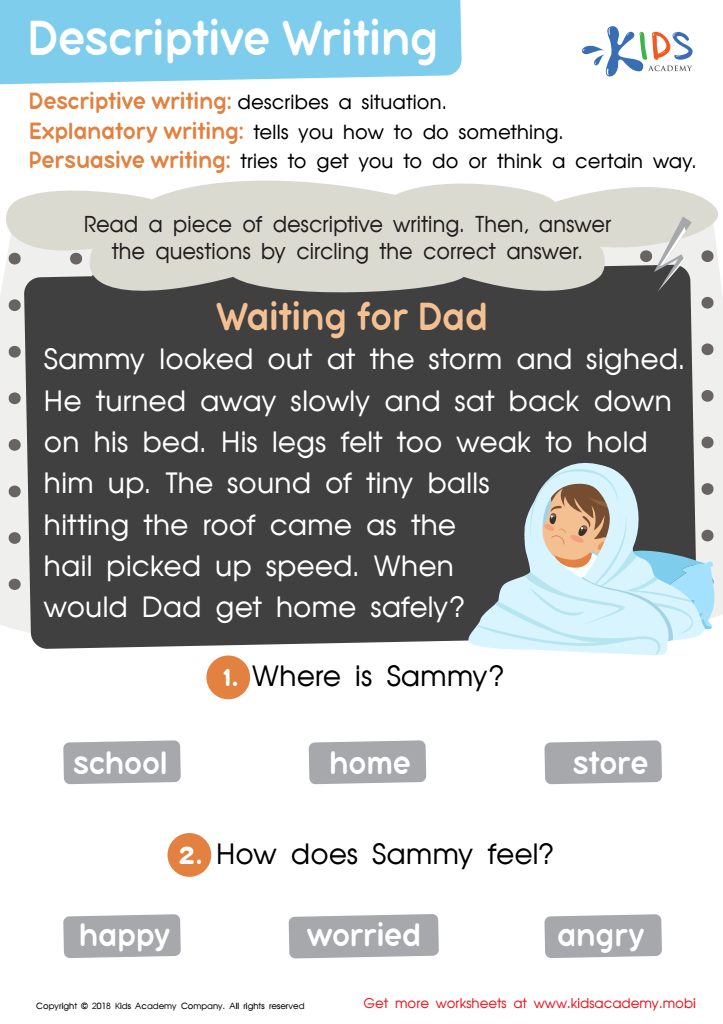
Descriptive Writing Worksheet: Part 2
In this worksheet, your kids will explore writing styles like descriptive, explanatory and persuasive. Read them the descriptive text, then have them answer the questions. Writing is an art – it's a way to express emotions, tell stories and share information.
Descriptive Writing Worksheet: Part 2
Worksheet
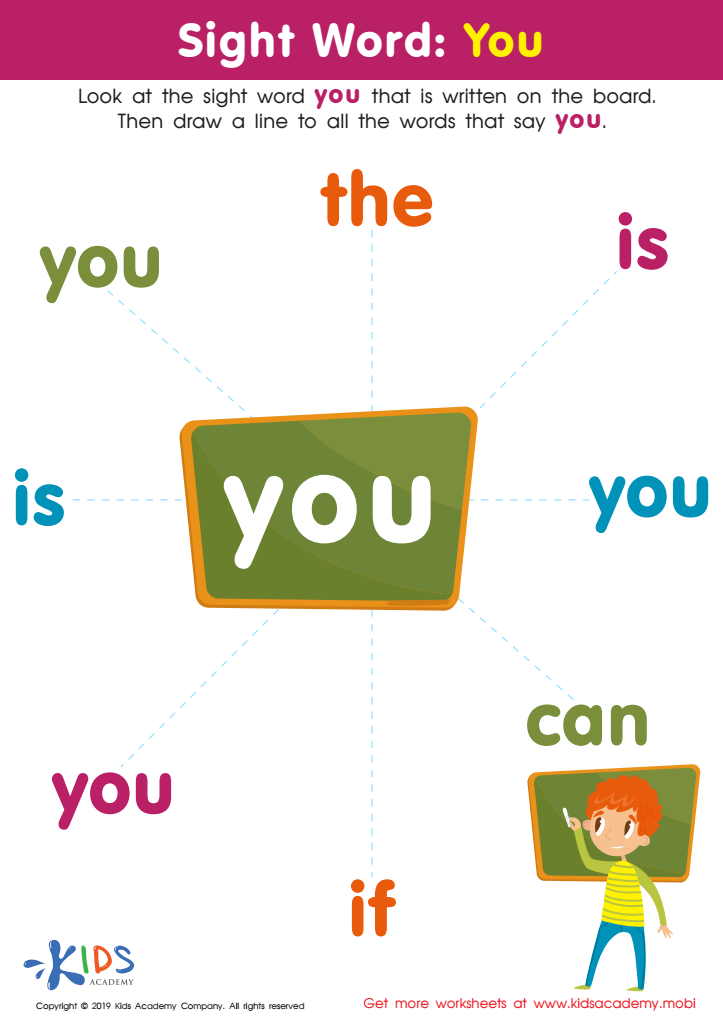
Sight Word You Worksheet
This free worksheet features the word 'you' and helps beginning readers practice visual-discriminatory skills. Using traceable lines and different colored words, it's an easy way to reinforce their identification of the word and build fluency.
Sight Word You Worksheet
Worksheet
Join Kids Academy for Free
Who is primarily going to use this learning content?







Understanding sentence construction at an early age lays a crucial foundation for children’s literacy development, which is vital for both parents and teachers to foster. Children aged 4-7 are in a crucial stage of language acquisition, where they absorb new words, concepts, and sentence structures rapidly. Introducing easy reading material that focuses on sentence construction helps them grasp the basic mechanics of language, such as subject-verb agreements, the use of pronouns, and proper tense.
For parents, encouraging strong reading habits at this age instills a love for learning and boosts their child’s confidence in school. Well-structured sentences make stories more comprehensible and engaging, allowing children to follow along more easily, which reinforces positive reading experiences. For teachers, fostering these skills enables students to participate more effectively in classroom activities and discussions, as well as to express their thoughts more clearly and accurately.
Easy reading materials help minimize frustration by matching the child’s cognitive and developmental levels, ensuring they do not feel overwhelmed. This builds patience and focus, essential qualities for academic success. Overall, nurturing proficiency in sentence construction at an early age sets the stage for effective communication, critical thinking, and lifelong learning, making it a fundamental concern for both parents and educators.