Vocabulary expansion Easy Writing Worksheets for Ages 4-7
7 filtered results
Difficulty Level
Grade
Age
-
From - To
Subject
Activity
Standards
Enhance your child's vocabulary with our engaging Easy Writing Worksheets designed specifically for ages 4-7! These interactive worksheets make learning fun while helping young learners expand their vocabulary through enjoyable activities. From fill-in-the-blank exercises to picture-word associations, each worksheet encourages creativity and self-expression. Our user-friendly format allows caregivers and teachers to easily integrate these resources into daily learning. By using captivating themes and bright visuals, children will develop language skills, boosting confidence and comprehension. Perfect for home or classroom use, our vocabulary expansion materials lay a strong foundation for future literacy success. Explore our worksheets today and watch your child's language flourish!
Favorites
With answer key
Interactive
 Assign to My Students
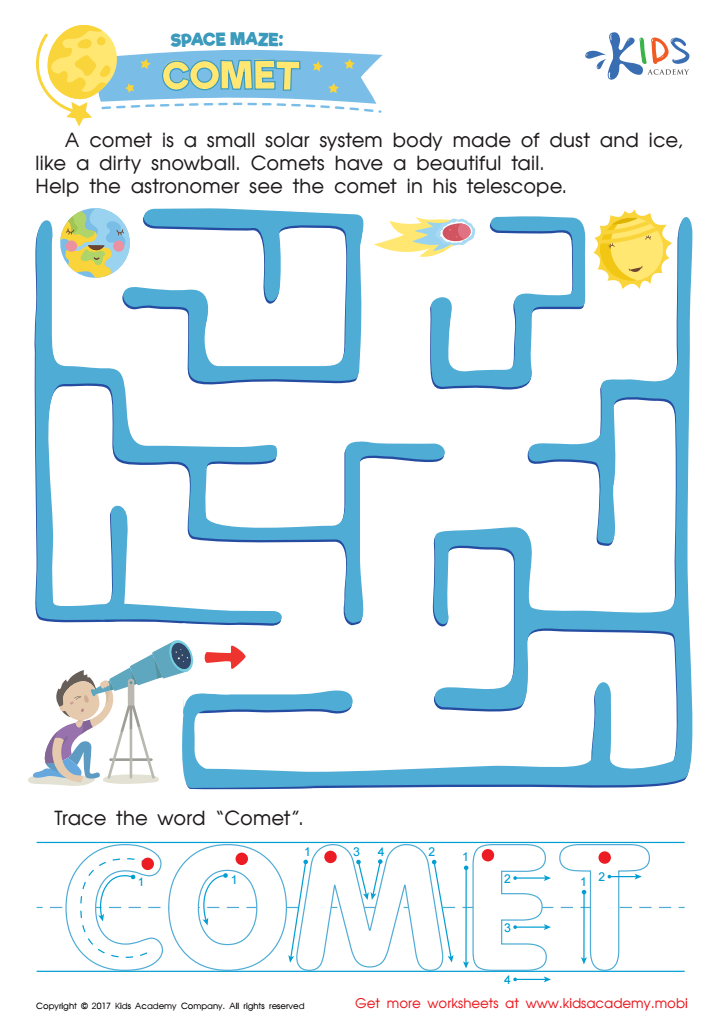
Space Maze: Comet Worksheet
Worksheet
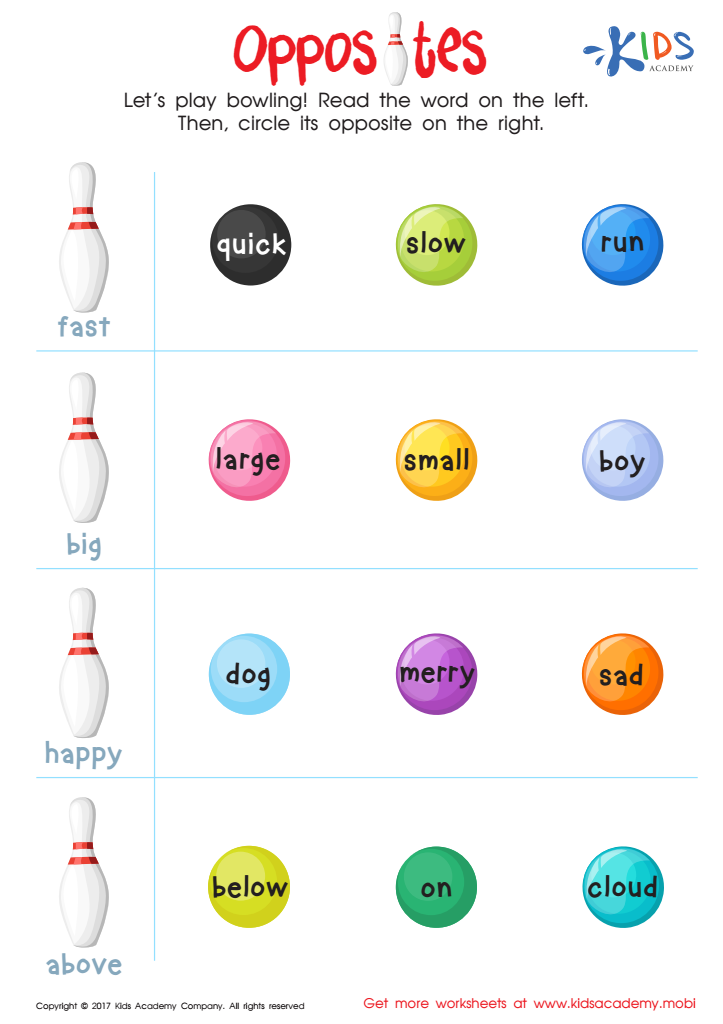
Opposites Worksheet
Have your students identify and circle the opposites of the words on the left. As a fun bowling-themed exercise, read the words and ask your kids if they know the opposites. Look through the options on the right and see if the answer is there; then, circle the correct answers.
Opposites Worksheet
Worksheet
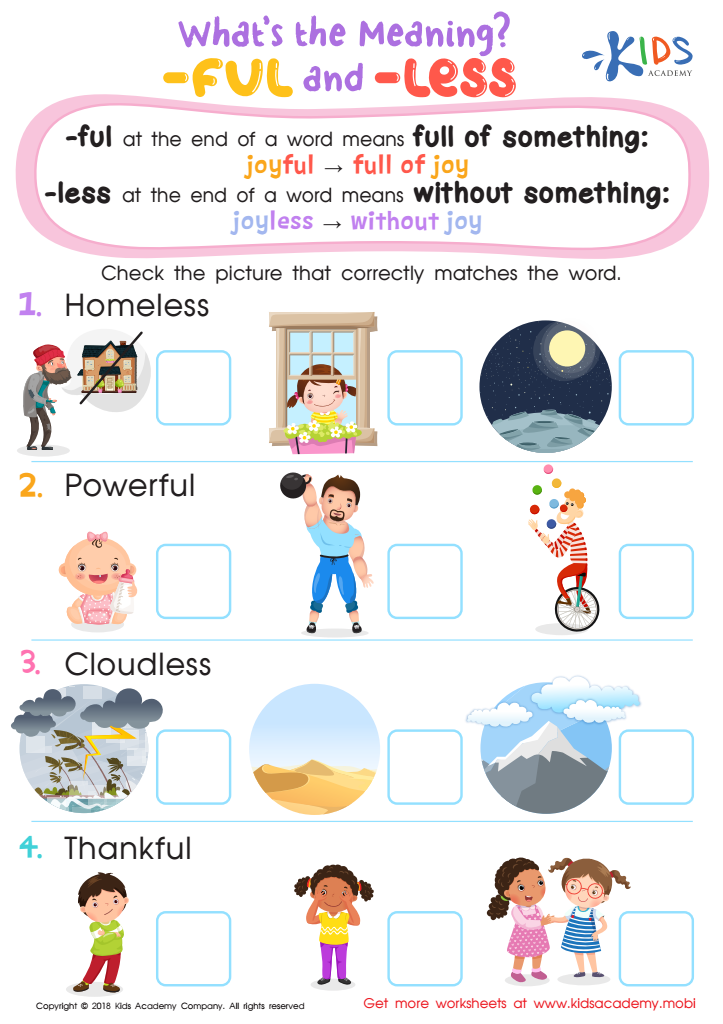
What's the Meaning? Worksheet
Look with your youngster through this colorful worksheet and match the pictures to the words at the top. These words have different meanings due to either a prefix or suffix being added, such as "ful" or "less".
What's the Meaning? Worksheet
Worksheet
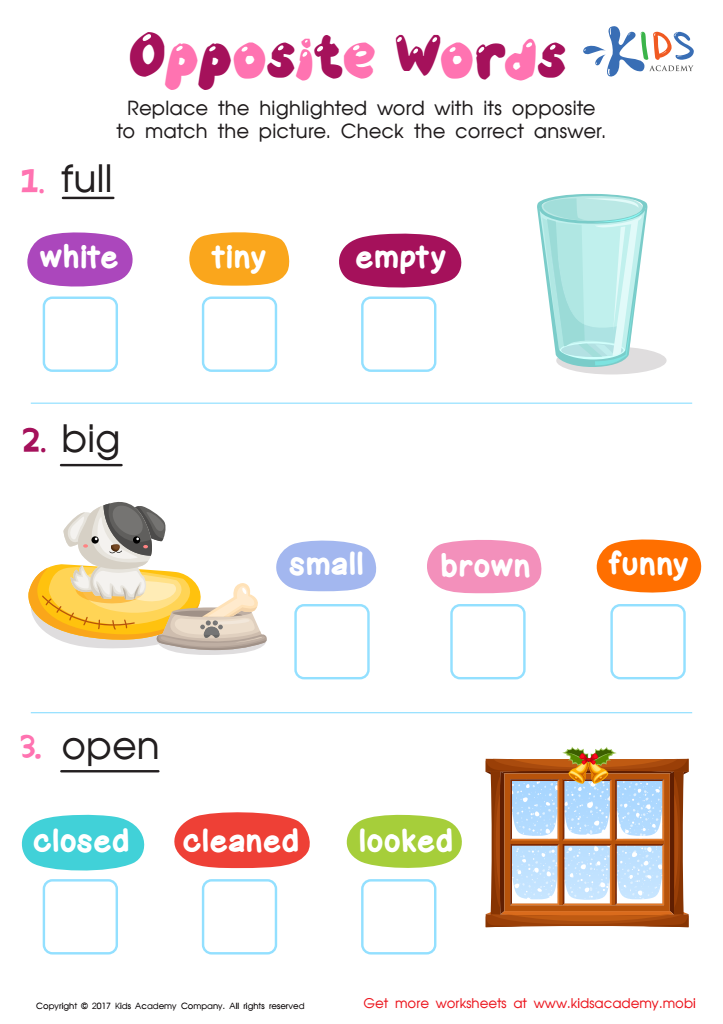
Opposite Words Worksheet
Help your child learn words and opposites. Look through a worksheet with them. Ask if they can read the underlined words. Then, ask which highlighted word is the opposite of the underlined word. The answer should match the picture.
Opposite Words Worksheet
Worksheet
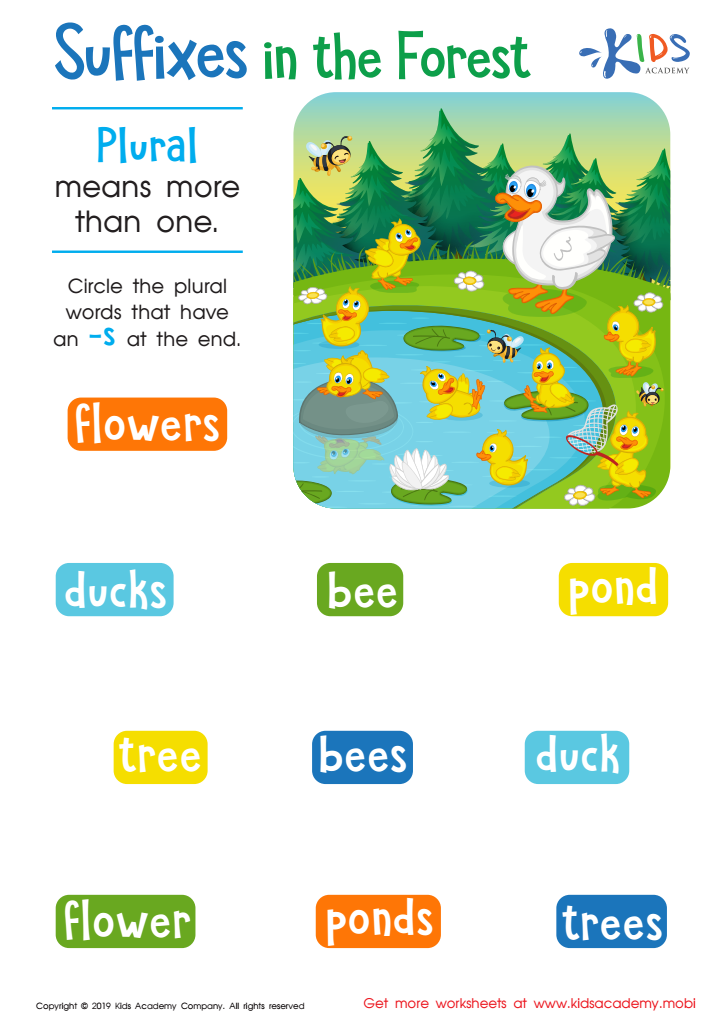
Suffixes in the Forest Worksheet
Suffixes are letters added to the end of words to form new words. These can be used to denote one who does something (e.g. reader) or more than one (e.g. adding -s). This worksheet helps kids practice pluralizing words they know by circling the plural words ending with -s.
Suffixes in the Forest Worksheet
Worksheet
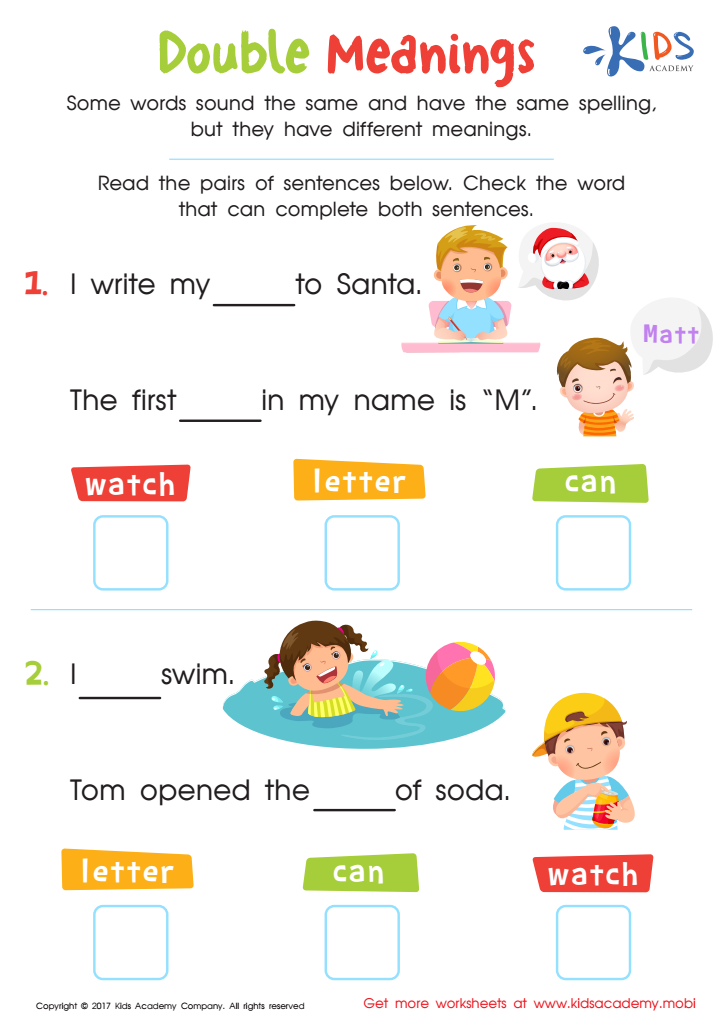
Double Meanings Worksheet
Homographs are words that look and sound the same, but have different meanings. This worksheet uses pictures to help young authors learn to use them correctly. Context and exposure to the words' meanings help them understand the difference.
Total: 80 words
Double Meanings Worksheet
Worksheet
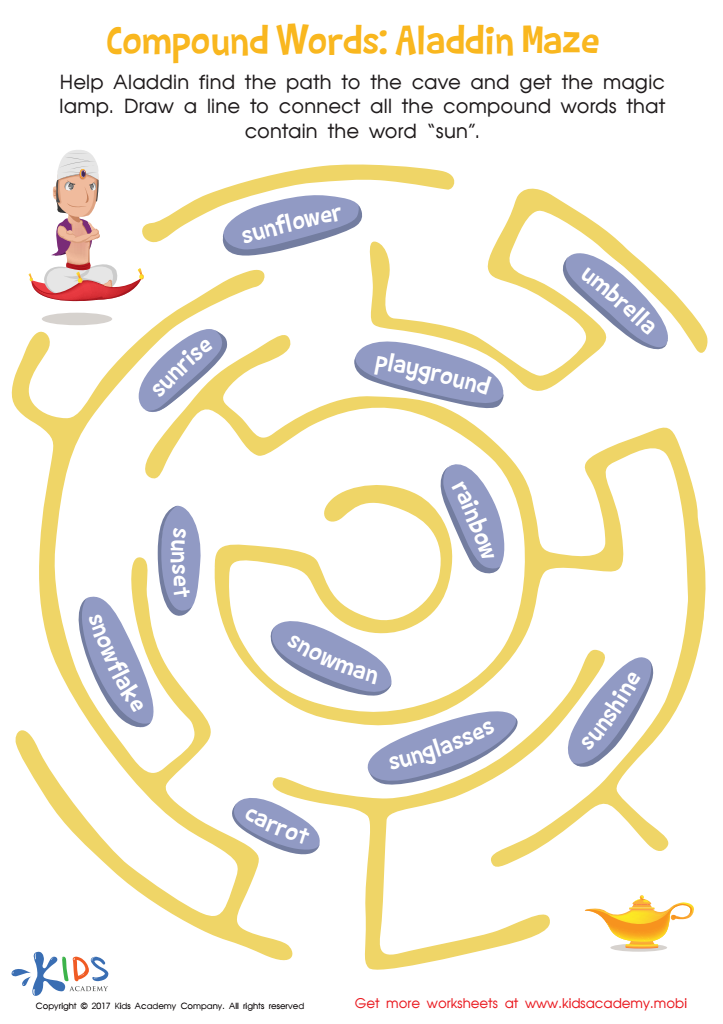
Compound Aladdin Maze Word Structure Worksheet
It's hard to keep track of all compound words! Help your child find sun-words with this fun worksheet featuring Aladdin! Your child will enjoy helping Aladdin find his way by finding the right words. It's a great way to learn compound words.
Compound Aladdin Maze Word Structure Worksheet
Worksheet
Join Kids Academy for Free
Who is primarily going to use this learning content?





Parents and teachers should prioritize vocabulary expansion for children aged 4-7 because a robust vocabulary is foundational to a child’s overall language development and academic success. At this age, children's brains are like sponges, rapidly absorbing new words and concepts. Introducing diverse vocabulary can enhance their communication skills, allowing them to express themselves more clearly and confidently.
Moreover, a strong vocabulary is linked to better reading comprehension. As children encounter new words in stories and educational materials, they are better equipped to understand and engage with the content. This familiarity with language enhances their literacy skills, setting a solid groundwork for future learning.
Additionally, vocabulary expansion aids in cognitive development. Children who learn new words are encouraged to think critically and make connections between concepts. Engaging in activities that promote vocabulary, such as storytelling, games, and songs, can make learning fun and interactive.
Lastly, a rich vocabulary can boost a child’s social interactions. It allows them to communicate their feelings, ideas, and questions, enhancing their relationships with peers and adults. By fostering vocabulary growth, parents and teachers are providing essential tools for children to thrive both academically and socially.