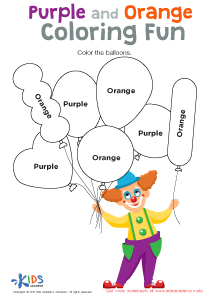
Hand-eye Coordination Easy English for Beginners Worksheets for Ages 4-8
3 filtered results
-
From - To
Discover our engaging "Hand-eye Coordination Easy English for Beginners Worksheets" designed for children aged 4-8! These worksheets seamlessly blend language learning with fun activities that enhance hand-eye coordination skills. Perfect for ESL learners, they support the development of essential motor skills while introducing basic English vocabulary. Each activity is thoughtfully crafted to keep young learners engaged, making it easy to grasp new concepts through playful tasks. Whether at home or in the classroom, these resources are ideal for fostering a love for learning and improving coordination. Explore the joy of learning with our vibrant and interactive worksheets today!
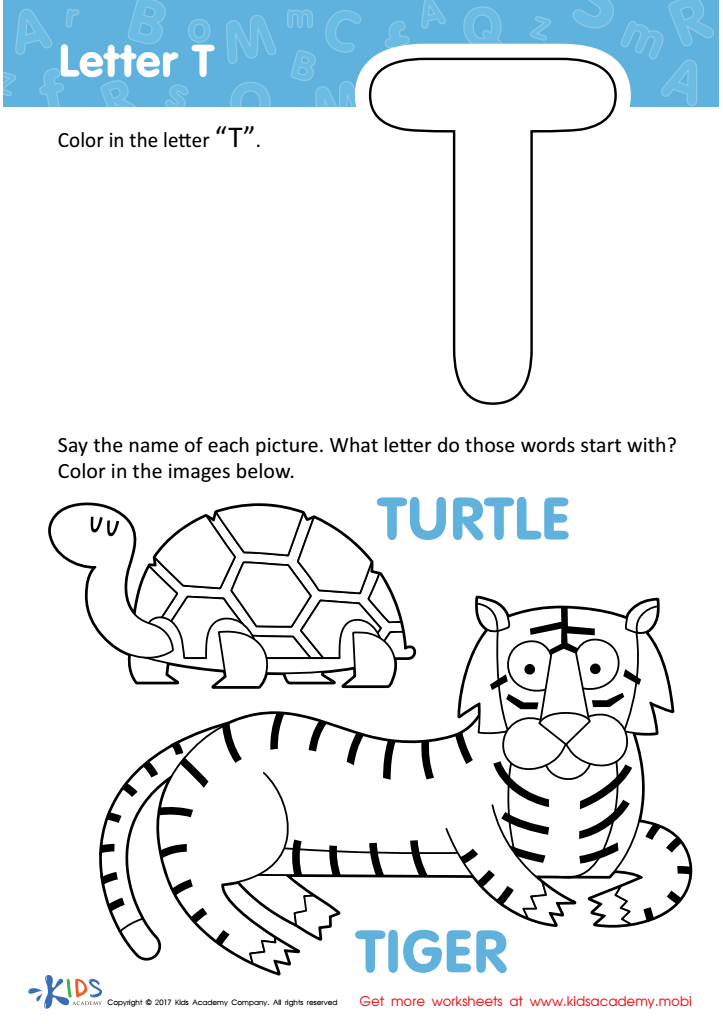
Letter T Coloring Sheet
 Assign to My Students
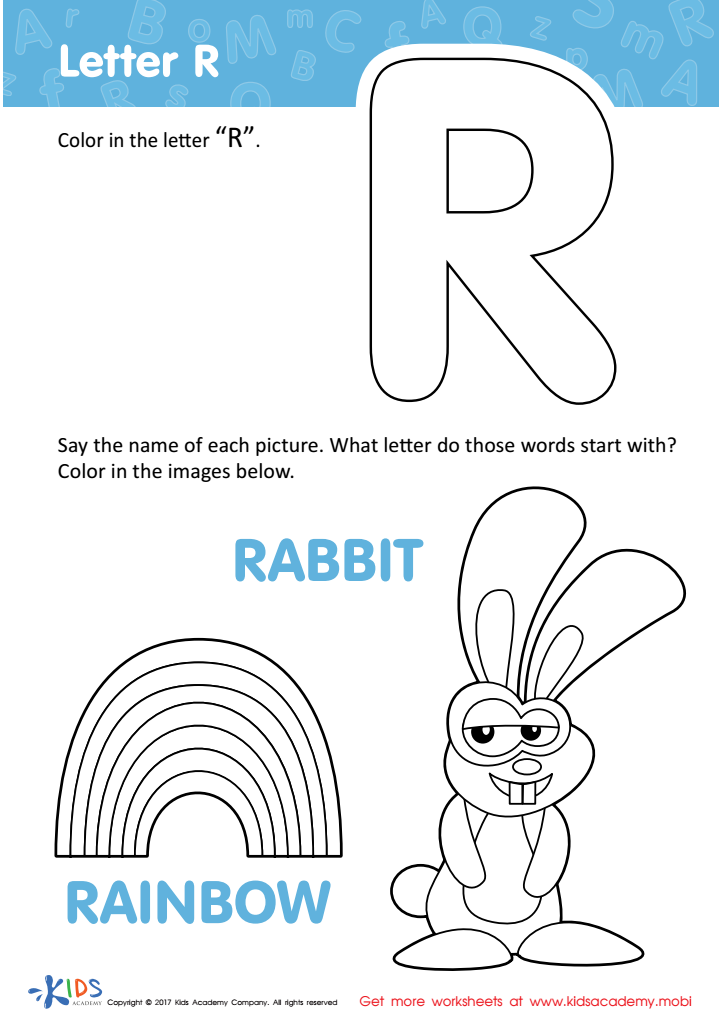
Letter R Coloring Sheet
Assign to My Students
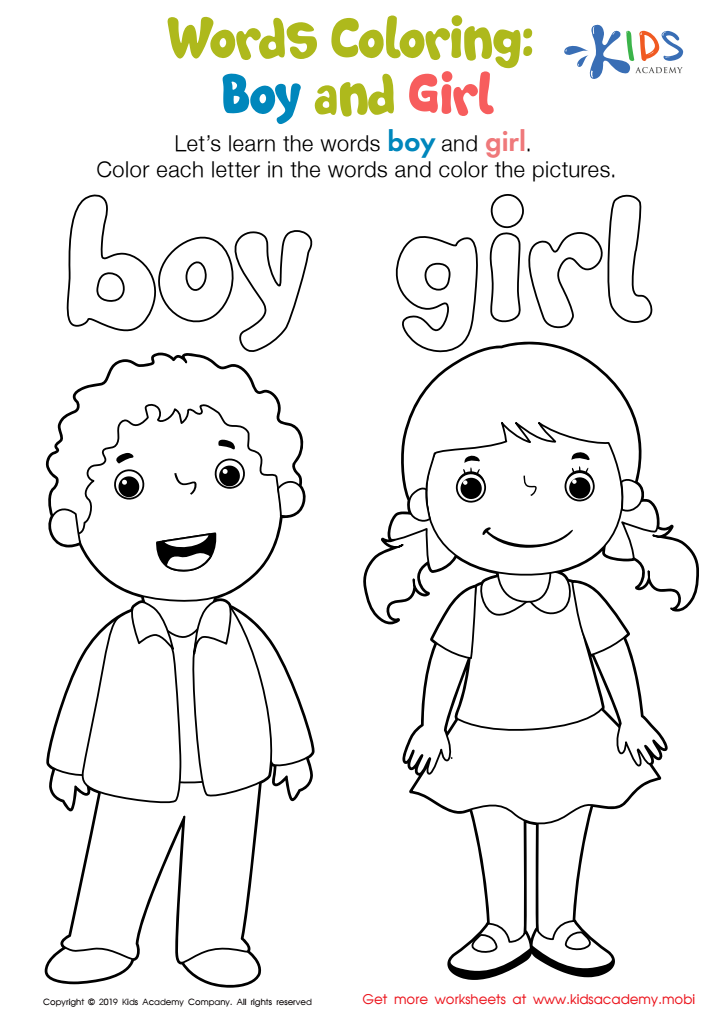
Boy and Girl Words Coloring Worksheet
Assign to My Students





Hand-eye coordination is a crucial skill for children aged 4-8, and both parents and teachers should pay attention to its development. This skill involves the ability to use visual information to guide hand movements. It's essential for many everyday activities, like writing, drawing, catching a ball, and even completing puzzles.
Good hand-eye coordination helps children with their fine motor skills, which are important for tasks such as holding a pencil and using scissors. As these skills improve, children gain confidence in their abilities, making learning more enjoyable. When children can write and draw better, it boosts their creativity and academic performance.
Moreover, activities that enhance hand-eye coordination often involve play, which makes learning fun and engaging. Parents and teachers can easily incorporate games, arts and crafts, and outdoor activities that promote these skills.
By focusing on hand-eye coordination, we support children’s overall physical and cognitive development. This foundational skill will help them succeed in school and everyday tasks. Encouraging activities that improve hand-eye coordination not only aids in future learning but also fosters a love for physical activity, which is essential for a healthy lifestyle. Thus, it’s vital for parents and teachers to prioritize this important aspect of a child’s development.