
Enhancing Counting Skills Easy Worksheets for Ages 4-8
5 filtered results
Difficulty Level
Grade
Age
-
From - To
Subject
Activity
Standards
Welcome to our "Enhancing Counting Skills" page, designed specifically for children ages 4-8! Our collection of easy worksheets features vibrant and engaging activities that help young learners grasp essential counting concepts. These worksheets are thoughtfully crafted to reinforce number recognition, one-to-one correspondence, and basic math skills through fun and playful exercises. Perfect for parents and educators, our resources provide a solid foundation for respectful learning while making counting a delightful experience. Explore our printable worksheets today and watch your child's confidence and enthusiasm for numbers grow!
Favorites
With answer key
Interactive
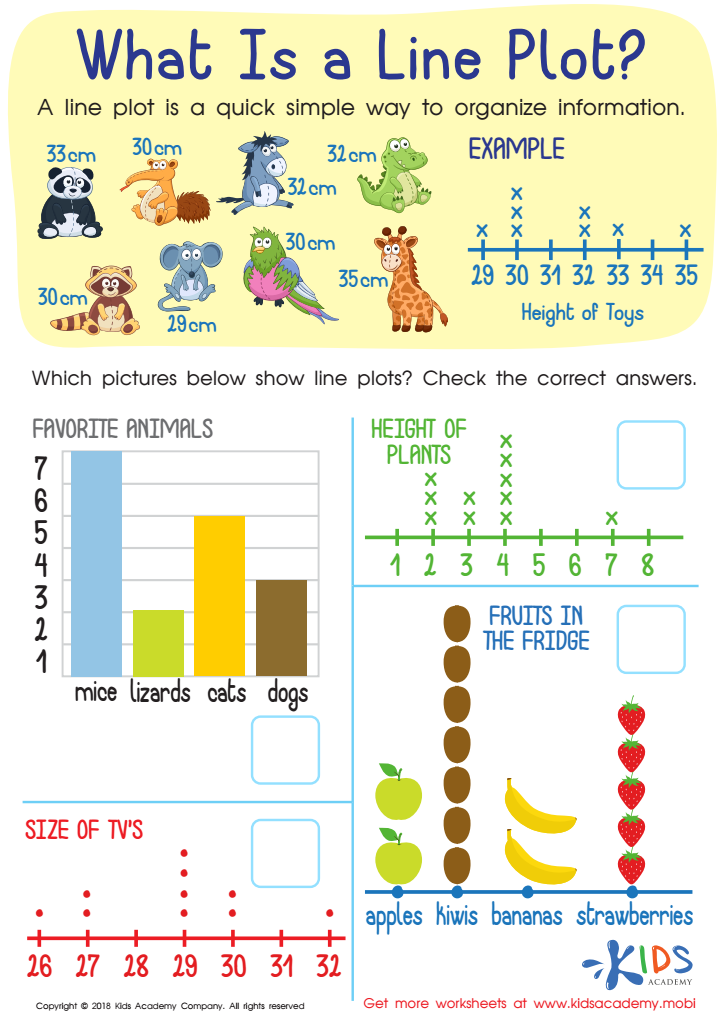
What Is a Line Plot? Worksheet
A line plot is an ideal method to organize data. For example, if your child needs to arrange objects for easy recognition, draw a line plot. This worksheet can help teach the skill. Kids must identify correct pictures that display line plots.
 Assign to My Students
What Is a Line Plot? Worksheet
Worksheet
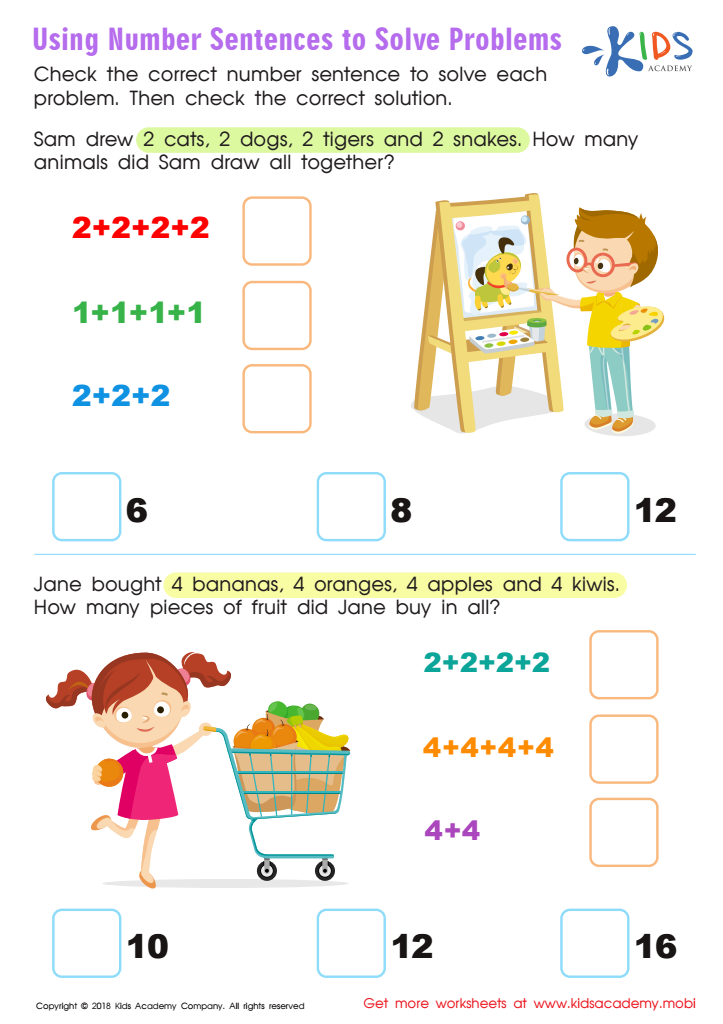
Using Number Sentences to Solve Problems Worksheet
Solving math problems requires an efficient strategy. Picture representation can help young mathematicians with basic addition problems, especially when it involves repeated addends. As they gain confidence, they'll be able to apply their number sentence solving abilities to more complex equations.
Using Number Sentences to Solve Problems Worksheet
Worksheet
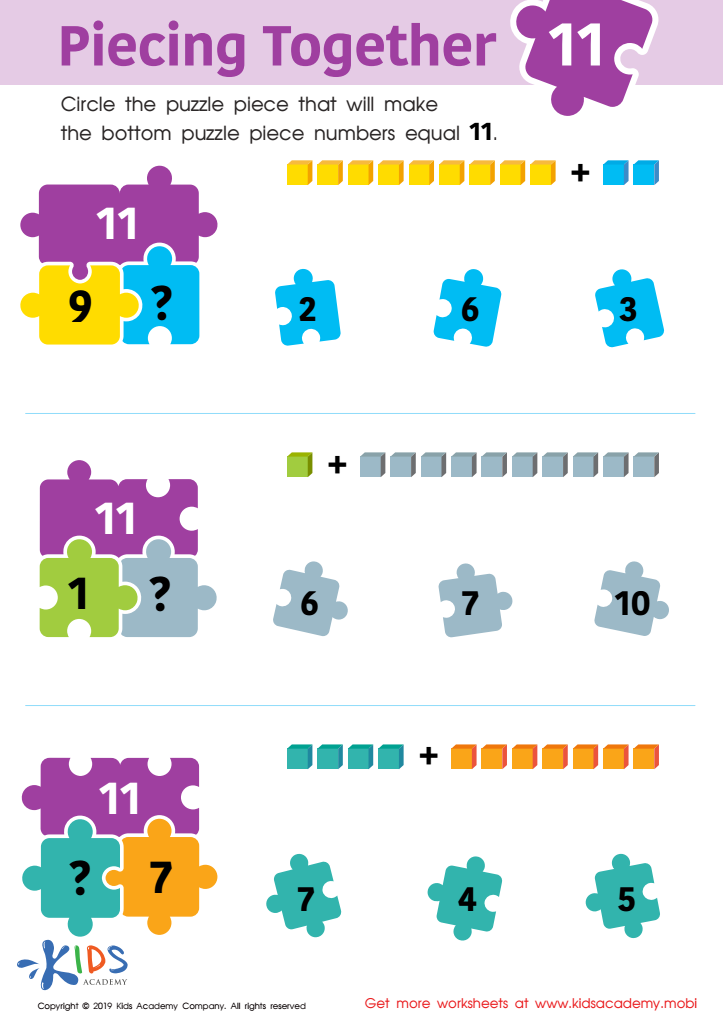
Piecing Together 11 Worksheet
Engage your preschoolers with learning-filled fun! Show them this colorful worksheet, and ask them to identify the figures. Each puzzle piece features an equation, except one which is missing. Help the kids solve the problems and circle the piece that'll make the numbers equal 11. It's a surefire way to make learning enjoyable!
Piecing Together 11 Worksheet
Worksheet
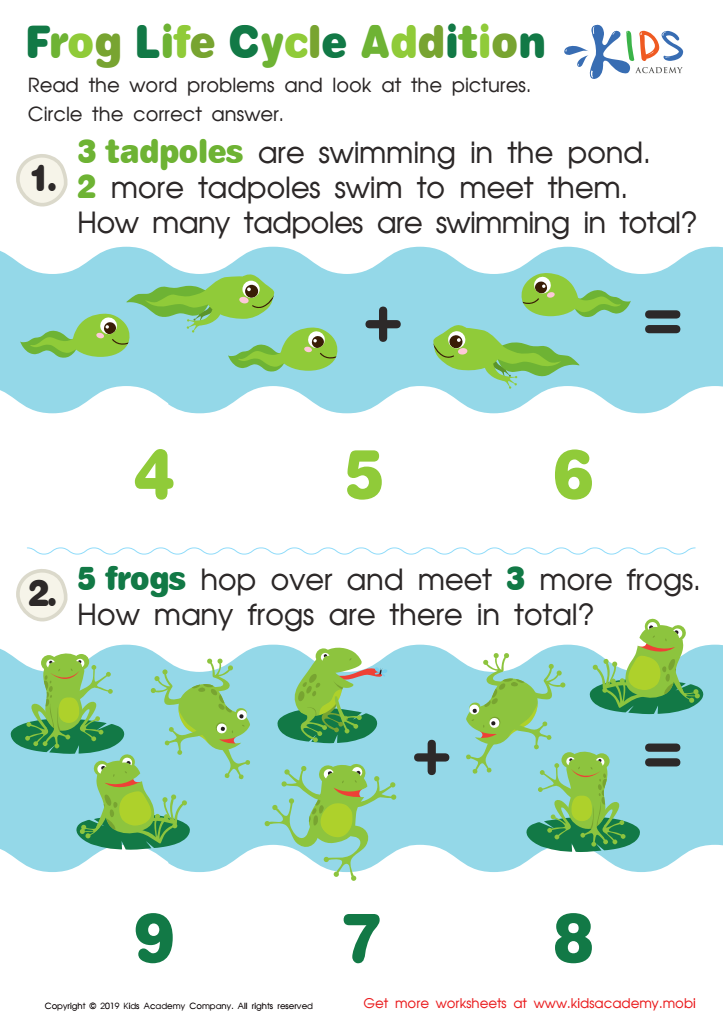
Frog Life Cycle Addition Worksheet
Look at this worksheet with your kids. Read the two word problems aloud, pointing at the pictures showing the frog's life cycle. Help your kids add simple equations and circle the correct answer. Fascinating creatures, frogs go through a cycle before becoming an adult.
Frog Life Cycle Addition Worksheet
Worksheet
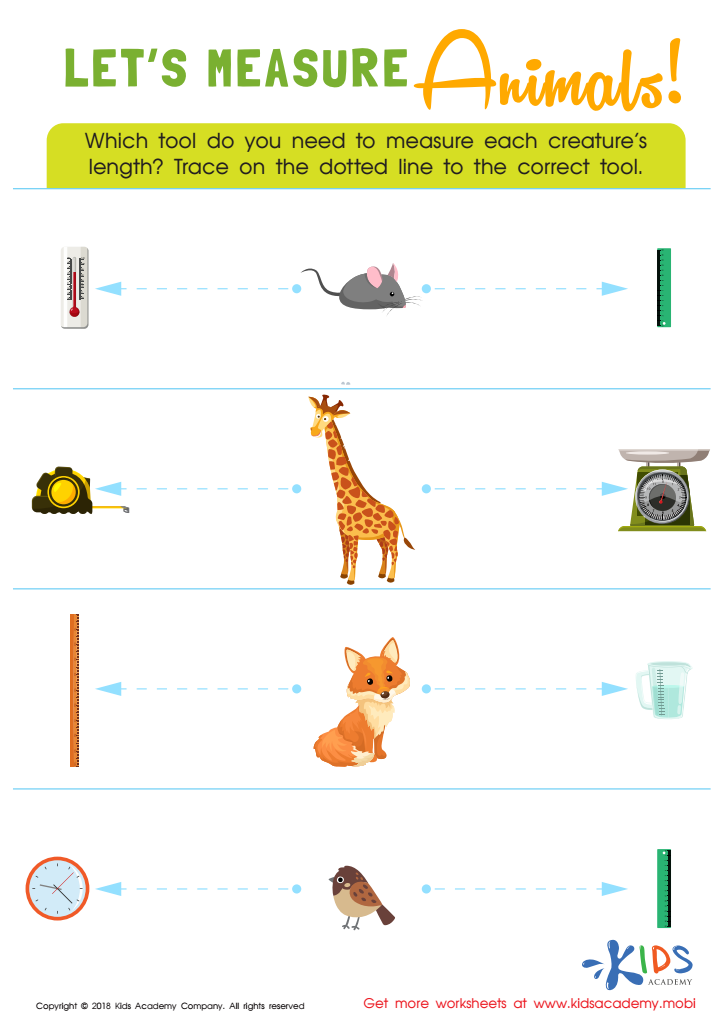
Let's Measure Animals! Worksheet
Have your students measure the length of animals like a mouse, giraffe, fox, and bird using this fun tracing sheet. They must carefully follow the dotted lines to the correct measuring tool, and by the end of the colorful worksheet, they'll know more about measuring and the different tools used.
Let's Measure Animals! Worksheet
Worksheet
Join Kids Academy for Free
Who is primarily going to use this learning content?





.jpg)

Enhancing counting skills for children ages 4-8 is crucial for their early development and lays the foundation for lifelong mathematical proficiency. During these formative years, children are highly perceptive and eager to engage with the world around them. Improving counting skills not only bolsters their mathematical understanding but also encourages critical thinking, problem-solving, and cognitive growth.
Parents and teachers should care about enhancing these skills because early proficiency in counting supports children's overall academic performance. Children who master counting can easily grasp more complex concepts in mathematics, such as addition and subtraction, as they progress in their education. Moreover, counting activities promote fine motor skills, language development, and social interaction when conducted in groups.
Engaging in fun and creative counting activities nurtures children's natural curiosity and makes learning enjoyable. Children who see math as a meaningful and engaging part of their lives are more likely to develop a positive attitude towards learning.
Lastly, strong counting skills contribute to the confidence and self-esteem of young learners. When children feel competent in their abilities, they are more inclined to take academic risks and embrace challenges. Thus, focusing on counting skills is an essential investment in a child's future educational journey.








