Improving vocabulary Easy Worksheets for Ages 4-8
3 filtered results
-
From - To
Unlock your child’s linguistic potential with our "Improving Vocabulary Easy Worksheets for Ages 4-8". Perfect for young learners, our worksheets are designed to make vocabulary building a fun and engaging experience. Each carefully crafted worksheet incorporates colorful visuals, captivating themes, and interactive activities to help your child master new words effortlessly. From basic word recognition to understanding usage in sentences, our exercises cater to various skill levels. Boost your child’s confidence and communication skills by providing a solid foundation in vocabulary. Explore a world of words and watch your child excel! Visit Kids Academy today and give your child the tools for successful learning.
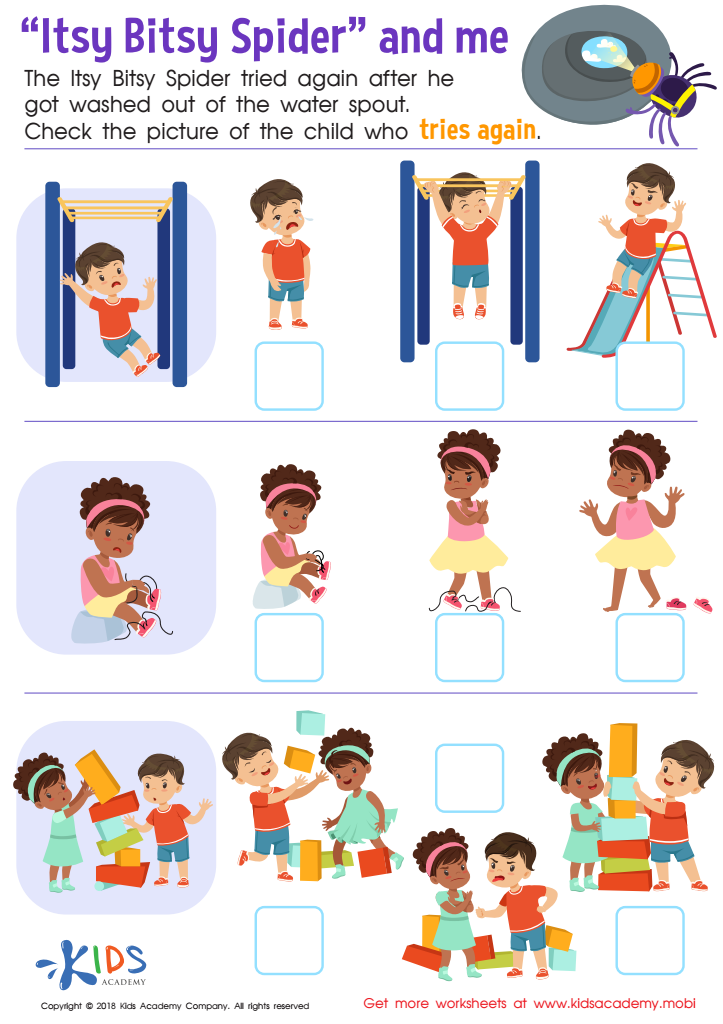
Itsy Bitsy Spider and Me Worksheet
 Assign to My Students
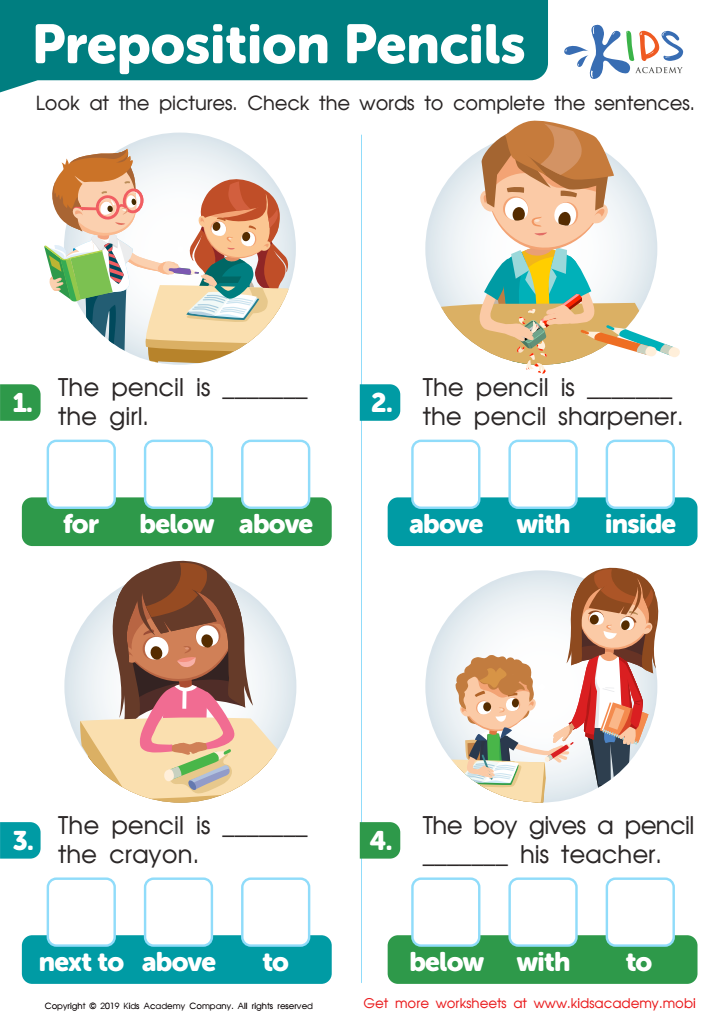
Preposition Pencils Worksheet
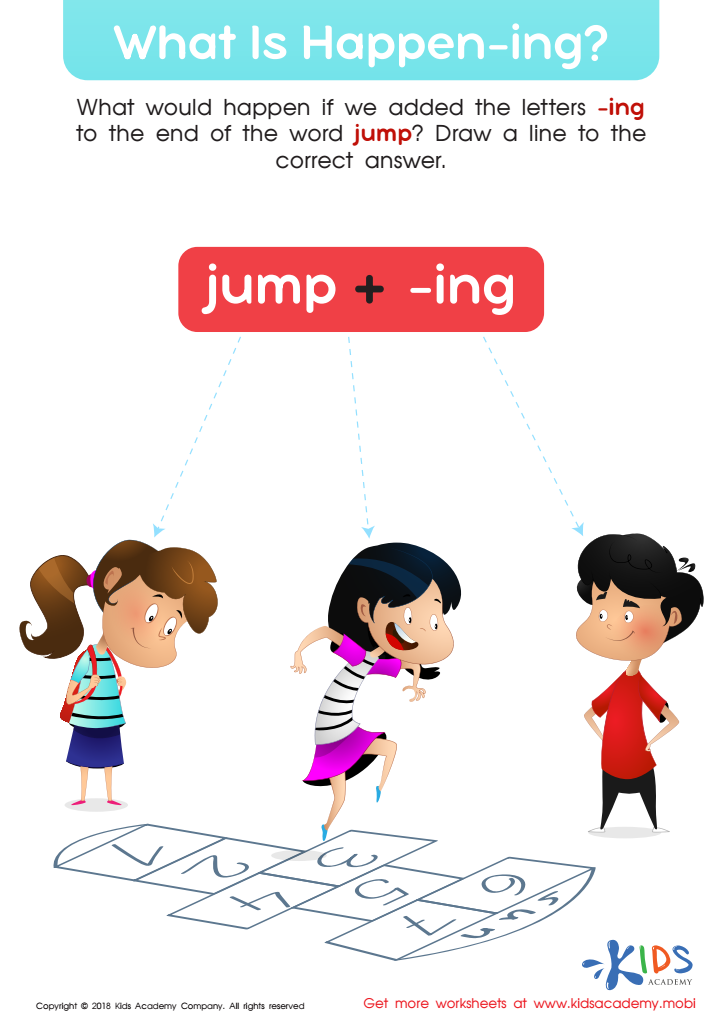
What Is Happen-Ing? Worksheet








Improving vocabulary for children ages 4-8 is critically important for several key reasons. First, a robust vocabulary forms the foundation for reading skills. Children who have a wide range of words at their disposal can better understand stories, follow instructions, and express their thoughts and feelings clearly. This leads to a more positive and rewarding learning experience, setting the stage for academic success.
Second, expanding vocabulary at an early age enhances cognitive development. When children learn new words, they also develop better communication and social skills. They become more adept at expressing themselves, which can boost their confidence and help them form stronger relationships with peers and adults.
Moreover, children in this age group are at a prime developmental stage where they can learn words quickly and more effectively. This is often referred to as the “sensitive period” for language acquisition. Making the most out of this period can have long-term benefits, as a rich vocabulary is associated with higher levels of reading comprehension and academic performance in later years.
Parents and teachers who focus on improving vocabulary not only prepare children for academic challenges but also give them tools to navigate social interactions and the larger world. Therefore, investing time in vocabulary building is a crucial part of early childhood education.








