
Interpreting data Easy Worksheets for Ages 4-8
3 filtered results
Difficulty Level
Grade
Age
-
From - To
Subject
Activity
Standards
Welcome to "Interpreting Data Easy Worksheets for Ages 4-8"! This engaging resource offers a fun and interactive way to introduce young children to the basics of data interpretation. With colorful visuals and age-appropriate activities, these worksheets help students develop essential skills like graph reading, data comparison, and critical thinking. Each worksheet is designed to spark curiosity and enhance learning through practical examples and easy-to-follow instructions. Perfect for use at home or in the classroom, our worksheets promote early math skills while ensuring that learning is enjoyable. Empower your child’s understanding of data with our fun and accessible resources today!
Favorites
With answer key
Interactive
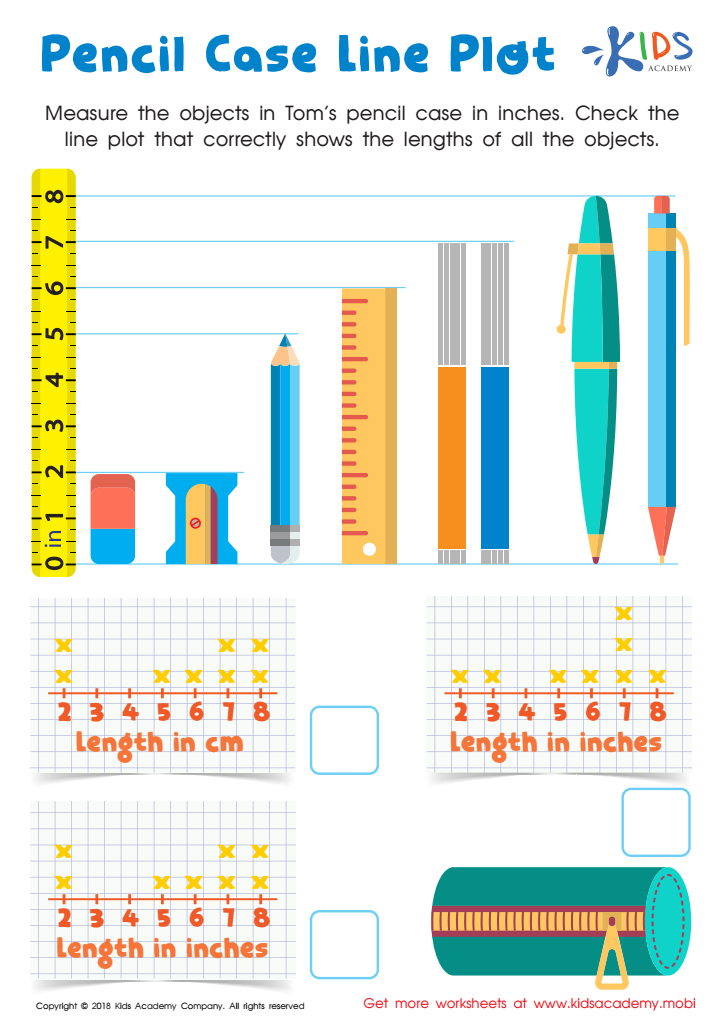
Pencil Case Line Plot Worksheet
Explain to your child that a line plot is a way to organize information. For example, if they need to arrange objects, they should draw a line plot. Now, have them help Tom measure the objects in his pencil case in inches. Then, have them check the line plot that accurately shows the length.
 Assign to My Students
Pencil Case Line Plot Worksheet
Worksheet
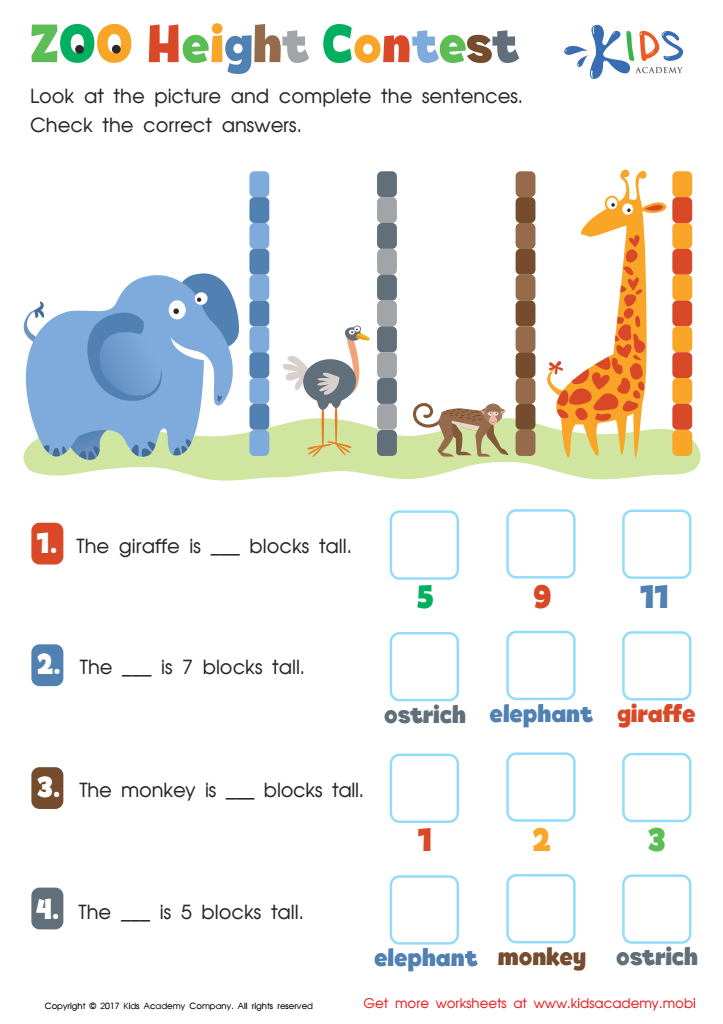
Zoo Height Contest Worksheet
Let's head to the zoo and use colorful blocks to measure your child's favorite animals! With this Kids Academy worksheet, help them practice and prepare for learning measurement. Guide them in looking at the zoo animals and counting blocks to find the height. Then, read the questions and check the box next to the correct answer.
Zoo Height Contest Worksheet
Worksheet
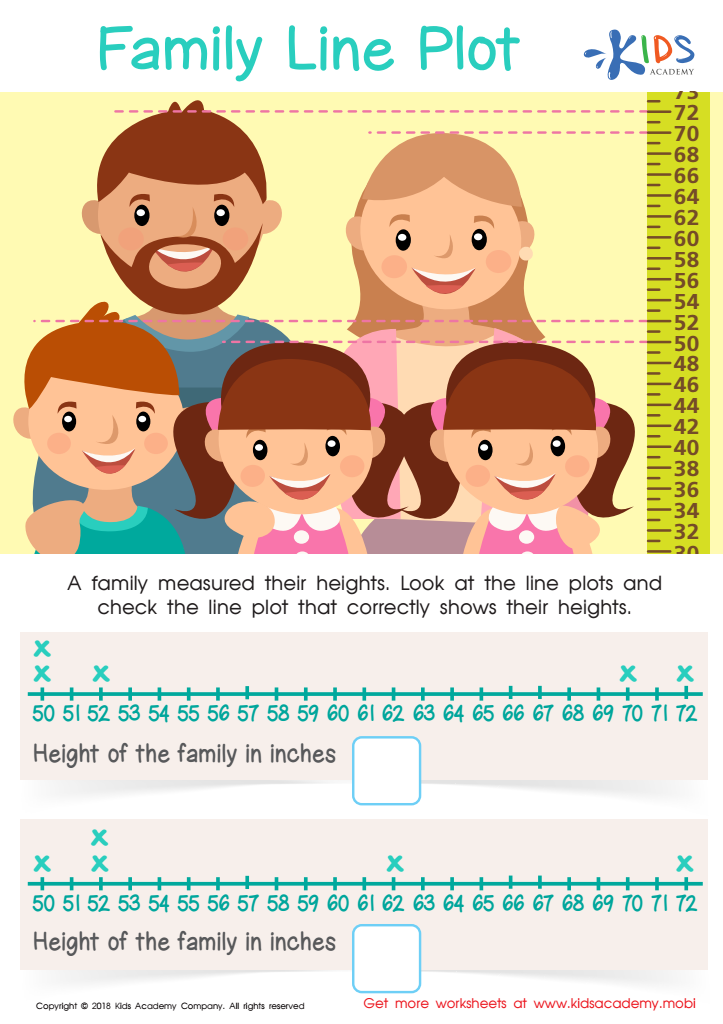
Family Line Plot Worksheet
Have you and your kids ever done a family height measurement? How did it go? If they're familiar with it, this worksheet may be simpler. The picture shows a family with their heights recorded. Get your kid to look at the line plots and choose the one that shows the family's heights accurately.
Family Line Plot Worksheet
Worksheet
Join Kids Academy for Free
Who is primarily going to use this learning content?








Interpreting data is important for both parents and teachers, especially for children aged 4-8, because it helps them understand the world around them. When kids learn to interpret simple data, like counting how many red or blue toys they have, they begin to grasp basic math and problem-solving skills. This builds a solid foundation for future learning.
Furthermore, data interpretation supports critical thinking. For example, when children see a chart showing how many classmates have pets, they can learn to make comparisons and draw conclusions—important skills for academic success.
Parents and teachers also benefit by gaining insights into a child’s learning progress. By tracking data related to a child's development or classroom activities, they can identify areas where a child excels or may need help. This can lead to personalized support tailored to each child's needs.
Finally, teaching kids to interpret data fosters curiosity. Engaging with data encourages them to ask questions, explore trends, and discover more about their environment, creating a love for learning that lasts a lifetime. In essence, caring about data is caring about a child's overall growth, learning, and happiness.








