Phonics Skills Easy Worksheets for Ages 4-8
5 filtered results
-
From - To
Discover engaging and effective Phonics Skills Easy Worksheets designed specifically for children ages 4-8. Our carefully crafted resources help young learners develop essential phonics skills, boosting their reading and writing abilities. These worksheets feature fun activities tailored to captivate kids’ interest, making learning an enjoyable experience. With a variety of exercises focused on letter recognition, sound blending, and word formation, children will build a strong foundation in literacy. Perfect for classrooms or homeschooling, these easy-to-use worksheets promote independent learning and foster a love for reading. Explore our collection today and support your child's phonics journey with engaging, high-quality resources!
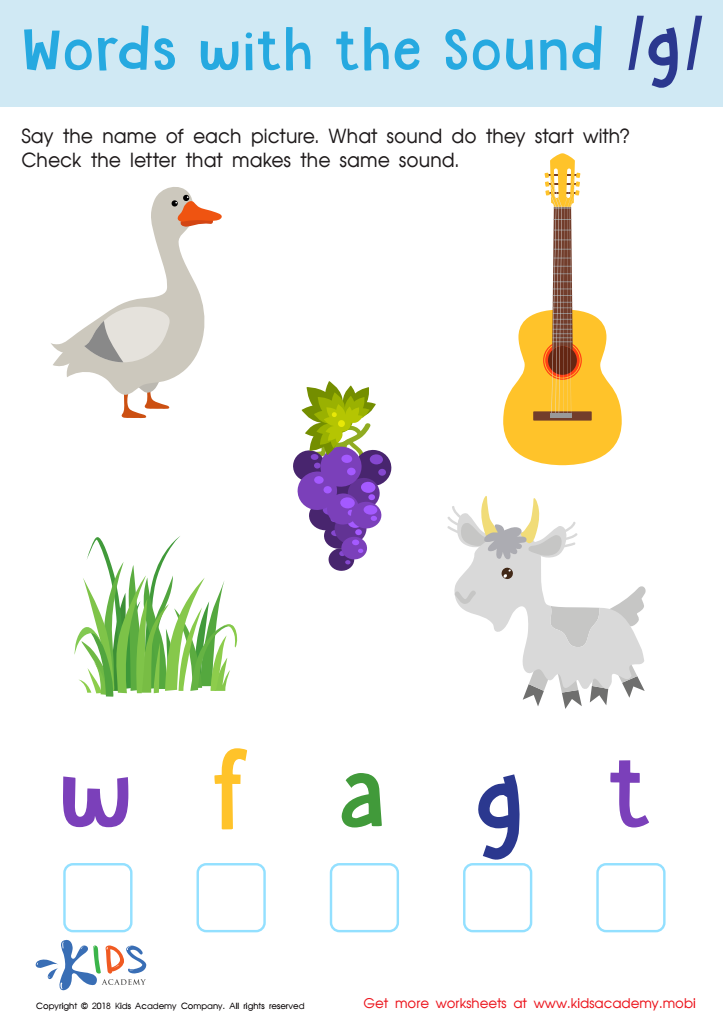
Words with sound g Reading Worksheet
 Assign to My Students
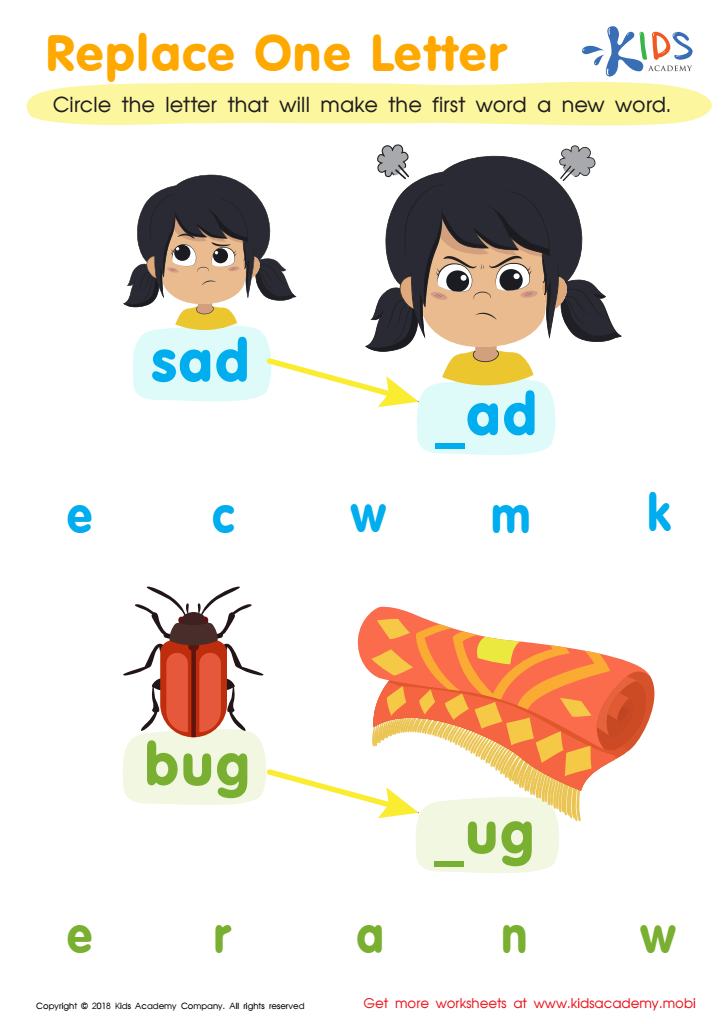
Replace One Letter Worksheet
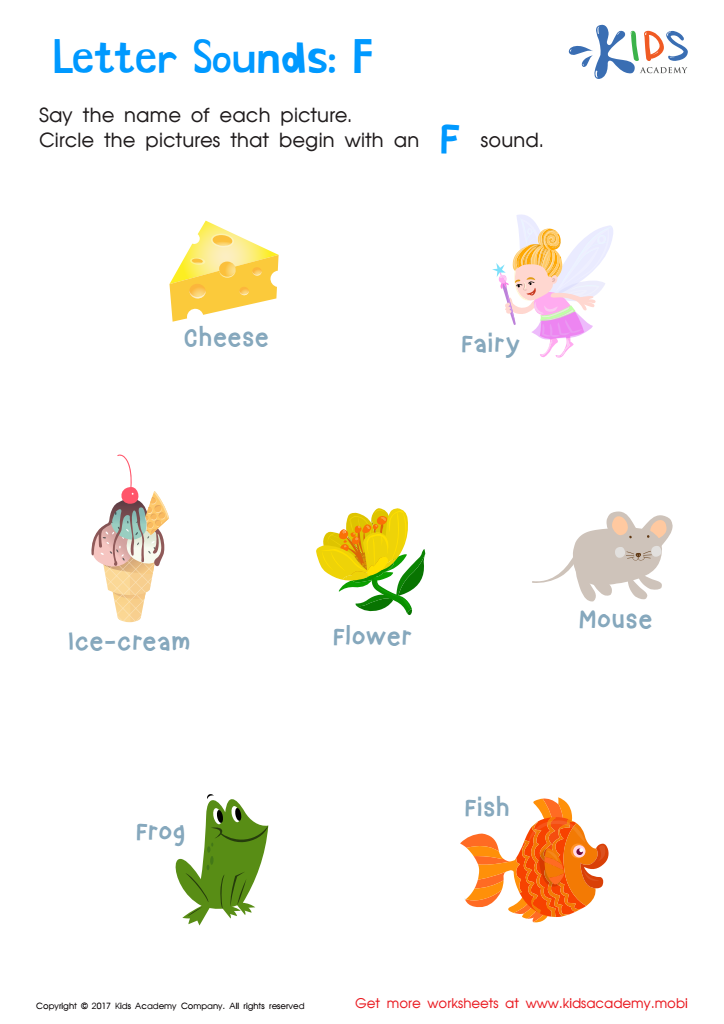
Letter F Sounds Worksheet
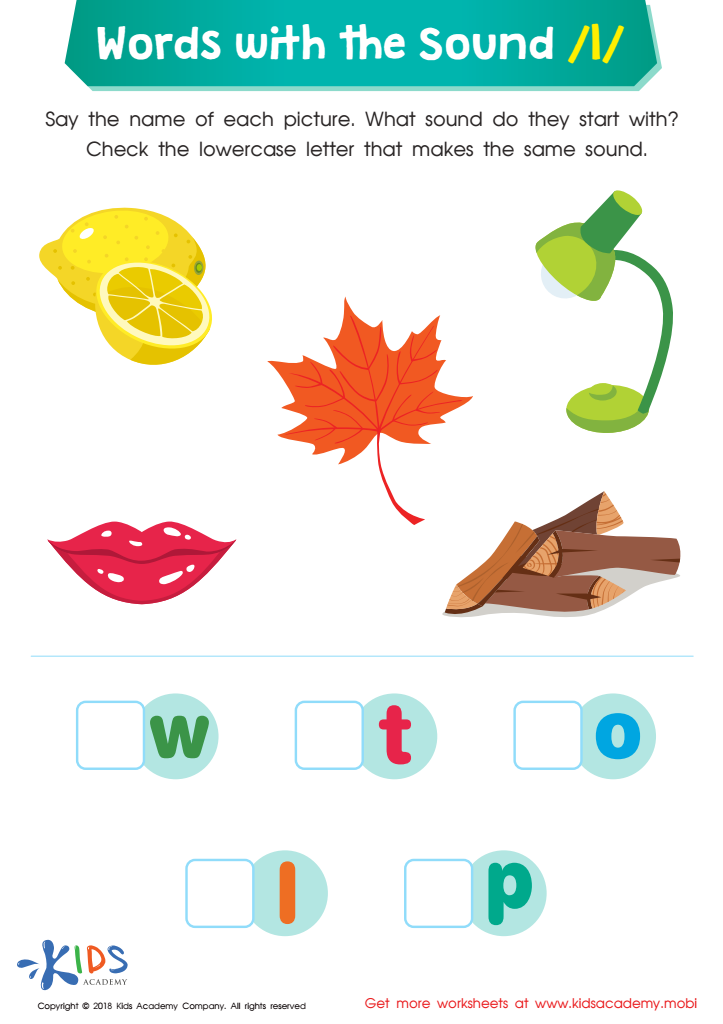
Words with Sound L Reading Worksheet
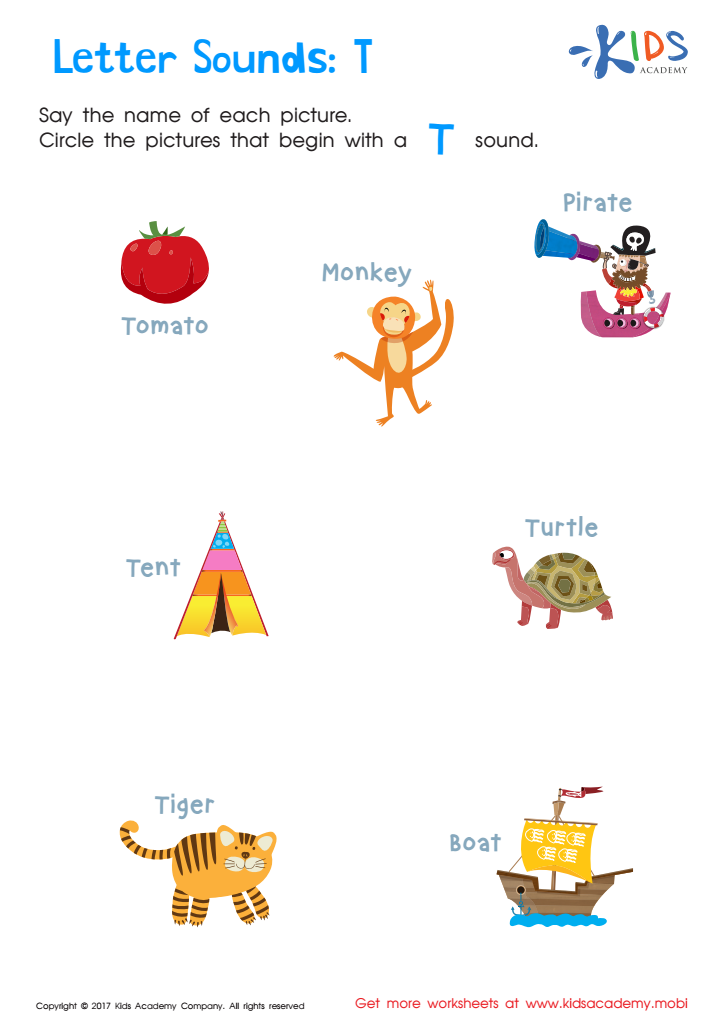
Letter T Sounds Worksheet








Phonics skills are crucial for children ages 4-8 as they form the foundation of reading and writing. Understanding the relationship between letters and their sounds enables young learners to decode words, making reading more accessible and enjoyable. This skill not only boosts literacy but also enhances overall academic performance, as reading is a gateway to learning across all subjects.
Parents and teachers should care about phonics because early reading success fosters confidence and a love for learning. When children can sound out words and read independently, they become more engaged with stories and information, encouraging curiosity and critical thinking. Additionally, strong phonics skills help prevent reading difficulties in the future, as proficient readers are often more comfortable tackling complex texts later on.
Supporting phonics development at home and in school—including through games, songs, and interactive activities—creates a collaborative learning environment. This involvement nurtures effective communication between parents, teachers, and children, reinforcing the understanding that literacy is a shared goal. By prioritizing phonics skills, adults play a vital role in shaping proficient readers, laying the groundwork for lifelong learning and success in education and beyond.








