
Sorting skills Easy Worksheets for Ages 4-8
6 filtered results
Difficulty Level
Grade
Age
-
From - To
Subject
Activity
Standards
Discover engaging "Sorting Skills Easy Worksheets" designed for children ages 4-8! Our collection of printable worksheets helps young learners develop crucial sorting abilities through fun and interactive activities. By categorizing objects based on attributes like color, shape, and size, children enhance their fine motor skills and critical thinking in an enjoyable way. Ideal for home or classroom use, these worksheets provide a creative platform for preschoolers and early elementary students to explore basic concepts while boosting their confidence. Explore our wide range of sorting worksheets today and watch as your child gains essential skills in a playful, supportive environment!
Favorites
With answer key
Interactive
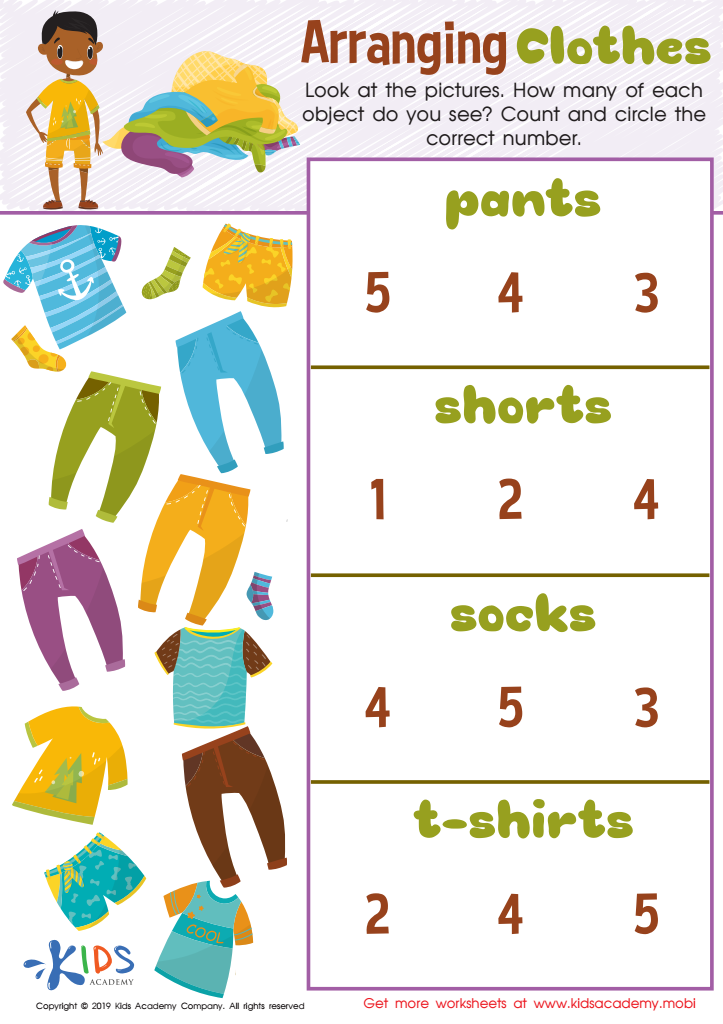
Arranging Clothes Worksheet
This worksheet uses familiar items, brightly colored to attract your kids. Ask them to name each item, then count them and circle the right number.
 Assign to My Students
Arranging Clothes Worksheet
Worksheet
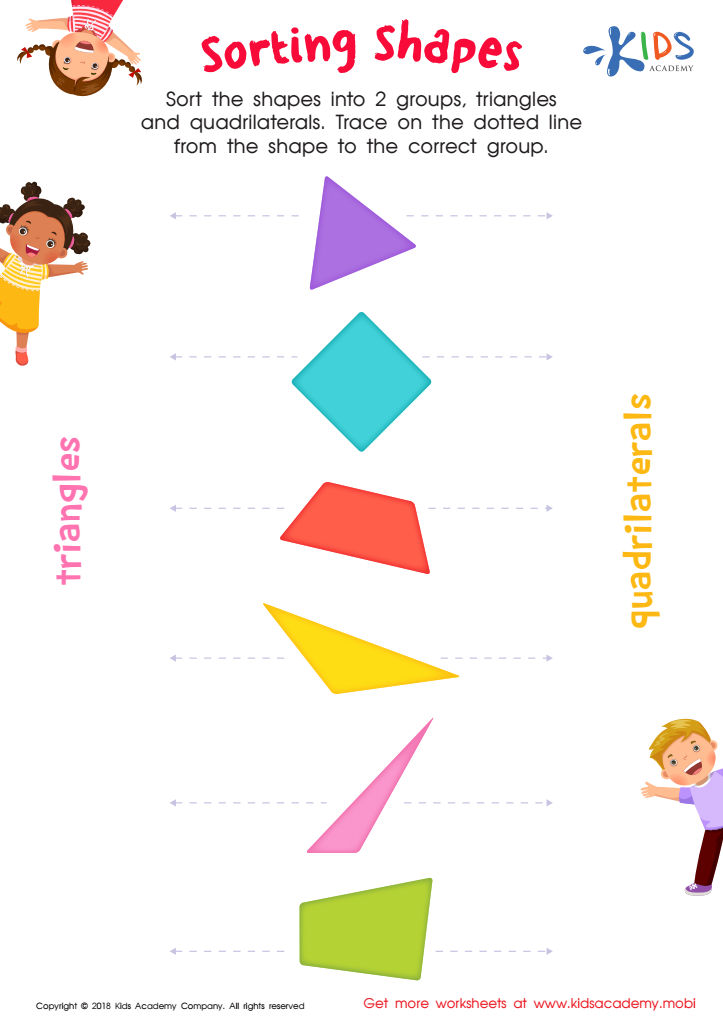
Sorting Shapes Worksheet
Before beginning, ensure your child is familiar with quadrilaterals (4 sides) and triangles (3 sides). This tracing exercise is easy: sort the shapes into the two groups and trace the dotted lines to the correct group.
Sorting Shapes Worksheet
Worksheet
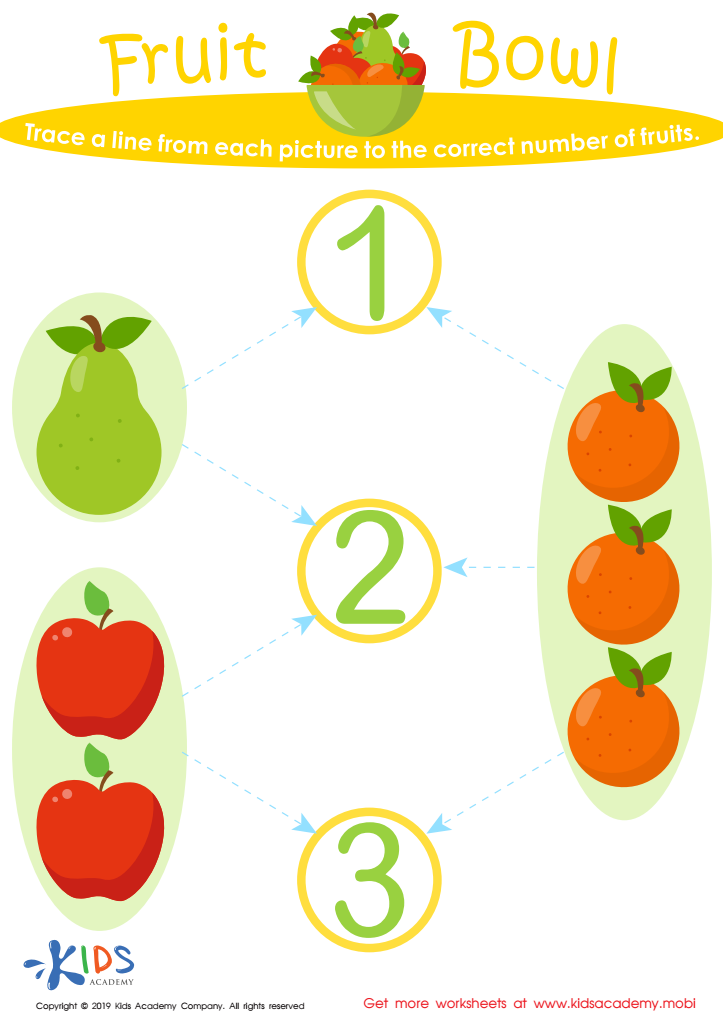
Fruit Bowl Worksheet
Kids love counting fruit! This fun math worksheet lets them count the number of fruit in each group and use the traceable lines to connect the correct number. It's a great way to learn one-to-one number representation, plus it's yummy and delicious!
Fruit Bowl Worksheet
Worksheet
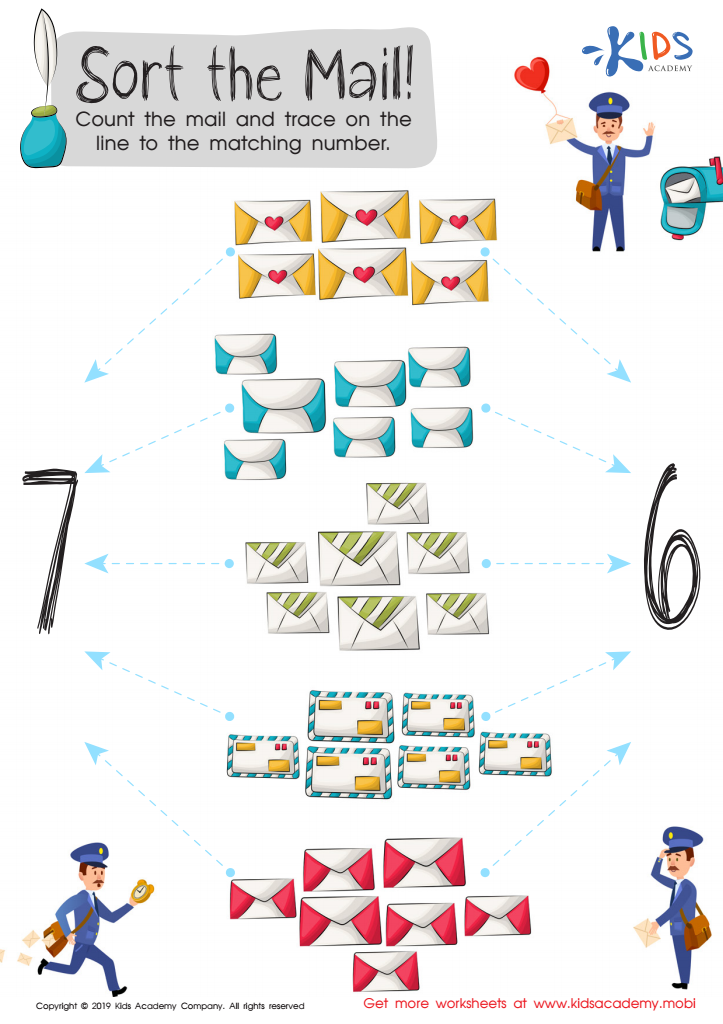
Sort the Mail Worksheet
Kids can learn number sense with one-to-one representation! This worksheet helps them connect groups of letters with the correct numbers by tracing the lines. They'll count and decide whether each group has 6 or 7 envelopes. This exercise gives children a better understanding of numerical representation.
Sort the Mail Worksheet
Worksheet
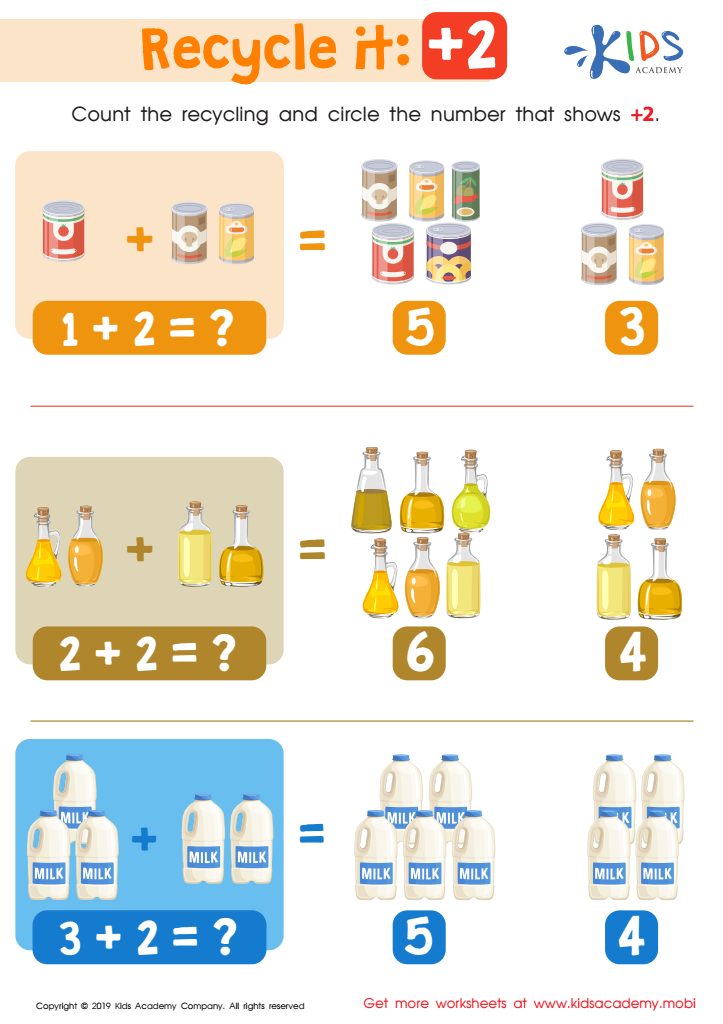
Recycle It: +2 Worksheet
Your kindergartners likely count everything they see, which is great for practice. Give them simple exercises such as in this worksheet to stimulate their minds. Ask them to count the recycling cans and then circle the number that shows +2.
Recycle It: +2 Worksheet
Worksheet
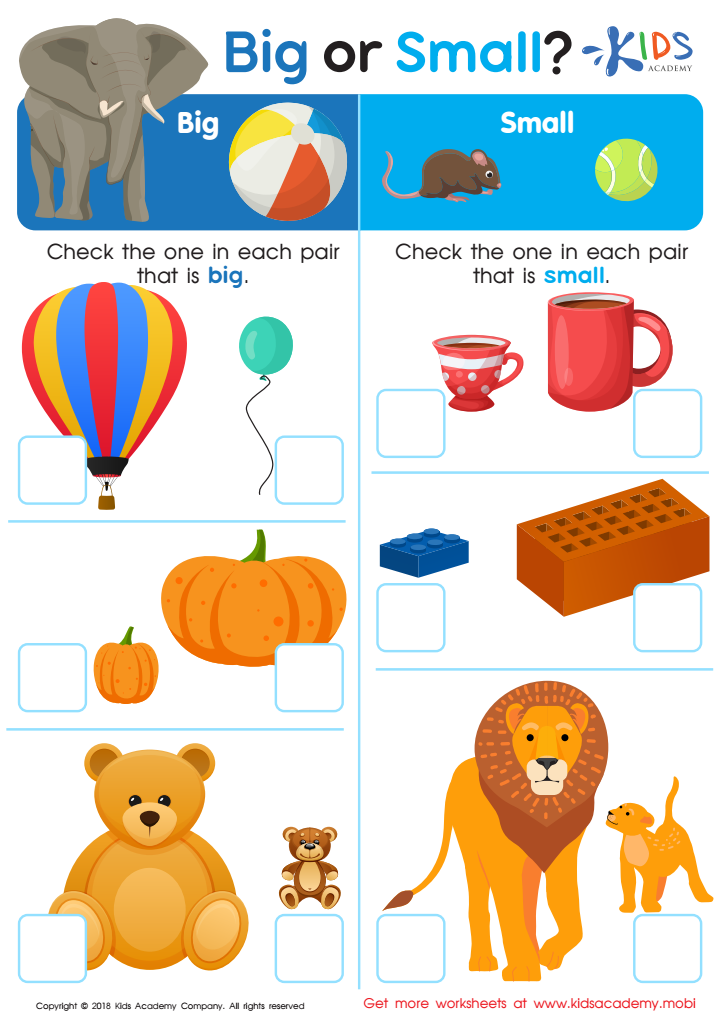
Big or Small? Worksheet
Kids need visuals to understand bigger and smaller concepts. This free PDF worksheet offers fun pictures that let them compare and gain a stronger understanding of sizes. Kids will enjoy it and won't realize they're learning since the pictures are so engaging. It's great preparation for future measurements.
Big or Small? Worksheet
Worksheet
Join Kids Academy for Free
Who is primarily going to use this learning content?






.jpg)
Sorting skills are foundational for young children, particularly between the ages of 4 and 8, as they lay the groundwork for critical thinking and cognitive development. When children learn to sort objects by various attributes—like color, shape, size, or function—they strengthen their ability to classify and categorize information. This skill is not just about physical items but also extends to problem-solving, organization, and understanding patterns, which are vital in subjects like math and science.
For parents and teachers, fostering sorting skills encourages children to engage with their environment in a meaningful way. It enhances observational skills as children learn to recognize similarities and differences. Moreover, sorting activities promote fine motor skills through handling objects and encourage language development as they articulate their reasoning behind sorting choices.
Additionally, sorting serves as an essential precursor to more complex concepts, such as algebraic thinking and data analysis later in their education. Thus, nurturing sorting skills prepares children not only academically but also aids in everyday tasks, instilling confidence and independence. By prioritizing sorting activities, parents and teachers play a crucial role in setting children on a path to successful learning experiences.








