Understanding opposites Easy Worksheets for Ages 4-8
4 filtered results
-
From - To
Discover our "Understanding Opposites Easy Worksheets" designed for children ages 4-8! These engaging worksheets help young learners grasp the concept of opposites through colorful illustrations and simple activities. Each worksheet is crafted to enhance vocabulary, critical thinking, and cognitive skills, ensuring that kids enjoy learning in a fun way. From hot and cold to big and small, these activities provide practical examples, facilitating easy comprehension of opposite concepts. Perfect for classroom use or at-home practice, our worksheets encourage early learners to explore language and develop essential understanding skills. Set your child's learning journey in motion with our captivating worksheets today!
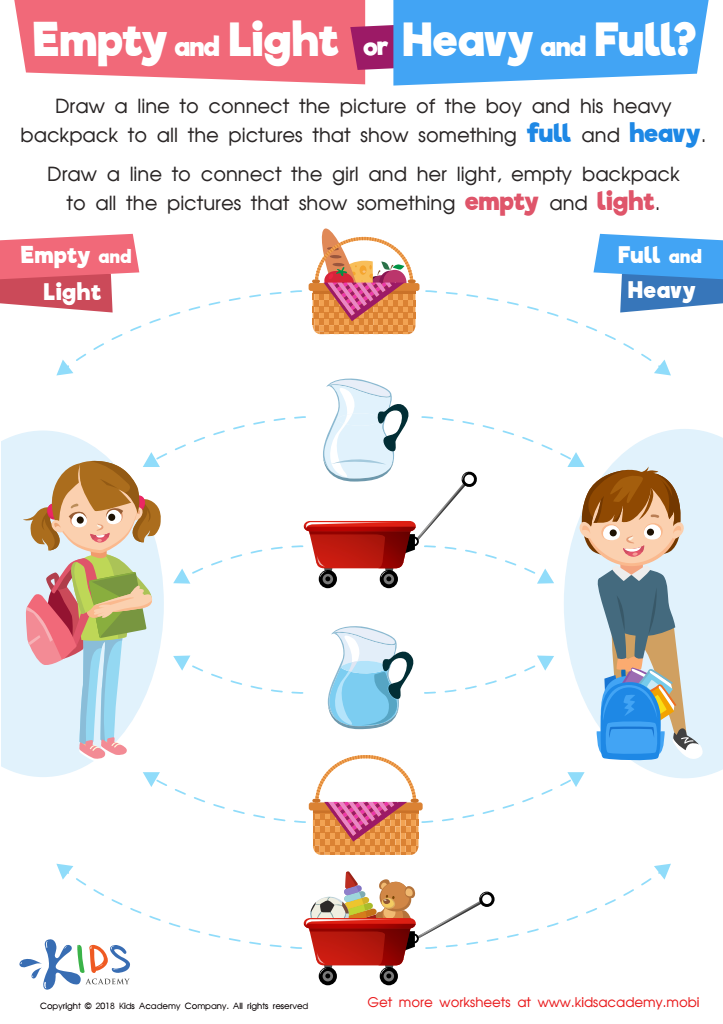
Empty and Light or Heavy and Full? Worksheet
 Assign to My Students
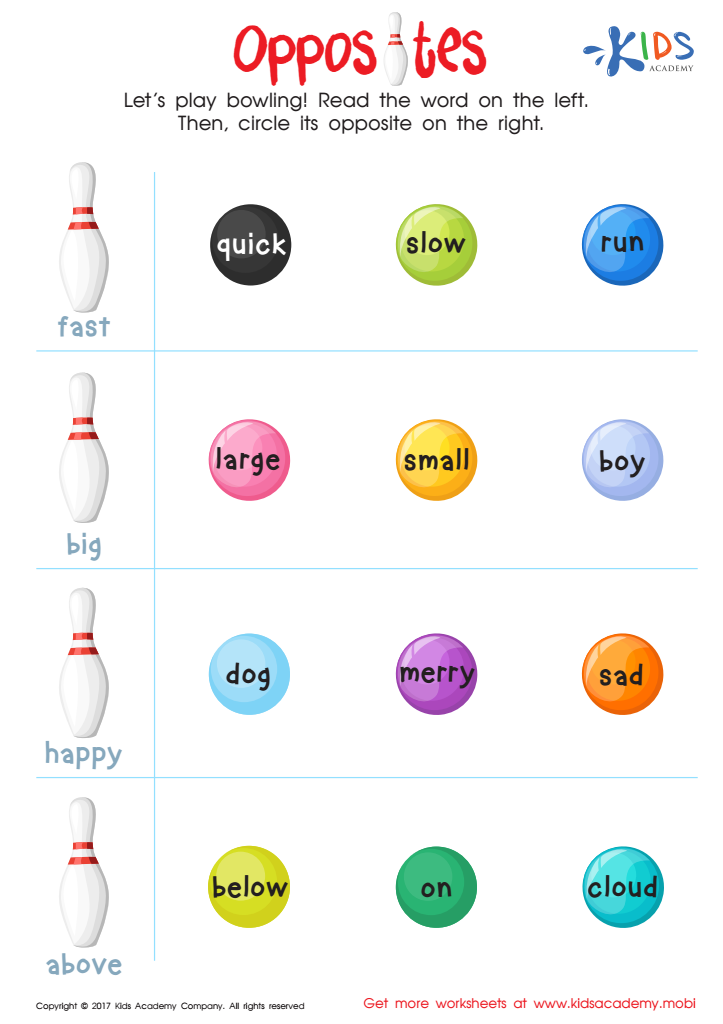
Opposites Worksheet
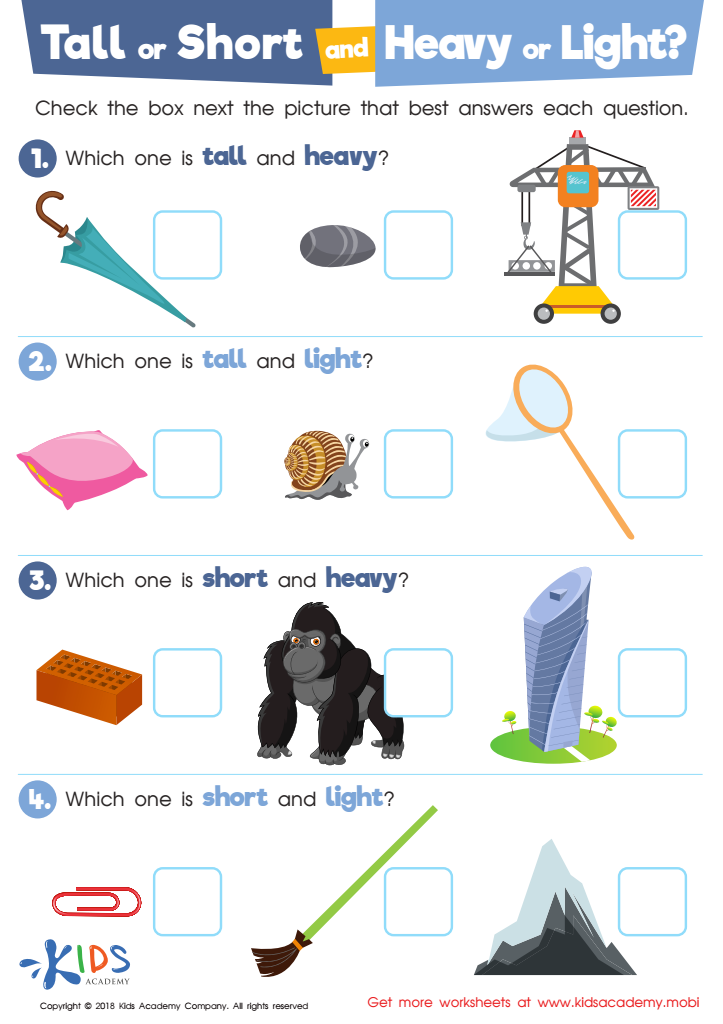
Tall or Short and Heavy or Light? Worksheet
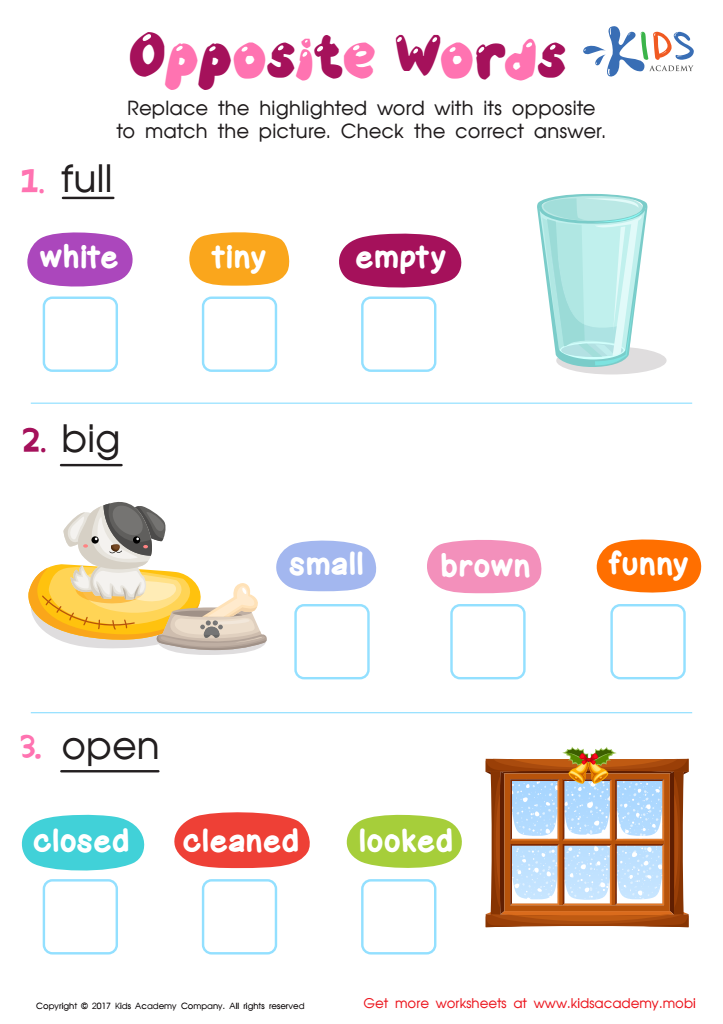
Opposite Words Worksheet






Understanding opposites is an essential foundational skill for children ages 4-8, and it plays a significant role in their cognitive, social, and emotional development. Learning about opposites helps children develop critical thinking and comprehension skills by encouraging them to make connections between contrasting concepts, such as big and small, hot and cold, or happy and sad. These contrasts enhance vocabulary acquisition and language development, which are crucial for effective communication.
Furthermore, understanding opposites aids in shape recognition and categorization, which are important mathematical concepts. By grasping opposites, children can better understand the world around them and express their observations, leading to improved problem-solving and reasoning skills. Emotionally, learning about opposites allows children to recognize and navigate their feelings and the feelings of others, fostering empathy and social skills.
For teachers and parents, introducing concepts of opposites in fun and engaging ways—through games, stories, and everyday experiences—can make learning more interactive and enjoyable. This not only reinforces their knowledge but also strengthens the bond between educators and students or parents and children. Ultimately, a solid understanding of opposites lays the groundwork for more advanced concepts in the future, making it a pivotal area of focus in early education.








