Counting skills Easy Measurement Worksheets for Ages 4-8
5 filtered results
-
From - To
Enhance your child’s counting skills with our engaging Easy Measurement Worksheets, specially designed for ages 4-8! These fun, interactive activities promote early math understanding while developing essential measuring concepts. Each worksheet encourages students to practice counting through vibrant illustrations and relatable scenarios, making learning enjoyable. With a variety of exercises focusing on counting objects, estimating quantities, and understanding measurement basics, kids will build confidence in their math abilities. Perfect for home or classroom use, these worksheets offer valuable practice that lays a strong foundation for future math success. Get started today and watch their skills flourish as they explore the world of measurement!
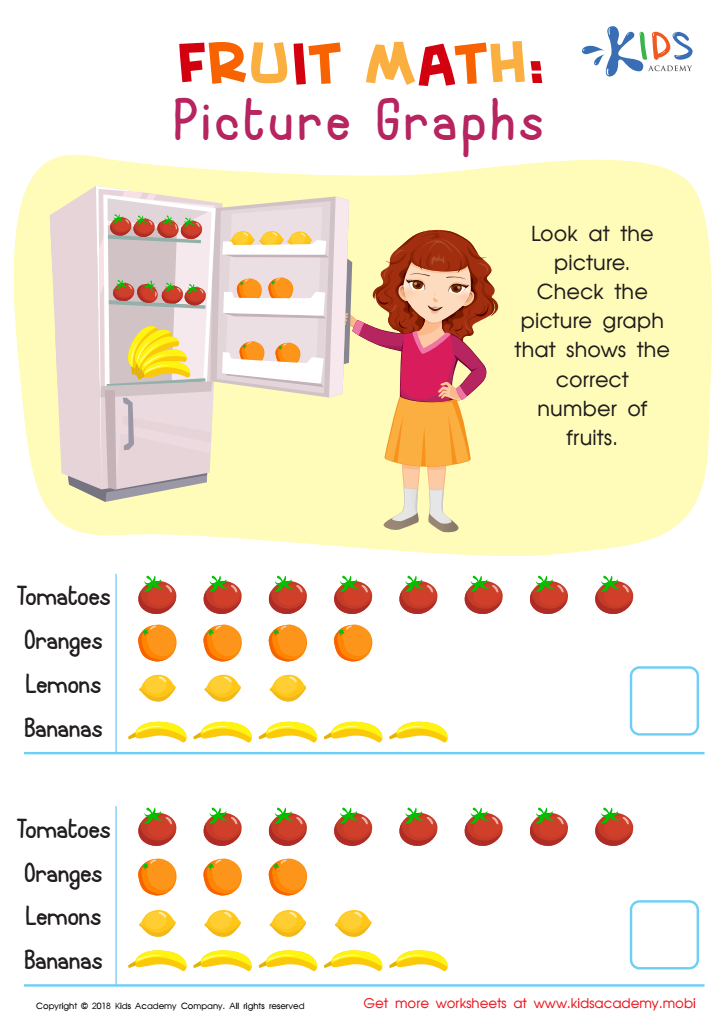
Fruit Math: Picture Graphs Worksheet
 Assign to My Students
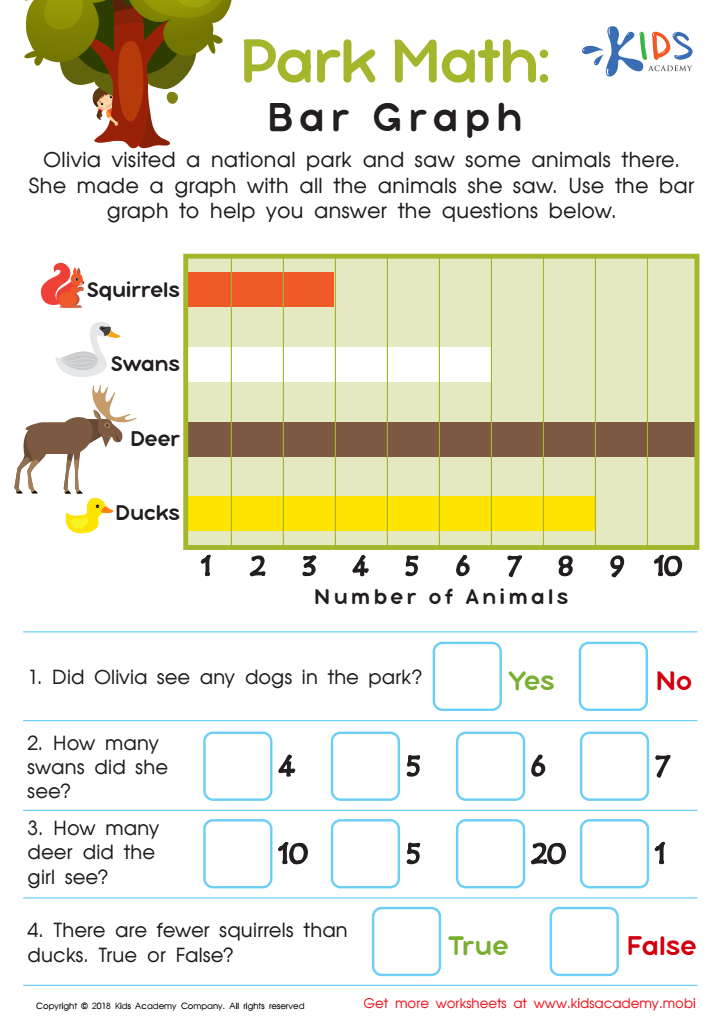
Park Math: Bar Graph Worksheet
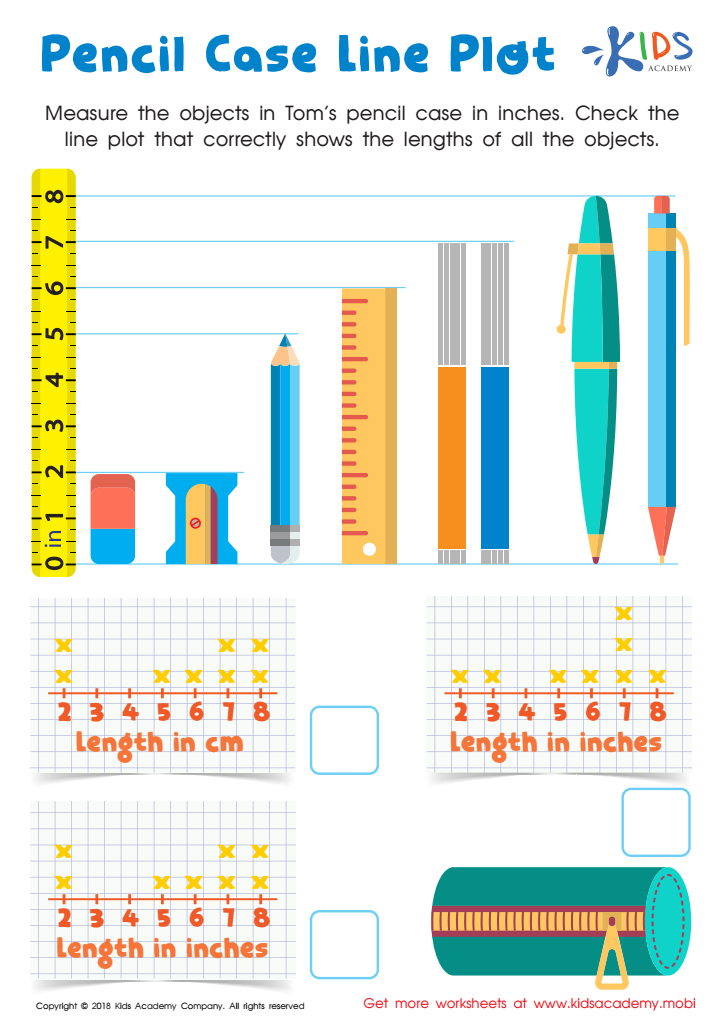
Pencil Case Line Plot Worksheet
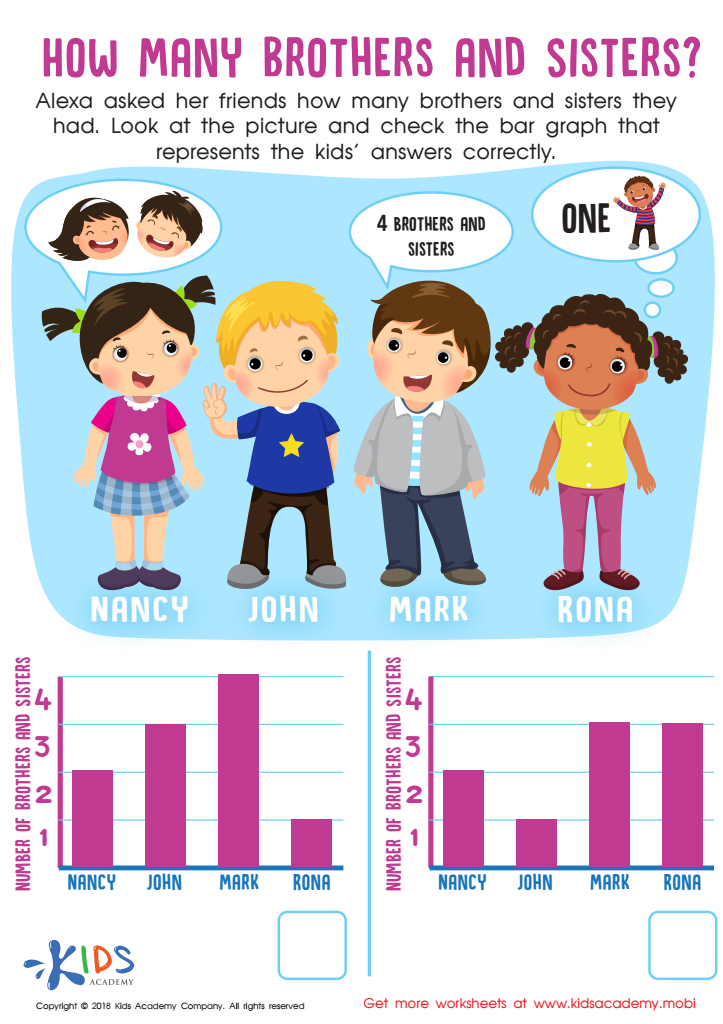
How Many Brothers and Sisters? Worksheet
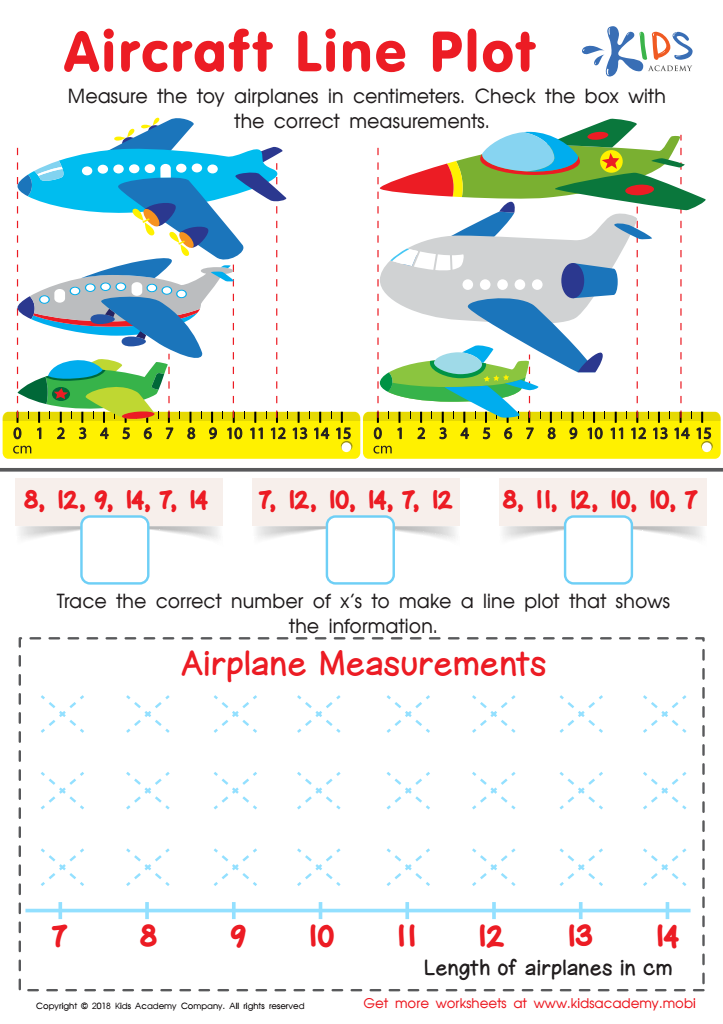
Aircraft Line Plot Worksheet








Counting skills and easy measurement are foundational components of early childhood education that greatly impact a child's cognitive development. For parents and teachers, fostering these skills in children aged 4-8 is essential for several reasons.
Firstly, counting serves as the bedrock for future math proficiency. Understanding numbers and their sequences helps children grasp more advanced concepts, such as addition, subtraction, and even basic problem-solving later on. Additionally, measurement activities, like comparing lengths or weights, teach children about properties of objects and aid in developing critical thinking skills.
Engaging children in counting and measurement also enhances their fine motor skills. Activities like sorting, stacking, or using measuring tools not only promote hand-eye coordination but also encourage perseverance and focused attention.
Moreover, integrating counting and measurement into everyday activities makes learning natural and fun. It promotes curiosity and allows children to explore their environment effectively, turning mundane experiences into active learning opportunities.
When parents and educators prioritize counting skills and easy measurement, they enable children to build confidence and competence in math, laying a strong foundation for academic success and lifelong learning. Overall, investing in these skills reaps benefits that extend beyond the classroom and deeply enrich a child's development.








