Understanding patterns Easy Times Tables Worksheets for Ages 4-8
3 filtered results
-
From - To
Boost your child's math skills with our "Understanding Patterns Easy Times Tables Worksheets" designed specifically for ages 4-8! These engaging worksheets help young learners explore the concept of patterns in multiplication through fun and interactive activities. Each worksheet focuses on different times tables, encouraging children to recognize numerical patterns while reinforcing foundational math understanding. With colorful illustrations and age-appropriate exercises, kids will enjoy practicing their times tables while developing critical thinking and problem-solving skills. Make learning enjoyable and effective—download our easy to use, printable worksheets today and watch your child gain confidence in math! Perfect for home or school use!
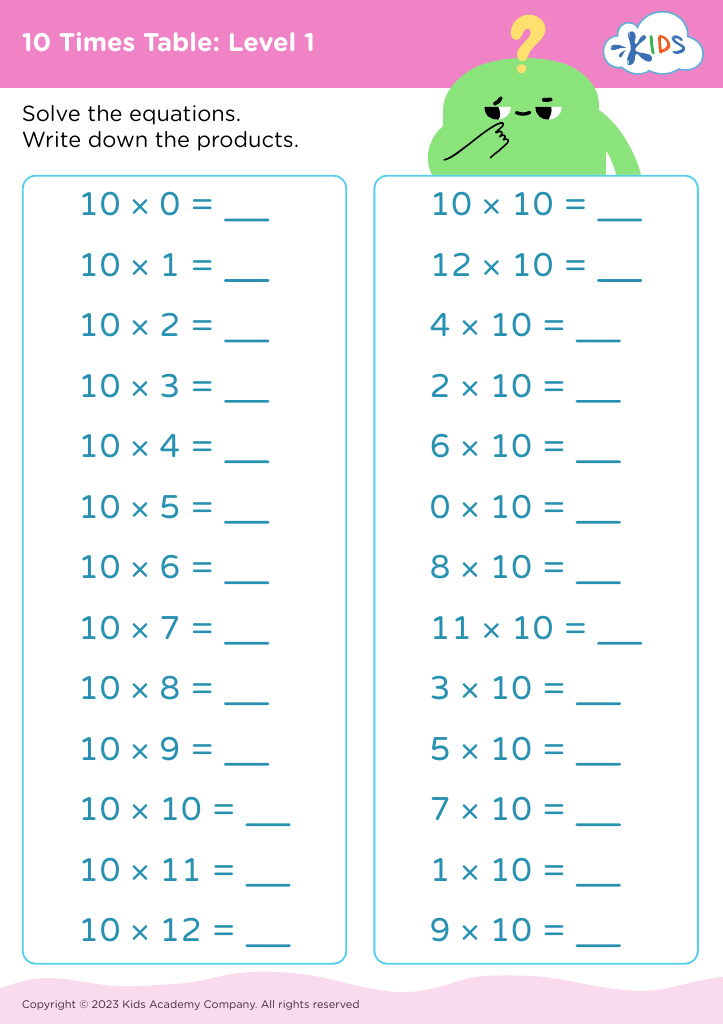
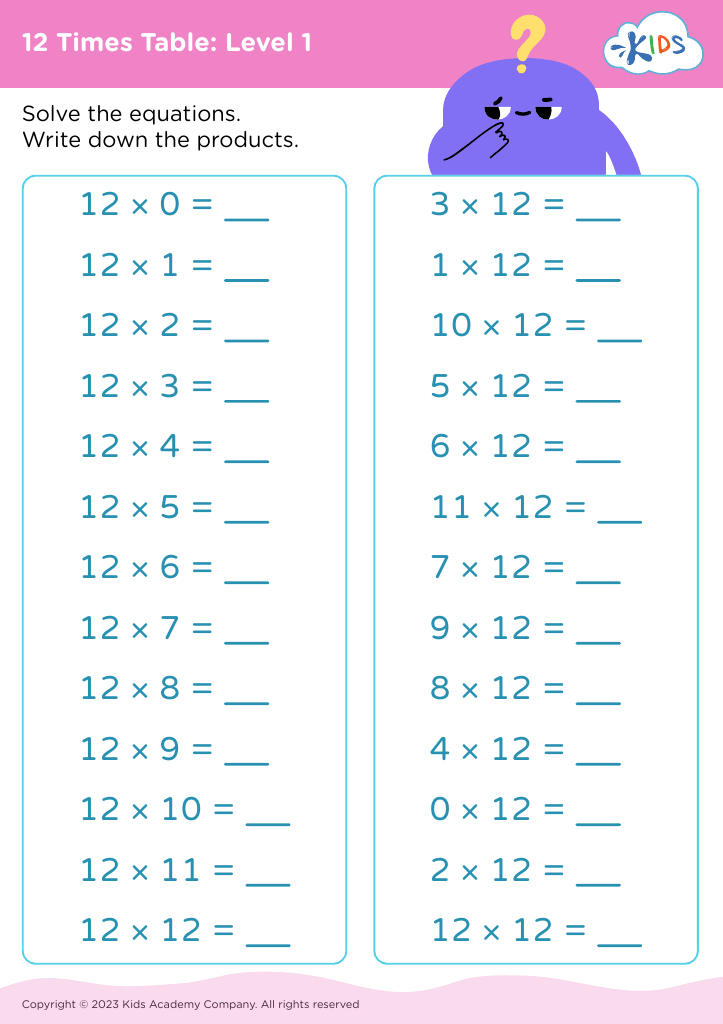
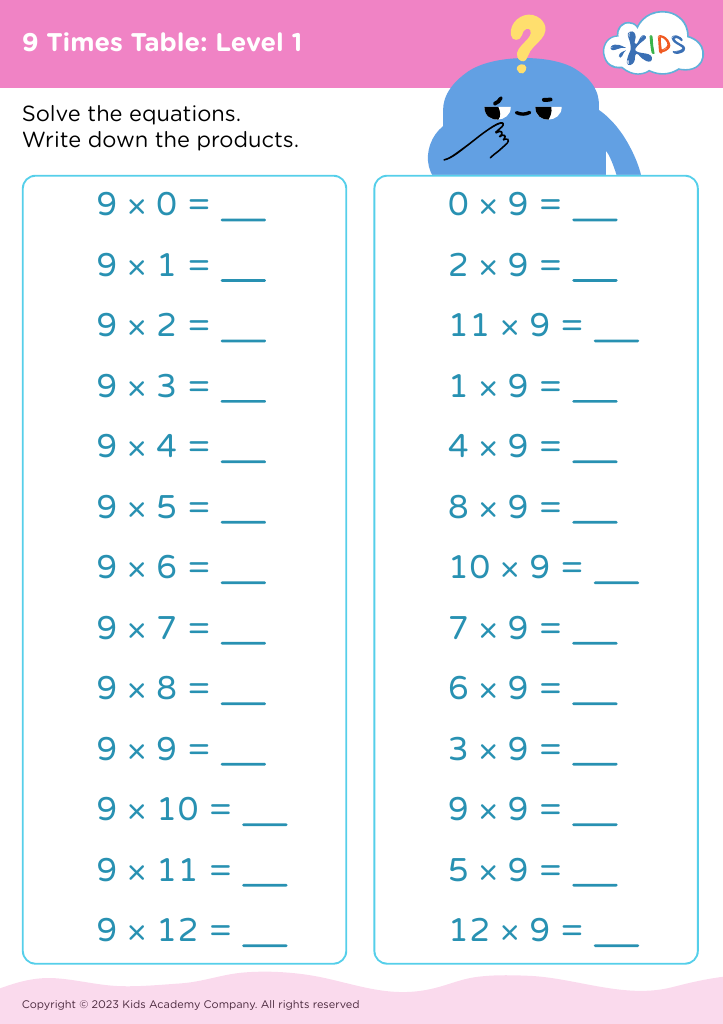





Understanding patterns is fundamental for young learners, and incorporating Easy Times Tables for ages 4-8 nurtures this crucial skill. Recognizing patterns helps children make connections across different areas of mathematics and problem-solving. The concept of multiplication, particularly with times tables, introduces children not only to number sequences but also to the idea of repeat addition. For example, the three times table shows repetitive addition (3+3+3), connecting it to everyday counting and grouping, which enhances their number sense.
Additionally, learning times tables through patterns encourages memory retention and fluency in mathematics, fostering confidence in tackling more complex concepts in the future. It aids cognitive development, teaching children how to think logically and recognize relationships between numbers. Pattern recognition also extends to various subjects, enriching brain development and analytical skills across disciplines.
For teachers and parents, promoting understanding patterns and times tables means equipping children with foundational skills essential for their academic journey. Emphasizing this intertwined learning makes math engaging and reduces anxiety, transforming it into a fun challenge rather than a daunting task. In nurturing these skills early on, we lay a strong groundwork for future mathematical success and critical thinking.








