Cognitive Development Easy Reading Comprehension Worksheets for Ages 4-8
4 filtered results
-
From - To
Explore our engaging Cognitive Development Easy Reading Comprehension Worksheets designed specifically for children ages 4-8! These worksheets are crafted to enhance young learners' understanding and critical thinking skills through fun, age-appropriate reading activities. Each worksheet fosters cognitive growth by promoting visual processing, problem-solving, and sentence comprehension. Perfect for at-home learning or as classroom resources, these activities help children build a strong foundation in reading while igniting their curious minds. Featuring vibrant illustrations and interactive questions, our worksheets make learning enjoyable and effective. Help your child become a confident reader and critical thinker today with our accessible resources!
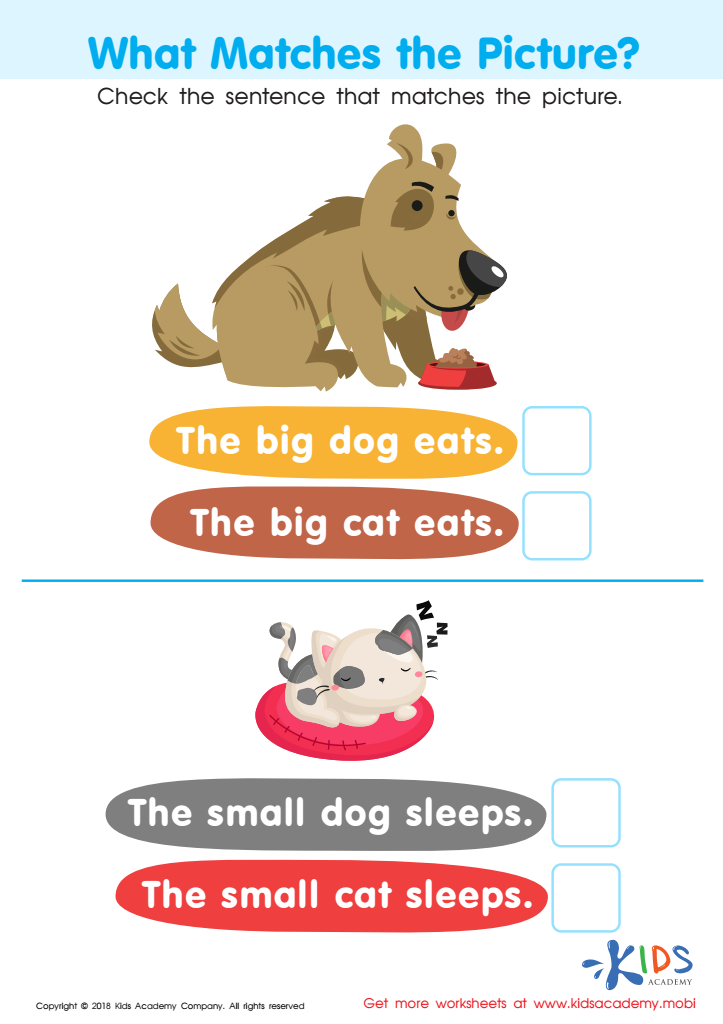
What Matches the Picture? Worksheet
 Assign to My Students
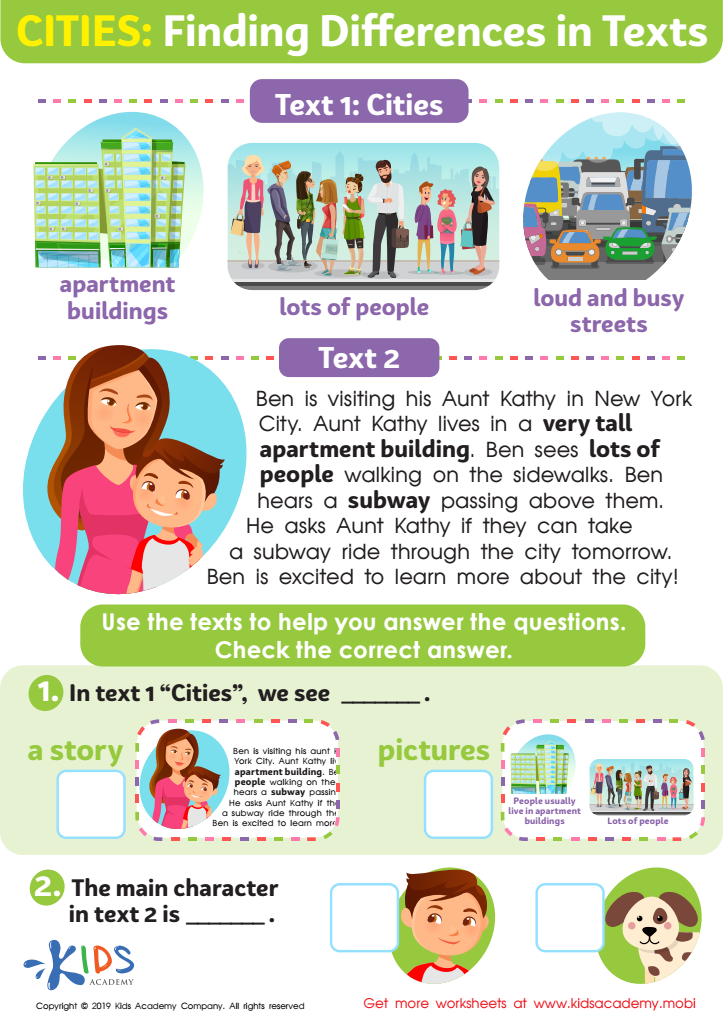
Cities: Finding Differences Worksheet
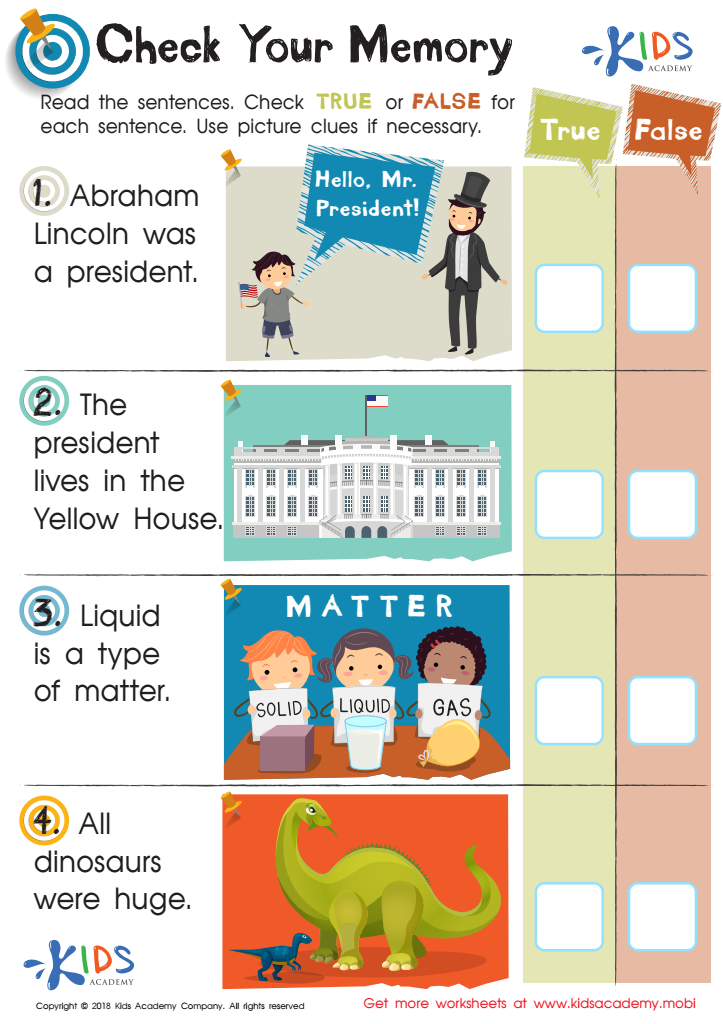
Check Memory Worksheet
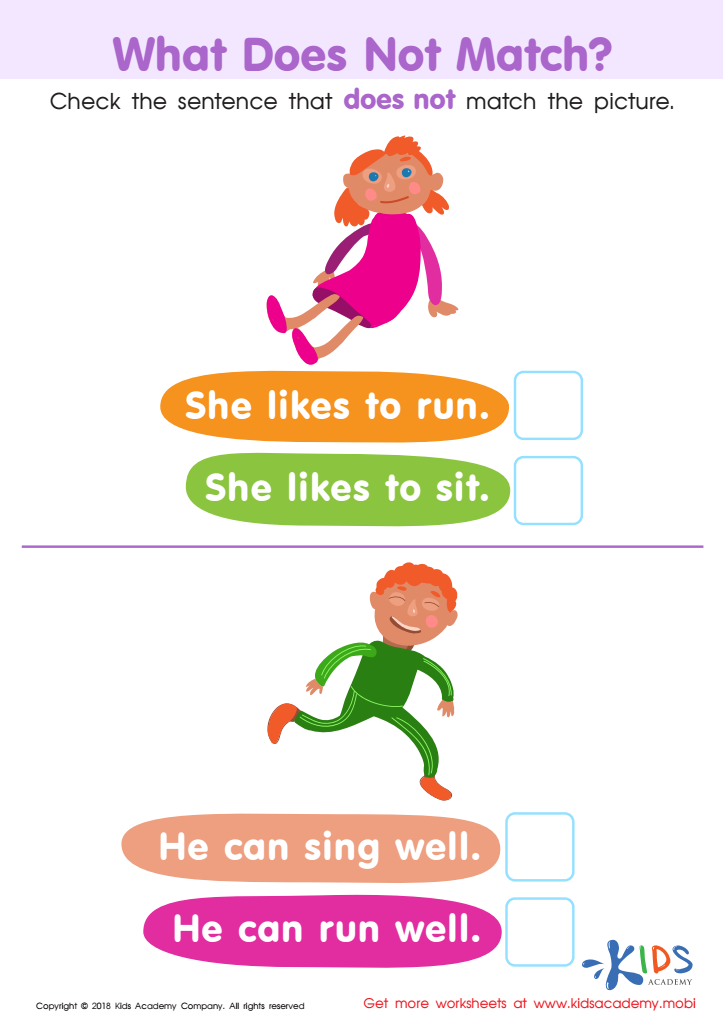
What Does Not Match? Worksheet








Cognitive development is crucial for children ages 4-8 as it sets the foundation for their future learning and problem-solving skills. During these formative years, children’s brains are highly adaptable, allowing them to absorb and process new information rapidly. This is the perfect time for parents and teachers to engage children with reading comprehension activities that enhance critical thinking, comprehension, and vocabulary.
Promoting reading comprehension helps children make connections between what they read and their own experiences. This connection encourages them to think more deeply and ask questions, fostering curiosity and creativity. Additionally, effective reading skills can boost confidence, as children feel proud when they understand stories and concepts.
Educators and parents should prioritize this skill because it supports academic success across all subjects, not just language arts. Children who are proficient in comprehension are better prepared to tackle math word problems, science texts, and real-world situations that require analytical thinking.
By investing time in cognitive development through reading comprehension, adults can help children develop essential life skills. This not only promotes a love for learning but ensures they grow into competent, critical thinkers ready for the challenges of the future. Empowering young minds today creates a brighter tomorrow.